
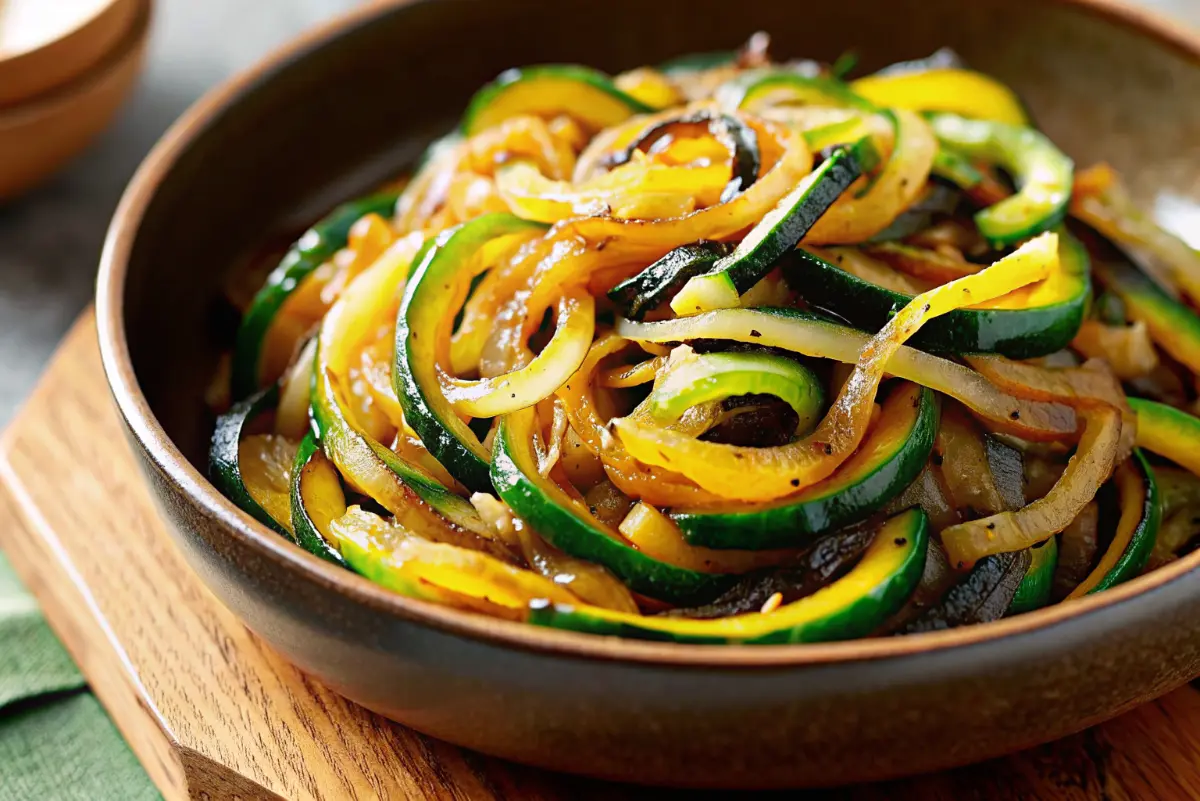
Japanese Zucchini Onion Stir-Fry (Fast, Glossy, Hibachi-Style)
If you’ve ever sat at a teppanyaki grill watching the chef flip vegetables in a hot pan, you already know the magic: sizzling edges, tender-crisp bites, and that savory, slightly sweet glaze that clings to every slice. This Japanese zucchini onion stir-fry brings that same “restaurant pan” feeling to your kitchen—without special equipment, fancy steps, or a long ingredient list.
One reason this Japanese zucchini onion stir-fry tastes so “right” is the balance of classic pantry flavors—salty, sweet, and toasty—brought together with smart timing. If you want a quick refresher on mirin (a sweet Japanese cooking condiment often used to round out sauces), this guide is helpful: mirin (Japanese sweet rice wine).
Why you’ll love this recipe
This hibachi-style zucchini and onions is a keeper because it’s:
- Quick: start to finish in about 15–20 minutes
- Flexible: swap the sauce style, add mushrooms, toss in tofu or shrimp
- High-impact: simple ingredients, bold flavor, glossy finish
- Perfectly textured: tender onions + zucchini that stays tender-crisp (not soggy)
What is Japanese zucchini onion stir-fry?
At its core, Japanese zucchini onion stir-fry is a high-heat sauté of sliced zucchini and onions finished with a savory-sweet sauce and a sesame topping. It’s commonly inspired by teppanyaki/hibachi-style vegetables served at Japanese steakhouses: the vegetables cook hot and fast, then get glazed at the end so they stay vibrant and lightly caramelized.
What sets it apart from a typical zucchini sauté?
- Heat + speed: you cook quickly so zucchini browns instead of steaming
- Sauce timing: you add sauce late, so it coats rather than turns watery
- Finish: toasted sesame (and sometimes a hint of sesame oil) makes it taste “complete”
Ingredients (simple, but strategic)
You don’t need much—just a few key pieces that work together.
The vegetables
- Zucchini (2 medium): firm, not overly large (big zucchini can be seedy and wetter)
- Onion (1 medium): yellow or sweet onion both work
The stir-fry base
- Neutral oil (1–2 tbsp): avocado, canola, grapeseed, or sunflower
- Butter (optional, 1 tbsp): for a steakhouse-style finish and richer glaze
The glossy sauce (choose one style)
You can go “teriyaki-like” or “soy + mirin.” Both are delicious.
Option A: Teriyaki-style quick sauce
- Soy sauce (2 tbsp)
- Teriyaki sauce (2 tbsp)
Option B: Soy + mirin glaze
- Soy sauce (2 tbsp)
- Mirin (2 tbsp)
- Sugar (1 tsp), optional if you want a slightly sweeter finish
Flavor boosters (optional but popular)
- Garlic (1–2 cloves, minced)
- Ginger (1 tsp, grated)
- Red pepper flakes (pinch)
The finish
- Toasted sesame seeds (1–2 tsp)
- Sesame oil (a few drops, optional): add at the end, not at the start
Best way to slice zucchini and onions
Slice shape affects texture more than people think.
Zucchini slicing options
- Half-moons (classic): slice into ½ cm (about ¼-inch) pieces
- Thicker bias slices: better browning, firmer bite
- Ribbons: pretty, fast cooking, slightly softer texture (sauce clings well)
Onion slicing options
- Thin half-moons: quick, even softening
- Thicker wedges: more bite, a little more caramelization
Tip: If your zucchini is very wet, pat slices dry with a paper towel before cooking.
Tools you’ll want (nothing fancy)
- A wide skillet (best for evaporation and browning) or a wok
- A small bowl (to mix sauce)
- Tongs or a spatula (to keep everything moving)
If your pan is small, plan to cook in batches—crowding is the fastest route to soggy zucchini.
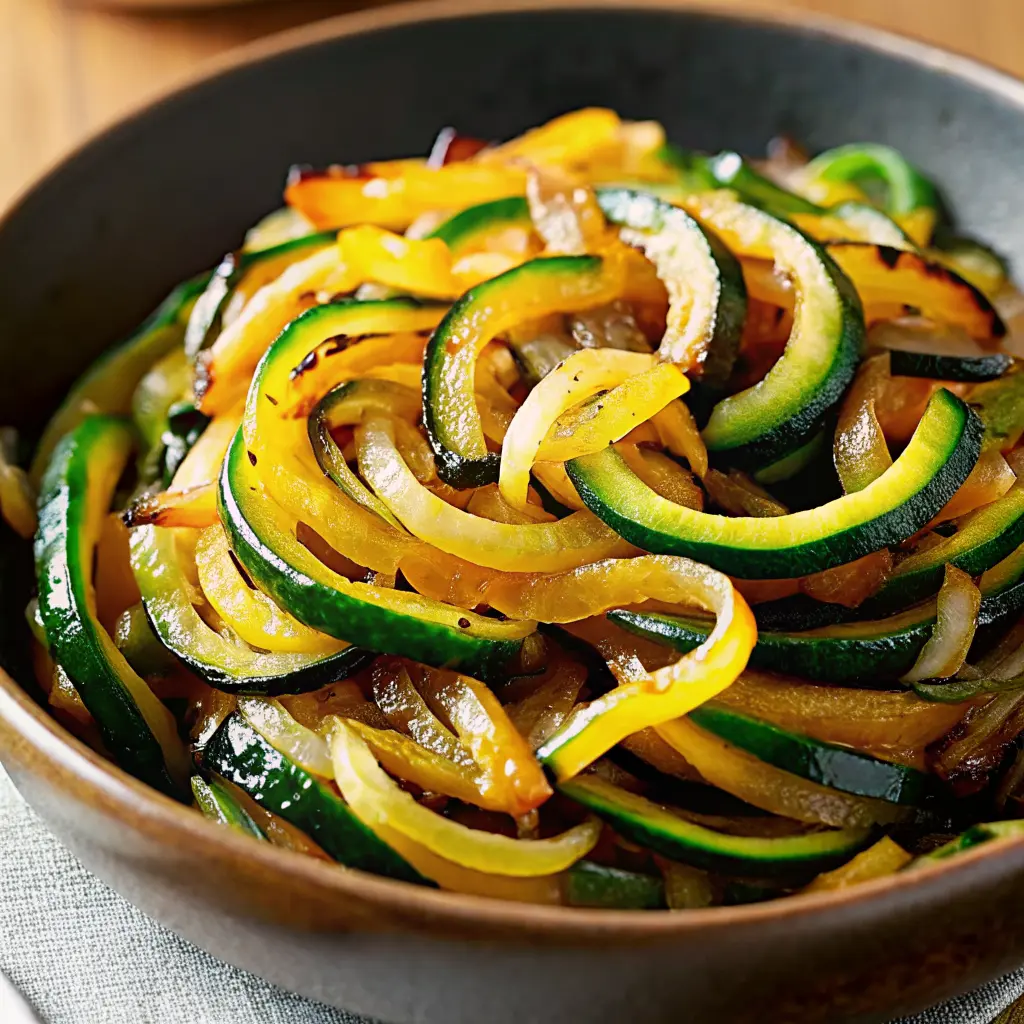
Japanese Zucchini Onion Stir-Fry (Step-by-Step)
1) Mix your sauce first
In a small bowl, stir together your chosen sauce:
- Option A: soy sauce + teriyaki sauce
- Option B: soy sauce + mirin (+ optional sugar)
Set aside. This matters because once the pan is hot, everything moves fast.
2) Heat the pan properly
Place a large skillet over medium-high to high heat. Add neutral oil and let it shimmer.
You want:
- Hot pan
- Quick sizzle
- Minimal steaming
3) Start with onions
Add onions first and sauté for 2–3 minutes, tossing often.
You’re aiming for:
- softened edges
- slight golden spots
- still a little bite
4) Add zucchini and keep it moving
Add zucchini slices. Stir-fry for 4–6 minutes, tossing so they sear lightly.
Key technique:
- Spread them out briefly to brown
- Toss, spread, toss again
- Don’t leave them piled in the center
5) Add garlic/ginger (optional) at the right time
If using garlic and ginger, add during the last 60–90 seconds of cooking so they turn fragrant without burning.
6) Sauce goes in late (the glossy moment)
Pour in your sauce and toss quickly for 30–60 seconds.
You’re not “simmering.” You’re glazing.
7) Finish with sesame
Turn off heat. Toss with:
- toasted sesame seeds
- optional tiny drizzle of sesame oil
- optional small knob of butter for a hibachi-style sheen
Serve immediately for the best texture.
Flavor variations (so you never get bored)
Once you master the basics, you can spin it in various directions.
1) Classic steakhouse-style (buttery + glossy)
- Add 1 tbsp butter at the end
- Finish with sesame seeds
- Keep sauce simple (soy + mirin or soy + teriyaki)
2) Garlic-ginger punch
- Add minced garlic + grated ginger near the end
- Finish with sesame seeds
- Optional pinch of chili flakes
3) Sweet-savory glaze (extra shiny)
- Use soy + mirin
- Add a tiny pinch of sugar
- Toss only 30–45 seconds for a clean glaze
4) Spicy version
- Chili flakes or chili oil (a few drops)
- Add after sauce so it doesn’t scorch
5) Miso-butter twist (bold, savory)
If you like deeper flavor:
- Stir 1 tsp miso into 1 tbsp softened butter
- Add it at the end and toss off-heat
This gives a rich, restaurant-style finish with a little extra complexity.
What to serve with Japanese zucchini onion stir-fry
This dish is a natural side, but it can also be the star in a bowl.
Easy pairings
- Steamed rice (white rice, jasmine-style, or short grain)
- Fried rice (especially if you want the hibachi vibe)
- Noodles (udon-style noodles, soba-style noodles, or simple stir-fried noodles)
Make it a full plate
- Serve with grilled chicken, shrimp, or steak
- Add a simple cucumber salad on the side
- Finish with extra sesame and a squeeze of citrus (optional)
Make-ahead, storage, and reheating (without ruining texture)
Zucchini is best right after cooking, but leftovers can still be great if you reheat correctly.
Storage
- Cool completely
- Store in an airtight container
- Keep for up to 3 days for best taste and texture
Reheating (best method)
- Reheat in a hot skillet over medium-high heat
- Toss for 1–3 minutes until warmed through
- If it looks wet, let it sizzle uncovered briefly to evaporate moisture
Microwave (if you must)
- Short bursts (20–30 seconds)
- Stir between bursts
- Expect softer texture
Freezing
Freezing changes zucchini texture (it softens after thawing). If you do freeze it:
- Freeze in a flat layer for quicker thawing
- Use thawed leftovers in:
- rice bowls
- noodle tosses
- quick pan reheats where texture isn’t the main focus
Troubleshooting (quick fixes)
“My zucchini turned soggy.”
- Pan wasn’t hot enough or pan was crowded
Fix: Cook in batches and add sauce at the end.
“There’s water in the pan.”
- Zucchini released moisture and couldn’t evaporate
Fix: Increase heat, spread veggies out, let liquid cook off before saucing.
“It tastes too salty.”
- Soy can vary in intensity
Fixes: - Add a splash of mirin (or a small pinch of sugar) to round it out
- Add more zucchini/onion to dilute
- Finish with sesame and a squeeze of citrus (optional)
“Not enough flavor.”
- Sauce didn’t cling or was too thin
Fixes: - Toss sauce in for only 30–60 seconds on high heat
- Add toasted sesame seeds
- Add garlic/ginger late for aroma
“My onions are still raw.”
- Slices too thick or too short cooking
Fix: Give onions a 2–3 minute head start before zucchini.
FAQs
What’s the best pan for this Japanese zucchini onion stir-fry?
A wide skillet is often best because it gives the vegetables space to sear and lets moisture evaporate quickly. A wok also works well if you keep heat high and don’t overcrowd.
Can I make this with yellow squash instead of zucchini?
Yes—yellow squash cooks similarly. Keep slices slightly thicker and cook hot and fast to avoid extra moisture.
How do I keep the sauce glossy instead of watery?
Add the sauce at the end and toss briefly (30–60 seconds). If you add sauce too early, the vegetables release moisture and the pan turns steamy rather than glossy.
Can I add mushrooms or peppers?
Absolutely. Add mushrooms with onions (they need time) and peppers right after onions so they stay bright and slightly crisp.
What’s a good substitute if I don’t have mirin?
Many cooks use a small mix of sweetness + mild acidity to mimic mirin’s balance (for example, a touch of sugar with a splash of mild vinegar). If you have teriyaki sauce, that’s an easy alternative route for a sweet-savory finish.
Conclusion
This Japanese zucchini onion stir-fry is the kind of recipe you’ll make once—and then keep on repeat. It’s fast, flexible, and full of that savory-sweet, sesame-finished flavor that feels straight off a hibachi grill.