
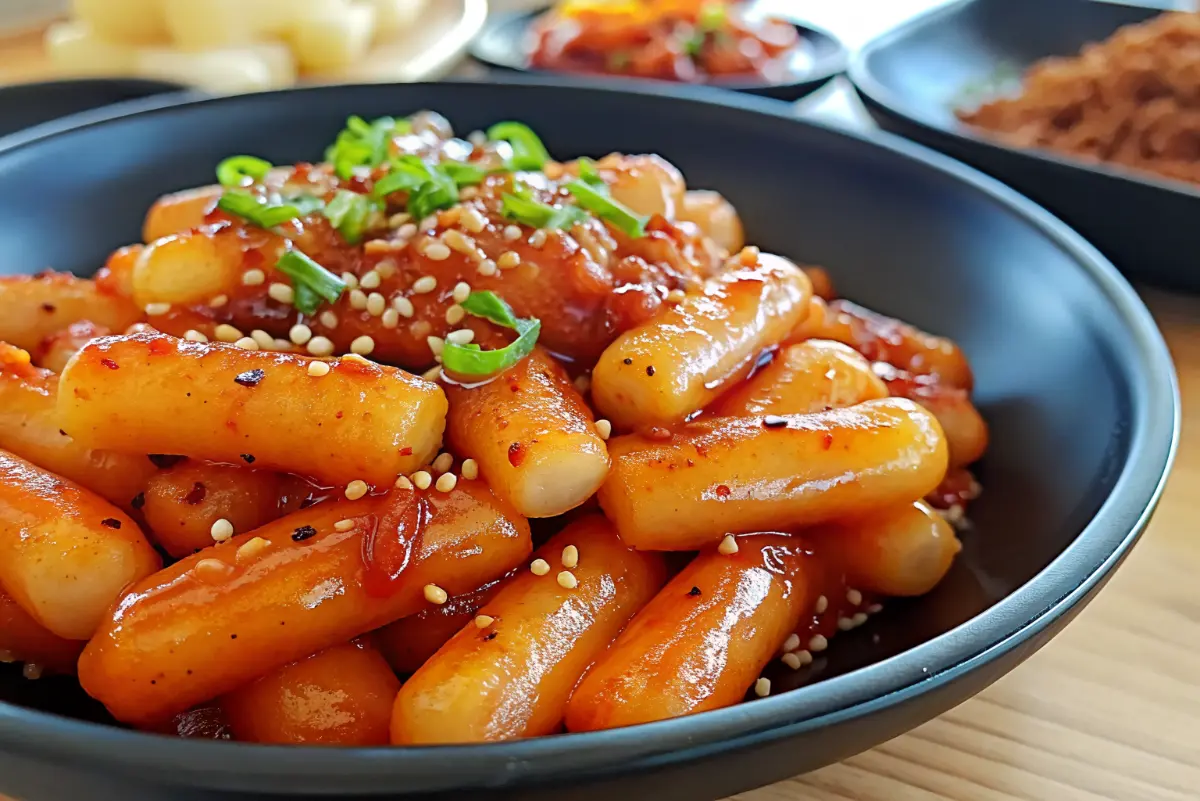
What Are Spicy Korean Rice Cakes (Tteokbokki)?
Tteokbokki (떡볶이) literally means “stir-fried rice cakes.” It’s one of the most popular Korean street foods, often sold from carts, tiny snack shops, and casual eateries. The dish features cylindrical rice cakes simmered in a thick, spicy-sweet sauce, usually made from:
- Gochujang (Korean chili paste)
- Gochugaru (Korean chili flakes)
- A light broth or water
- Aromatics such as garlic and onion
- Optional add-ins like fish cakes, vegetables, ramen, and cheese
Traditionally, there were two main styles:
- Spicy red tteokbokki – made with gochujang, sold widely as street food
- Gungjung tteokbokki – a royal court version, seasoned with soy sauce instead of chili, with beef and vegetables
In modern Korean cooking, when people say tteokbokki, they almost always mean the spicy red version. That’s the focus of this guide on spicy Korean rice cakes. the long history of Korean rice cakes
Ingredient Spotlight for Spicy Korean Rice Cakes
To make seriously satisfying tteokbokki, it helps to understand each key ingredient and why it matters. Think of this section as your ingredient roadmap.
Korean Rice Cakes (Tteok / Garaetteok)
The star of the dish is tteok—chewy, dense rice cakes made from rice flour. For spicy Korean rice cakes, you specifically want:
- Tteokbokki-tteok – cylinder-shaped rice cakes
- Fresh or vacuum-packed, often found in the refrigerated or frozen section of Asian/Korean grocery stores
Good tteok should be:
- Firm when cold
- Soft and beautifully chewy once simmered in sauce
- Made primarily from rice (avoid wheat-based “rice cakes” for this recipe)
Gochujang (Korean Chili Paste)
Gochujang is essential for:
- Deep red color
- Complex spicy-sweet flavor
- Umami richness
Look for:
- A tub labeled gochujang
- Mild, medium, or hot versions depending on your spice tolerance
- Korean brands in the Asian section of your supermarket or in Korean grocery stores
Gochugaru (Korean Chili Flakes)
While gochujang provides body, gochugaru provides:
- Extra heat
- Smoky, fruity chili notes
- A more vibrant red color
You can:
- Use a little for mild heat
- Increase it to create ultra-spicy tteokbokki
- Skip it if you want a very gentle, beginner-friendly version
Broth or Base Liquid
You have two main options:
- Anchovy-kelp stock – traditional, with deep savory flavor
- Water + seasoning – quicker and still delicious
Anchovy stock is usually made from:
- Dried anchovies (heads and guts removed)
- Kelp (dashima or kombu)
- Water simmered for 10–15 minutes
You can keep it simple with water as long as you season generously with soy sauce and gochujang.
Aromatics, Vegetables, and Add-Ins
To give spicy Korean rice cakes more personality and texture, you can add:
- Aromatics
- Minced garlic
- Sliced onion
- Chopped green onions (scallions)
- Vegetables
- Sliced cabbage
- Sliced carrot
- Sliced green chili peppers or bell peppers
- Add-ins
- Korean fish cakes (eomuk), sliced
- Hard-boiled eggs
- Sausages or hot dogs, cut on the bias
- Dumplings, noodles, or tofu
Seasoning Extras and Toppings
These small touches make the sauce round and satisfying:
- Soy sauce – for extra saltiness and umami
- Sugar or corn syrup – to balance the chili heat
- Sesame oil – a nutty finishing touch
- Sesame seeds – toasted, sprinkled at the end
- Extra sliced green onions – freshness and color
- Shredded cheese – for cheesy tteokbokki
Essential Tools & Equipment
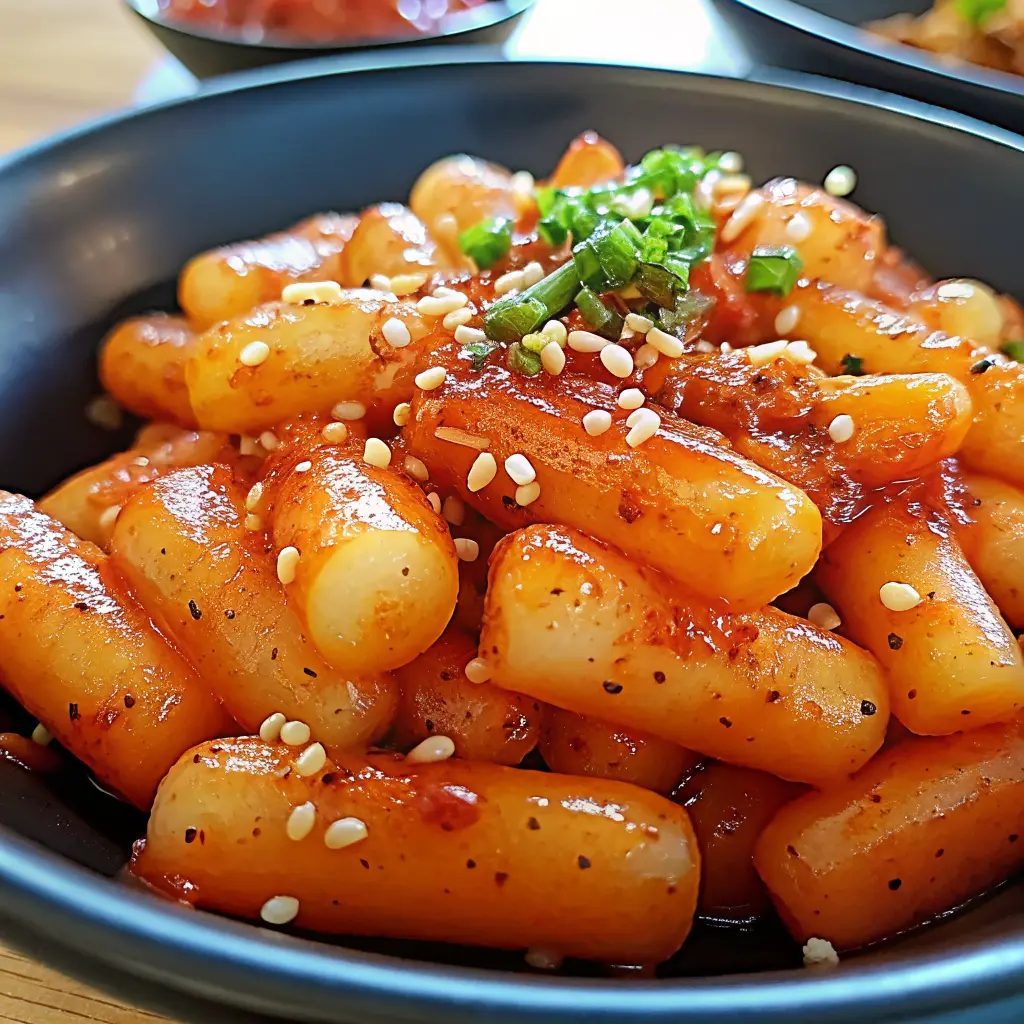
You don’t need special equipment to make spicy Korean rice cakes, but the right pan helps.
- Wide, shallow pan or skillet
- Encourages even simmering
- Makes it easier to stir the rice cakes and sauce
- Wooden spoon or heat-safe spatula
- Great for stirring thick sauce without scratching your pan
- Small pot (optional)
- For making anchovy-kelp stock before adding it to your main pan
If you use a nonstick pan, it will also reduce sticking and make cleanup easier.
Step-by-Step Recipe: Spicy Korean Rice Cakes (Tteokbokki)
Below is a flexible base recipe you can customize. Adjust everything—especially spice and sweetness—to your taste.
Ingredients (Base Version)
- 450–500 g tteokbokki rice cakes, soaked
- 3 cups anchovy-kelp stock or water
- 3–4 tablespoons gochujang
- 1–2 tablespoons gochugaru (adjust to taste)
- 1–2 tablespoons soy sauce
- 1–2 tablespoons sugar or corn syrup
- 2 cloves garlic, minced
- ½ medium onion, sliced
- 1 cup sliced Korean fish cakes (optional but classic)
- 1 cup chopped cabbage or other vegetables
- 2 green onions, sliced
- 2 boiled eggs (optional)
- 1 teaspoon sesame oil
- Sesame seeds and extra green onion for garnish
Step 1 – Make the Broth (or Prepare Water Base)
If using anchovy-kelp stock:
- Add dried anchovies and a piece of kelp to a small pot of water.
- Bring to a gentle simmer and cook for about 10–15 minutes.
- Strain and discard the solids.
- Measure out about 3 cups for this recipe.
If using water:
- Simply measure out 3 cups of water.
- You’ll rely on gochujang and soy sauce for flavor.
Step 2 – Prep Ingredients
While the stock is simmering:
- Soak the rice cakes in warm water for 10–20 minutes.
- Slice the onion, green onions, and cabbage (if using).
- Cut fish cakes into bite-sized strips.
- Peel your boiled eggs, if adding.
Having everything ready makes cooking smooth and fast.
Step 3 – Build the Sauce in the Pan
In a wide pan:
- Pour in the stock or water.
- Add:
- Gochujang
- Gochugaru
- Soy sauce
- Sugar or corn syrup
- Minced garlic
- Whisk or stir until the gochujang is fully dissolved.
- Bring the mixture to a gentle simmer over medium heat.
Taste the broth at this stage—this is your chance to adjust the basic balance before the rice cakes go in.
Step 4 – Simmer the Rice Cakes
Add the soaked and drained rice cakes to the simmering sauce.
- Stir gently to prevent sticking.
- Keep the heat at medium; the sauce should be bubbling, not violently boiling.
- Within a few minutes, the sauce will begin to thicken and cling to the rice cakes.
You’re looking for:
- Rice cakes that are soft but still pleasantly chewy
- Sauce that is thicker and glossier, coating each piece
If it gets too thick before the rice cakes are tender, add a splash of stock or water.
Step 5 – Add Vegetables, Fish Cakes, and Eggs
When the rice cakes are almost done:
- Add sliced onion, cabbage, and fish cakes.
- Nestle in boiled eggs if using.
- Continue simmering another 3–5 minutes, stirring occasionally.
This step:
- Softens the vegetables slightly while keeping some texture
- Warm the fish cakes and eggs through
- Allows flavors to mingle
Step 6 – Adjust Seasoning and Texture
Now is the time to taste and personalize:
- Too mild?
- Add a little more gochugaru or gochujang.
- Too salty or intense?
- Stir in some extra water or stock.
- Not sweet enough?
- Add a small spoonful of sugar or syrup.
Let everything simmer another minute or two after adjusting, so the flavors meld.
Step 7 – Finish with Sesame Oil and Garnish
Turn off the heat and:
- Drizzle in sesame oil and stir.
- Top with:
- Sliced green onions
- Sesame seeds
- Optional shredded cheese for a cheesy variation
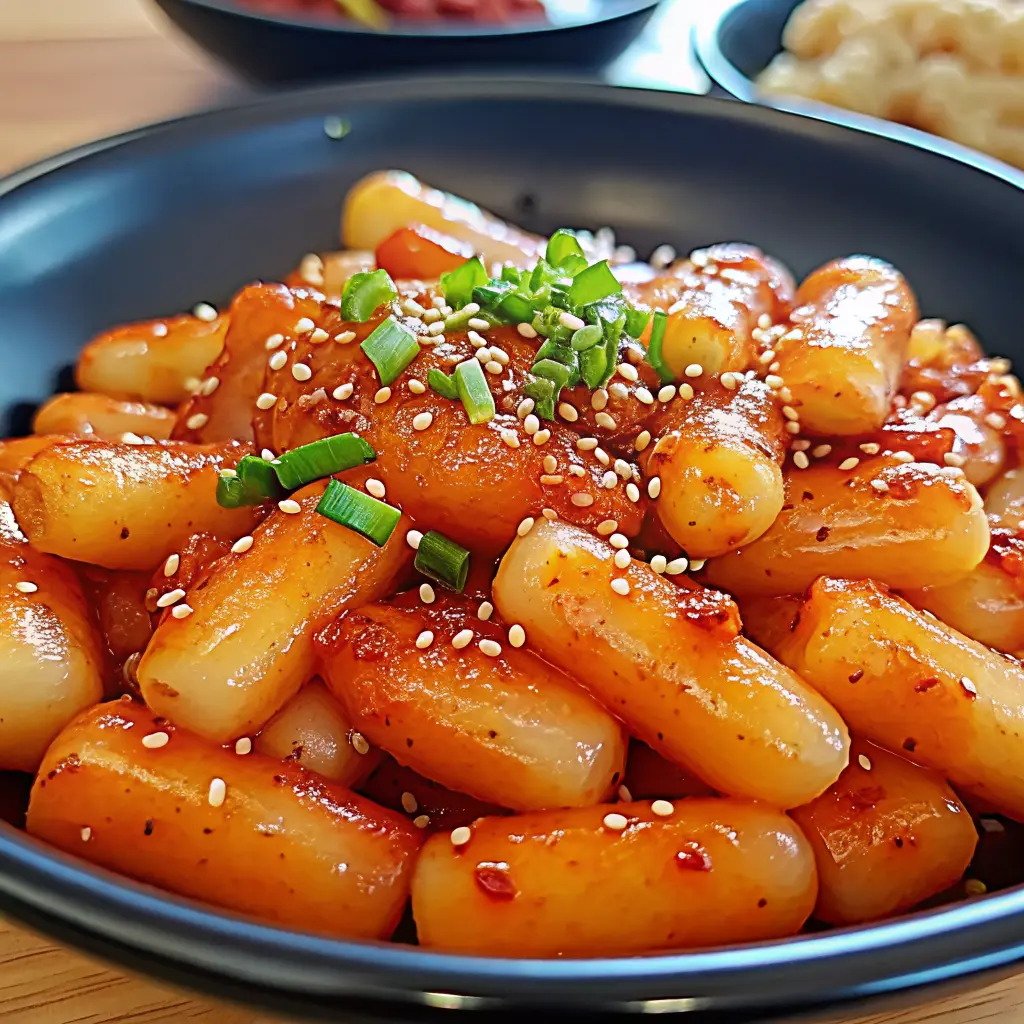
Customizing Spice, Sweetness, and Sauce Texture
One of the best parts of making tteokbokki at home is tailoring it to your personal taste.
Adjusting the Spice Level
For mild:
- Use less gochugaru (or omit it entirely).
- Use a mild gochujang brand.
For medium:
- Use the recipe amounts as written.
For extra spicy:
- Increase gochugaru to 2–3 tablespoons.
- Add a little more gochujang, tasting as you go.
Balancing Sweetness
Traditional spicy Korean rice cakes are slightly sweet to balance the heat.
- Add sugar, honey, or corn syrup a bit at a time.
- Taste after each adjustment; you want “pleasantly sweet,” not dessert-level sweet.
Getting the Sauce Just Right
If the sauce is:
- Too thin
- Simmer, uncovered, a bit longer to reduce and thicken.
- Too thick
- Add small splashes of water or stock while stirring.
What to Serve with Spicy Korean Rice Cakes
Tteokbokki can be a snack, a light meal, or part of a larger spread.
Street-Food Style Pairings
Serve your spicy Korean rice cakes with:
- Fish cake skewers (odeng/eomuk)
- Sundae (Korean blood sausage)
- Twigim (Korean-style tempura—fried vegetables, dumplings, or squid)
These classic pairings turn a simple bowl of tteokbokki into a full Korean street-food experience at home.
Simple Side Dishes at Home
You can also keep it easy:
- A side of kimchi
- A quick cucumber salad with vinegar and sesame
- Fried eggs for extra richness
Serve everything in small dishes around the main pan of spicy Korean rice cakes so everyone can mix and match bites.
Presentation Tips
To make your dish look as good as it tastes:
- Serve in a shallow skillet or big bowl so the red sauce shows.
- Top generously with green onions and sesame seeds.
- Add a little cheese or extra chili flakes on one side for visual contrast.
Make-Ahead, Storage & Reheating Tips
Tteokbokki is best when freshly cooked, but you can still enjoy leftovers with a few tricks.
Storing Leftovers
- Let the dish cool to room temperature.
- Transfer to an airtight container.
- Refrigerate and enjoy within a couple of days for best texture.
Reheating on the Stove
When rice cakes sit, they tend to absorb the sauce and firm up.
- Place leftover spicy Korean rice cakes in a pan.
- Add a splash of water or stock to loosen the sauce.
- Reheat gently over low to medium heat, stirring until everything is hot and the rice cakes soften again.
Freezing Considerations
You can freeze components, but freezing fully cooked tteokbokki often changes the rice cakes’ texture. It’s usually better to:
- Freeze the sauce or stock separately
- Keep rice cakes in the freezer in their original packaging, then cook them fresh when you’re ready
Troubleshooting Spicy Korean Rice Cakes
Even with a solid recipe, questions and small issues can pop up. Here’s how to solve the most common ones.
My Rice Cakes Are Too Hard
If your rice cakes are still firm or stiff:
- Soak them longer in warm water before cooking.
- Simmer them a few extra minutes in the sauce.
- Check that you’re using rice-based tteokbokki-tteok and not another type of rice cake intended for grilling or frying.
My Rice Cakes Turned Mushy
Mushy rice cakes usually mean:
- They were over-soaked or boiled for too long before cooking.
- They simmered too long at high heat in the sauce.
Next time, shorten the soaking time and keep the sauce at a gentle simmer.
The Sauce Is Too Spicy
If you’ve gone a bit overboard with the heat:
- Add more water or stock to dilute the spice.
- Stir in a little extra sugar or syrup to soften the bite.
- Add cheese or a small splash of cream to the pan to mellow the flavor.
The Sauce Tastes Bland
To boost a flat sauce:
- Add a bit more gochujang or soy sauce.
- Simmer a bit longer to concentrate flavors.
- Add a touch of sugar if it feels harsh or unbalanced.
The Sauce Keeps Sticking or Burning
If your sauce sticks to the pan:
- Turn the heat down—medium or medium-low is enough.
- Add more water or stock, especially if the sauce has reduced a lot.
- Stir more frequently, scraping along the bottom of the pan.
FAQs About Spicy Korean Rice Cakes (Tteokbokki)
1. What does “tteokbokki” mean?
“Tteokbokki” combines two Korean words:
- Tteok – rice cake
- Bokki – stir-fried or sautéed
So it essentially means “stir-fried rice cakes.”
2. What do spicy Korean rice cakes taste like?
Spicy Korean rice cakes are:
- Soft and chewy in texture
- Coated with a thick, red sauce that’s sweet, spicy, and savory
- Deeply flavorful from gochujang, garlic, and soy sauce
They’re bold and comforting, with just enough heat to keep you coming back for another bite.
3. Are Korean rice cakes always spicy?
No. While the most famous version is spicy, made with gochujang, there are also non-spicy varieties like:
- Gungjung tteokbokki, which uses soy sauce and often includes beef and vegetables
- Other stir-fried rice cake dishes seasoned with soy, sesame oil, and vegetables
You can also tone down the heat in spicy Korean rice cakes by using less gochugaru and a milder gochujang.
4. What do Koreans usually eat with tteokbokki?
Common pairings include:
- Fish cake skewers (odeng/eomuk)
- Twigim (fritters like fried dumplings, sweet potatoes, or squid)
- Sundae (Korean blood sausage)
Irresistible Spicy Korean Rice Cakes (Tteokbokki)
- Total Time: PT25M
- Yield: 4 servings 1x
- Diet: Vegetarian
Description
Spicy Korean Rice Cakes, or Tteokbokki, are chewy rice cakes simmered in a bold gochujang sauce that combines a hint of sweetness with a kick of heat.
Ingredients
For the Tteokbokki
- 1 lb Korean rice cakes (tteok), cylindrical or sliced
- 3 cups water or anchovy broth
- 2–3 tbsp gochujang (Korean red chili paste)
- 1 tbsp gochugaru (Korean chili flakes)
- 1 ½ tbsp soy sauce
- 1–2 tbsp sugar (adjust to taste)
- 2 cloves garlic, minced
- 1 tsp sesame oil
Optional Add-Ins
- 1 fish cake sheet (eomuk), sliced
- 1 boiled egg, halved
- Cabbage or sliced scallions
- 1–2 slices of melted cheese (modern street style)
For Serving
- Sesame seeds
- Sliced scallions
Instructions
1. Prepare the Rice Cakes
- If using refrigerated rice cakes, soak in warm water for 10–15 minutes to soften.
- If using fresh, no soaking is needed.
2. Make the Sauce
- Combine water/broth, gochujang, gochugaru, soy sauce, sugar, garlic, and sesame oil in a pan.
- Bring to a simmer and stir until smooth.
3. Simmer the Tteok
- Add rice cakes (and fish cake if using).
- Simmer 10–12 minutes, stirring occasionally until thick and glossy.
- Adjust sweetness or heat as desired.
4. Serve
- Plate hot and garnish with scallions and sesame seeds.
Notes
- Anchovy broth is a traditional ingredient that adds deep umami; water works for a simplified version.
- For cheesy tteokbokki, add sliced mozzarella or processed cheese at the end.
- Sugar balance varies widely—Korean street style is sweeter.
- Prep Time: PT10M
- Cook Time: PT15M
- Category: Appetizer
- Method: Stovetop / Simmered
- Cuisine: Korean
Nutrition
- Serving Size: 1 plate
- Calories: 360 kcal
- Sugar: 12g
- Sodium: 820mg
- Fat: 5g
- Saturated Fat: 1g
- Unsaturated Fat: 4g
- Trans Fat: 0g
- Carbohydrates: 75g
- Fiber: 2g
- Protein: 7g
- Cholesterol: 0mg