

What Is Coconut Chicken and Zucchini Curry?
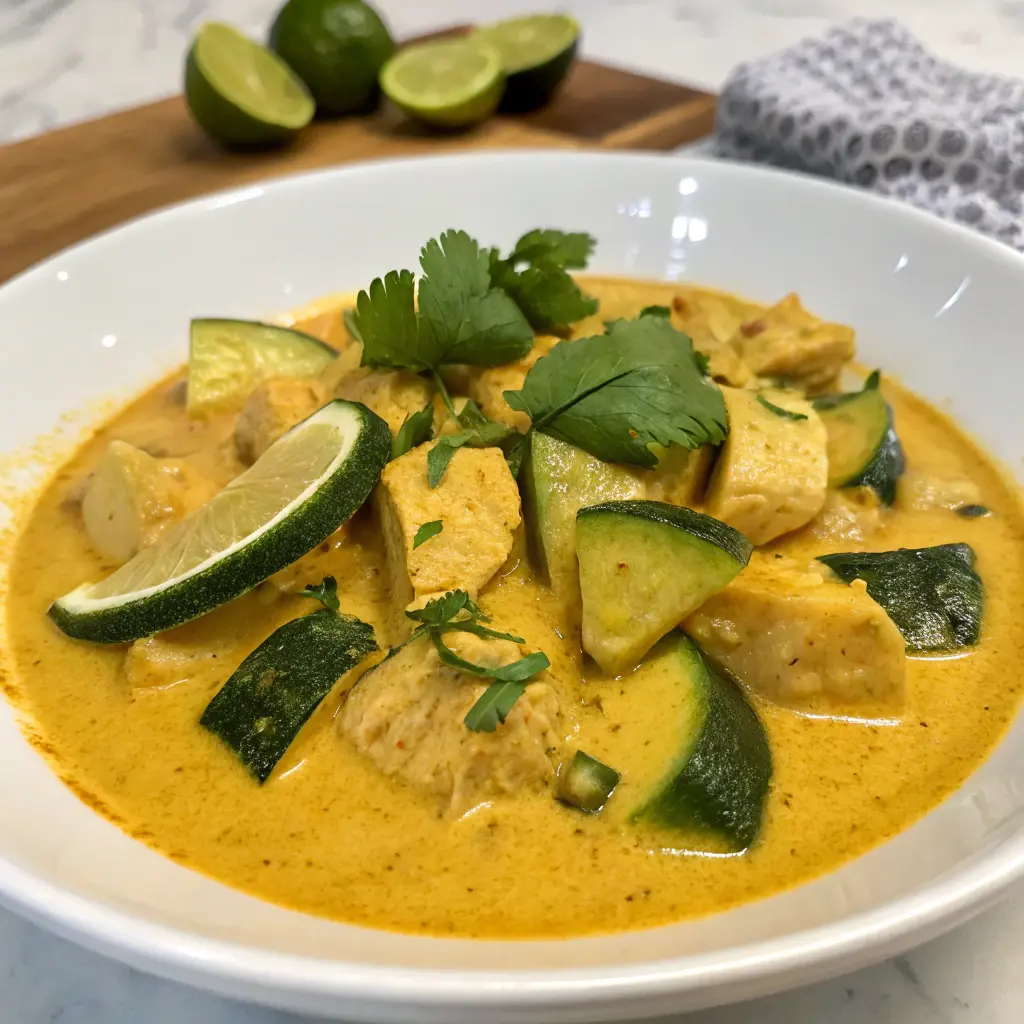
Coconut Chicken and Zucchini Curry is a creamy skillet curry made with chicken, zucchini, coconut milk, aromatics, and curry seasoning. Unlike some heavily spiced curries that rely on a long list of ingredients, this version focuses on a small group of ingredients that work beautifully together.
The coconut milk creates the smooth base of the sauce. Curry powder or curry paste provides warmth and depth, while garlic, ginger, and onion create the aromatic foundation. Zucchini adds a tender vegetable element without overpowering the sauce.
The exact flavor can vary depending on the curry seasoning you choose. Curry powder gives the dish a warm, rounded flavor, while Thai red curry paste creates a more vibrant and chili-forward curry. You can also add lime juice and fresh cilantro at the end to give the sauce a fresh finish.
Why You’ll Love This Coconut Chicken and Zucchini Curry
There are plenty of reasons to put this easy curry on your dinner rotation.
- Easy one-pan preparation: Most of the cooking happens in one large skillet.
- Creamy curry sauce: Coconut milk creates a smooth and luxurious texture.
- Tender chicken: Bite-sized pieces cook quickly and absorb the curry sauce.
- Fresh zucchini: Zucchini cooks directly in the curry and adds a pleasant contrast.
- Flexible seasoning: Make it mild, medium, or spicy.
- Simple ingredients: Most items are easy to find at a regular grocery store.
- Great for weeknights: The recipe does not require complicated cooking techniques.
- Easy to customize: Add bell peppers, spinach, mushrooms, green beans, or carrots.
- Excellent with rice: The creamy sauce is perfect for spooning over fluffy rice.
- Great leftovers: The flavors become even more blended after resting.
The biggest secret is not to rush the process. Sautéing the aromatics properly and giving the curry seasoning a little time in the pan before adding the coconut milk creates a much more flavorful sauce.
Ingredients You’ll Need
- 1 ½ pounds boneless, skinless chicken thighs or chicken breasts, cut into bite-sized pieces
- 2 medium zucchini, sliced into ½-inch half-moons
- 1 can (13.5–14 oz) full-fat coconut milk
- 1 medium yellow onion, finely diced
- 3–4 garlic cloves, minced
- 1 tablespoon fresh ginger, grated
- 1 ½–2 tablespoons curry powder or curry paste, adjusted to taste
- 1–2 tablespoons neutral cooking oil
- 1 tablespoon fresh lime juice, plus extra for serving
- ¼ cup fresh cilantro, chopped
- 1 teaspoon salt, or to taste
- ½ teaspoon black pepper
- ¼ teaspoon red pepper flakes, optional
- ½ cup chicken broth or water, only if needed to adjust the sauce
Optional Garnishes
- Fresh cilantro
- Sliced green onions
- Fresh red chili
- Lime wedges
- Toasted cashews
- Roasted peanuts
- Fresh Thai basil
- Toasted coconut flakes
Kitchen Equipment
You only need a few basic pieces of equipment.
- Large skillet or sauté pan
- Sharp chef’s knife
- Cutting board
- Wooden spoon or spatula
- Measuring spoons
- Measuring cup
- Small bowl for preparing seasonings
- Food thermometer
A large skillet is preferable because it gives the chicken enough room to brown instead of steam.
Step-by-Step Instructions
Step 1: Prepare the Chicken
Pat the chicken pieces dry with paper towels.
Season them lightly with salt and black pepper.
If you are using chicken breasts, avoid cutting the pieces too small because they can cook quickly and become dry.
If using chicken thighs, cut away any large pieces of excess fat before cutting the meat into bite-sized chunks.
Set the seasoned chicken aside while you prepare the skillet.
Step 2: Heat the Skillet
Place a large skillet over medium-high heat.
Add the cooking oil and allow it to heat for a few seconds.
The pan should be hot enough for the chicken to begin browning when it touches the surface.
Avoid adding too much chicken at once. Overcrowding the pan traps steam and makes it harder to achieve good browning.
Step 3: Brown the Chicken
Add the chicken pieces in a single layer.
Cook for several minutes, turning occasionally, until the outside develops light golden-brown color.
You do not need to completely cook the chicken at this stage. The goal is primarily to develop color and flavor.
Once browned, transfer the chicken to a clean plate.
Do not worry if there are small browned bits left in the bottom of the pan. Those bits will become part of the curry sauce.
Step 4: Cook the Onion
Reduce the heat to medium.
Add the diced onion to the same skillet.
Cook for about 3 to 4 minutes, stirring occasionally, until the onion begins to soften.
If the pan looks dry, add a small splash of oil.
Scrape the bottom gently with a wooden spoon to loosen any browned pieces.
Step 5: Add Garlic and Ginger
Add the minced garlic and grated ginger.
Stir continuously for about 30 seconds to 1 minute.
You should notice a strong, fragrant aroma.
Do not let the garlic become dark brown because burnt garlic can make the entire curry taste bitter.
Step 6: Add the Curry Seasoning
Add the curry powder or curry paste.
Stir it into the onion, garlic, and ginger.
Cook for about 30 seconds to 1 minute.
This short step allows the seasoning to blend with the oil and aromatics, creating a deeper aroma before the coconut milk is added.
If using curry paste, make sure it is fully broken up and evenly distributed throughout the pan.
Step 7: Add the Coconut Milk
Pour in the coconut milk.
Stir thoroughly.
Use your spoon to scrape the bottom of the skillet so the browned chicken bits and curry seasoning become part of the sauce.
The mixture should quickly turn into a creamy, fragrant curry base.
Bring the sauce to a gentle simmer.
Avoid aggressively boiling the coconut milk.
Step 8: Return the Chicken
Return the browned chicken and any juices from the plate to the skillet.
Stir well so each piece becomes coated in the coconut curry sauce.
Allow the chicken to simmer gently.
The exact cooking time depends on the size of your chicken pieces and whether you use breasts or thighs.
Step 9: Add the Zucchini
When the chicken is nearly cooked, add the sliced zucchini.
Stir gently.
Cook until the zucchini becomes tender but still has some structure.
Adding zucchini too early is one of the easiest ways to end up with soft, mushy pieces. Because zucchini cooks quickly, it is better added later in the process.
For tender-crisp zucchini, keep the simmer relatively gentle and monitor it closely.
Step 10: Adjust the Sauce
Taste the curry.
If the sauce is too thin, allow it to simmer uncovered for a few minutes.
If the sauce is too thick, add a small splash of water or broth.
If the curry needs more flavor, add a little extra curry powder or curry paste.
If it tastes rich but slightly flat, add a squeeze of fresh lime juice.
Season gradually rather than adding a large amount of salt at once.
Step 11: Finish With Lime and Cilantro
Turn off the heat.
Add fresh lime juice and chopped cilantro.
Stir gently.
Taste once more.
You can add:
- More lime for brightness
- More salt for savory depth
- More chili for heat
- More coconut milk for a softer flavor
- More curry paste for stronger spice
The final curry should taste balanced rather than dominated by a single ingredient.
Expert Tips for the Best Coconut Chicken and Zucchini Curry
Brown the Chicken First
Browning the chicken gives the curry a deeper flavor than simply simmering raw chicken in coconut milk.
You do not need a dark crust. A light golden color is enough.
Cook the Aromatics Properly
Onion, garlic, and ginger create the foundation of the sauce.
Give the onion enough time to soften before adding the garlic and ginger.
Garlic needs much less cooking time than onion, so add it later.
Bloom the Curry Seasoning
Do not simply pour curry powder into the coconut milk.
Cooking curry powder or curry paste briefly with the aromatics helps release its aroma and gives the sauce a more developed flavor.
Add Zucchini Toward the End
This is one of the most important tips.
Zucchini contains plenty of moisture and cooks quickly. Adding it too early can make the pieces overly soft and can also loosen the curry sauce.
Use Fresh Lime at the End
Lime juice is best added after cooking.
The bright acidity cuts through the creamy coconut sauce and gives the finished dish a fresher flavor.
Common Mistakes to Avoid
1. Overcrowding the Pan
Too much chicken at once can cause steaming instead of browning.
Fix: Cook in batches if necessary.
2. Burning the Garlic
Garlic can go from fragrant to bitter very quickly.
Fix: Cook it briefly over medium heat.
3. Adding Too Much Curry Paste
Different brands vary considerably in intensity.
Fix: Start with a smaller amount and increase after tasting.
4. Overcooking the Zucchini
Mushy zucchini can change the texture of the entire curry.
Fix: Add it near the end.
5. Making the Sauce Too Thin
Coconut milk combined with moisture from zucchini can sometimes produce a thinner sauce than expected.
Fix: Simmer uncovered for several minutes.
6. Making the Sauce Too Thick
A curry that reduces too far can become heavy.
Fix: Add a splash of water, broth, or coconut milk.
7. Forgetting the Lime
A creamy curry often benefits from a bright finishing ingredient.
Fix: Add fresh lime juice just before serving.
8. Cutting Chicken Unevenly
Large pieces and tiny pieces will not finish cooking at the same time.
Fix: Aim for similar-sized pieces.
Delicious Variations
Thai-Inspired Coconut Chicken and Zucchini Curry
Use red curry paste instead of standard curry powder.
Add:
- Fish sauce
- Fresh lime
- Thai basil
- Red chili
- Bamboo shoots
Serve with jasmine rice.
Green Coconut Chicken Curry
Use green curry paste and finish with fresh basil and lime.
Add sliced bell pepper or green beans for extra color.
Indian-Inspired Coconut Chicken Curry
Use curry powder with:
- Ground cumin
- Ground coriander
- Turmeric
- Garam masala
- Fresh ginger
- Garlic
This version has a warmer, more spice-forward character.
Spicy Coconut Chicken Curry
For more heat, add:
- Fresh red chili
- Crushed red pepper flakes
- Cayenne pepper
- Extra curry paste
Add the heat gradually.
Mild Coconut Chicken Curry
For a milder family-friendly version:
- Use mild curry powder.
- Reduce or omit fresh chili.
- Use less curry paste.
- Add a little extra coconut milk if necessary.
Best Toppings and Garnishes
The right garnish can make a simple skillet curry look restaurant-worthy.
Try:
- Fresh cilantro
- Thai basil
- Sliced green onions
- Fresh red chili
- Lime wedges
- Toasted cashews
- Roasted peanuts
- Sesame seeds
- Toasted coconut flakes
- Lime zest
For a colorful presentation, spoon the curry over rice and finish with chopped cilantro, sliced chili, and a lime wedge.
What to Serve With Coconut Chicken and Zucchini Curry
Jasmine Rice
Jasmine rice is one of the best choices for this curry.
Its fragrant aroma works beautifully with coconut milk and curry seasoning, while the grains soak up the sauce.
Basmati Rice
Basmati rice gives the dish a slightly different character.
The long grains remain distinct and make an excellent base for a rich curry sauce.
Coconut Rice
For an extra coconut-forward meal, serve the curry with coconut rice.
The combination creates a particularly creamy and aromatic dinner.
Naan or Flatbread
Warm naan or another flatbread is ideal for scooping up the curry sauce.
You can also use roti or a simple homemade flatbread.
Rice Noodles
Rice noodles are a good alternative when you want something different from traditional rice.
Toss them with a little of the curry sauce before serving.
Fresh Cucumber Salad
A simple cucumber salad provides a cool, crisp contrast to the warm curry.
Try cucumber, lime juice, cilantro, and a little sliced chili.
How to Store Coconut Chicken and Zucchini Curry
If you have leftovers, let the curry cool appropriately before transferring it to a clean airtight container.
Refrigerate promptly.
According to USDA guidance, cooked chicken leftovers can generally be kept refrigerated for 3 to 4 days.
The zucchini may soften slightly after sitting in the sauce, but the curry will still be delicious.
Store the rice separately when possible. This makes reheating easier and helps preserve the texture of both the curry and rice.
How to Reheat on the Stove
Place the desired amount of curry in a saucepan.
Heat over medium-low heat.
Stir occasionally.
If the sauce has become very thick, add a splash of water or coconut milk.
Continue heating until the curry is thoroughly hot.
How to Reheat in the Microwave
Place one serving in a microwave-safe bowl.
Cover loosely.
Heat in short intervals, stirring between each interval.
This helps distribute the heat more evenly and prevents the sauce from becoming excessively hot around the edges.
Can You Freeze Coconut Chicken and Zucchini Curry?
Yes, you can freeze the finished curry.
However, zucchini can become softer after freezing and thawing.
If you already know that you will freeze some of the curry, consider cooking the zucchini just until tender rather than very soft.
Freezing Instructions
- Allow the cooked curry to cool appropriately.
- Divide it into convenient portions.
- Place each portion in a freezer-safe airtight container.
- Leave a little room for expansion.
- Label the container with the date.
- Freeze.
For the best texture, use frozen portions within a reasonable period rather than storing them indefinitely.
How to Thaw
The easiest method is to transfer the frozen curry to the refrigerator and allow it to thaw gradually.
You can then reheat it gently on the stovetop.
If the sauce separates slightly after freezing, stir it thoroughly while reheating.
Make-Ahead Tips
This coconut chicken curry is easy to prepare in advance.
You can do most of the preparation earlier in the day.
Prepare the ingredients ahead
- Cut the chicken.
- Slice the zucchini.
- Dice the onion.
- Mince the garlic.
- Grate the ginger.
- Measure the curry seasoning.
- Chop the cilantro.
- Cut the lime.
Keep the ingredients properly refrigerated until you are ready to cook.
Make the curry ahead
You can cook the entire curry in advance and gently reheat it before serving.
For the best zucchini texture, another option is to prepare the curry sauce and chicken ahead, then add freshly cut zucchini while reheating.
This keeps the zucchini firmer and fresher.
Frequently Asked Questions
Can I use chicken breast instead of chicken thighs?
Absolutely.
Chicken breast works very well in this coconut chicken and zucchini curry. Cut it into evenly sized pieces and avoid cooking it longer than necessary.
Can I use frozen zucchini?
Yes, although fresh zucchini generally gives you better texture.
Frozen zucchini can release more moisture, so you may need to simmer the curry uncovered for a little longer.
Can I make this curry without curry paste?
Yes.
Curry powder is an easy substitute.
You can also create your own blend with curry powder, cumin, coriander, turmeric, black pepper, and a little chili powder.
How do I make coconut chicken curry thicker?
The easiest method is to simmer the curry uncovered.
As some of the liquid evaporates, the sauce becomes thicker.
You can also use less broth or water from the beginning.
Can I make this curry spicy?
Yes.
Add fresh chili, red pepper flakes, cayenne, or extra curry paste.
Start with a small amount because you can always add more heat later.
Serving Suggestions
For an inviting presentation, spoon a generous portion of Coconut Chicken and Zucchini Curry over freshly cooked jasmine or basmati rice.
Add a few pieces of zucchini to the top so the vegetables are visible.
Finish with chopped cilantro, sliced green onion, and a lime wedge.
If you enjoy spicy food, add thin slices of fresh red chili.
For extra texture, sprinkle toasted cashews or peanuts over each serving.
Serve immediately while the sauce is warm and creamy.
These small details make a noticeable difference.
Conclusion
Coconut Chicken and Zucchini Curry is the kind of dinner that delivers plenty of flavor without making the cooking process complicated. Tender chicken, fresh zucchini, creamy coconut milk, fragrant garlic and ginger, and your favorite curry seasoning come together in one skillet to create a comforting homemade meal.