
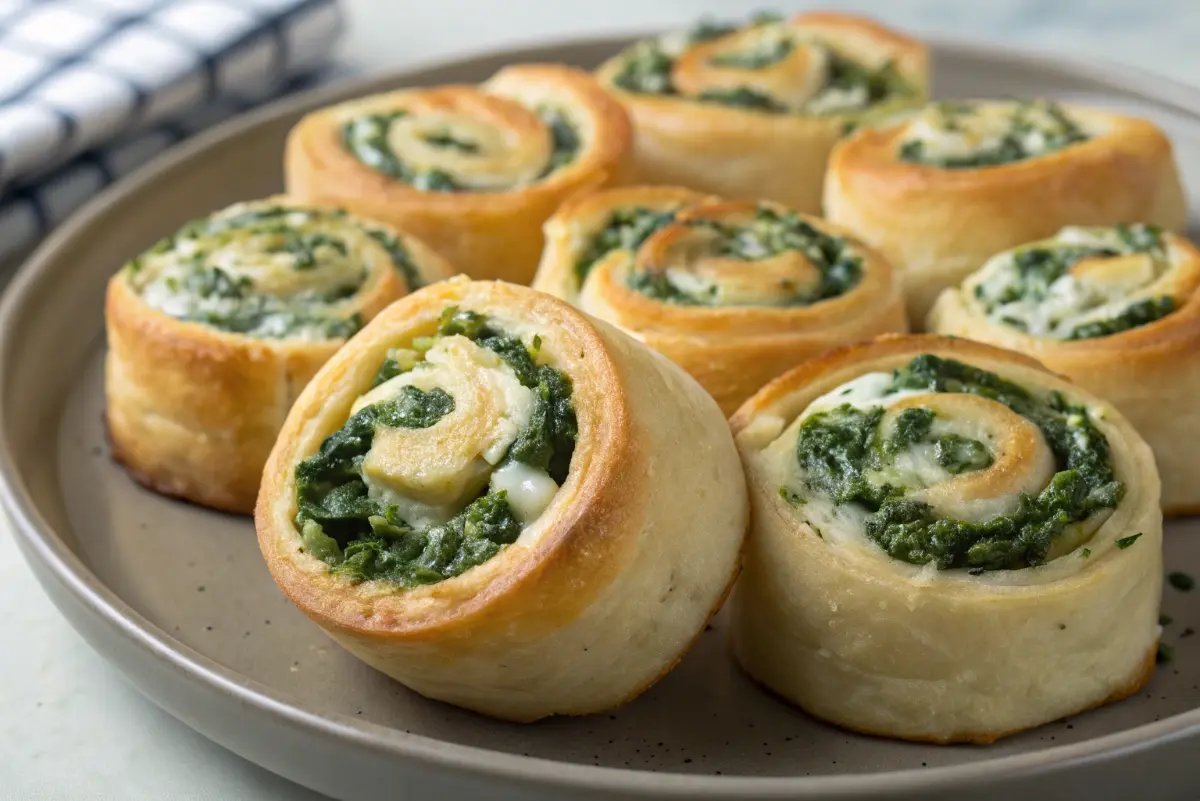
Why You’ll Love This Spinach and Ricotta Rolls Recipe
There are plenty of reasons to make these spinach ricotta rolls at home.
- Easy ingredients: You only need a handful of everyday ingredients.
- Simple preparation: The filling comes together quickly.
- Flaky pastry: Puff pastry creates a crisp, golden exterior.
- Creamy filling: Ricotta gives the center a soft, rich texture.
- Flexible recipe: Fresh or frozen spinach can be used.
- Easy to customize: Add Parmesan, feta, herbs, spices, or extra garlic.
- Great for entertaining: Cut them into small pieces for parties.
- Make-ahead friendly: Assemble the rolls before baking.
- Freezer friendly: You can prepare extra rolls for another day.
- Easy to reheat: An oven or air fryer helps restore the crisp pastry.
The contrast between the flaky pastry and creamy filling makes these rolls particularly satisfying. They also look impressive on a serving platter without requiring complicated pastry techniques.
What Are Spinach and Ricotta Rolls?
Spinach and ricotta rolls are savory pastry rolls made by wrapping a seasoned spinach and ricotta filling inside puff pastry or another type of pastry.
They are similar in shape and presentation to vegetarian sausage rolls. Instead of a meat-based filling, however, the center contains a mixture of spinach, ricotta, cheese, aromatics, and seasonings.
The basic idea is wonderfully simple:
- Prepare the spinach.
- Mix it with ricotta and seasonings.
- Place the filling onto pastry.
- Roll the pastry around the filling.
- Cut the long rolls into smaller pieces.
- Brush with egg wash.
- Bake until golden and crisp.
This makes them ideal for both beginner bakers and experienced home cooks.
Ingredients for Spinach and Ricotta Rolls Recipe
- 2 sheets puff pastry, thawed
- 10 oz (280 g) frozen spinach, thawed and squeezed very dry
- 1 cup (250 g) ricotta cheese
- ½ cup (50 g) grated Parmesan cheese
- 1 small onion, finely chopped
- 2 cloves garlic, minced
- 1 egg, beaten
- ½ tsp salt
- ¼ tsp black pepper
- ¼ tsp ground nutmeg
- 1 tbsp olive oil
- 1 egg, beaten, for egg wash
- 1 tbsp sesame seeds, optional
- 1 tbsp chopped fresh parsley, optional
How to Make Spinach and Ricotta Rolls Recipe
Step 1: Prepare the Oven
Preheat your oven before assembling the rolls.
A hot oven helps the puff pastry rise properly and become golden and crisp.
For this recipe, preheat to approximately 200°C / 400°F, adjusting slightly according to your oven and the pastry package instructions.
Line a baking tray with parchment paper.
If you’re using a fan-forced oven, you may need to reduce the temperature slightly.
Step 2: Prepare the Spinach
If you’re using frozen spinach, thaw it completely and squeeze away the excess liquid.
If you’re using fresh spinach, cook it in a pan until wilted.
Don’t add hot spinach directly to the ricotta. Allow it to cool first.
Warm spinach can soften the ricotta mixture and make the filling more difficult to work with.
Step 3: Cook the Onion and Garlic
Heat a small amount of olive oil in a skillet.
Add the finely chopped onion and cook until softened.
Add minced garlic and cook briefly.
You don’t need to brown the garlic heavily. The goal is simply to release its aroma.
Remove the pan from the heat and allow the mixture to cool.
Step 4: Make the Ricotta Filling
Place the drained spinach in a large bowl.
Add:
- Ricotta
- Cooked onion
- Garlic
- Parmesan
- Beaten egg
- Salt
- Black pepper
- Optional nutmeg
Mix everything until evenly combined.
The mixture should be creamy but thick enough to hold its shape.
If the filling looks loose or watery, don’t add it to the pastry yet. Drain additional moisture from the spinach or ricotta first.
Step 5: Prepare the Puff Pastry
Place the thawed puff pastry onto a clean work surface.
Depending on the size of your pastry sheets, cut each sheet into long rectangles.
You want the pieces large enough to hold a strip of filling while still leaving enough pastry around the filling to seal the roll.
Keep unused pastry refrigerated while you work.
If the pastry becomes sticky or difficult to handle, return it to the refrigerator for several minutes.
Step 6: Add the Filling
Place a line of spinach and ricotta filling along one side of each pastry rectangle.
Don’t spread the filling all the way to the edges.
Leave enough space to seal the pastry.
Avoid adding too much filling. It can be tempting to make the rolls extra thick, but overfilling makes them harder to close and increases the chance of the filling escaping during baking.
Step 7: Roll the Pastry
Carefully roll the pastry around the filling.
Bring the pastry over the filling and continue rolling until you have a long cylinder.
Seal the edge by lightly brushing it with beaten egg or water.
Place the roll seam-side down on the prepared baking tray.
Repeat with the remaining pastry and filling.
Step 8: Chill the Rolls
For cleaner slices and better pastry handling, place the assembled rolls in the refrigerator for a short period before cutting.
Chilling also makes the pastry firmer.
This is especially helpful if the kitchen is warm or the pastry has become soft during assembly.
Step 9: Cut Into Individual Rolls
Use a sharp knife to cut each long roll into smaller pieces.
You can make them:
- Bite-sized for parties
- Medium-sized for lunch
- Larger for a more substantial serving
For appetizers, smaller pieces are usually easier to serve.
Step 10: Apply the Egg Wash
Arrange the rolls on the baking tray with space between each piece.
Brush the tops lightly with beaten egg.
Don’t completely soak the pastry. A thin, even layer is enough.
For an attractive finish, sprinkle the tops with sesame seeds, poppy seeds, or Parmesan.
Step 11: Bake Until Golden
Place the tray into the preheated oven.
Bake until the pastry has puffed and turned a deep golden brown.
Depending on the size of your rolls and your oven, this usually takes around 25–30 minutes.
Established versions of this recipe commonly use baking times in this range, with the rolls finished when the pastry is browned and crisp.
Avoid removing them while the pastry is still pale.
The deeper golden color generally gives you a more appealing crisp exterior.
Step 12: Cool Slightly Before Serving
Remove the tray from the oven and let the rolls sit for a few minutes.
The filling will be very hot immediately after baking.
Transfer the rolls to a serving platter and serve warm.
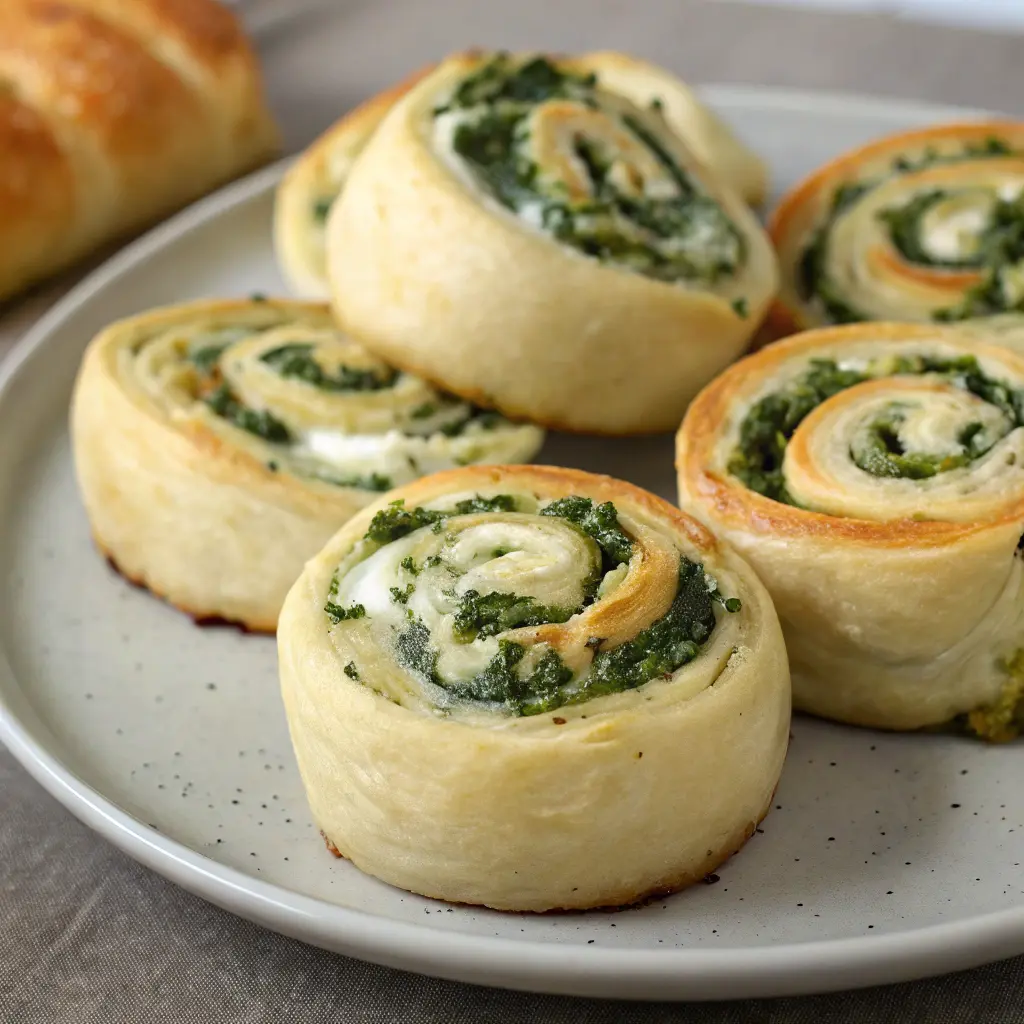
How to Get Crispy, Golden Spinach and Ricotta Rolls
The secret to excellent spinach ricotta pastry rolls isn’t complicated. Most of the important details come down to moisture, temperature, and pastry handling.
1. Squeeze the Spinach Thoroughly
This is perhaps the most important step.
Spinach contains a surprising amount of water, especially after thawing or cooking.
If you leave that liquid in the filling, it can make the pastry soft instead of crisp.
2. Don’t Use Overly Wet Ricotta
Some ricotta is naturally wetter than others.
If yours contains a lot of liquid, let it drain before adding it to the bowl.
3. Keep the Pastry Cold
Puff pastry works best when it stays cool.
If it becomes warm and floppy:
- Stop assembling.
- Place it in the refrigerator.
- Let it firm up.
- Continue once it’s easier to handle.
4. Don’t Overfill the Rolls
A moderate amount of filling is easier to roll and seal.
Too much filling can cause the pastry to split.
5. Chill Before Baking
A short chill helps the rolls keep their shape.
It also makes cutting much cleaner.
6. Leave Space Between the Rolls
Don’t place every roll directly against the next one.
Give them room for the pastry to expand and brown.
7. Use a Fully Preheated Oven
Avoid placing pastry into an oven that is still warming up.
A properly preheated oven gives the pastry the best opportunity to puff and become crisp.
Common Mistakes to Avoid
Using Wet Spinach
This is the most common problem.
If your spinach is dripping with water, the filling will likely be too loose.
Solution: squeeze it thoroughly before mixing.
Adding Hot Spinach to Ricotta
Hot ingredients can make the filling soft.
Solution: allow cooked spinach and onions to cool before mixing.
Overfilling the Pastry
Large amounts of filling can force the pastry open.
Solution: use a neat, moderate strip of filling.
Letting the Pastry Get Too Warm
Warm puff pastry can become sticky.
Solution: work in batches and refrigerate the pastry whenever necessary.
Skipping the Egg Wash
The rolls can still bake without egg wash, but they won’t have the same glossy golden finish.
Solution: brush the tops lightly before baking.
Crowding the Baking Tray
Crowded pastry pieces may not brown evenly.
Solution: leave a little space around every roll.
Baking Until Pale
Puff pastry should look properly golden rather than lightly beige.
Solution: give the rolls enough time to puff and brown.
Cutting With a Dull Knife
A dull knife can squash the pastry.
Solution: use a sharp knife and make confident cuts.
Spinach and Ricotta Rolls Variations
One of the best things about this recipe is how easy it is to customize.
Spinach, Ricotta and Feta Rolls
Add crumbled feta to the filling.
Feta gives the rolls a more pronounced savory flavor and works beautifully with spinach.
Spinach and Ricotta Parmesan Rolls
Add extra Parmesan to the filling.
You can also sprinkle Parmesan over the egg-washed pastry before baking.
Garlic Spinach and Ricotta Rolls
For stronger garlic flavor, add an extra clove of minced garlic.
Roasted garlic can also be used for a softer, sweeter flavor.
Spinach and Ricotta Rolls With Herbs
Fresh herbs can completely change the character of the filling.
Try:
- Parsley
- Basil
- Dill
- Thyme
- Rosemary
- Oregano
Spinach Ricotta Rolls With Lemon Zest
A small amount of finely grated lemon zest adds a fresh, bright note to the creamy filling.
Spinach, Ricotta and Mozzarella Rolls
Mozzarella creates a softer, stretchy cheese element.
For the best texture, use it alongside ricotta rather than replacing all of the ricotta.
Can You Make Spinach and Ricotta Rolls With Filo Pastry?
Yes.
Filo pastry creates a different texture from puff pastry.
Instead of a thick, flaky shell, filo gives you multiple delicate, crisp layers.
To make a filo version:
- Lay out one sheet of filo.
- Brush lightly with melted butter or oil.
- Add another sheet.
- Repeat for several layers.
- Add the spinach and ricotta filling.
- Roll carefully.
- Place seam-side down.
- Brush the outside.
- Bake until crisp and golden.
Work quickly with filo because it can dry out when exposed to air.
Keep the filling relatively firm and avoid overfilling the pastry.
What to Serve With Spinach and Ricotta Rolls Recipe
These rolls can be served on their own, but a dipping sauce makes them even more fun.
Tomato Relish
A sweet and tangy tomato relish pairs beautifully with the creamy filling.
Marinara Sauce
Warm marinara provides a classic tomato contrast.
Tomato Chutney
For a stronger sweet-savory combination, serve the rolls with tomato chutney.
Sweet Chili Sauce
Sweet chili sauce adds sweetness and gentle heat.
Garlic Dip
A creamy garlic dip complements the spinach, ricotta, and pastry.
Herbed Yogurt Dip
Mix plain yogurt with fresh herbs, lemon zest, garlic, and black pepper for a cool dipping sauce.
Simple Salad
For lunch or brunch, serve the rolls alongside a simple green salad.
Soup
They also pair nicely with:
- Tomato soup
- Vegetable soup
- Creamy mushroom soup
- Onion soup
The crisp pastry makes a great accompaniment to a warm bowl of soup.
How to Store Spinach and Ricotta Rolls Recipe
Allow leftover rolls to cool before placing them into a suitable airtight container.
For best texture, avoid trapping excess steam while the pastry is still extremely hot.
Store them in the refrigerator and reheat them in an oven or air fryer when possible.
The USDA recommends refrigerating leftovers promptly and generally using refrigerated leftovers within 3–4 days.
Best Reheating Method
The oven is usually the best option for maintaining crisp pastry.
Place the rolls on a baking tray and warm them until heated through and the exterior becomes crisp again.
An air fryer also works very well for smaller portions.
Can You Microwave Them?
You can, but the pastry will generally become softer.
If crisp pastry is important, choose an oven or air fryer instead.
Can You Freeze Spinach and Ricotta Rolls?
Yes. These rolls are convenient to freeze, especially if you’re preparing them for a future gathering.
Freezing Before Baking
For the best make-ahead option:
- Assemble the rolls.
- Cut them into portions.
- Place them on a lined tray.
- Freeze them until firm.
- Transfer them to a suitable freezer container.
- Label the container with the date.
- Bake when needed.
This method allows you to prepare the rolls well in advance.
Freezing After Baking
You can also freeze baked rolls.
Allow them to cool completely first.
Place them in a freezer-safe container with parchment between layers if necessary.
Reheating Frozen Rolls
For the best pastry texture, reheat frozen rolls in the oven or air fryer.
They may need additional cooking time compared with refrigerated rolls.
The USDA notes that frozen leftovers can generally be kept for longer periods, although quality can decline over time.
Make-Ahead Spinach and Ricotta Rolls
These rolls are especially useful when you’re entertaining because much of the work can be completed before guests arrive.
Option 1: Prepare the Filling Ahead
Make the spinach and ricotta mixture earlier in the day.
Cover and refrigerate it until you’re ready to assemble the rolls.
Option 2: Assemble the Rolls Ahead
Prepare the complete rolls and keep them chilled until baking time.
This works particularly well for parties and family gatherings.
Option 3: Freeze for Later
Prepare a larger batch and freeze some for another occasion.
When you want freshly baked rolls, simply cook the prepared portions according to your preferred method.
Frequently Asked Questions
What Are Spinach and Ricotta Rolls Made Of?
Spinach and ricotta rolls are typically made with spinach, ricotta cheese, puff pastry, egg, and seasonings. Many versions also include onion, garlic, Parmesan, feta, herbs, or spices. The filling is wrapped in pastry and baked until golden.
Can I Use Frozen Spinach for Spinach and Ricotta Rolls?
Absolutely. Frozen chopped spinach is one of the easiest options for this recipe. Thaw it completely and squeeze out as much liquid as possible before combining it with the ricotta.
Can You Freeze Spinach and Ricotta Rolls?
Yes. You can freeze them either before or after baking. For convenience, prepare and portion unbaked rolls, freeze them until firm, then transfer them to a suitable freezer container.
Can I Make Spinach and Ricotta Rolls Ahead of Time?
Yes.
You can prepare the filling in advance, assemble the rolls ahead of time, or freeze a batch for later.
For entertaining, assembling the rolls several hours before baking can save valuable preparation time.
Can I Use Puff Pastry Instead of Filo Pastry?
Yes. Puff pastry is one of the most popular choices for this style of roll.
Puff pastry produces a thicker, flaky exterior, while filo pastry creates a lighter, delicate crunch.
Can I Make Spinach and Ricotta Rolls in an Air Fryer?
Yes.
Arrange the rolls in a single layer and avoid overcrowding the basket. Cook until the pastry is puffed and golden, checking them during the final few minutes because air fryer temperatures and cooking times vary.
Final Thoughts
This Spinach and Ricotta Rolls Recipe proves that impressive homemade appetizers don’t need to be complicated. With flaky puff pastry, creamy ricotta, savory spinach, garlic, onion, and a few simple seasonings, you can create golden rolls that are perfect for almost any occasion.