
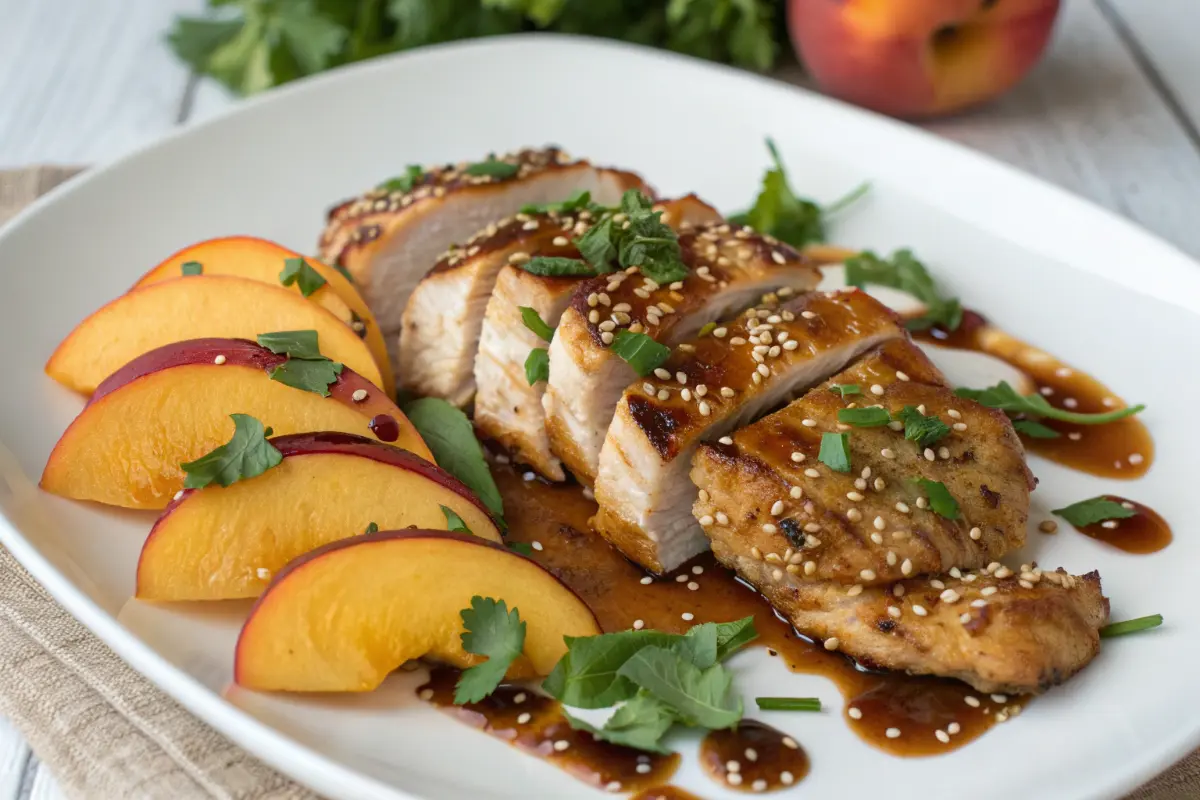
Why You’ll Love This Teriyaki Chicken Recipe
There are plenty of reasons to put this peach teriyaki chicken recipe on the dinner rotation.
- Sweet and savory: The teriyaki glaze brings salty, savory depth while the peaches add natural sweetness.
- Fresh and vibrant: Ginger, lime, scallions and fresh peaches keep the dish from feeling heavy.
- Easy to customize: Use chicken breasts or thighs, cook on the grill or stovetop, and adjust the heat of the sesame drench.
- Weeknight friendly: The chicken can marinate ahead of time, while the peach mixture and sauce come together quickly.
- Perfect for summer: Fresh peaches are especially appealing when they’re ripe, fragrant and readily available.
- Great for serving bowls: Rice creates a simple base for the chicken, sauce, peaches and vegetables.
The key is contrast. You don’t want every part of the plate to taste the same. The chicken is deeply savory, the peaches are fresh and juicy, and the sesame drench is rich and aromatic. Together, they create a more layered dish than ordinary teriyaki chicken.
What Is Teriyaki Chicken with Ginger Peaches and Sesame Drench?
At its heart, this is a three-part dish: teriyaki chicken, ginger peaches and a creamy-style savory sesame drench.
The chicken is marinated in teriyaki sauce with garlic before being cooked until tender and beautifully browned. The marinade gives the chicken a sweet-savory coating and helps create those caramelized edges that make teriyaki so appealing.
The peaches are prepared separately. Fresh peach pieces are combined with ginger, lime juice, scallions or cilantro and a touch of seasoning. Instead of cooking them into a thick sauce, they remain fresh and juicy, giving the finished dish a texture similar to a loose peach salsa.
The final component is the sesame drench. Soy sauce, toasted sesame oil, brown sugar and chili crisp create a bold sauce that can be spooned over the chicken and rice.
The three components are deliberately different:
- Teriyaki chicken provides richness and caramelization.
- Ginger peaches provide freshness, acidity and juicy texture.
- Sesame drench adds nutty, savory depth.
- Rice absorbs the flavorful sauces and juices.
- Green vegetables add another texture and a fresh finish.
Ingredients You’ll Need
For the Teriyaki Chicken
- 1 lb (450 g) boneless, skinless chicken breasts
- ½ cup teriyaki sauce
- 2 cloves garlic, minced
- 1 tablespoon avocado oil or neutral cooking oil
For the Ginger Peaches
- 2 ripe but firm peaches, diced
- 1 tablespoon fresh ginger, finely grated
- 1 tablespoon fresh lime juice
- 2 scallions, thinly sliced
- 2 tablespoons fresh cilantro, chopped
- 1 teaspoon granulated sugar
- ¼ teaspoon salt
For the Sesame Drench
- ¼ cup reduced-sodium soy sauce
- 1 tablespoon toasted sesame oil
- 1 tablespoon brown sugar
- 1–2 tablespoons chili crisp, to taste
- 2 tablespoons water
For Serving
- 2–3 cups cooked jasmine or white rice
- 1–2 cups steamed green beans or broccoli
- Extra sliced scallions
- Sesame seeds
- Fresh cilantro
- Extra chili crisp, optional
How to Make Teriyaki Chicken with Ginger Peaches and Sesame Drench
Step 1: Prepare the Chicken
Start by trimming the chicken breasts and removing any unwanted pieces of fat or connective tissue.
For thicker breasts, slice them horizontally to create thinner portions. You can also gently pound them to an even thickness.
This small step makes a significant difference. Thin, evenly sized pieces cook more consistently and develop more browned surface area.
Place the chicken in a bowl or resealable container.
Add the teriyaki sauce and minced or grated garlic. Turn the chicken several times so every piece is coated.
For the best flavor, let the chicken marinate in the refrigerator for several hours. If you’re short on time, even a shorter marinade can still give the chicken a noticeable teriyaki flavor.
Don’t leave the chicken sitting at room temperature while it marinates.
Step 2: Prepare the Rice
While the chicken marinates, cook your rice according to the package instructions.
Jasmine rice is an excellent choice, but almost any plain rice will work.
The goal isn’t to make the rice complicated. You want something relatively neutral that can soak up the teriyaki juices, peach juices and sesame sauce.
Keep the cooked rice covered until you’re ready to assemble the bowls.
Step 3: Make the Sesame Drench
In a small bowl, whisk together:
- Soy sauce
- Toasted sesame oil
- Brown sugar
- Chili crisp
- Water
Taste the mixture and adjust the balance.
If it tastes too salty, add a little more water. If you want more sweetness, add a small amount of brown sugar. For more heat, increase the chili crisp.
The finished sauce should be pourable. You don’t want it so thick that it sits in one place on the chicken.
Set the sesame drench aside while you prepare the peaches.
Step 4: Make the Ginger Peaches
Wash the peaches and cut them into small, bite-sized pieces.
Add them to a bowl with grated fresh ginger, lime juice, chopped scallions and cilantro.
Add a small amount of sugar and salt, then toss gently.
Don’t stir aggressively. Ripe peaches can break apart easily, and the goal is to keep recognizable pieces of fruit in the mixture.
Let the peaches sit for a few minutes.
As they rest, their juices combine with the lime and ginger, creating a naturally flavorful dressing for the fruit.
If the peaches are particularly tart, a little extra sugar can balance them. If they’re extremely sweet, you may prefer to leave the additional sugar out. seasonal produce guide for peaches
Step 5: Cook the Teriyaki Chicken
Heat a large skillet over medium to medium-high heat and add a small amount of avocado oil.
Remove the chicken from the marinade, allowing excess marinade to drip away.
Place the chicken in the hot skillet without overcrowding the pan.
Cook until the underside develops a deep golden-brown color, then turn the chicken and continue cooking until the thickest part is fully cooked.
The exact cooking time depends on the thickness of the chicken.
For poultry, the USDA recommends a minimum internal temperature of 165°F measured with a food thermometer.
Avoid relying solely on color to determine whether chicken is done. A thermometer gives you a much more reliable measurement.
Once cooked, transfer the chicken to a plate and allow it to rest briefly before slicing.
Step 6: Grill the Chicken Instead
If you prefer grilled teriyaki chicken, preheat your grill and lightly oil the grates.
Remove excess marinade from the chicken before placing it on the grill.
Cook the chicken over medium heat, turning when the first side has developed attractive grill marks.
Teriyaki sauce contains sweet ingredients, so extremely high heat can cause the outside of the chicken to darken too quickly.
A moderate temperature gives you more control and allows the chicken to develop caramelized edges without scorching the glaze.
USDA guidance for grilling poultry also recommends using a food thermometer and cooking poultry to 165°F.
Once the chicken reaches the correct temperature, transfer it to a clean plate and let it rest briefly.
Step 7: Assemble the Dish
Now comes the fun part.
Start each serving with a generous scoop of warm rice.
Add sliced teriyaki chicken.
Spoon the ginger peaches over the top or arrange them alongside the chicken.
Drizzle the sesame sauce across the chicken and rice.
Finish with:
- Chopped scallions
- Cilantro
- Sesame seeds
- Extra chili crisp, if desired
Serve immediately.
The combination of warm chicken, hot rice and cool, juicy peaches creates one of the most appealing contrasts in the entire dish.
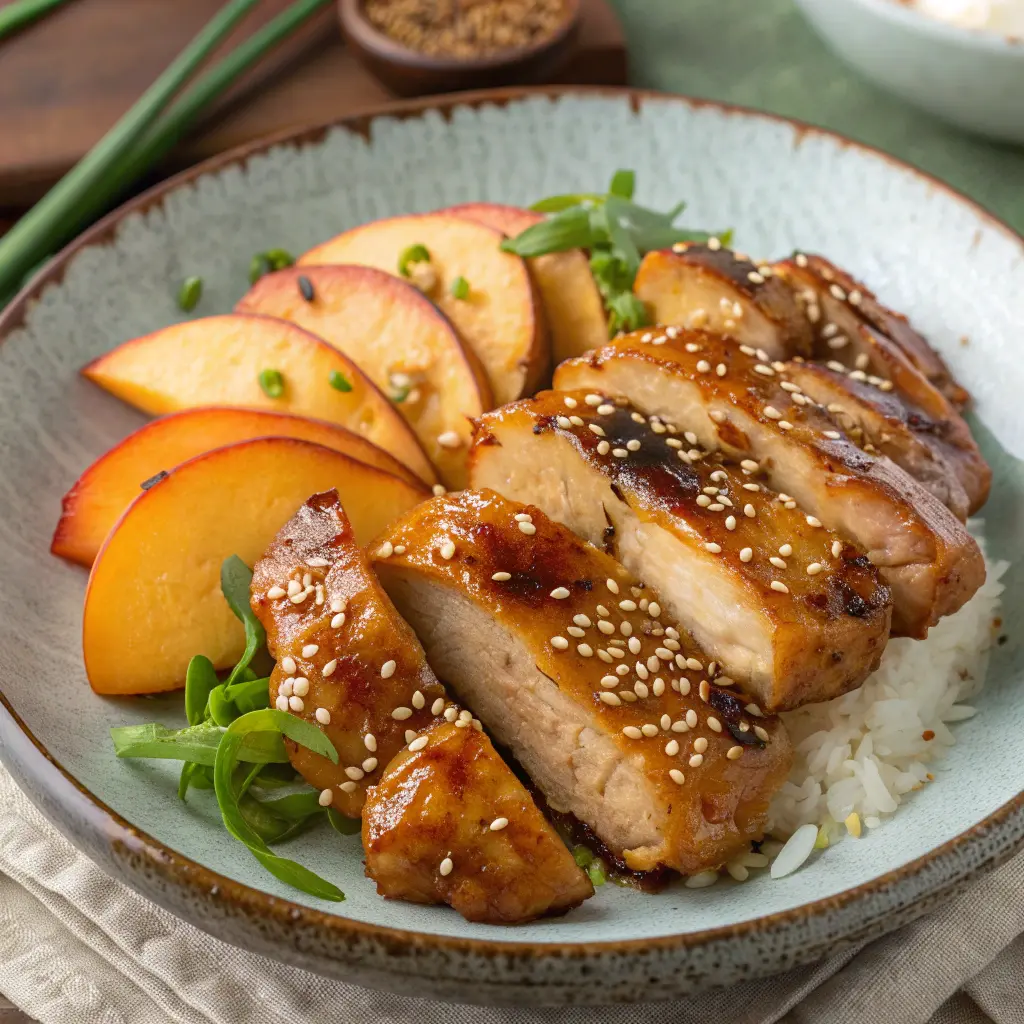
How the Three Main Components Work Together
The success of this ginger peach chicken recipe comes down to balance.
The Teriyaki Chicken
Teriyaki chicken supplies the deep, savory foundation.
The garlic adds aromatic character, while the teriyaki marinade creates sweetness and a glossy exterior as the chicken cooks.
When the chicken is sliced, you get a mixture of browned edges and tender interior with every piece.
The Ginger Peaches
The peaches work almost like a fresh salsa.
Their juicy texture provides contrast against the cooked chicken.
Fresh ginger adds warmth, while lime juice introduces acidity. Scallions provide a mild onion flavor, and cilantro adds another layer of freshness.
This keeps the dish from becoming one-dimensional.
The Sesame Drench
The sesame sauce connects everything.
Toasted sesame oil gives the sauce its unmistakable nutty aroma. Soy sauce contributes savory depth, brown sugar adds sweetness, and chili crisp brings heat.
Because the sauce is spooned over the finished dish rather than used as the only cooking sauce, you can control exactly how much you want.
Why the Combination Works
A good bowl of teriyaki chicken with peaches should have several textures and flavors at once.
You get:
- Tender chicken
- Sticky caramelized edges
- Juicy peaches
- Fragrant ginger
- Nutty sesame
- Soft rice
- Crisp vegetables
- A little heat from chili crisp
That’s what turns a simple chicken dinner into something memorable.
Tips for Making the Best Teriyaki Chicken
Use Ripe but Firm Peaches
The ideal peach should give slightly when pressed but shouldn’t be mushy.
Very firm peaches can taste less juicy, while overly soft peaches can collapse during mixing.
Don’t Skip Fresh Ginger
Ground ginger doesn’t provide quite the same sharp, fresh character.
Grate fresh ginger finely so it distributes throughout the peach mixture.
Choose Toasted Sesame Oil
Toasted sesame oil has a much stronger aroma than ordinary sesame oil.
Use it in the finishing sauce where its flavor can remain prominent.
Don’t Overcrowd the Skillet
If too much chicken is packed into the pan, the temperature drops and the chicken can steam rather than brown.
Cook in batches if necessary.
Watch the Heat
Teriyaki sauce contains sweet ingredients that can caramelize quickly.
Medium or medium-high heat gives you more control than blasting the chicken with maximum heat.
Let the Peaches Rest
A few minutes of resting time allows the ginger, lime and peach juices to combine.
This creates a more cohesive topping.
Keep the Sesame Drench Pourable
The sauce should flow easily from a spoon.
If it becomes too thick, whisk in a little water until it reaches the consistency you want.
What to Serve With Teriyaki Chicken with Ginger Peaches
The easiest pairing is rice and a green vegetable.
Jasmine Rice
Jasmine rice is fragrant and fluffy, making it a natural match for teriyaki sauce.
White Rice
Plain white rice keeps the focus on the chicken, peaches and sesame drench.
Brown Rice
Brown rice provides a chewier texture and works particularly well if you enjoy a heartier rice bowl.
Green Beans
Green beans are an excellent side because their crisp texture contrasts with the tender chicken and juicy peaches.
Broccoli
Steamed, roasted or stir-fried broccoli works well with the sweet-savory sauce.
Cucumber Salad
A simple cucumber salad adds a cool, crisp element that pairs beautifully with ginger and lime.
Cabbage Slaw
A lightly dressed cabbage slaw can provide crunch and another fresh component.
For an easy dinner presentation, build everything in one bowl:
- Rice on the bottom
- Sliced chicken on one side
- Ginger peaches on the other
- Green vegetables alongside
- Sesame drench over the chicken
- Scallions and sesame seeds on top
Recipe Variations and Substitutions
Use Chicken Thighs
Chicken thighs are an excellent substitute for chicken breasts.
They can be especially useful on the grill because they tend to remain juicy and flavorful.
Use boneless, skinless thighs for the easiest preparation.
Use Nectarines
Nectarines can replace peaches in the ginger mixture.
Their flavor is similar, but their smooth skin means there’s no need to peel them.
Choose ripe fruit that still holds its shape when cut.
Make It Spicier
Increase the amount of chili crisp in the sesame drench.
You can also add:
- Red pepper flakes
- Thinly sliced fresh chili
- A pinch of cayenne
- Your favorite hot sauce
Add heat gradually so it doesn’t overwhelm the peach and ginger flavors.
Use Gluten-Free Ingredients
If you need a gluten-free version, pay attention to the specific sauces you purchase.
Use a gluten-free teriyaki sauce and choose tamari or another verified gluten-free soy sauce when appropriate.
Don’t assume every bottle of teriyaki sauce or soy sauce has the same ingredients.
Make It Vegetarian
The flavor combination also works with tofu or tempeh.
For tofu, press it well before cooking so the exterior can brown properly.
Cut it into slabs or cubes and coat it with the teriyaki mixture before cooking.
Tempeh can also work particularly well because its hearty texture stands up to the sweet teriyaki glaze.
Use Canned Peaches
Fresh peaches are ideal, but canned peaches can be used when fresh fruit isn’t available.
Drain them thoroughly before chopping.
Because canned peaches can already be quite sweet, taste the mixture before adding additional sugar.
Use Frozen Peaches
Frozen peaches should be thawed completely and drained before using.
They may be softer than fresh peaches, so handle them gently.
How to Store and Reheat Leftover Teriyaki Chicken
Store leftover chicken and rice in airtight containers and refrigerate promptly.
Keeping the ginger peaches and sesame drench separate is preferable because the peaches can release additional liquid as they sit.
For the best texture, reheat the chicken and rice separately from the peaches.
The chicken can be warmed gently in a skillet or microwave.
If the sesame sauce has thickened in the refrigerator, whisk in a small amount of water before serving.
For cooked poultry leftovers, USDA guidance recommends refrigeration within two hours and using refrigerated leftovers within three to four days.
When reheating leftovers, USDA guidance recommends bringing them to 165°F.
Common Mistakes to Avoid
Overcooking the Chicken
Thin chicken cooks quickly.
Keep an eye on the temperature and remove the chicken from the heat once it reaches the recommended internal temperature.
Burning the Teriyaki Glaze
High heat can cause the sweet sauce to darken too rapidly.
Use moderate heat and avoid leaving the chicken unattended.
Using Very Soft Peaches
Extremely ripe peaches can turn mushy when tossed.
Firm-ripe fruit gives you a better texture.
Making the Sesame Drench Too Thick
The sauce should drizzle rather than behave like a paste.
Add water a little at a time if necessary.
Adding Too Much Salt
Teriyaki sauce and soy sauce are both naturally salty.
Taste before adding extra salt anywhere else in the dish.
Mixing Everything Too Early
Keep the hot chicken, rice, peach mixture and sauce separate until you’re ready to serve.
This preserves the contrast between warm, juicy, crisp and creamy textures.
Frequently Asked Questions
Can I use chicken thighs instead of chicken breasts?
Absolutely. Chicken thighs are a particularly good option for teriyaki because they remain tender and work beautifully with both skillet cooking and grilling. Use boneless, skinless thighs for the simplest preparation and cook them according to their thickness.
How long should I marinate teriyaki chicken?
Several hours gives the marinade more time to flavor the chicken, but you don’t necessarily need an overnight marinade for a flavorful dinner. Even a shorter marinating period can work when you’re pressed for time.
Can I make teriyaki chicken without grilling it?
Yes. A skillet is one of the easiest methods. Heat a lightly oiled pan over medium to medium-high heat and cook the chicken until browned and fully cooked. The skillet method also makes it easier to collect the flavorful browned bits left in the pan.
What temperature should teriyaki chicken reach?
Chicken should reach a minimum internal temperature of 165°F. Use a food thermometer inserted into the thickest part of the chicken. USDA guidance emphasizes temperature rather than color as the reliable way to determine poultry doneness.
Can I use store-bought teriyaki sauce?
Yes. Store-bought teriyaki sauce is a convenient shortcut and works well for this recipe. Choose a sauce with a flavor you enjoy, then adjust the sweetness and saltiness of the sesame drench accordingly.
Final Thoughts
Teriyaki Chicken with Ginger Peaches and Sesame Drench is a fresh take on the classic teriyaki dinner. Instead of relying on one sauce to provide every flavor, the recipe builds the plate in layers.