
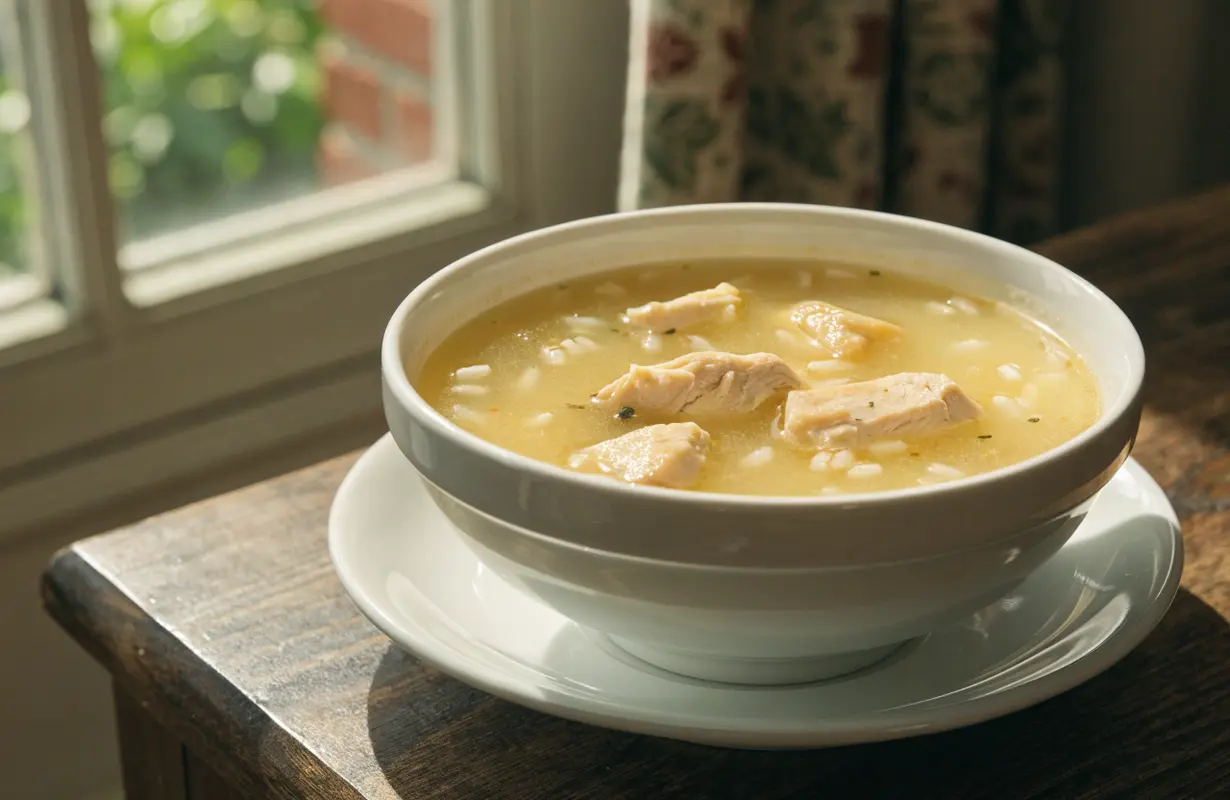
Why You’ll Love This Healing Chicken and Rice Soup
This healing chicken and rice soup is built around simple ingredients, straightforward cooking, and a generous amount of flavor.
Here are a few reasons it works so well:
- It is made in one pot.
- The ingredients are easy to find.
- Chicken and rice make the soup hearty and satisfying.
- Garlic and ginger give the broth extra character.
- Fresh vegetables add color and texture.
- Lemon or lime keeps the finished soup bright.
- Fresh herbs provide a clean, fragrant finish.
- You can easily adjust the consistency.
- It works with chicken breasts or chicken thighs.
- You can use several different types of rice.
- It reheats easily with a splash of additional broth.
- It can be adapted for a slow cooker or Instant Pot.
The soup is also highly customizable. If you prefer a classic flavor, keep the seasoning simple with garlic, onion, black pepper, parsley, and lemon. If you want something more aromatic, add ginger, turmeric, cilantro, lime, and a small amount of soy sauce.
Ingredients for Healing Chicken and Rice Soup
The ingredient list is uncomplicated, but each component has a specific job.
Chicken
You can use either chicken thighs or chicken breasts.
Chicken thighs tend to remain juicy and have a slightly richer flavor. They are particularly good for soups because they can handle gentle simmering without becoming dry as quickly.
Chicken breast has a lighter texture and is convenient if you already have cooked chicken available.
For this recipe, use approximately:
- 1 to 1½ pounds boneless chicken thighs or breasts
- Fresh chicken is ideal
- Leftover cooked chicken can also be used
If using leftover chicken, add it later in the cooking process rather than simmering it for the entire time.
Rice
Rice is one of the defining ingredients, so choosing the right variety matters.
Good options include:
- Jasmine rice
- Long-grain white rice
- Basmati rice
- Brown rice
- Wild rice
- A wild rice blend
Jasmine rice is particularly good when you want tender grains and a relatively quick cooking time.
White rice also works beautifully, but it can absorb a considerable amount of broth. If you plan to store the soup for several days, consider cooking the rice separately and adding it to individual servings.
Chicken Broth
Use a flavorful chicken broth or chicken stock as the foundation.
You can use:
- Homemade chicken stock
- Low-sodium chicken broth
- Regular chicken broth
- Chicken stock
- A combination of broth and water
If your broth is strongly seasoned, wait until the end before adding a large amount of salt.
Onion
Yellow onion, white onion, or shallots all work.
Dice the onion finely so that it becomes tender during the initial sauté and blends naturally into the broth.
Garlic
Fresh garlic gives the soup a much stronger flavor than dried garlic powder.
Use approximately three to five cloves, depending on how prominent you want the garlic flavor to be.
Fresh Ginger
Fresh ginger gives this soup its distinctive aromatic character.
Peel the ginger with the edge of a spoon, then grate it finely or mince it.
A small amount provides gentle warmth, while a larger amount creates a much more pronounced ginger flavor.
Carrots and Celery
Classic soup vegetables such as carrots and celery provide sweetness, texture, and color.
Dice them into similarly sized pieces so they cook evenly.
Spinach or Other Greens
Fresh spinach can be stirred in during the final minutes.
You can also use:
- Kale
- Swiss chard
- Baby spinach
- Fresh parsley
- Cilantro
The greens should not be cooked for longer than necessary.
Lemon or Lime
A little citrus juice transforms the finished soup.
Lemon gives the soup a traditional bright flavor, while lime works particularly well with ginger, cilantro, and jasmine rice.
Add the citrus at the end rather than at the beginning.
Seasonings
Keep the seasoning flexible.
Useful options include:
- Salt
- Black pepper
- Turmeric
- Red pepper flakes
- Garlic
- Ginger
- Fresh parsley
- Cilantro
- Green onions
For a slightly deeper savory flavor, you can also add a small splash of soy sauce or fish sauce.
How to Make Healing Chicken and Rice Soup
Step 1: Prepare the Ingredients
Before turning on the stove, prepare everything.
Dice the onion, carrots, and celery. Mince the garlic. Grate the ginger. Rinse the rice if appropriate for the variety you’re using.
Cut large chicken breasts or thighs into smaller pieces if desired.
Having everything ready makes the cooking process much easier.
Step 2: Sauté the Aromatics
Place a large soup pot or Dutch oven over medium heat.
Add a tablespoon of olive oil or another neutral cooking oil.
Add:
- Diced onion
- Carrots
- Celery
Cook for approximately five minutes, stirring occasionally.
The vegetables should begin to soften without becoming deeply browned.
Add the garlic and ginger.
Cook for another 30 to 60 seconds.
At this point, the kitchen should smell intensely fragrant.
Do not cook the garlic for too long because it can become bitter.
Step 3: Add the Chicken
Add the chicken pieces to the pot.
Season with black pepper and a modest amount of salt.
If you’re using turmeric, add it now.
Cook the chicken for several minutes, stirring occasionally.
You do not need to completely cook the chicken at this stage. The goal is to develop flavor before the broth is added.
Step 4: Add the Broth
Pour the chicken broth into the pot.
Use a wooden spoon to scrape the bottom of the pot and loosen any flavorful pieces.
Bring everything to a gentle simmer.
Avoid an aggressive boil.
A gentle simmer keeps the soup controlled and makes it easier to judge when the chicken and rice are ready.
Step 5: Add the Rice
Add your rice according to the variety you’re using.
For standard white or jasmine rice, you can usually add it directly to the simmering soup.
Stir once to distribute the grains.
Reduce the heat and let the soup simmer until the chicken is cooked and the rice is tender.
The exact timing depends on the rice variety.
Step 6: Check the Chicken
When the chicken is cooked through, remove a piece and check it.
If you’re using whole chicken breasts or thighs, you can remove them from the pot, shred them with two forks, and return the shredded chicken to the soup.
This creates a classic shredded chicken and rice soup texture.
Step 7: Add the Greens
If you’re using spinach, stir it into the hot soup during the final few minutes.
It will wilt quickly.
For kale or another sturdier green, allow slightly more cooking time.
Step 8: Add Lemon or Lime
Turn the heat down.
Add fresh lemon or lime juice.
Start with a small amount.
Taste the broth.
If it needs more brightness, add another squeeze.
This final step is one of the easiest ways to make homemade soup taste fresh rather than flat.
Step 9: Add Fresh Herbs
Finish with fresh herbs.
Good choices include:
- Cilantro
- Parsley
- Basil
- Mint
- Green onions
You can use one herb or combine several.
Step 10: Taste and Adjust
Now taste the entire pot.
Ask yourself:
- Does it need more salt?
- Does it need more citrus?
- Is the broth too concentrated?
- Is the soup too thick?
- Would black pepper improve it?
- Does it need more ginger?
- Would a splash of soy sauce add depth?
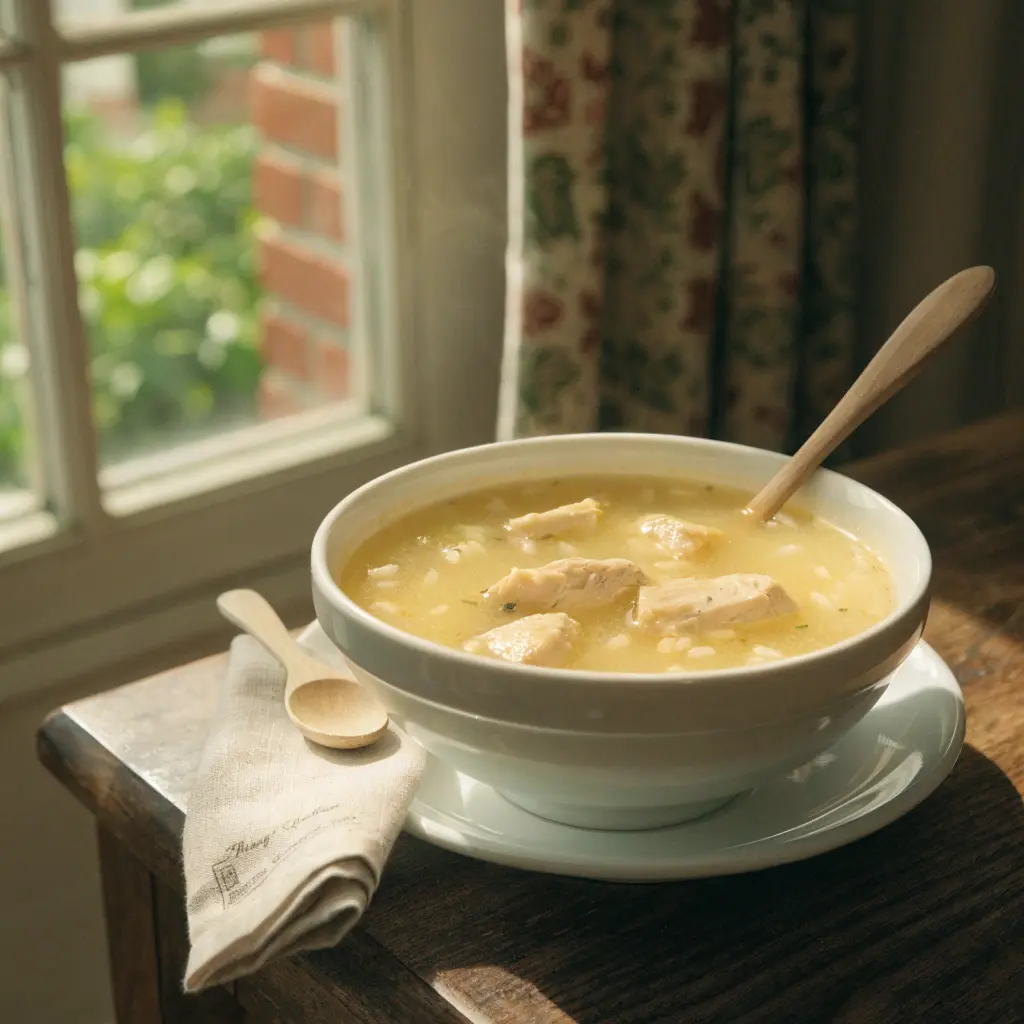
Easy Substitutions and Variations
One of the best things about this recipe is how easy it is to adapt.
Chicken Breast Version
Use boneless, skinless chicken breast for a lighter-textured soup.
Avoid simmering it for much longer than necessary.
Once cooked, remove it, shred it, and return it to the pot.
Chicken Thigh Version
Chicken thighs are excellent for a richer, more rustic soup.
Boneless thighs are particularly convenient because there is no need to remove bones after cooking.
Lemon Chicken and Rice Soup
Use lemon instead of lime.
Add:
- Lemon juice
- Lemon zest
- Parsley
- Black pepper
This creates a bright, classic variation.
Ginger Chicken and Rice Soup
For a stronger ginger flavor:
- Add additional fresh ginger.
- Use jasmine rice.
- Finish with lime.
- Add cilantro.
- Include a small amount of green onion.
Turmeric Chicken and Rice Soup
Add approximately ½ to 1 teaspoon ground turmeric.
Turmeric gives the broth a beautiful golden color and a warm, earthy flavor.
It pairs particularly well with:
- Ginger
- Garlic
- Black pepper
- Lemon
- Chicken broth
Spicy Chicken and Rice Soup
Add red pepper flakes, sliced chili, or a small amount of chili oil.
For a deeper spicy flavor, add the chili while sautéing the aromatics.
Creamy Chicken and Rice Soup
If you prefer a creamy soup, add a small amount of heavy cream or coconut milk near the end.
Coconut milk works particularly well with ginger, lime, cilantro, and chili.
Vegetable-Heavy Version
Increase the amount of:
- Carrots
- Celery
- Spinach
- Mushrooms
- Peas
- Kale
Keep the broth generous so the soup doesn’t become more like a stew.
How to Make Chicken and Rice Soup in the Instant Pot
The Instant Pot can speed up the chicken-cooking process.
Start by using the sauté function to soften the onion, carrots, and celery.
Add garlic and ginger.
Add the chicken and seasonings.
Pour in the broth and scrape the bottom of the pot.
The exact pressure-cooking time depends on whether you’re using whole chicken breasts, thighs, or smaller pieces.
For the best rice texture, you can also cook the rice separately and add it afterward.
Once the chicken is cooked:
- Remove the chicken.
- Shred it.
- Return it to the pot.
- Add cooked rice.
- Stir in spinach.
- Add lemon or lime.
- Finish with fresh herbs.
This produces a soup with much more control over the rice texture.
How to Make the Broth More Flavorful
A flavorful broth begins before the liquid is added.
Do not underestimate the importance of sautéing your vegetables.
Allowing the onion, carrot, and celery to soften in oil creates a deeper foundation.
Then add garlic and ginger.
Let them cook briefly before adding broth.
You can also increase flavor by using:
- Homemade chicken stock
- Roasted chicken
- Fresh herbs
- Lemon zest
- Lime zest
- Soy sauce
- Fish sauce
- Black pepper
- Fresh ginger
- Garlic
- Green onion
If the broth tastes flat, don’t automatically add more salt.
First try a small squeeze of lemon or lime.
Acidity can make the existing flavors seem much more pronounced.
How to Store Healing Chicken and Rice Soup
Allow the soup to cool appropriately before transferring it into storage containers.
For the best results:
- Use airtight containers.
- Divide large amounts into smaller portions.
- Refrigerate promptly.
- Keep the refrigerator at 40°F or below.
- Store rice separately if possible.
- Label containers with the date.
Can You Freeze Chicken and Rice Soup?
Yes, but the rice deserves special consideration.
Rice can become softer after freezing and reheating.
For the best texture, freeze the broth and chicken separately from freshly cooked rice whenever possible.
To freeze the soup:
- Allow the soup to cool appropriately.
- Portion it into freezer-safe containers.
- Leave a little room for expansion.
- Seal tightly.
- Label with the date.
- Freeze.
For the best results:
Freeze the chicken and broth without rice.
When you’re ready to serve it:
- Thaw the soup safely.
- Reheat it.
- Cook fresh rice.
- Add the rice to each bowl.
- Finish with fresh herbs and citrus.
This gives you a texture much closer to freshly prepared soup.
How to Reheat Chicken and Rice Soup
The stovetop is the easiest method for reheating a large quantity.
Place the soup in a saucepan over medium-low heat.
Stir occasionally.
If the soup has thickened considerably, add:
- Chicken broth
- Water
- A combination of both
Taste after reheating.
The rice may have absorbed much of the original seasoning, so a little additional salt, pepper, or lemon may be necessary.
For individual portions, the microwave works well.
Use a microwave-safe bowl, cover it appropriately, and stir the soup during reheating so the temperature is distributed evenly.
Common Mistakes to Avoid
Adding the Rice Too Early
Rice absorbs liquid as it cooks.
If you add it too early, you may end up with a pot that resembles a thick stew rather than soup.
Overcooking the Chicken
Chicken breast in particular can become dry when cooked for too long.
Remove it as soon as it is done and shred it.
Boiling the Broth Too Hard
A gentle simmer is easier to control.
It also gives you more time to monitor the chicken and rice.
Adding Citrus Too Early
Lemon and lime are best used as finishing ingredients.
Adding them at the end preserves their bright flavor.
Adding Too Much Salt
Broth, soy sauce, and fish sauce can all contain significant amounts of salt.
Taste first.
Season second.
Forgetting About Leftover Rice
If the soup is being stored, remember that the rice will continue absorbing liquid.
Cooked rice stored separately gives you much more control.
What to Serve With Chicken and Rice Soup
Although this soup works perfectly well on its own, you can serve it with simple sides.
Crusty Bread
A slice of toasted sourdough or crusty French bread is excellent for dipping into the broth.
Garlic Bread
Garlic bread adds another layer of savory flavor.
Crackers
Classic crackers are an easy option when you want something crunchy.
Toasted Pita
Warm pita is especially good with ginger, turmeric, cilantro, and lime versions of the soup.
Simple Salad
A crisp salad provides a fresh contrast to the warm soup.
Roasted Vegetables
Roasted carrots, broccoli, cauliflower, or Brussels sprouts can turn the soup into a larger dinner.
How to Make This Soup Ahead of Time
This recipe is particularly convenient for advance preparation.
You can prepare the broth and chicken one day ahead.
For the best texture, cook the rice separately.
When you’re ready to serve:
- Reheat the broth and chicken.
- Add cooked rice.
- Stir in greens.
- Add lemon or lime.
- Taste for seasoning.
- Add fresh herbs.
- Serve immediately.
This approach keeps the rice from becoming excessively soft.
It also makes portioning easier.
Frequently Asked Questions
Is chicken and rice soup easy to make?
Yes. The basic process involves sautéing vegetables and aromatics, adding chicken and broth, cooking the rice, shredding the chicken, and finishing the soup with citrus and herbs.
What is the best rice for chicken and rice soup?
Jasmine and long-grain white rice are excellent choices for a quick, classic soup. Brown rice and wild rice can also be used, although they require different cooking times.
Can I use leftover chicken?
Absolutely. Shredded leftover chicken or rotisserie chicken can be added toward the end of cooking. This prevents the chicken from becoming unnecessarily dry.
Can I use leftover rice?
Yes. Add cooked rice during the final few minutes rather than simmering it throughout the entire cooking process.
How do I stop rice from getting mushy?
Avoid overcooking the rice and consider storing cooked rice separately from the soup. This is particularly useful if you plan to eat leftovers over several days.
Final Thoughts
Healing chicken and rice soup is the kind of recipe that rewards simple cooking. You don’t need an elaborate ingredient list or complicated techniques. A good broth, tender chicken, properly cooked rice, aromatic vegetables, fresh ginger and garlic, and a final squeeze of lemon or lime are enough to create a deeply satisfying bowl.