
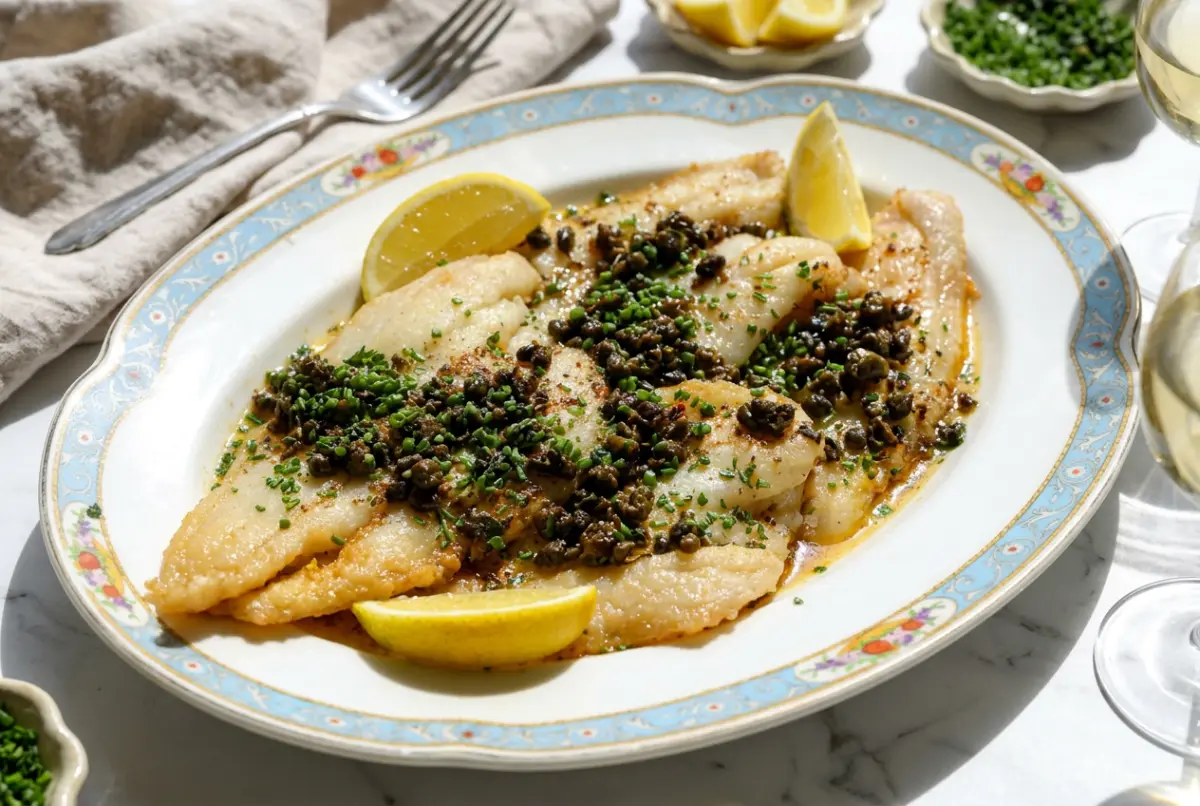
What Is Sole Meunière Recipe?
Sole meunière is a traditional French fish dish prepared by lightly coating sole in flour, pan-frying it in butter, and finishing it with a sauce made from browned butter, lemon juice, and fresh parsley.
The dish is particularly famous for its delicate flavor and simple preparation. Unlike heavily battered or breaded fish, sole meunière uses only a thin layer of flour. This coating creates a lightly crisp exterior without overwhelming the tender fish.
The traditional preparation is often associated with Dover sole, a prized fish known for its delicate texture and mild flavor. However, lemon sole and other similar white fish can also be used.
Understanding the Meaning of Meunière
The French word meunière translates roughly to “miller’s wife.” In culinary terminology, it refers to a preparation in which fish is coated in flour before being cooked in butter.
The technique is simple:
- Lightly season the fish.
- Coat it in flour.
- Pan-fry it until golden.
- Finish it with butter, lemon, and parsley.
The flour coating is an important part of the preparation. It helps create a delicate crust while allowing the fish to retain its natural flavor.
The History of Sole Meunière
Sole meunière has long been associated with classic French cooking. Its popularity comes from the simplicity of the ingredients and the elegance of the finished dish.
Traditional French kitchens often relied on fresh fish, butter, herbs, and seasonal ingredients. Sole meunière brought these elements together in a way that highlighted the quality of the fish rather than hiding it behind complicated sauces.
The dish also became well known internationally through French restaurants and culinary writing. Its elegant presentation and straightforward technique helped establish it as a favorite among seafood lovers.
Today, sole meunière remains a classic choice in French bistros and home kitchens alike.
Sole Meunière Recipe Ingredients
The beauty of this recipe lies in its simplicity. Every ingredient contributes to the final flavor, texture, or appearance.
Main Ingredients
For approximately 2 servings, you will need:
- 2 sole fillets: Approximately 5–7 ounces each, preferably fresh or properly thawed.
- 1/2 cup all-purpose flour: For lightly coating the fish.
- 4 tablespoons unsalted butter: Divided between cooking the fish and preparing the sauce.
- 1 tablespoon neutral cooking oil: Helps prevent the butter from browning too quickly.
- 1 lemon: Fresh juice for the sauce and wedges for serving.
- 2 tablespoons fresh parsley: Finely chopped.
- Salt: To season the fish.
- Freshly ground black pepper: For a gentle, aromatic seasoning.
Choosing the Best Sole
The quality of the fish makes a noticeable difference in the finished dish.
Dover sole is a traditional choice because of its delicate flavor and fine texture. It is particularly popular in classic French restaurants.
Lemon sole is another excellent option. It is often easier to find and works beautifully with the same preparation.
When selecting sole, look for:
- Firm, moist flesh.
- A fresh, mild smell.
- Fillets that are not discolored.
- Fish that has been properly refrigerated.
If using frozen sole, thaw it in the refrigerator before cooking.
Why Unsalted Butter Is Best
Butter is one of the most important ingredients in sole meunière.
Unsalted butter allows you to control the seasoning more precisely. It also provides the rich, nutty flavor that develops when the butter is browned.
As butter melts, its milk solids gradually turn golden. This process creates the characteristic aroma and flavor of beurre noisette, or brown butter.
The key is to watch the butter carefully. It can move from beautifully browned to burned in a short amount of time.
The Importance of Fresh Lemon and Parsley
Fresh lemon juice adds brightness to the sauce and balances the richness of the butter.
Fresh parsley provides a clean, herbal flavor and gives the finished dish a beautiful appearance.
For the best results:
- Use freshly squeezed lemon juice.
- Chop the parsley shortly before serving.
- Add the parsley near the end of cooking.
- Keep a few lemon wedges ready for garnish.
Essential Kitchen Equipment
You do not need specialized equipment to prepare this classic French fish recipe.
The following tools make the process easier:
- Large skillet: A nonstick or stainless-steel skillet works well.
- Fish spatula: Helps turn delicate sole without breaking it.
- Shallow plate: Useful for dredging the fish in flour.
- Paper towels: Essential for removing excess moisture.
- Small bowl: For preparing the lemon juice and parsley.
- Sharp knife: For cutting lemon wedges and chopping parsley.
- Cutting board: Provides a clean surface for preparation.
- Serving platter: Makes it easy to present the finished fish.
Step-by-Step Instructions for Sole Meunière Recipe
Follow these steps to prepare perfectly golden sole with a delicious lemon-brown-butter sauce.
Step 1: Pat the Sole Dry
Begin by removing excess moisture from the sole fillets.
Use paper towels to gently pat both sides of the fish until the surface feels dry.
This step is particularly important because excess moisture can prevent the flour from forming a delicate coating.
Wet fish may also release moisture into the skillet, making it difficult to achieve a golden crust.
For the best results, take a moment to dry the fillets thoroughly before seasoning.
Step 2: Season the Fish
Place the dry sole fillets on a clean plate.
Season both sides with salt and freshly ground black pepper.
Keep the seasoning light. Sole has a delicate flavor, and the goal is to enhance it rather than overpower it.
If the fillets are particularly thin, use a smaller amount of seasoning.
Step 3: Dredge the Sole in Flour
Place the flour in a shallow dish.
Carefully lay one sole fillet in the flour, turning it gently to coat both sides.
Lift the fillet and shake off any excess flour.
Repeat with the remaining fillet.
The coating should be thin and even. A thick layer of flour can become heavy and prevent the fish from developing the delicate texture that makes sole meunière special.
For the best results, dredge the fish immediately before cooking.
Step 4: Heat the Skillet
Place a large skillet over medium to medium-high heat.
Add the neutral cooking oil and approximately 1 tablespoon of butter.
Allow the butter to melt and begin foaming.
The skillet should be hot enough to create a golden crust, but not so hot that the butter burns immediately.
If the butter begins turning dark before the fish is added, reduce the heat slightly.
Step 5: Cook the Sole
Carefully place the floured sole fillets in the skillet.
Avoid overcrowding the pan. The fillets should have enough space to cook evenly.
Cook the first side for approximately 2–4 minutes, depending on the thickness of the fish.
Look for these signs:
- The edges begin turning opaque.
- The underside develops a golden color.
- The fish releases more easily from the skillet.
- The surface becomes lightly crisp.
Avoid moving the fish repeatedly while it cooks. Allow the flour coating to develop before attempting to turn it.
Step 6: Flip the Fish Carefully
Once the first side is golden, gently slide a fish spatula underneath the fillet.
Turn the fish carefully.
Sole is delicate, so a wide spatula makes this step easier.
Cook the second side for another 1–3 minutes, depending on thickness.
The fish should become opaque and separate easily into flakes when gently tested with a fork.
Avoid pressing down on the fillets with the spatula. This can break the fish and release its moisture.
Step 7: Remove the Fish from the Pan
Transfer the cooked sole to a warm serving platter.
If cooking multiple batches, keep the fish warm while preparing the remaining fillets.
Avoid covering the fish tightly. Trapped steam can soften the delicate golden coating.
The fish should remain warm while you prepare the sauce.
Step 8: Prepare the Brown Butter Sauce
Reduce the heat to medium-low.
Add the remaining butter to the skillet.
Allow it to melt completely. The butter will begin to foam as it heats.
Watch the color carefully.
At first, the butter will appear pale yellow. As it cooks, the milk solids will begin turning golden brown.
A nutty aroma will develop, signaling that the butter is ready.
The butter should be golden and fragrant, not dark brown or burned.
If the skillet contains dark, burned flour or butter residue, it is better to wipe it out and prepare the sauce in a clean pan.
Step 9: Add Lemon Juice and Parsley
Remove the skillet from the heat.
Carefully add the fresh lemon juice. The butter may foam or sputter, so pour slowly.
Stir gently to combine.
Add the chopped parsley and mix until evenly distributed.
The sauce should have a rich, buttery flavor with a bright lemon finish.
Taste the sauce and adjust the seasoning with a small pinch of salt if necessary.
Step 10: Finish and Serve
Arrange the sole fillets on a serving platter.
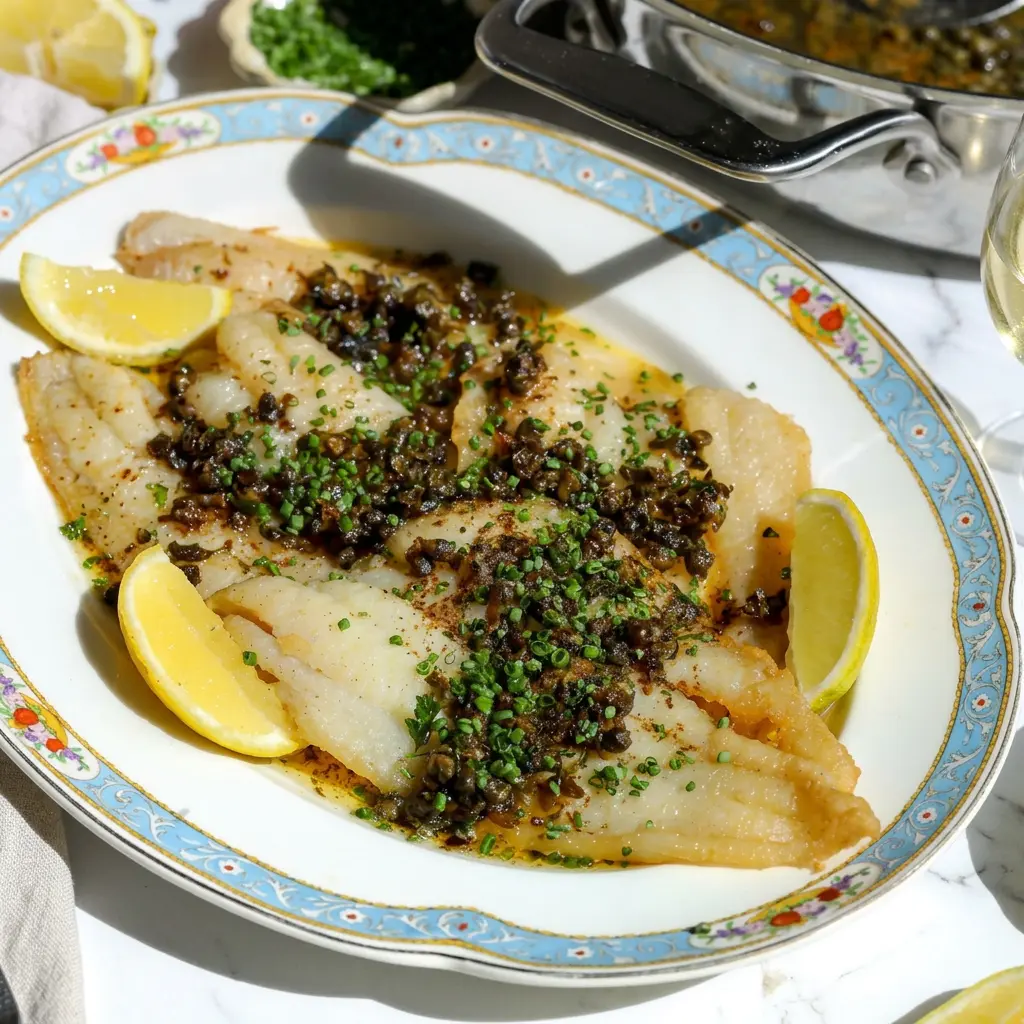
Spoon the warm lemon-brown-butter sauce over the fish.
Garnish with fresh parsley and lemon wedges.
Serve immediately while the fish is tender and the coating is still lightly crisp.
For an elegant presentation, place the fillets slightly overlapping on a warm platter and pour the sauce around and over them.
Common Mistakes to Avoid
Even a simple recipe can become disappointing when a few important details are overlooked.
Here are some common mistakes and how to avoid them.
- Using wet fish: Always pat the sole dry before dredging it in flour.
- Adding too much flour: A light coating creates the best texture.
- Overcrowding the skillet: Cook in batches when necessary.
- Using excessive heat: High heat can burn the butter before the fish cooks.
- Flipping too early: Allow the first side to develop a golden crust.
- Overcooking the sole: Thin fillets need only a short cooking time.
- Burning the brown butter: Watch the color and aroma carefully.
- Adding too much lemon juice: Start with a moderate amount and adjust to taste.
- Preparing the fish too early: Cook it shortly before serving for the best texture.
Avoiding these mistakes will help you achieve a beautiful golden crust and tender fish every time.
Sole Meunière Recipe Variations
The traditional recipe is delicious on its own, but there are several ways to customize it.
Classic Dover Sole Meunière
Dover sole is the traditional choice for this dish.
Its delicate texture and mild flavor work beautifully with butter and lemon.
If you can find fresh Dover sole, use the same preparation method described above.
Whole Dover sole can also be served with the bones removed at the table for a more traditional restaurant-style presentation.
Lemon Sole Meunière
Lemon sole is a popular alternative to Dover sole.
It is often easier to find and works well with the same flour coating and lemon-brown-butter sauce.
Because fillets can vary in thickness, adjust the cooking time accordingly.
Sole Meunière with Capers
Capers add a pleasant salty and tangy flavor to the sauce.
To make this variation:
- Prepare the brown butter as directed.
- Add a tablespoon of drained capers.
- Stir in the lemon juice.
- Finish with fresh parsley.
The capers provide a delicious contrast to the rich butter.
Sole Meunière with Garlic Butter
For a more aromatic variation, add a small amount of finely minced garlic to the butter.
Allow the garlic to cook briefly until fragrant.
Avoid browning it too deeply, as burned garlic can create a bitter flavor.
Add the lemon juice and parsley as usual.
Alternative White Fish
If sole is unavailable, you can use another delicate white fish.
Suitable options include:
- Flounder.
- Plaice.
- Thin white fish fillets.
- Trout, for a slightly different flavor.
The cooking method remains similar, but cooking time may vary depending on the thickness and texture of the fish.
What to Serve with Sole Meunière Recipe
Sole meunière pairs beautifully with simple side dishes that complement its buttery lemon sauce.
Classic French Side Dishes
French-style mashed potatoes
Creamy mashed potatoes provide a wonderful contrast to the delicate fish. They also make an excellent base for the lemon-butter sauce.
Boiled or roasted potatoes
Small potatoes tossed with butter and parsley are a classic accompaniment.
Green beans
Steamed or sautéed green beans add color and a pleasant texture to the plate.
Asparagus
Lightly cooked asparagus works particularly well with lemon butter.
Fresh and Light Accompaniments
A simple green salad with a light vinaigrette is an excellent choice.
Other options include:
- Roasted zucchini.
- Steamed seasonal vegetables.
- Lemon-dressed greens.
- A fresh cucumber salad.
These side dishes complement the richness of the sauce without competing with the flavor of the fish.
Bread and Sauce Pairings
Crusty French bread is perfect for soaking up the remaining lemon-brown-butter sauce.
A freshly baked baguette is particularly suitable for a traditional French-inspired meal.
How to Store and Reheat Sole Meunière Recipe
Sole meunière is best served immediately, but leftovers can be stored and reheated carefully.
Storing Leftovers
Allow the fish to cool slightly before transferring it to an airtight container.
Refrigerate promptly.
For food-handling guidance, consult the food handling recommendations.
Store the fish and any remaining sauce together or separately, depending on your preference.
How Long Does Sole Meunière Last in the Refrigerator?
Cooked fish can generally be refrigerated for 3–4 days when handled and stored properly.
However, sole meunière is best enjoyed soon after cooking because its delicate coating can soften over time.
If the fish develops an unusual smell or appearance, discard it.
How to Reheat Sole Meunière
The best way to reheat sole meunière is gently in a skillet.
- Place a skillet over low heat.
- Add a small amount of butter.
- Place the fish in the skillet.
- Heat gently until warmed through.
- Add a little fresh lemon juice if desired.
Can You Freeze Sole Meunière?
Cooked sole meunière can be frozen, but the texture may change after thawing.
The flour coating can become softer, and the fish may lose some of its delicate texture.
For the best results, prepare the fish fresh whenever possible.
If freezing is necessary, store it in an airtight, freezer-safe container and thaw it in the refrigerator before reheating.
Make-Ahead Instructions
Although sole meunière is best cooked fresh, you can prepare several ingredients ahead of time.
What Can Be Prepared in Advance?
- Measure the flour.
- Chop the parsley.
- Cut the lemon into wedges.
- Prepare the lemon juice.
- Portion the sole fillets.
- Measure the butter and cooking oil.
What Should Be Prepared Immediately Before Serving?
The fish should be dredged in flour shortly before cooking.
The brown butter sauce should also be prepared just before serving.
This helps preserve the golden coating and the fresh flavor of the lemon and parsley.
If preparing the recipe for guests, have your side dishes ready before beginning to cook the sole.
The fish itself takes only a few minutes, so timing is important.
Frequently Asked Questions About Sole Meunière Recipe
What does sole meunière mean?
Sole meunière is a traditional French fish preparation. Sole is lightly coated in flour, pan-fried in butter, and finished with lemon juice and parsley.
What type of fish is best for sole meunière?
Dover sole is the traditional choice.
Its delicate texture and mild flavor work beautifully with the butter and lemon sauce.
Lemon sole is another excellent option, particularly for home cooking.
Can I make sole meunière with frozen fish?
Yes, frozen sole can be used.
Thaw the fish in the refrigerator before cooking. Pat the fillets dry with paper towels to remove excess moisture.
This helps the flour coating adhere properly and allows the fish to develop a golden crust.
How do you know when sole is cooked?
Sole is cooked when its flesh becomes opaque and separates easily into flakes.
Because the fillets are thin, they cook quickly.
The exact cooking time depends on their thickness, so watch the fish carefully rather than relying only on the clock.
Conclusion
This Sole Meunière Recipe is a beautiful example of classic French cooking. With delicate sole fillets, a light flour coating, golden butter, fresh lemon juice, and parsley, it transforms a few simple ingredients into an elegant and memorable meal.