
What Is a Citrus Pomegranate Kale Salad?
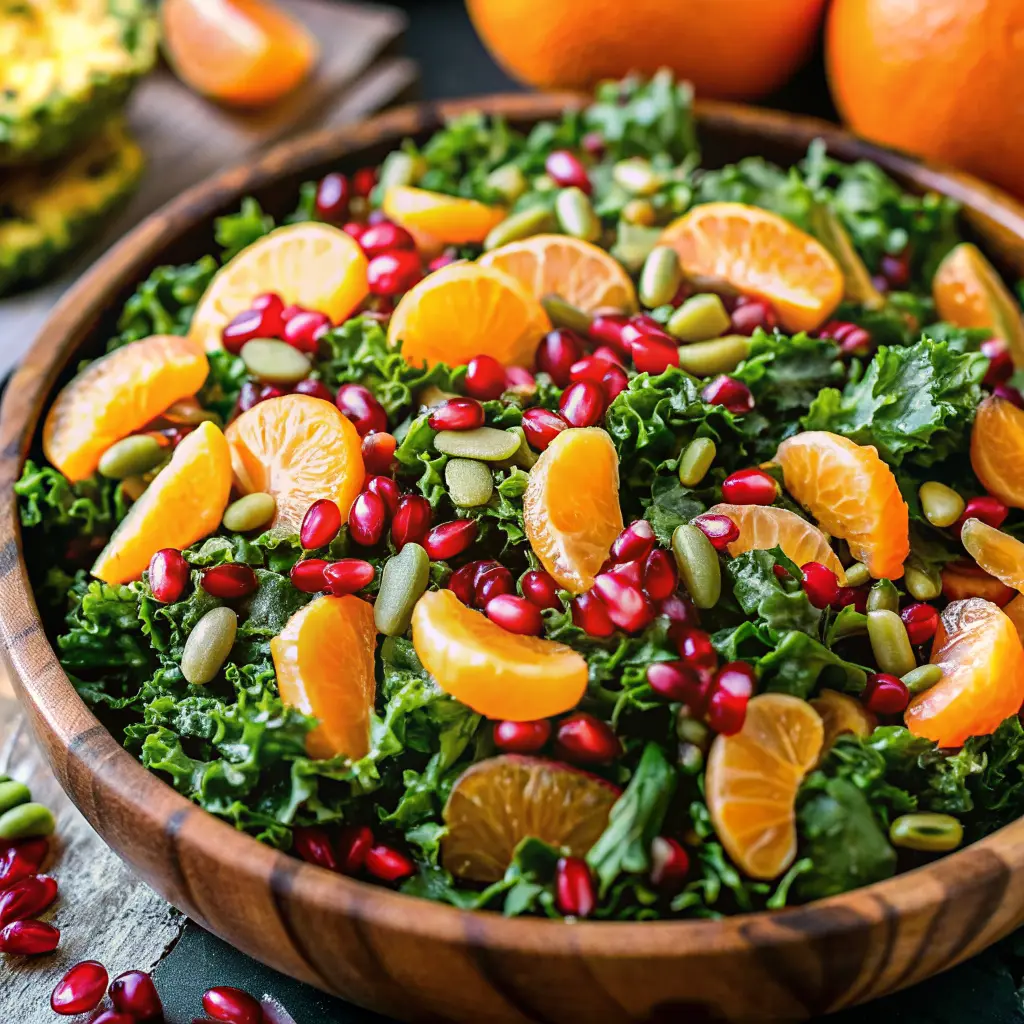
At its core, a citrus pomegranate kale salad is a massaged kale salad topped with:
- Bright citrus segments (orange, clementine, mandarin, blood orange, grapefruit)
- Juicy pomegranate arils
- Crunchy nuts or seeds
- A simple, zippy honey-citrus vinaigrette
It’s a salad that thrives in the cooler months when citrus and pomegranates are at their peak. The sturdy kale holds up beautifully to the dressing, and the fruit adds sparkle, sweetness, and tartness in every bite.
You can:
- Serve it as a side dish alongside roasted meats or seafood
- Add grains and protein to turn it into a complete main
- Build it into vibrant lunch bowls for busy days
Ingredient Spotlight: Kale
The star base of this salad is, of course, kale. Choosing and treating it well makes the difference between a rough, tough salad and one that you can’t stop eating.
Best Types of Kale for This Salad
You can use several varieties:
- Curly kale
- Common in most grocery stores
- Curly frills that grip dressing nicely
- Great when thoroughly massaged
- Tuscan kale (lacinato, cavolo nero)
- Long, flatter leaves
- Slightly more delicate texture
- Often considered ideal for salads once massaged
Either works beautifully; what matters most is how you prep it.
How to Choose Good Kale
When you’re shopping, look for:
- Leaves that are firm and crisp, not limp
- A strong, rich green color without yellowing
- Stems that feel sturdy, not slimy or soft
Avoid bunches with lots of holes, black spots, or slimy sections.
How to Prep Kale for Salad
- Strip the stems
- Hold the bottom of the stem with one hand.
- Pinch the leaf at the base and pull upward to strip the leafy part away.
- Wash thoroughly
- Rinse the leaves in cold water to remove any grit.
- Spin them very dry in a salad spinner—dressing clings best to dry leaves.
- Chop into ribbons
- Stack several leaves, roll them up like a cigar, and slice them into thin ribbons.
- Aim for bite-sized pieces so the salad feels delicate rather than clunky.
Ingredient Spotlight: Citrus Fruits
The citrus is where this salad really shines. You’re not limited to one type, and mixing them brings layers of flavor.
Best Citrus Types to Use
Consider using a mix like:
- Navel or Cara Cara oranges – classic, juicy, and pleasantly sweet
- Mandarins, satsumas, or clementines – easy to peel, sweet, and fragrant
- Blood oranges – dramatic color and slightly berry-like notes
- Grapefruit – more complex, with a slight bitterness that plays nicely against honey
You can choose just one citrus or create a blend for more interest.
How Citrus Changes the Personality of the Salad
- Using mostly sweet oranges and mandarins yields a bright, approachable salad.
- Adding blood oranges and grapefruit introduces complexity and a gentle edge.
- A little zest worked into the dressing amplifies the aroma without overpowering.
Segmenting Citrus for a Restaurant-Style Presentation
For the most elegant presentation, you’ll want to “supreme” or segment your citrus:
- Remove the peel and all the white pith.
- Cut between the membranes to release perfect wedges.
- Work over a bowl to catch all the juice for your dressing.
Ingredient Spotlight: Pomegranate & Crunchy Add-Ins
Those glittering pomegranate arils aren’t just pretty—they add pops of juicy sweetness and a gentle crunch.
Working with Pomegranates
You’ll need:
- 1 medium pomegranate for a generously studded salad
- Or about 1 to 1½ cups of ready-to-use arils
To release the seeds with minimal mess, many people like the “water bowl” method:
- Score the pomegranate around the middle.
- Break it apart gently into sections in a bowl of water.
- Use your fingers to loosen the seeds; they sink while the white pith floats.
- Skim off the pith and drain the seeds.
The result: a bowl of jewel-like arils ready to scatter over your salad.
Crunchy Elements: Nuts and Seeds
To contrast the softness of kale and juicy fruit, add crunch:
- Pepitas (pumpkin seeds) – toasty, small, and easy to scatter
- Almonds – slivered or chopped
- Pecans or walnuts – roughly broken for a rustic look
- Sunflower seeds – a smaller, nut-free option
Toast your nuts or seeds lightly in a dry skillet until fragrant for extra flavor.
Optional Creamy Add-Ins
A little creaminess can round everything out:
- Crumbled feta
- Crumbled goat cheese
- Cubes or slices of ripe avocado
These elements are optional, but they turn a simple side salad into something more luxurious and satisfying.
The Honey-Citrus Vinaigrette: Simple Dressing, Big Flavor
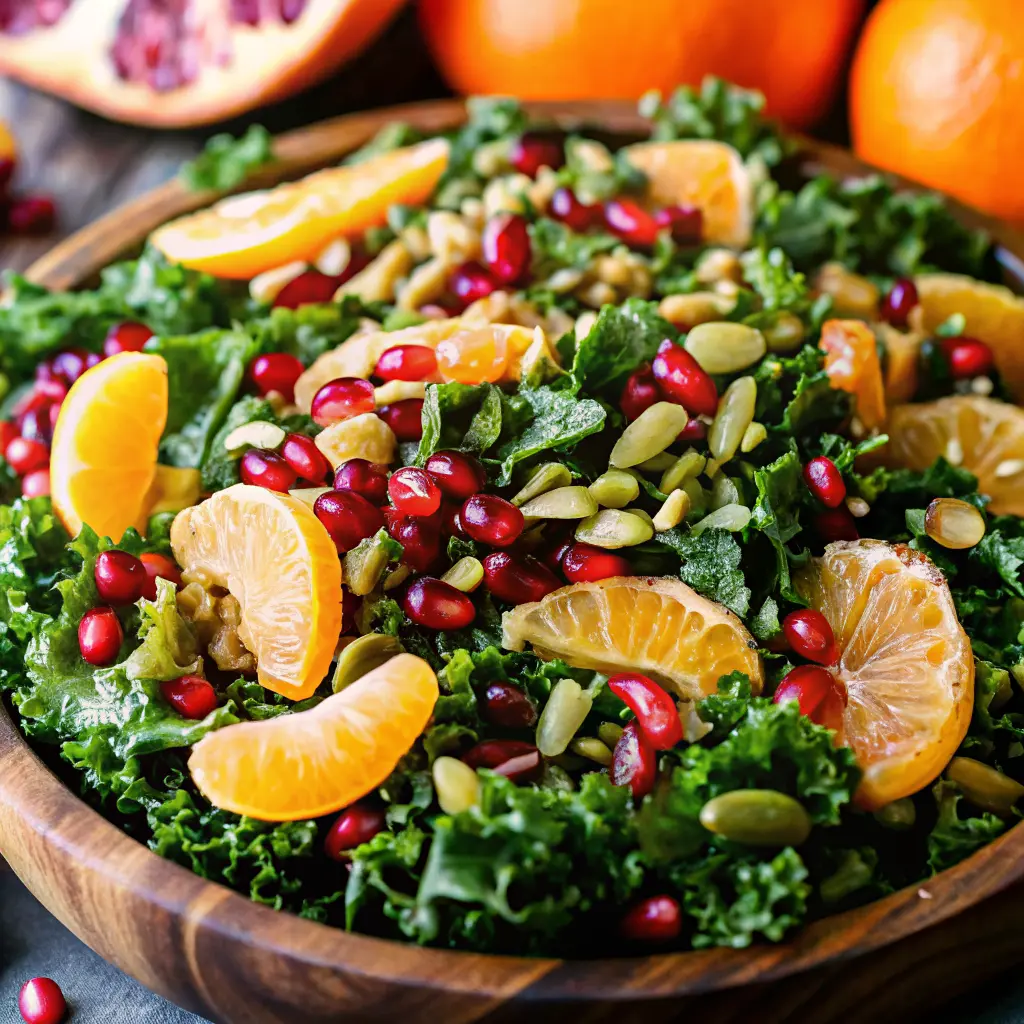
The dressing for this salad is a bright, honey-citrus vinaigrette that you can whisk together in minutes.
Core Components
A classic ratio might look like:
- 3 tablespoons extra-virgin olive oil
- 2 tablespoons fresh citrus juice (orange, lemon, or a mix)
- 1 tablespoon honey or maple syrup
- ½ to 1 teaspoon Dijon mustard (optional, for body and tang)
- Salt and freshly ground black pepper, to taste
Why This Dressing Works So Well
- The citrus juice wakes up the kale and complements the fruit.
- The honey or maple balances the tart notes from citrus and pomegranate.
- The olive oil gives the salad a silky, rich finish.
- A touch of Dijon helps emulsify the dressing and adds a subtle savory note.
You can also:
- Add a bit of finely grated citrus zest for stronger aroma.
- Whisk in a tiny pinch of garlic or ginger for more complexity.
Tools & Equipment You’ll Need
You don’t need anything fancy, but the right tools make prep smoother:
- Large mixing bowl (big enough to hold and massage the kale)
- Salad spinner
- Sharp chef’s knife (for kale and citrus)
- Small paring knife (for detailed citrus work)
- Cutting board
- Small jar or bowl + whisk (for the dressing)
- Large serving platter or bowl
Step-by-Step: How to Make Citrus Pomegranate Kale Salad
Here’s a clear, step-by-step method you can follow every time.
Step 1: Prep the Kale
- Strip the leaves from the stems and discard the thick stems.
- Wash the leaves thoroughly and spin them dry.
- Stack and roll the leaves, then slice into thin ribbons.
- Place the kale into a large mixing bowl.
Step 2: Massage the Kale
Massaging kale transforms it from tough to tender.
- Drizzle a small amount of olive oil and a splash of citrus juice (or a spoonful of the dressing) over the chopped kale.
- Using clean hands, gently “scrunch” and massage the leaves for 1–3 minutes.
- You’ll notice the kale:
- Darken in color
- Reduce in volume
- Feel softer and more pliable
You’re done when it feels pleasant to chew a test piece, not stiff or rubbery.
Step 3: Segment the Citrus
While the kale rests, prepare your citrus:
- Cut off the top and bottom of each fruit.
- Stand it upright and slice downward along the curve to remove the peel and white pith.
- Hold the peeled fruit over a bowl and cut between the membranes to release clean segments.
- Let the extra juice collect in the bowl—you can add it to your dressing.
If you prefer a quicker method, you can:
- Peel the fruit by hand
- Separate segments
- Gently run a knife along the sides of each segment to remove any tough membrane
Step 4: Prepare the Pomegranate Seeds
If you’re starting with a whole pomegranate:
- Score around the middle, but don’t cut too deep.
- Gently twist to break it into halves.
- Either:
- Hold a half over a bowl and tap the back firmly with a wooden spoon to release the seeds, or
- Submerge sections in water and loosen the seeds with your fingers.
Pick out any bits of white pith and set your arils aside.
Step 5: Whisk the Honey-Citrus Vinaigrette
In a small bowl or jar:
- Combine citrus juice, honey or maple syrup, salt, and pepper.
- Add the olive oil (and Dijon, if using).
- Whisk until the dressing looks slightly thickened and blended, or shake well in a jar.
Taste and adjust:
- Too sharp? Add a bit more oil or a drizzle of honey/maple.
- Too mild? Add an extra squeeze of citrus or a pinch of salt.
Step 6: Assemble the Salad
- Dress the kale
- Pour about half of the vinaigrette over the massaged kale.
- Toss thoroughly to coat every ribbon.
- Taste a piece; add more dressing if it still feels underdressed.
- Add the fruit and crunch
- Gently fold in the citrus segments and pomegranate arils.
- Scatter in your chosen nuts or seeds.
- Add any creamy elements
- Sprinkle feta or goat cheese over the top, or tuck slices of avocado around the salad.
Step 7: Final Touches & Presentation
To make your citrus pomegranate kale salad look restaurant-worthy:
- Reserve a handful of the prettiest citrus segments and pomegranate seeds for the top.
- Arrange the salad on a wide, shallow platter rather than a deep bowl.
- Finish with:
- A final drizzle of dressing
- A small pinch of flaky salt
- A few extra nuts or seeds for visual contrast
Serving Suggestions & Pairing Ideas
This salad fits into all kinds of menus.
As a Side Dish
Pair it with:
- Roasted chicken, turkey, or pork
- Glazed ham
- Herb-crusted lamb
- Baked salmon or other rich fish
The citrus and pomegranate cut through richer main dishes beautifully.
On a Holiday Table
Because of its jewel tones, this citrus pomegranate kale salad feels right at home for:
- Thanksgiving
- Christmas
- New Year’s
- Winter gatherings and potlucks
Arrange it on a large platter and garnish with extra citrus slices and a few whole pomegranate halves on the side for drama.
For Everyday Meals
Use leftovers or a fresh batch:
- As a base for grain bowls
- Topped with leftover roast chicken or salmon
- Served alongside simple pasta or roasted vegetables
Make-Ahead, Storage & Meal Prep Tips
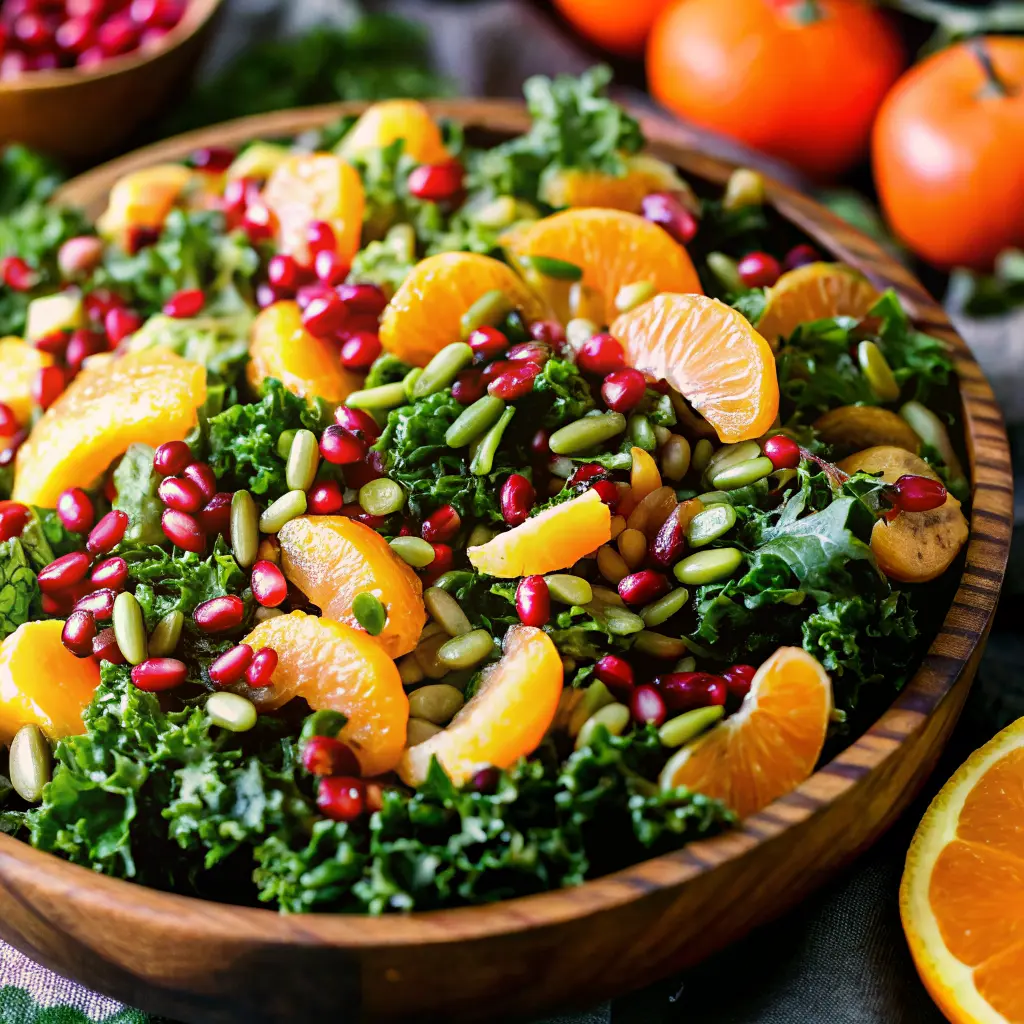
One of the biggest advantages of using kale is how well it stands up to time compared to tender greens.
Make-Ahead Strategies
- Prep the kale in advance
- Wash, de-stem, chop, and store it dry in an airtight container in the fridge for up to a couple of days.
- Massage ahead
- You can even massage the kale with a little oil and citrus, then chill it; it will become even more tender.
- Mix dressing in advance
- The vinaigrette keeps well in the fridge; just shake or whisk before using.
- Prep components separately
- Segment the citrus and store it with its juices in a closed container.
- Store pomegranate seeds in another container.
Assemble everything close to serving time for the best textures.
Storing Leftovers
If your salad is already dressed:
- Cover and refrigerate it in an airtight container.
- It will soften more over time but still be enjoyable for a day or two.
To keep things fresher:
- Store the dressed kale separately from the citrus, pomegranate, and nuts.
- Add the crunchy elements just before serving to maintain their texture.
Troubleshooting & Pro Tips
Even simple salads can go a bit sideways. Here’s how to fix common issues.
Kale Still Feels Tough
- Massage longer—another minute or two makes a big difference.
- Add a small splash of citrus juice and a drizzle of oil while massaging.
- Slice the kale into thinner ribbons next time.
Salad Tastes Flat
- Add a pinch of salt and toss again.
- Drizzle in a little more citrus juice for brightness.
- Add a small spoonful of honey or maple if everything tastes too sharp.
Dressing Is Too Sharp or Too Sweet
- Too sharp:
- Add more olive oil and a tiny bit of honey or maple.
- Toss and taste again.
- Too sweet:
- Add an extra squeeze of lemon or orange juice.
- Add a pinch of salt to balance.
Fruit Makes the Salad Soggy
- Dress only the amount you’re serving immediately.
- Keep citrus segments and pomegranate arils separate until close to serving time if you’re prepping ahead.
Presentation Tips
- Reserve some of the best-looking fruit and nuts for the top.
- Use a wide platter so the colors spread out instead of hiding in a deep bowl.
- Add a final sprinkle of zest for a visual and aromatic flourish.
Frequently Asked Questions About Citrus Pomegranate Kale Salad
Do I have to massage the kale?
Yes, you really should. Massaging kale breaks down its fibers and transforms it from stiff and squeaky to tender and pleasant to chew. It only takes a couple of minutes, and the difference is huge.
Can I prep this salad ahead for a party?
Absolutely. A great strategy is:
- Prep and massage the kale earlier in the day.
- Mix the dressing and keep it chilled.
- Segment the citrus and deseed the pomegranate.
- Just before serving, toss the kale with dressing, then fold in the fruit and crunchy toppings.
This way, you get maximum flavor and ideal texture when your guests arrive.
How long does kale salad last in the fridge?
If fully assembled and dressed, expect the salad to be at its best within a day. Kale holds up better than lettuce, but the citrus and pomegranate will gradually soften it. If you want more longevity, store each component separately and combine as needed.
What kind of kale works best—curly or Tuscan?
Both work well:
- Curly kale is easy to find and gives lots of texture.
- Tuscan kale (lacinato) offers a slightly more delicate chew.
Can I use bottled citrus juice instead of fresh?
Fresh citrus juice always gives the brightest flavor, especially since the citrus is a star in this salad. If you must use bottled juice, choose a good-quality, 100% juice option and consider adding a little zest from a fresh citrus fruit to boost the fragrance.
Conclusion
This citrus pomegranate kale salad is everything you want in a vibrant, fruit-forward salad: striking colors, layered textures, and a lively balance of flavors. Once you’ve made it once or twice, you’ll find it surprisingly simple—and endlessly adaptable.