
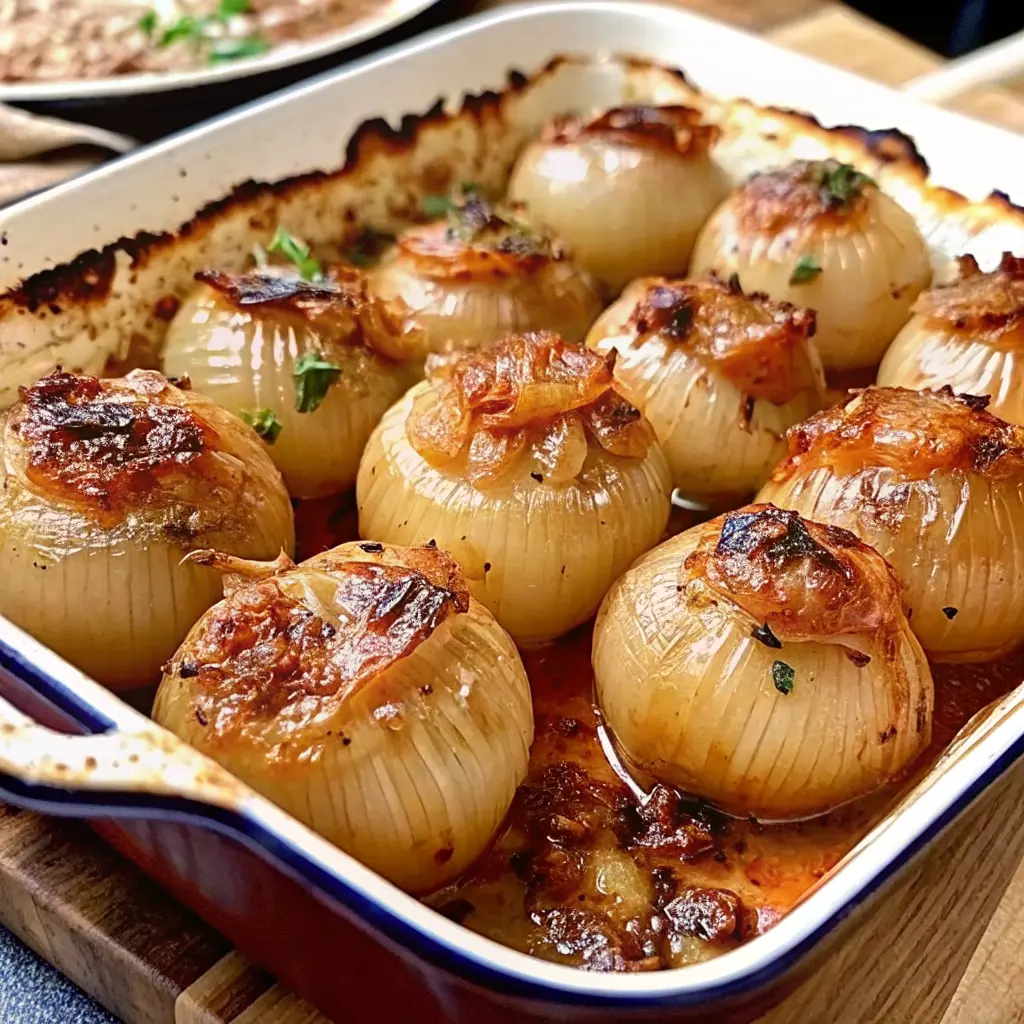
If you love dishes where simple ingredients turn into something “wow,” this Greek Stuffed Onions Recipe is going to be your new favorite. Think tender onion layers wrapped into cozy little onion rolls, filled with a fragrant rice mixture (with or without meat), then baked until everything melts together in a rich, savory sauce.
To pick the best onions for Greek stuffed onions, it helps to know which varieties soften well and peel cleanly—this guide on types of onions and how to use each one is a handy reference when you’re choosing size, sweetness, and texture.
What are Greek stuffed onions called?
Depending on the cook and region, you’ll see a few names:
- Salantourmasi (also spelled salantourmasi/salatourmasi)
- Kremmydia Gemista (literally “stuffed onions”)
- “Greek onion dolmades” or “onion dolma” (more descriptive than traditional)
No matter the name, the idea is the same: softened onion layers become natural wrappers for a savory filling, then everything cooks gently until tender and irresistible.
Why this Greek Stuffed Onions Recipe works
Here’s what makes this version reliable (and repeatable):
- The onions stay intact thanks to a simple blanch-and-separate method.
- The filling cooks evenly because the rice is lightly sautéed and properly hydrated.
- The sauce does the heavy lifting—it perfumes the onions and keeps the rolls juicy.
- Flexible options: make it meatless, add ground meat, or play with herbs and spices.
Ingredients for Greek Stuffed Onions Recipe
For the onions
- 6–8 large onions (yellow or sweet onions work great)
- Water + 1–2 teaspoons salt (for blanching)
For the filling (classic rice-herb base)
- 1/2 cup olive oil, divided
- 1 medium onion, finely chopped (or use chopped onion “centers” from the large onions)
- 3–4 cloves garlic, minced
- 1 cup short- or medium-grain rice (uncooked)
- 1/2 cup chopped fresh parsley
- 2–3 tablespoons chopped fresh mint (or 1–2 tablespoons dried mint)
- Optional: 2 tablespoons chopped dill (very Greek, very good)
- 1–1 1/2 teaspoons salt (start with 1 tsp, adjust later)
- 1 teaspoon black pepper
- 1 teaspoon ground cumin (warm, earthy)
- Optional: 1/4 teaspoon cinnamon (traditional in some styles)
- Optional: 1/3 cup pine nuts OR chopped walnuts
- Optional: 1/4 cup currants or raisins (a sweet-savory nod found in some stuffed dishes)
- 1 3/4 cups warm water or broth (for the filling)
Optional meat version
- 350–450 g (12–16 oz) ground beef, lamb, or a mix
For the sauce (tomato-onion braise)
- 2 tablespoons olive oil
- 1 medium onion, finely chopped
- 2 tablespoons tomato paste
- 400 g (14–15 oz) crushed tomatoes or passata
- 1 1/2–2 cups water or broth (enough to come halfway up the rolls)
- 1 teaspoon salt (to taste)
- 1/2 teaspoon black pepper
- 1 teaspoon dried oregano
- Optional finishing: 1–2 tablespoons lemon juice + lemon zest
Quick swaps
- No mint? Use more parsley + a little dill.
- Prefer lighter sauce? Use less tomato and more broth, finish with lemon.
- Want deeper flavor? Add a pinch of allspice or a bay leaf to the pan.
Tools you’ll need
- Large pot (for blanching onions)
- Sharp knife + cutting board
- Slotted spoon or tongs
- Mixing bowl
- Large baking dish or Dutch oven (something deep enough to snugly fit the rolls)
- Foil or lid for covering
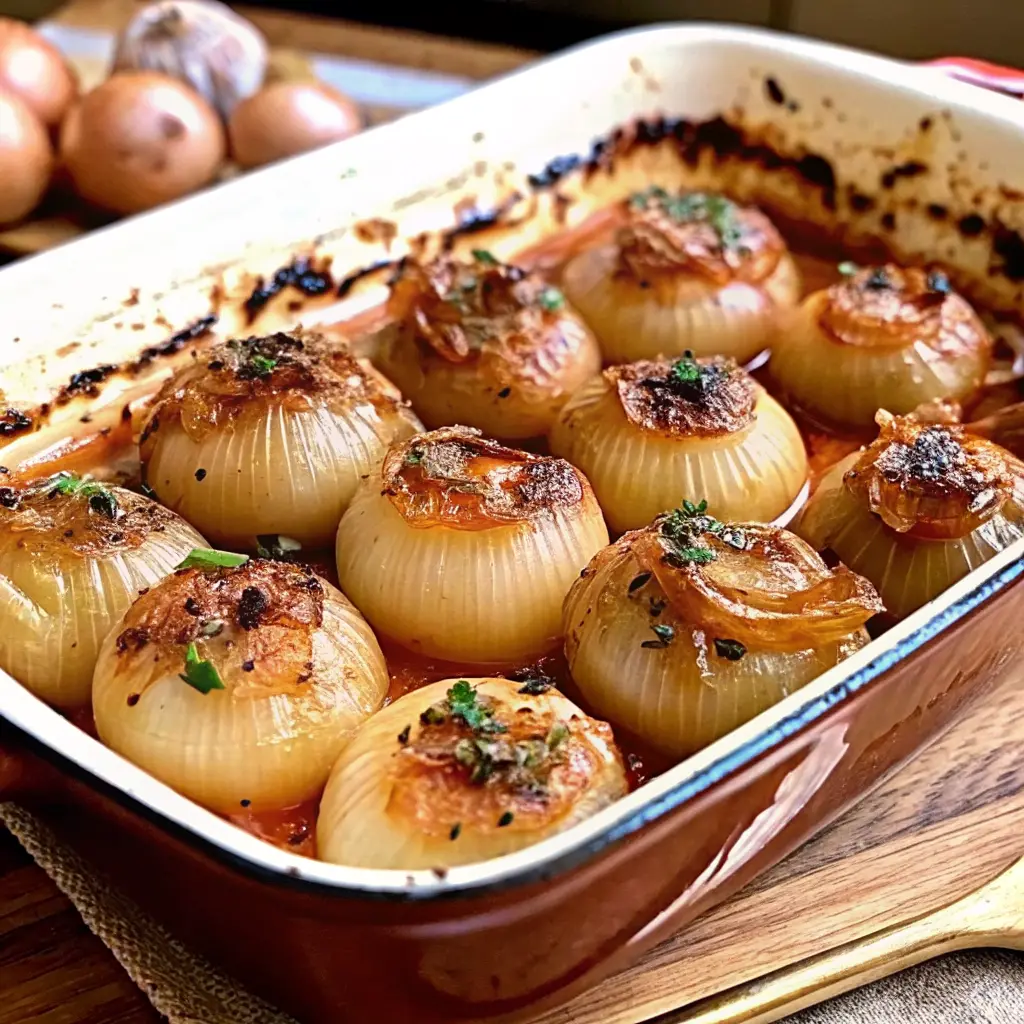
How to make Greek Stuffed Onions Recipe
Step 1: Prep the onions (the easy way)
This is the step that scares people—until they do it once.
1) Trim and peel
- Cut off the stem end (top) and just a thin slice off the root end (bottom).
- Peel off the papery skin.
2) Make the “release cut”
- Make one vertical cut from top to bottom through the outer layers only.
- This slit is the secret: it lets the onion layers slide apart after blanching.
3) Blanch until flexible
- Bring a big pot of water to a boil and salt it.
- Add onions and simmer 8–15 minutes (depends on size).
- You want them soft enough to separate, not collapsing.
4) Cool and separate
- Lift onions out and let them cool until you can handle them.
- Starting from the slit, gently peel off layers one by one.
- Stack the usable “cups”/layers on a plate.
What about the centers?
- The small inner cores are often too tight to stuff.
- Chop them and use them in the filling and/or sauce—zero waste, more flavor.
Pro tip
- If a layer tears, don’t toss it. Overlap it like a patch and roll anyway—once packed in the pan, it usually holds.
Step 2: Make the filling
You can make this meatless or with meat using the same base.
1) Sauté aromatics
In a pan over medium heat:
- Add 1/4 cup olive oil
- Sauté chopped onion (or onion centers) for 4–6 minutes
- Add garlic and cook 30 seconds
2) Toast the rice
- Stir in the rice and cook 1–2 minutes to coat in the oil.
- Add salt, pepper, cumin, and optional cinnamon.
3) Add water/broth + herbs
- Add 1 3/4 cups warm water or broth
- Simmer 3–5 minutes (you’re not fully cooking the rice—just starting it)
- Turn off heat and stir in parsley, mint, and optional dill
- Fold in nuts/currants if using
If using meat
- Either:
- Brown the ground meat lightly with the onions before adding rice (richer, deeper flavor), or
- Keep meat raw and mix it in after the rice step (more tender filling)
Texture check
- The filling should be moist and spoonable, not dry and crumbly.
Step 3: Stuff and roll the onions
This is the fun part.
How to fill
- Lay one onion layer open like a sheet.
- Add 1–2 tablespoons filling (more for large layers).
- Roll gently but firmly, like a small wrap.
Key rolling tips
- Don’t overstuff—rice expands.
- Roll snug, not tight enough to burst.
- Place rolls seam-side down in the baking dish.
Pack them in
- Arrange rolls close together so they support each other.
- If you have extra onion scraps, tuck them around the edges.
Step 4: Make the sauce and assemble
Quick tomato-onion sauce
In a pan:
- Heat 2 tbsp olive oil
- Sauté chopped onion 4–6 minutes
- Stir in tomato paste 1 minute
- Add crushed tomatoes + 1 1/2 cups water/broth
- Season with salt, pepper, oregano
Pour and set liquid level
- Pour sauce over the rolls.
- Add extra water/broth if needed so the liquid comes about halfway up the rolls.
Optional finish
- Add lemon zest now, and lemon juice after baking for brightness.
Step 5: Bake (or simmer)
Oven method (most common)
- Preheat oven to 180°C / 350°F
- Cover the dish tightly with foil (or use a lid)
- Bake 45 minutes
- Uncover and bake 20–30 minutes more, until:
- Onions are fork-tender
- Sauce is reduced and glossy
- Filling is set
Stovetop/Dutch oven option
- Place rolls in a heavy pot, add sauce, cover.
- Simmer gently 60–80 minutes, checking liquid level.
Doneness cues
- An onion roll should cut with a spoon edge.
- Rice should be tender (not chalky).
- Sauce should taste rounded and cooked through.
Serving ideas (Greek-style)
Greek stuffed onions are super versatile on the table. Try:
- Family-style: bring the dish straight to the table and spoon extra sauce over everything
- With simple sides:
- A crisp chopped salad
- Roasted potatoes or a tray of vegetables
- Warm bread to scoop sauce
- Toppings:
- Crumbled feta
- A spoon of thick yogurt with garlic and lemon
- Fresh herbs (mint + parsley is a great combo)
Serving tip
- Let the dish rest 10–15 minutes before serving. The sauce thickens and the rolls hold their shape better.
Variations you can publish (and readers love)
1) Meatless Greek stuffed onions
A classic direction—fragrant, herby, and full of character:
- Keep the rice/herb base
- Add pine nuts and currants
- Finish with lemon juice and extra herbs
2) Ground meat version (kima style filling)
For a heartier pan:
- Use beef, lamb, or a mix
- Add a pinch of allspice or cinnamon
- Bake until sauce is rich and slightly caramelized around the edges
3) Lemony braise version
If you want a lighter, brighter style:
- Use less tomato (or skip crushed tomatoes and rely on broth)
- Add lemon zest early
- Finish with lemon juice and a drizzle of olive oil
4) Spice and herb variations
- More dill for a sharper, greener note
- More mint for a fresh, aromatic lift
- Extra cumin for warmth (especially good with meat)
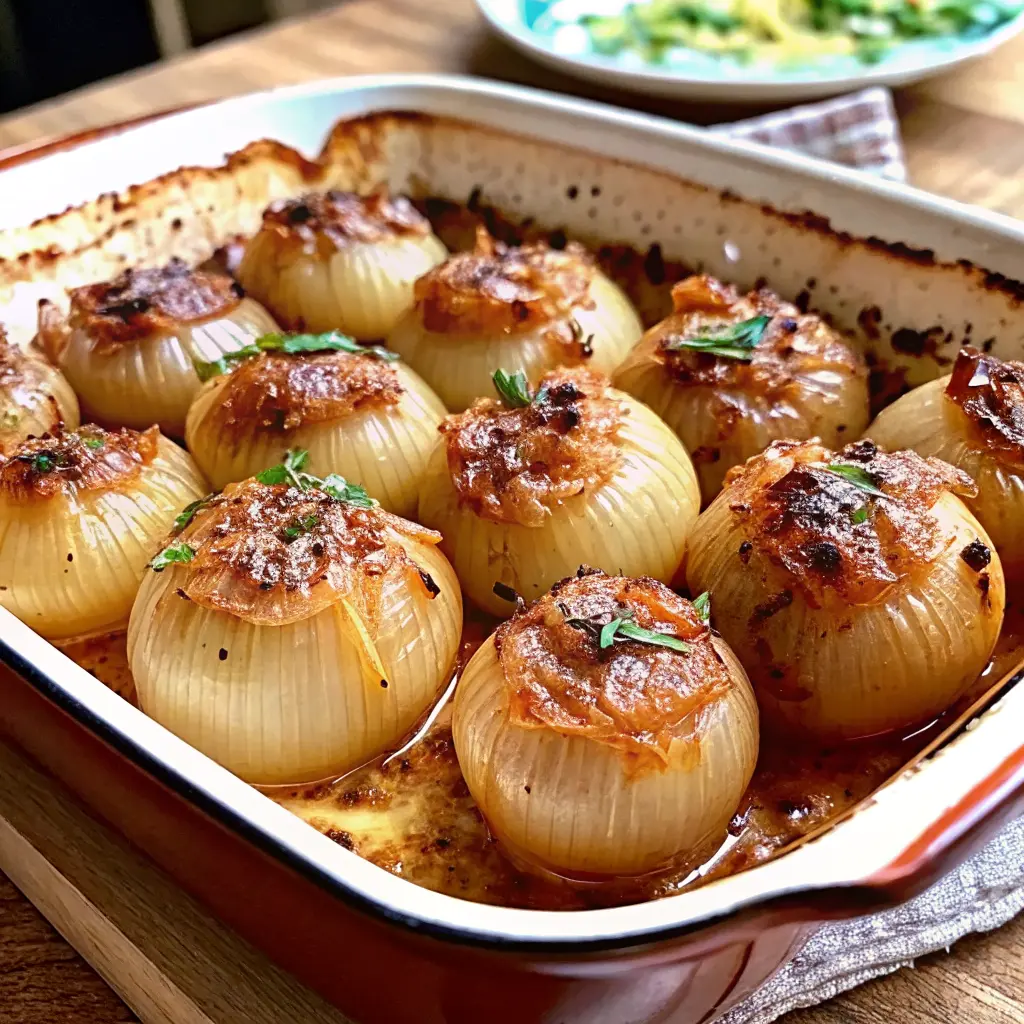
Make-ahead, storage, reheating, freezing
Make-ahead
- Assemble the onion rolls and sauce up to 1 day ahead.
- Cover and refrigerate.
- Bake when ready (add 10–15 minutes to covered baking time if starting cold).
Storage
- Store leftovers in an airtight container with sauce.
- Best within 3–4 days (the onions stay tender and flavorful).
Reheating
- Oven: cover and warm at 160°C / 325°F until hot.
- Stovetop: simmer gently with a splash of water/broth.
Freezing
- Freeze in portions with plenty of sauce.
- Thaw overnight in the fridge, then reheat covered in the oven.
Note
- Onion dishes reheat best when they’re kept saucy—don’t let them dry out.
Troubleshooting (common issues + fixes)
“My onion layers tore”
- Blanch a bit longer next time.
- Choose larger onions with thicker layers.
- Patch torn layers by overlapping and rolling anyway.
“The rolls opened in the pan”
- You may have overstuffed.
- Pack rolls tighter in the dish.
- Always place seam-side down.
“The rice is undercooked”
- Liquid level was too low or heat was too high.
- Add 1/2 cup warm broth to the dish, cover, and bake 10–15 minutes more.
“The sauce is too thin”
- Uncover and bake longer to reduce.
- Or spoon sauce into a pan, simmer to thicken, then return it to the dish.
“The onions are soft but the filling feels dry”
- Add a splash of broth before reheating.
- Next time, increase sauce slightly or reduce uncovered time.
FAQs: Greek stuffed onions (People Also Ask style)
What are Greek stuffed onions called?
They’re commonly called Salantourmasi or Kremmydia Gemista. You might also see “Greek onion dolmades” as a descriptive name.
Do I have to boil the onions first?
Blanching (boiling briefly) makes the layers flexible, so they roll without cracking. It’s the easiest way to get neat onion rolls.
What onions are best for this recipe?
Large yellow onions or sweet onions are great because the layers are wide and separate cleanly. If you’re unsure which onion will behave best, use a variety guide (like the one linked earlier) and choose a large, sturdy type.
Can I make Greek stuffed onions vegetarian?
Absolutely. Use the rice-herb filling, add pine nuts or walnuts, and finish with lemon. It’s flavorful and satisfying without meat.
What rice works best for stuffed onions?
Short- or medium-grain rice works beautifully because it becomes tender and cohesive inside the roll. Avoid very delicate rice that turns mushy quickly.
Conclusion
This Greek Stuffed Onions Recipe turns humble onions into an unforgettable centerpiece: tender, aromatic, and deeply comforting. Make it once, and you’ll start thinking of a dozen ways to tweak it—more herbs, lemonier sauce, meatless or meaty—while still keeping that classic Salantourmasi soul.