
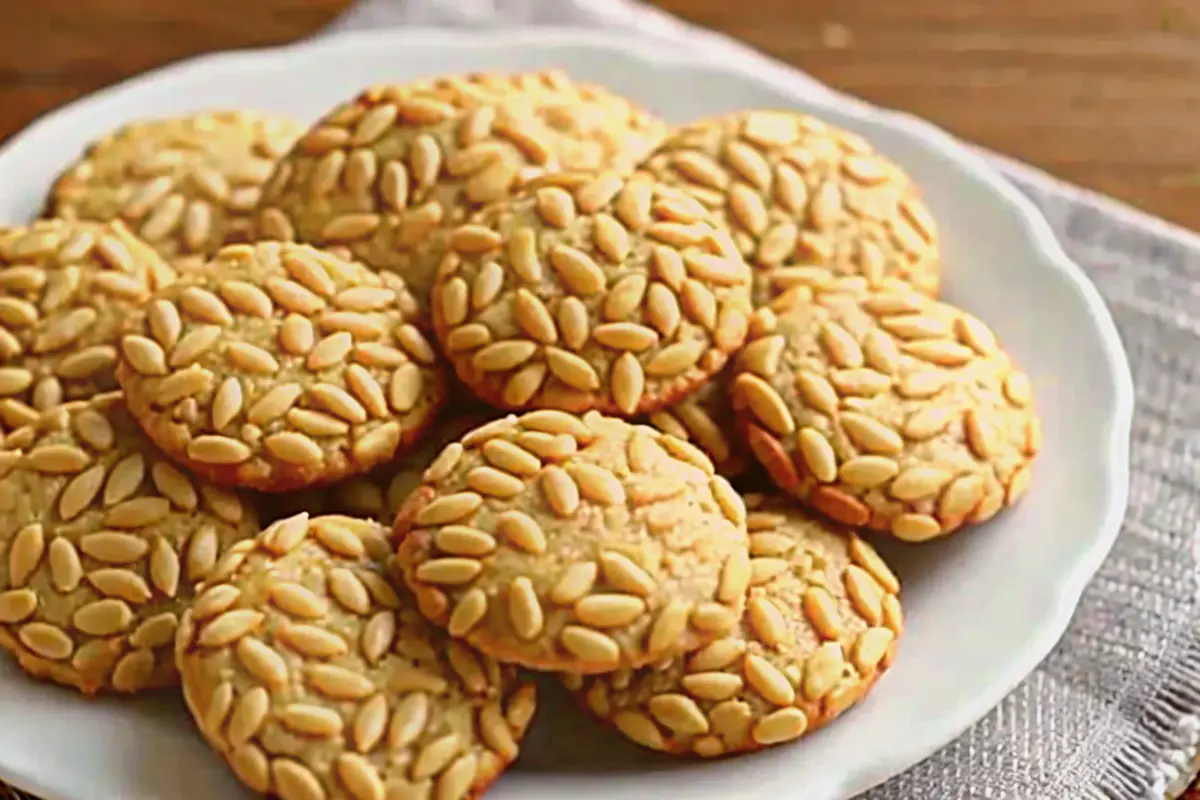
What Are Pignoli Cookies?
Pignoli Cookies are Italian-American bakery favorites made with a simple, sticky dough based on almond paste (not flour-heavy cookie dough), rolled and pressed into a generous blanket of pine nuts before baking. They’re known for:
- A chewy center with a slightly crisp outer shell
- A crackly, glossy top that looks naturally “bakery-made.”
- A rich almond aroma and a toasty pine nut crunch
You’ll often see them on holiday cookie trays, in Italian pastry shops, and in festive cookie boxes—because they’re elegant without being fussy.
Why You’ll Love These Pignoli Cookies
These are the kind of cookies that get people hovering near the dessert table.
- Big flavor, small ingredient list
- Naturally pretty (those pine nuts do the decorating for you)
- No complicated shaping
- Perfect for gifting (they stay beautiful and bakery-style)
- Make-ahead friendly (freeze baked cookies or portioned dough)
Ingredients You’ll Need (And Why They Matter)
This recipe is all about choosing the right building blocks—especially the almond paste and pine nuts.
Core Ingredients
- Almond paste (the star): creates the chewy, almond-rich base
- Granulated sugar: sweetens and helps create that crackly top
- Egg whites: bind the dough and give lift/structure
- Pine nuts (pignoli): the signature coating (and the whole point!)
- Salt (just a pinch): sharpens the almond flavor
Optional Flavor Boosters (choose one, not all)
- Orange zest (classic Italian-bakery vibe)
- Vanilla extract (soft, rounded sweetness)
- Almond extract (use sparingly—almond paste is already bold)
Tools & Equipment
Keep it simple—this is a low-fuss cookie.
- Mixing bowl + sturdy spoon or stand mixer
- Baking sheet(s)
- Parchment paper (or silicone baking mat)
- Small bowl or plate for pine nuts
- Cookie scoop (helpful for even sizing)
- Clean, lightly damp hands for shaping sticky dough
Pignoli Cookies Recipe (Bakery-Style)
Yield & Timing
- Makes: about 18–22 cookies (depending on size)
- Bake time: 12–15 minutes
- Cool time: 20–30 minutes (important for set)
Ingredients
- 400 g almond paste (about 14 oz)
- 200 g granulated sugar (about 1 cup)
- 2 large egg whites (about 60–70 g total)
- 1/4 tsp salt
- 1 tsp orange zest or 1 tsp vanilla (optional)
- 200–250 g pine nuts (about 1 1/2 to 2 cups), for coating
Step-by-Step: How to Make Pignoli Cookies
1) Prep the oven and pans
- Preheat to 350°F / 175°C
- Line baking sheets with parchment paper
- Place an oven rack in the middle position
2) Break down the almond paste
Almond paste can be firm, especially if cool. You want it to become crumbly before it becomes smooth.
- Crumble the almond paste into your bowl
- Add sugar and mix until the paste is broken into smaller bits
If using a stand mixer:
- Use the paddle attachment on low speed until crumbly.
3) Add egg whites gradually
This is the most important texture step: you’re aiming for a sticky, scoopable dough that holds its shape.
- Add 1 egg white and mix
- Add the second egg white slowly (you may not need every last drop if your paste is soft)
- Mix until you get a thick, sticky dough that looks like a smooth almond “paste” you can scoop
Add:
- Salt
- Optional zest/vanilla
4) Scoop and shape
- Scoop dough into mounds (about 1 1/2 tablespoons each for bakery-style)
- Roll lightly between damp palms to form a ball (or a rounded mound)
5) Coat in pine nuts
Pour pine nuts onto a plate.
- Press the dough ball gently into the nuts
- Turn and press so the top and sides are well-coated
- Place on the baking sheet with a little space between cookies
Pro tip for maximum coverage:
- Press pine nuts into the dough with your fingertips so they “lock in.”
6) Bake
- Bake 12–15 minutes, until:
- pine nuts are lightly golden
- tops look set and crackly
- cookies still feel soft in the center (they firm as they cool)
7) Cool (don’t skip this)
- Let cookies cool on the tray for 10 minutes
- Transfer to a rack to cool fully
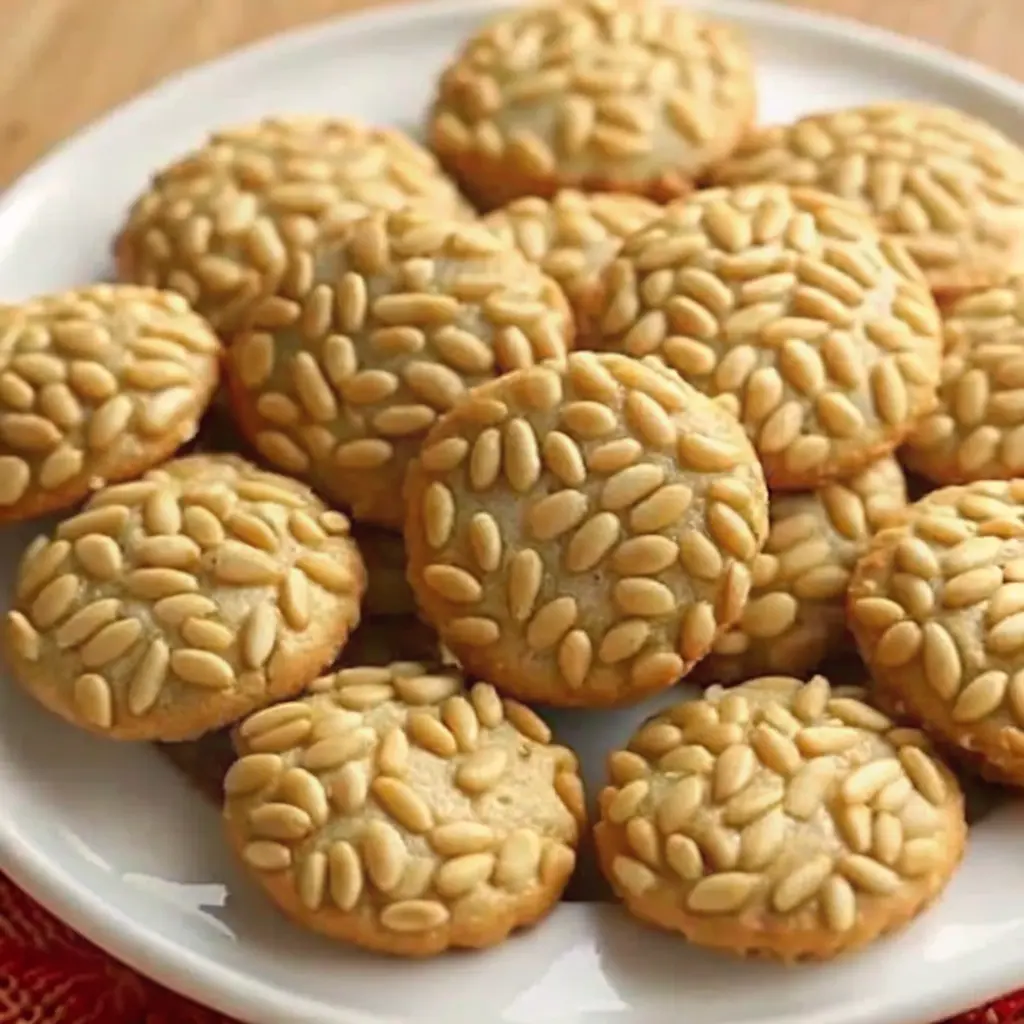
What Pignoli Cookie Dough Should Look Like
Your dough should be:
- Sticky (yes, that’s normal)
- Scoopable (holds a mound shape)
- Not runny (shouldn’t puddle on the tray)
If it’s too stiff, it may be slightly dry (or the paste is extra firm). If it’s too loose, it will spread.
Troubleshooting: Fixes for Common Problems
My cookies spread too much
This usually means the dough was too wet.
Try this:
- Mix in 1–2 tablespoons more sugar
- Let dough sit 10 minutes (it can tighten slightly)
- Scoop smaller mounds and bake a test cookie
My pine nuts fell off
This is almost always a pressing issue.
Fix it by:
- Pressing the nuts in firmly
- Making sure the dough surface is sticky (don’t flour your hands—use water)
- Coating immediately after shaping
My cookies came out dry
They’re likely overbaked.
Next time:
- Pull them when the nuts are just starting to golden
- Remember they set as they cool
My dough is too stiff to scoop
- The almond paste may be cold/firm
- Let the dough sit at room temperature for 10–15 minutes, then remix briefly
Flavor Variations
Pignoli Cookies are iconic for a reason, but you can still personalize them.
Classic Italian Touch
- Orange zest: bright, fragrant, bakery-style
Soft & Sweet
- Vanilla extract: gentle and crowd-pleasing
Bolder Almond
- Almond extract: use 1/8 to 1/4 tsp max (a little goes a long way)
Pretty Finish
- Light dusting of powdered sugar after cooling (optional)
Mini Cookie Tray Version
- Scoop 1 tablespoon portions
- Bake slightly less (start checking at 10–12 minutes)
Make-Ahead, Storage, and Freezing
One reason people love Pignoli Cookies for holidays: they store well and stay impressive.
Storing at room temperature
- Keep in an airtight container
- Layer with parchment if stacking
- Best texture for 3–5 days
Freezing baked cookies
- Cool completely
- Freeze on a tray until firm
- Transfer to a freezer container with parchment between layers
- Thaw at room temperature (uncovered for best texture)
Freezing portioned dough
- Scoop dough mounds onto a lined tray
- Freeze until firm
- Store in a freezer bag/container
- When ready: thaw just until slightly tacky, coat in pine nuts, bake
Serving Ideas: How to Make Them Feel Even More Special
These cookies are made for moments.
- Serve with espresso, coffee, or hot tea
- Add to a holiday tray with:
- biscotti
- butter cookies
- chocolate-dipped treats
- Pack in cookie boxes:
- Use parchment cups
- Keep snug so they don’t tumble (nuts can crack if shaken)
Why Are Pignoli Cookies So Expensive in Bakeries?
It’s usually one reason: pine nuts.
- Pine nuts tend to be pricey compared to other nuts
- Bakeries use a heavy coating for that signature look
- These cookies are labor-intensive at scale (each one gets individually coated)
At home, you still get the “luxury cookie” experience—without paying bakery prices per piece.
FAQ: Pignoli Cookies (People Also Ask Style)
1) What are Pignoli Cookies made of?
They’re typically made with:
- almond paste
- sugar
- egg whites
- pine nuts for coating
Some versions add orange zest or vanilla.
2) Are Pignoli Cookies Italian or Italian-American?
They’re strongly associated with Italian-American bakeries, especially in areas with large Italian communities. You’ll also find similar pine–nut–topped almond cookies in Italian pastry traditions.
3) Can I use marzipan instead of almond paste?
It’s not recommended. Marzipan is usually sweeter and softer, which can change the dough texture and final cookie structure. If you’re unsure which one you bought, use this quick explainer: difference between almond paste and marzipan.
4) Do I need to chill Pignoli Cookie dough?
Usually, no. If your dough feels very loose or your kitchen is warm, a short rest can help it feel easier to scoop—but chilling is not a must for most batches.
5) Why did my cookies spread too much?
Common causes:
- too much egg white
- very soft almond paste
- oven running cool
Conclusion
Pignoli Cookies are one of those bakery classics that look fancy, taste unforgettable, and still come together with a short list of simple ingredients. With the right almond paste base, a generous coating of pine nuts, and a careful bake (just until golden), you’ll get that signature crackly top, chewy center, and elegant finish every time.
Print
Pignoli Cookies Recipe
- Total Time: PT30M
- Yield: 22 cookies 1x
- Diet: Gluten Free
Description
Pignoli Cookies are classic Italian almond cookies made with almond paste and rolled in pine nuts for a crisp-on-the-outside, chewy-in-the-center texture. Naturally gluten-free and beautifully golden, these cookies are beloved at Italian bakeries, holidays, and celebrations. They’re simple, elegant, and rich with almond flavor.
Ingredients
For the Cookies
- 8 oz almond paste (not marzipan)
- ¾ cup powdered sugar
- ¼ cup granulated sugar
- 1 large egg white
- ½ tsp almond extract (optional)
- Pinch of salt
For Coating
- 1 cup pine nuts (pignoli)
Instructions
1. Make the Dough
- Preheat oven to 325°F (165°C).
- Line baking sheets with parchment.
- Break almond paste into small pieces and pulse with sugars in a food processor until sandy.
- Add egg white, almond extract, and salt.
- Blend until a sticky dough forms.
2. Shape & Coat
- Scoop dough into 1 tbsp balls.
- Roll each ball in pine nuts to fully coat.
- Place on prepared sheets, spaced apart (cookies spread slightly).
3. Bake
- Bake 18–20 minutes until lightly golden with soft centers.
4. Cool & Serve
- Cool fully before removing from pan (they firm as they cool).
Notes
- Almond paste is essential—marzipan is too sweet and changes texture.
- Pine nuts can be gently toasted before rolling for extra flavor.
- Almond extract deepens flavor but traditional recipes often skip it.
- Prep Time: PT10M
- Cook Time: PT20M
- Category: Cookie Recipes
- Method: Baked
- Cuisine: Italian
Nutrition
- Serving Size: 1 cookie
- Calories: 160 kcal
- Sugar: 12g
- Sodium: 15mg
- Fat: 10g
- Saturated Fat: 1g
- Unsaturated Fat: 9g
- Trans Fat: 0g
- Carbohydrates: 15g
- Fiber: 1 g
- Protein: 3g
- Cholesterol: 0mg
1 thought on “Irresistible Pignoli Cookies (Italian Pine Nut Cookies) – Bakery Style”