
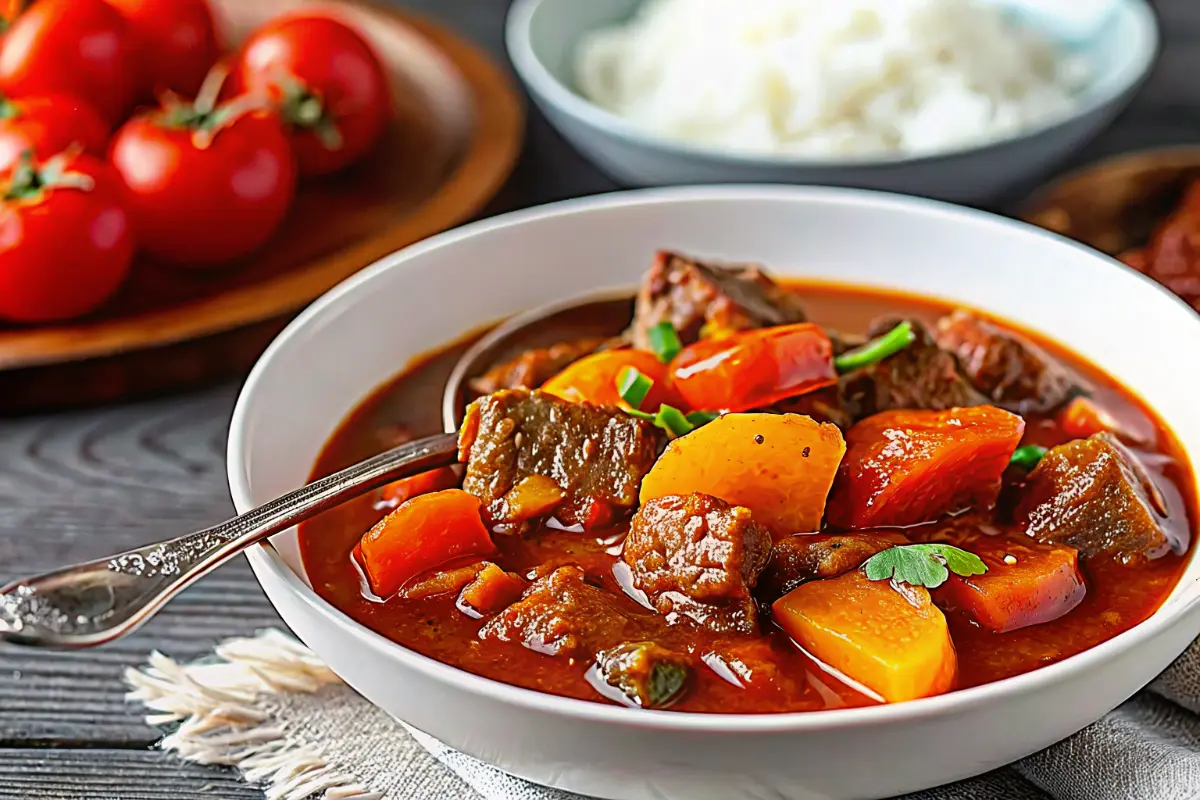
What Is a Filipino Beef Stew?
When people talk about Filipino beef stew, they often mean one of a few beloved dishes:
- Mechado – a tomato and soy-based stew with potatoes and carrots
- Caldereta – a richer, often slightly spicier stew with tomato, liver spread or other thickeners, and sometimes olives
- Nilagang baka – a clear-broth boiled beef soup with vegetables
Our Juicy Filipino Beef Stew Recipe is mainly mechado-style with a little caldereta influence: it’s tomato-forward, savory, slightly tangy, and absolutely perfect with rice. It leans on:
- A slow-cooked tomato sauce enriched with soy sauce and aromatics
- Collagen-rich beef cuts that become incredibly tender when simmered
- A finishing touch of acidity from calamansi or lemon to brighten the whole pot
You get the cozy, homey feel of classic Filipino ulam (main dish) with a sauce that’s thick enough to spoon over rice but not so heavy that it feels stodgy.
Ingredients for Juicy Filipino Beef Stew Recipe
Best Beef Cuts for a Juicy Stew
For melt-in-your-mouth beef, choose cuts with plenty of connective tissue and some fat marbling. Great options include:
- Beef chuck roast – Classic choice for braising; becomes very tender.
- Beef shank (with bone) – Adds a beautiful beefy flavor and body to the sauce.
- Short ribs – Extra rich and decadent if you want a more luxurious stew.
- Brisket (point cut) – Works well if you want something a bit fattier and ultra-tender.
Avoid extra-lean cuts, which tend to dry out. A little fat and connective tissue is your friend in a long-simmered Filipino beef stew.
Aromatics & Base Flavors
You’ll build your flavor base with:
- Onions – Sweetness and depth as they soften and caramelize
- Garlic – Classic Filipino aroma and savoriness
- Bay leaves – Gentle herbal note
- Whole peppercorns or ground black pepper – Warm spice
These are sautéed in oil and beef drippings to form the backbone of your stew.
Liquid & Seasonings
To create the juicy, saucy base, you’ll need:
- Tomato sauce or crushed tomatoes
- Beef broth or water (you can also use chicken broth for a cleaner flavor and adjust seasonings)
- Soy sauce for umami and color
- Fish sauce (patis) for deeper savoriness
- Calamansi juice (or lemon/lime juice)
- A small pinch of sugar to round out the acidity
Together, these give your Filipino tomato and soy sauce stew its signature flavor.
Vegetables & Optional Add-Ins
Classic Filipino beef mechado-style stew usually includes:
- Potatoes – Creamy and satisfying
- Carrots – Gentle sweetness and color
- Bell peppers – Adds fragrance and a hint of sweetness
Optional extras:
- Green peas or green beans
- Olives, especially if you want more of a caldereta vibe
- Chili peppers (siling labuyo) if you like it spicy
Equipment You’ll Need
To make this one-pot Filipino beef stew, you don’t need anything fancy:
- A heavy-bottomed pot or Dutch oven
- A sharp knife and sturdy cutting board
- Tongs or a spatula for browning the meat
- Measuring cups and spoons
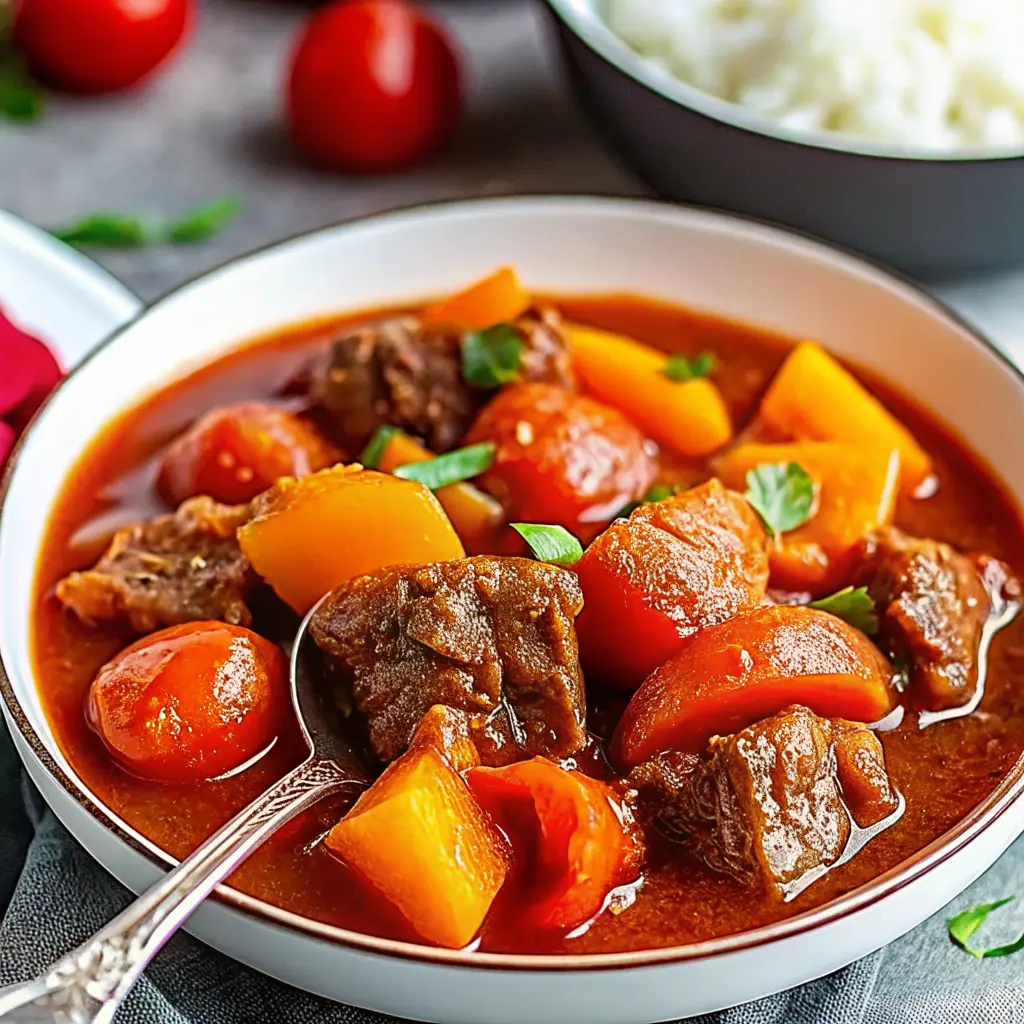
Step-by-Step: Juicy Filipino Beef Stew Recipe (Stovetop)
Below is a flexible, mechado-style version you can customize. Quantities can be scaled depending on how many people you’re feeding.
1. Marinate & Season the Beef
- Cut your beef chuck (or other braising cut) into large, even cubes.
- In a bowl, combine:
- Soy sauce
- Crushed garlic
- A splash of calamansi or lemon juice
- Cracked black pepper
- Toss the beef cubes in the marinade and let them rest for at least 30 minutes (or up to a few hours in the fridge).
This quick marinade infuses the meat with flavor and lays the foundation for that juicy, savory character.
2. Brown the Beef Properly
- Pat the marinated beef dry with paper towels. This helps it brown instead of steaming.
- Heat oil in your heavy pot over medium-high heat.
- Sear the beef cubes in batches, making sure not to overcrowd the pan.
- Brown all sides until you see a dark crust and lots of browned bits (fond) on the bottom of the pot.
Those caramelized bits are flavor gold and will dissolve into the stew, making your sauce richer and more complex.
3. Build the Aromatic Base
- Once the beef is browned, set it aside on a plate.
- In the same pot, add a bit more oil if needed.
- Sauté chopped onions until soft and lightly golden.
- Add minced garlic and cook until fragrant, but not burnt.
- Deglaze the pot with a small splash of broth, soy sauce, or water, scraping up all those browned bits with a wooden spoon.
At this point, the kitchen will smell deeply Filipino—a mix of sautéed onions, garlic, and beef.
4. Add the Liquids & Start Simmering
- Return the seared beef and its juices to the pot.
- Pour in tomato sauce or crushed tomatoes.
- Add beef broth or water until the beef is mostly submerged.
- Stir in soy sauce, a little patis, bay leaves, and peppercorns.
- Bring everything just to a boil, then immediately lower to a gentle simmer.
Cover the pot partially and let it simmer low and slow. Depending on your cut, this can take anywhere from 1½ to 2 hours or more until the beef is fork-tender.
5. Add the Vegetables at the Right Time
To keep your veggies from turning mushy:
- When the beef is almost tender (you can pierce it with a fork with some resistance), add chopped potatoes and carrots.
- Continue simmering until the potatoes and carrots are cooked through.
- Add sliced bell peppers in the final 10–15 minutes, so they stay slightly crisp and colorful.
This staggered timing ensures each vegetable hits the perfect texture.
6. Adjust Seasoning & Sauce Consistency
Right before serving:
- Taste the sauce.
- Add more soy sauce or patis if it needs more saltiness.
- Add a bit more calamansi or lemon juice if it needs brightness.
- Add a pinch of sugar if the tomato and citrus feel too sharp.
- If the stew is too thin, remove the lid and simmer until the sauce thickens to your liking.
Serving Suggestions & Presentation
Filipino beef stew is meant to be shared, enjoyed family-style, and eaten with something that soaks up all that glorious sauce.
Classic Ways to Serve
- Over a big plate of steaming white rice
- With garlic fried rice for an extra-savory meal
- Alongside soft pandesal or crusty bread to mop up the sauce
Garnishes & Finishing Touches
- Freshly chopped scallions or spring onions
- Calamansi or lemon wedges on the side
- A sprinkle of freshly ground black pepper
Leftover Transformations
If you have leftover juicy Filipino beef stew (lucky you!), try:
- Beef stew fried rice – Chop the beef and vegetables, mix with day-old rice and a bit of leftover sauce.
- Pasta bake – Toss the stew with cooked pasta, top with cheese, and bake until bubbly.
- Fillings for empanadas or hand pies – Reduce the sauce slightly and use as a rich filling.
Make-Ahead, Storage & Reheating
This Filipino beef stew is perfect for planning ahead:
- Make-ahead: Cook the stew a day before a gathering and reheat before serving. The flavor deepens overnight.
- Storage:
- Cool the stew completely.
- Store in airtight containers in the fridge.
- Freezing:
- Portion into freezer-safe containers.
- Leave a bit of space at the top for expansion.
To reheat:
- Warm gently on the stovetop over low heat, stirring occasionally.
- Add a splash of water or broth if the sauce has thickened too much in the fridge or freezer.
Slow and gentle reheating helps keep the beef moist and tender.
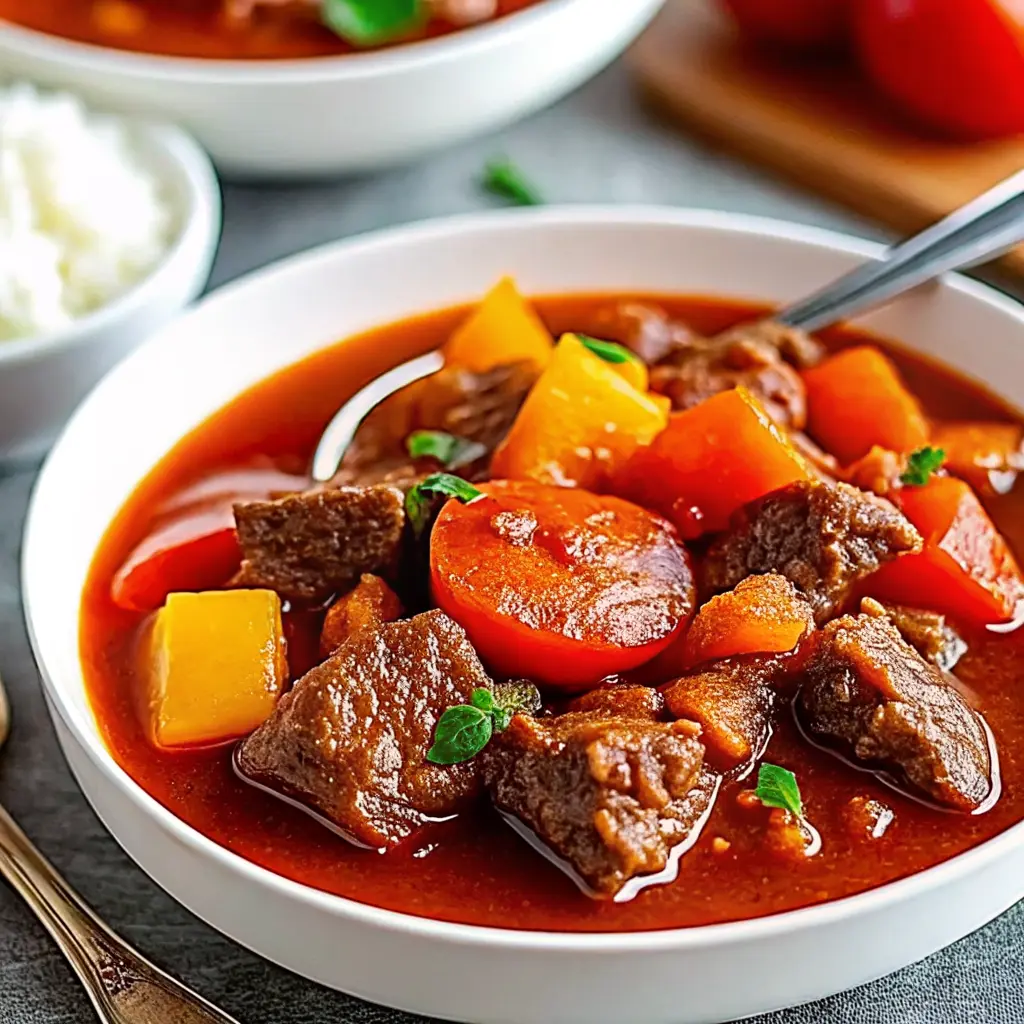
Troubleshooting Common Problems
Even experienced cooks hit a few bumps now and then. Here’s how to fix (or prevent) the most common issues:
Beef Is Tough
- It probably needs more time.
- Keep the heat low and simmer until the meat is truly fork-tender.
- If you used a very lean cut, try chuck or shank next time for better results.
Stew Is Too Watery
- Remove the lid and simmer until the liquid reduces and thickens.
- Lightly mash a few pieces of potato into the sauce to give it more body.
Stew Is Too Salty
- Add more water or unsalted broth to dilute.
- Increase the amount of potato or other neutral vegetables in the pot.
- Balance with a pinch of sugar and a touch more acidity.
Vegetables Are Mushy
- Add them later in the cooking process next time.
- Cut them into slightly larger chunks.
- Check them earlier so you can turn off the heat as soon as they’re done.
FAQs About Juicy Filipino Beef Stew Recipe
1. What cut of beef is best for this juicy Filipino beef stew?
Use beef chuck, shank, short ribs, or point-cut brisket. These cuts have enough fat and connective tissue to stay tender and juicy after a long simmer. Serious Eats+1
2. How do I keep the beef from getting tough?
Avoid boiling. Keep the stew at a gentle simmer and give it enough time. Tough beef often just needs more low-and-slow cooking.
3. Can I make this in an Instant Pot or pressure cooker?
Yes. Brown the beef on sauté mode, build your aromatic base, then pressure cook for around 30–40 minutes (depending on cut and size) before adding vegetables and finishing on sauté.
4. Is Filipino beef stew spicy?
Not necessarily. Traditional mechado-style is typically mild. You can easily adjust the heat by adding or skipping chilies.
Conclusion
This Juicy Filipino Beef Stew Recipe brings together everything you love about true Filipino comfort: tender beef, a rich tomato-soy sauce, and hearty vegetables that soak up every bit of flavor. With the right cut of beef, patient simmering, and a few smart seasoning tweaks, you get a stew that tastes like it’s been passed down through generations.
Print
Filipino Beef Stew Recipe
- Total Time: PT2H00M
- Yield: 6 servings 1x
- Diet: Gluten Free
Description
This Juicy Filipino Beef Stew—inspired by classic Filipino Kaldereta—features tender beef simmered slowly in a rich tomato-based sauce with potatoes, carrots, bell peppers, and optional liver spread for that signature silky texture.
Ingredients
For the Beef Stew
- 2 lbs beef chuck, cut into large cubes
- 2 tbsp oil
- 1 medium onion, chopped
- 4 cloves garlic, minced
- 1 cup tomato sauce
- 1 tbsp tomato paste
- 3 cups beef broth
- 1 medium carrot, sliced
- 2 medium potatoes, cubed
- 1 red bell pepper, sliced
- 1 green bell pepper, sliced
- 1 bay leaf
- 1 tbsp soy sauce
- ½ tsp paprika
- ½ tsp chili flakes (optional)
- Salt and pepper to taste
Optional (Authentic Kaldereta Touch)
- ¼ cup liver spread (makes stew richer and creamier)
- ½ cup green peas
- ¼ cup grated cheese
- 1–2 red chiles for heat
For Garnish
- Chopped parsley or green onions
Instructions
1. Brown the Beef
- Heat oil in a heavy pot over medium-high heat.
- Brown beef cubes in batches until caramelized.
- Remove beef and set aside.
2. Build the Stew Base
- Sauté onions until soft.
- Add garlic and cook 1 minute.
- Stir in tomato paste and cook until slightly darkened.
- Add tomato sauce, soy sauce, beef broth, bay leaf, paprika, salt, and pepper.
- Return beef to the pot and bring to a boil.
3. Simmer Until Tender
- Reduce heat to low.
- Cover and simmer 1.5 to 2 hours, until beef is fork-tender.
- Stir occasionally and add liquid if needed.
4. Add Vegetables
- Add potatoes and carrots; simmer 12–15 minutes.
- Add bell peppers and cook another 5 minutes.
5. Make It Extra Juicy & Rich (Optional)
- Stir in liver spread and/or cheese to thicken and deepen the flavor.
- Add peas at the end to keep their color bright.
6. Serve
- Garnish with chopped parsley.
- Serve with steamed rice or warm bread.
Notes
- Beef chuck works best; it becomes melt-in-your-mouth tender.
- Adjust the broth depending on how thick you want the sauce.
- For a sweeter Filipino profile, add a teaspoon of sugar.
- Prep Time: PT15M
- Cook Time: PT1H45M
- Category: Comfort Food
- Method: Stovetop
- Cuisine: Filipino
Nutrition
- Serving Size: 1 bowl
- Calories: 430 kcal
- Sugar: 7 g
- Sodium: 590 mg
- Fat: 22 g
- Saturated Fat: 8 g
- Unsaturated Fat: 14 g
- Trans Fat: 0 g
- Carbohydrates: 28 g
- Fiber: 4 g
- Protein: 32 g
- Cholesterol: 110mg
1 thought on “Juicy Filipino Beef Stew Recipe | Tender One-Pot Filipino Comfort”