
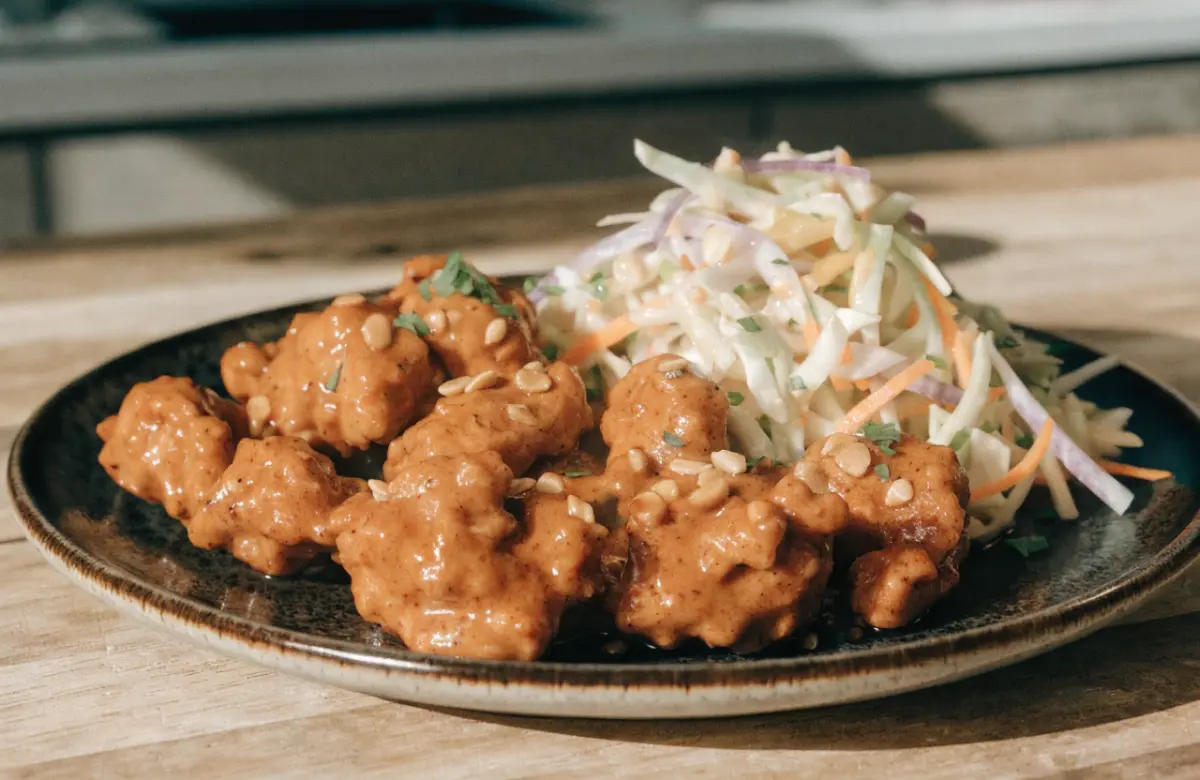
Why You’ll Love This Peanut Chicken Recipe
There is something particularly satisfying about a dinner where every component has a different personality. The chicken is warm and savory, the rice is soft and fragrant, and the slaw is cool, crunchy, and gingery.
Here are a few reasons to make this peanut chicken with ginger slaw:
- Quick and easy enough for a weeknight dinner
- Uses simple ingredients
- Packed with contrasting textures
- Features a creamy, savory peanut sauce
- Fresh ginger gives the slaw a lively flavor
- Purple cabbage adds beautiful color
- Coconut rice makes the bowl extra comforting
- Easy to customize with different toppings
- Works well with chicken breast or chicken thighs
- Great for serving family-style
- Easy to turn into wraps, noodle bowls, or lettuce cups
The real magic happens when all three components are eaten together. A forkful of tender chicken, fluffy rice, and crisp ginger slaw gives you savory, creamy, tangy, fresh, and slightly sweet flavors in one bite.
What Is Peanut Chicken with Ginger Slaw?
Peanut Chicken with Ginger Slaw is an easy Asian-inspired dinner built around three simple components: peanut-coated chicken, crunchy ginger cabbage slaw, and rice.
The chicken is thinly sliced before being coated in peanut sauce. Because the pieces are relatively small, they cook quickly in a hot skillet and become coated in a glossy layer of sauce.
The slaw provides the contrast. Thinly sliced purple cabbage is tossed with rice vinegar, ginger, a little sugar, and salt. The result is crisp and tangy with plenty of fresh ginger flavor.
Finally, everything can be served over coconut jasmine rice. The rice provides a soft, fragrant base that brings the chicken and slaw together.
You can think of the finished dish as a peanut chicken rice bowl with a fresh cabbage topping.
Ingredients for Peanut Chicken with Ginger Slaw
The ingredient list is straightforward, but each ingredient has an important role.
For the Peanut Chicken
- 1 ½ lb (680 g) boneless, skinless chicken breasts, thinly sliced
- ½ cup peanut satay sauce or creamy peanut sauce
- 2 cloves garlic, minced
- 1 tablespoon neutral cooking oil
- ½ teaspoon salt
For the Ginger Slaw
- 4 cups finely shredded purple cabbage
- 1 small shallot, thinly sliced
- 1 tablespoon fresh ginger, finely grated
- 3 tablespoons rice vinegar
- 1 tablespoon granulated sugar
- ½ teaspoon salt
For the Coconut Rice
- 1 ½ cups jasmine rice
- 1 cup coconut milk
- 1 cup water
- ½ teaspoon salt
Optional Toppings
- ¼ cup chopped roasted peanuts
- 2 tablespoons crispy shallots
- 2 tablespoons fresh cilantro, chopped
- 2 green onions, thinly sliced
- 1 tablespoon sesame seeds
- Lime wedges, for serving
- Chili crisp or Sriracha, to taste
How to Make Peanut Chicken with Ginger Slaw
This recipe becomes much easier when you prepare the components in the right order.
Step 1: Slice the Chicken
Place the boneless, skinless chicken breasts on a clean cutting board and slice them into thin strips.
Try to keep the pieces similar in size. This helps them cook at roughly the same rate.
Thin strips are especially useful for this recipe because the chicken cooks quickly and gives the peanut sauce plenty of surface area to cling to.
Step 2: Coat the Chicken
Place the sliced chicken in a bowl.
Add:
- Peanut sauce
- Grated garlic
- Salt
Toss everything together until the chicken is evenly coated.
You don’t need a long marinade. A short resting period while you prepare the slaw and rice gives the sauce time to flavor the chicken.
How to Make the Ginger Slaw
The ginger slaw is one of the most important parts of this dish.
It isn’t simply a side salad. Its crisp texture and sharp flavor balance the richness of the peanut chicken.
Step 1: Slice the Cabbage
Thinly shred the purple cabbage.
The thinner the cabbage, the easier it is to combine with the dressing.
If you have a mandoline, use it carefully to create very thin slices. Otherwise, use a sharp knife.
Step 2: Prepare the Shallot
Slice the shallot very thinly.
You want the shallot to blend into the cabbage rather than overpower it.
Step 3: Make the Ginger Dressing
In a small bowl, combine:
- Rice vinegar
- Sugar
- Fresh ginger or ginger paste
- Salt
Whisk until the sugar and salt are well incorporated.
Taste the dressing before adding it to the cabbage. You are looking for a balance of tangy, sweet, salty, and gingery.
Step 4: Toss the Slaw
Place the cabbage and shallot in a large bowl.
Pour the dressing over the top and toss thoroughly.
You can gently massage the cabbage with clean hands for a few seconds. This helps the dressing coat the cabbage while keeping plenty of crunch.
Don’t overwork it. The goal is crunchy-tender cabbage, not soft cabbage.
How to Make Coconut Rice
While the slaw rests, prepare the rice.
Step 1: Rinse the Rice
Rinse jasmine rice under cool water until the water becomes clearer.
This helps remove excess surface starch.
Step 2: Combine the Ingredients
Add the rice, coconut milk, water, and salt to a saucepan.
Bring the mixture to a gentle boil.
Step 3: Simmer
Reduce the heat, cover the saucepan, and simmer until the rice is tender and the liquid has been absorbed.
Avoid constantly lifting the lid because the trapped steam helps the rice cook evenly.
Step 4: Rest and Fluff
Turn off the heat and let the rice rest for several minutes.
Then fluff it gently with a fork.
The finished rice should be soft and fragrant without becoming mushy.
How to Cook the Peanut Chicken
Once the slaw and rice are ready, cook the chicken.
Heat a large nonstick skillet over medium-high heat.
Add a little neutral oil.
Place the chicken into the skillet in a relatively even layer.
Avoid overcrowding the pan. If necessary, cook the chicken in two batches.
Let the chicken cook for a few minutes before turning the pieces.
Because the strips are thin, they should cook fairly quickly.
Continue cooking until the chicken is cooked through and coated in a glossy peanut sauce.
For poultry, use a food thermometer to confirm that the thickest pieces have reached 165°F (73.9°C).
A Useful Tip
If the peanut sauce begins sticking too aggressively to the skillet, lower the heat slightly and add a small splash of water.
This can loosen the sauce and help prevent it from becoming overly dark.
How to Assemble the Peanut Chicken Bowls
Now comes the fun part.
Start with a generous scoop of coconut rice.
Add several pieces of peanut chicken.
Pile the ginger slaw alongside or directly over the chicken.
Then finish with your favorite toppings.
A beautiful combination is:
- Coconut rice
- Peanut chicken
- Purple ginger slaw
- Cilantro
- Crispy shallots
- Crushed peanuts
- Lime wedge
- Chili crisp
The original recipe concept also pairs peanut chicken with coconut rice, purple cabbage slaw, cilantro, and crispy shallots.
The result is colorful enough for a dinner party but simple enough for an ordinary weeknight.
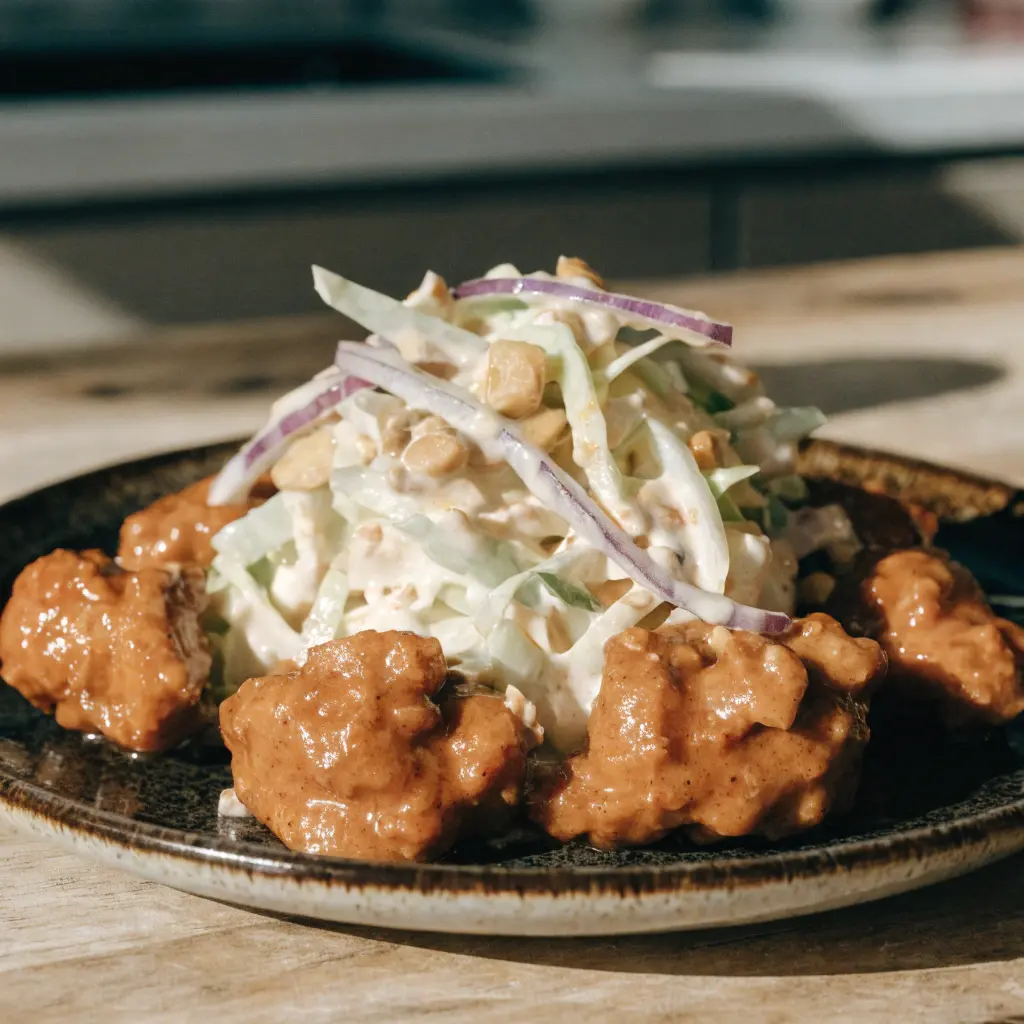
How to Make the Best Peanut Sauce
A good peanut sauce should have balance.
You don’t want it to taste only sweet or only salty. The best version has several flavors working together.
The Basic Flavor Formula
A peanut sauce can combine:
- Peanut butter
- Soy sauce
- Rice vinegar
- Lime juice
- Ginger
- Garlic
- Honey or maple syrup
- Warm water
- Chili sauce
The exact proportions can be adjusted depending on your preferred flavor.
If Your Peanut Sauce Is Too Thick
Add warm water one tablespoon at a time.
Whisk after each addition.
If It Is Too Thin
Add a little more peanut butter.
If It Is Too Sweet
Add a splash of rice vinegar or lime juice.
If It Is Too Salty
Add more peanut butter and a little water.
If You Want More Heat
Add:
- Chili crisp
- Sriracha
- Sambal
- Red pepper flakes
- Fresh chili
How to Make Extra-Crunchy Ginger Slaw
If you’re a fan of crunchy cabbage slaw, a few small techniques make a noticeable difference.
- Slice the cabbage thinly.
- Don’t use excessive dressing.
- Toss shortly before serving.
- Keep the cabbage chilled until needed.
- Don’t massage the cabbage for too long.
- Add crispy toppings just before serving.
The longer dressed cabbage sits, the softer it becomes.
For the best contrast with the warm chicken, prepare the slaw close to serving time.
Common Mistakes to Avoid
Overdressing the Slaw
Too much dressing can make the cabbage watery.
Add enough to coat the cabbage without drowning it.
Overcooking the Chicken
Thin pieces don’t need a long cooking time.
Use a thermometer to verify doneness rather than relying only on appearance.
Burning the Peanut Sauce
Peanut-based sauces can stick and darken quickly.
Keep the heat controlled.
Cutting the Cabbage Too Thick
Large cabbage pieces won’t have the same delicate texture as finely shredded slaw.
Preparing the Slaw Too Early
If you want maximum crunch, don’t dress it hours before serving.
Skipping the Acid
The vinegar in the slaw is important because it balances the richness of the peanut sauce.
What to Serve with Peanut Chicken
The easiest pairing is coconut jasmine rice, but you have plenty of other choices.
Rice
- Jasmine rice
- Coconut rice
- Brown rice
- Sticky rice
- Plain steamed rice
Noodles
Turn the recipe into a noodle bowl with:
- Rice noodles
- Soba noodles
- Egg noodles
Add a little extra peanut sauce to bring everything together.
Fresh Sides
You can also serve the chicken with:
- Cucumber salad
- Mango slices
- Fresh herbs
- Extra cabbage slaw
- Sliced avocado
- Steamed vegetables
Easy Variations of Peanut Chicken with Ginger Slaw
Once you’ve made the basic recipe, it’s easy to create your own version.
Spicy Peanut Chicken
Add chili crisp or Sriracha directly to the peanut sauce.
For a stronger kick, add thinly sliced fresh chili.
Peanut Chicken Lettuce Wraps
Skip the rice.
Spoon the peanut chicken and ginger slaw into crisp lettuce leaves.
Finish with crushed peanuts and lime.
Peanut Chicken Noodle Bowls
Cook rice noodles and toss them with a little peanut sauce.
Top with the chicken and ginger slaw.
Peanut Chicken Salad
Use the ginger slaw as the centerpiece of a larger salad.
Add chicken, cucumber, carrots, herbs, and peanuts.
Peanut Chicken with Chicken Thighs
Replace chicken breast with boneless chicken thighs.
Cut them into thin pieces and cook using the same method.
Rotisserie Chicken Version
For a shortcut, shred cooked chicken and toss it with warmed peanut sauce.
Then serve it with fresh ginger slaw and rice.
Tofu Peanut Bowl
For a different main component, use crispy tofu instead of chicken.
The peanut sauce and ginger slaw work beautifully with crispy tofu.
How to Make This Recipe Spicy
The dish has plenty of flavor without heat, but spicy ingredients can take it in another direction.
Try one of these:
- Chili crisp for texture and heat
- Sriracha for a smooth spicy flavor
- Sambal for a deeper chili taste
- Crushed red pepper flakes
- Fresh Thai chilies
- Cayenne pepper
Start with a small amount.
The goal is to enhance the peanut and ginger flavors rather than completely cover them.
How to Make Peanut Chicken Ahead of Time
This recipe is excellent for preparing several components in advance.
Earlier in the Day
You can:
- Slice the chicken
- Prepare the peanut sauce
- Shred the cabbage
- Slice the shallot
- Mix the slaw dressing
- Cook the coconut rice
For the best texture, keep the slaw dressing separate from the cabbage until closer to serving.
For Meal Prep
Divide the rice and chicken into containers.
Store the slaw separately whenever possible.
Add the slaw shortly before eating so it remains crisp.
Storage and Reheating
Store the chicken, rice, and slaw separately if you can.
This is especially useful because the slaw will soften more quickly once dressed.
Cooked Chicken
Place leftover chicken in a sealed container and refrigerate promptly.
The USDA advises using most cooked leftovers within 3 to 4 days.
Rice
Store cooked rice in a covered container and refrigerate promptly.
Ginger Slaw
Keep the slaw refrigerated in a covered container.
If possible, store extra dressing separately.
Reheating
Warm the chicken gently in a skillet or microwave.
If the chicken seems dry, add a small splash of water or extra peanut sauce.
Reheat leftovers thoroughly; USDA guidance recommends reheating leftovers to 165°F.
Avoid reheating the slaw. Add it cold after the chicken and rice are warm.
Frequently Asked Questions
Is peanut chicken the same as satay chicken?
They’re closely related in flavor but aren’t necessarily the same dish. Peanut chicken can refer to chicken cooked or coated with peanut sauce, while satay traditionally refers to skewered and grilled meat served with a peanut-based sauce.
This recipe takes inspiration from those flavors while turning them into an easy skillet dinner.
What is ginger slaw made of?
A simple ginger slaw can be made with shredded cabbage, fresh ginger, rice vinegar, sugar, salt, and shallot.
You can also add green onions, cilantro, carrots, or lime.
Can I use chicken thighs instead of chicken breast?
Absolutely.
Boneless, skinless chicken thighs are an excellent substitute. Slice them thinly so they cook quickly.
Can I use bagged coleslaw mix?
Yes.
Bagged coleslaw mix is one of the easiest shortcuts for this recipe.
If it contains carrots, you’ll also get extra color and texture.
Conclusion
Peanut Chicken with Ginger Slaw is a flavorful and colorful dinner that brings together tender chicken, creamy peanut sauce, crisp cabbage, fresh ginger, and fragrant coconut rice. Each component adds something different, creating a delicious balance of rich, tangy, savory, and fresh flavors in every bite.
Print
Peanut Chicken with Ginger Slaw – Easy & Irresistible Dinner
- Total Time: PT45M
- Yield: 4 servings 1x
Ingredients
For the Peanut Chicken
- 1 ½ lb (680 g) boneless, skinless chicken breasts, thinly sliced
- ½ cup peanut satay sauce or creamy peanut sauce
- 2 cloves garlic, minced
- 1 tablespoon neutral cooking oil
- ½ teaspoon salt
For the Ginger Slaw
- 4 cups finely shredded purple cabbage
- 1 small shallot, thinly sliced
- 1 tablespoon fresh ginger, finely grated
- 3 tablespoons rice vinegar
- 1 tablespoon granulated sugar
- ½ teaspoon salt
For the Coconut Rice
- 1 ½ cups jasmine rice
- 1 cup coconut milk
- 1 cup water
- ½ teaspoon salt
Instructions
1. Prepare the Chicken
Place the thinly sliced chicken breasts in a large bowl. Add the peanut sauce, minced garlic, and salt. Toss well until every piece is evenly coated. Set aside while you prepare the slaw and rice.
2. Make the Ginger Slaw
Add the shredded purple cabbage and sliced shallot to a large bowl. In a small bowl, whisk together the grated ginger, rice vinegar, sugar, and salt. Pour the dressing over the cabbage and toss until well combined. Set aside to allow the flavors to blend while keeping the cabbage crisp.
3. Cook the Coconut Rice
Rinse the jasmine rice under cool water until the water runs mostly clear. Add the rice, coconut milk, water, and salt to a saucepan. Bring to a gentle boil, then reduce the heat to low. Cover and simmer until the rice is tender and the liquid has been absorbed. Remove from the heat and let it rest for 5 minutes before fluffing with a fork.
4. Cook the Peanut Chicken
Heat the cooking oil in a large skillet over medium-high heat. Add the coated chicken in a single layer, working in batches if necessary to avoid overcrowding the pan. Cook for several minutes, turning occasionally, until the chicken is cooked through and coated in a glossy peanut sauce.
5. Adjust the Sauce
If the peanut sauce becomes too thick while cooking, add a small splash of water and stir gently. Reduce the heat if the sauce starts sticking or browning too quickly.
6. Assemble the Bowls
Divide the coconut rice between serving bowls. Add the warm peanut chicken and a generous portion of ginger slaw. Sprinkle with chopped peanuts, crispy shallots, cilantro, green onions, or sesame seeds.
7. Add the Finishing Touches
Serve immediately with lime wedges and, if desired, a little chili crisp or Sriracha for extra heat. Enjoy the combination of creamy peanut chicken, crunchy ginger slaw, and fragrant coconut rice.
- Prep Time: PT20M
- Cook Time: PT25M
- Category: Dinner
- Method: Skillet
- Cuisine: Asian-Inspired
Nutrition
- Serving Size: 1 bowl
- Calories: 720 kcal
- Sugar: 12 g
- Sodium: 980 mg
- Fat: 32 g
- Saturated Fat: 10 g
- Unsaturated Fat: 19 g
- Trans Fat: 0 g
- Carbohydrates: 76 g
- Fiber: 6 g
- Protein: 39 g
- Cholesterol: 85 mg