
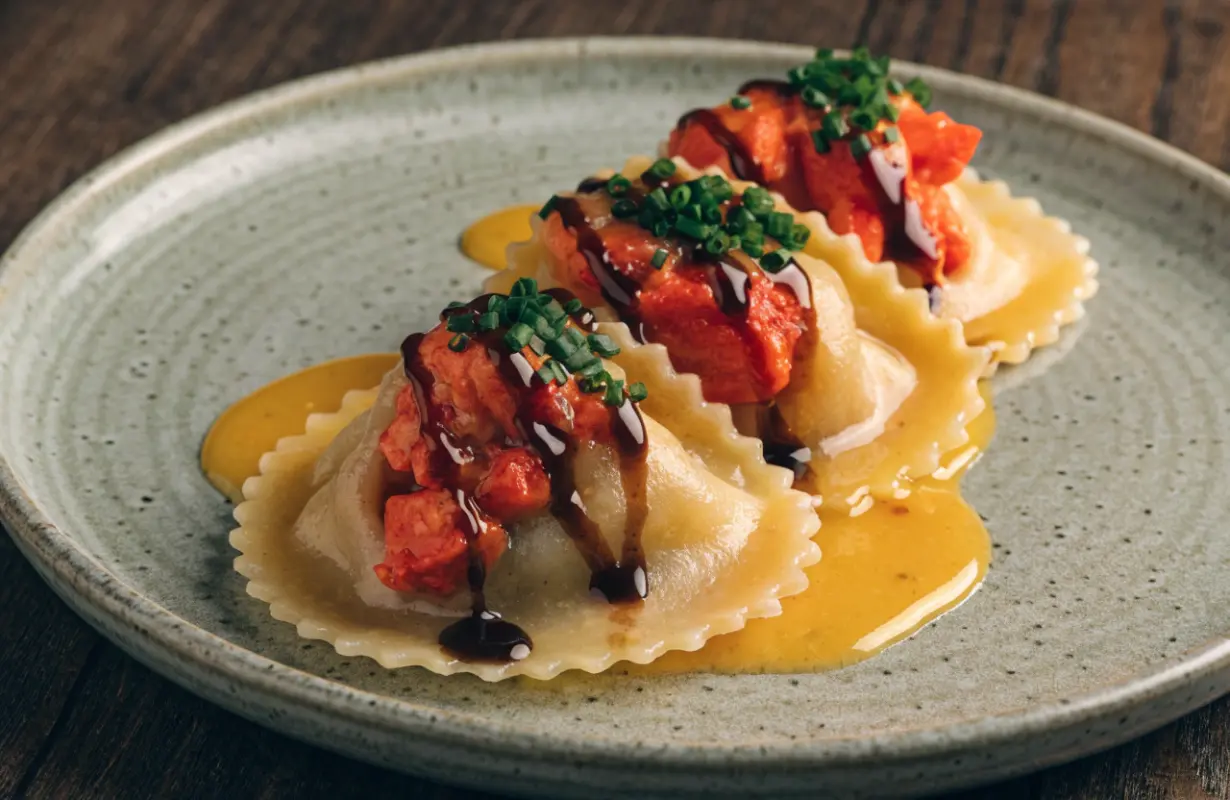
Why You’ll Love This Lobster Ravioli Recipe
There are several reasons this recipe deserves a place in your collection of favorite pasta dishes.
- Rich, creamy flavor: Butter, garlic, heavy cream, and Parmesan create a smooth sauce with a savory, satisfying finish.
- Easy preparation: Store-bought lobster ravioli eliminates the time and effort required to prepare filled pasta from scratch.
- Restaurant-style presentation: Fresh parsley, grated Parmesan, and a little lemon zest give the finished dish an elegant appearance.
- Flexible ingredients: You can add spinach, shallots, or a splash of white wine to customize the sauce.
- Perfect for special occasions: The combination of lobster-filled pasta and creamy garlic sauce makes an ordinary dinner feel memorable.
The secret is keeping the sauce balanced. It should complement the lobster’s delicate flavor rather than overpower it with excessive garlic, cheese, or seasoning.
Ingredients for Lobster Ravioli with Creamy Garlic Parmesan Sauce
The ingredients are simple, but each one contributes something important to the finished dish. Use freshly grated cheese, fresh garlic, and good-quality ravioli whenever possible for the best flavor and texture.
For the Lobster Ravioli
- 20–24 ounces lobster ravioli: Fresh or refrigerated ravioli is convenient, while frozen ravioli works well when prepared according to the package directions.
- Water for boiling: Use enough water to allow the pasta to move freely.
- Salt: Add a little to the cooking water to season the pasta.
For the Creamy Garlic Parmesan Sauce
- 3 tablespoons unsalted butter: Creates a rich base for the sauce and carries the garlic flavor.
- 1 teaspoon olive oil: Optional, but useful for sautéing the garlic.
- 4 garlic cloves, finely minced: Provide the sauce’s signature savory aroma.
- 1 cup heavy cream: Gives the sauce its creamy consistency.
- ¾ cup freshly grated Parmesan cheese: Adds a nutty, savory flavor and helps thicken the sauce.
- ¼ cup reserved pasta water: Helps loosen the sauce and allows it to coat the ravioli evenly. Add more as needed.
- ¼ teaspoon freshly ground black pepper: Adds gentle warmth.
- Salt, to taste: Adjust after adding the Parmesan.
- 1 tablespoon chopped fresh parsley: Adds freshness and color.
- ½ teaspoon lemon zest: Optional, for a brighter finish.
- Pinch of red pepper flakes: Optional, for a little heat.
Optional Ingredients for Extra Flavor
You can also include:
- 1 small shallot, finely minced
- 2 tablespoons dry white wine
- 1 tablespoon chopped fresh chives
- A small handful of baby spinach
- Extra Parmesan for serving
These additions are optional. The basic recipe already delivers a rich, flavorful sauce without requiring a long ingredient list.
Equipment You’ll Need
Prepare the following equipment before you begin:
- A large pot for boiling the ravioli
- A wide skillet for making the sauce
- A colander or slotted spoon
- A whisk or wooden spoon
- A measuring cup for reserved pasta water
- A fine grater for the Parmesan
- A sharp knife and cutting board
How to Make Lobster Ravioli with Creamy Garlic Parmesan Sauce
Follow these steps to prepare tender lobster ravioli with a smooth, flavorful garlic-Parmesan cream sauce.
Step 1: Cook the Lobster Ravioli
Bring a large pot of water to a boil. Add a little salt, then carefully place the ravioli into the water.
Cook according to the package instructions. Fresh ravioli generally cooks more quickly than frozen varieties, so check the cooking time before adding the pasta.
Stir gently to prevent the ravioli from sticking together. Avoid vigorous stirring because the delicate pasta can tear and release its filling.
Before draining, reserve approximately half a cup of pasta water. This starchy liquid will help adjust the consistency of your sauce later.
Drain the ravioli carefully or lift them out with a slotted spoon. Set them aside briefly while you prepare the sauce.
Cooking tip: If the ravioli are ready before the sauce, avoid leaving them sitting in a colander for too long. Coordinate the cooking process so you can combine them with the sauce while everything is warm.
Step 2: Melt the Butter and Sauté the Garlic
Place a wide skillet over medium-low heat. Add the butter and optional olive oil, allowing the butter to melt gently.
Add the minced garlic and stir continuously for approximately 30–60 seconds, until fragrant.
The garlic should become aromatic without turning dark brown. Burnt garlic develops a bitter taste that can overpower the delicate lobster filling.
If you are using shallots, add them to the butter first and cook until softened. Then add the garlic and continue cooking briefly.
Keep the heat moderate throughout this step. The goal is to release the garlic’s flavor into the butter, creating a savory foundation for the cream sauce.
Step 3: Add the Heavy Cream
Pour the heavy cream into the skillet and stir to combine it with the garlic butter.
Allow the mixture to reach a gentle simmer. Avoid letting it boil rapidly, as excessive heat can cause the sauce to reduce too quickly or develop an uneven texture.
Let the cream simmer for approximately 2–4 minutes, stirring occasionally. It should begin to thicken slightly while remaining fluid enough to coat the ravioli.
If you want to include white wine, add it after the garlic has softened and before pouring in the cream. Allow the wine to reduce briefly, then add the cream and continue with the recipe.
At this stage, the sauce should smell buttery and aromatic, with the garlic evenly distributed throughout.
Step 4: Stir in the Parmesan Cheese
Reduce the heat to low before adding the freshly grated Parmesan.
Sprinkle the cheese into the warm cream gradually, stirring or whisking as you go. Continue until the cheese melts and the sauce becomes smooth.
Add the black pepper and taste before adding any salt. Parmesan has a naturally salty, savory flavor, and the ravioli filling may already be seasoned.
If the sauce looks too thick, add a tablespoon of reserved pasta water and stir. Repeat as needed until the consistency is silky and pourable.
Important tip: Avoid adding Parmesan to rapidly boiling cream. Lower heat and gradual incorporation help prevent clumping and graininess.
Step 5: Combine the Ravioli and Sauce
Transfer the cooked ravioli into the skillet using a slotted spoon or broad spatula.
Gently turn the ravioli in the sauce until each piece is coated. Use slow folding movements instead of vigorous stirring to protect the delicate pasta.
If the sauce is too thick to spread evenly, add reserved pasta water a little at a time.
Allow everything to warm together for approximately 1–2 minutes, or just long enough for the ravioli to be heated through and the sauce to cling to the pasta.
If you’re adding baby spinach, stir it in during this final stage and let it wilt briefly.
Taste the sauce once more and adjust the seasoning if needed.
Step 6: Garnish and Serve
Remove the skillet from the heat.
Finish the dish with chopped fresh parsley, a little extra grated Parmesan, and optional lemon zest. A small amount of lemon zest adds a fresh aroma that contrasts beautifully with the creamy sauce.
Divide the ravioli among warm serving plates and spoon the remaining sauce over the top.
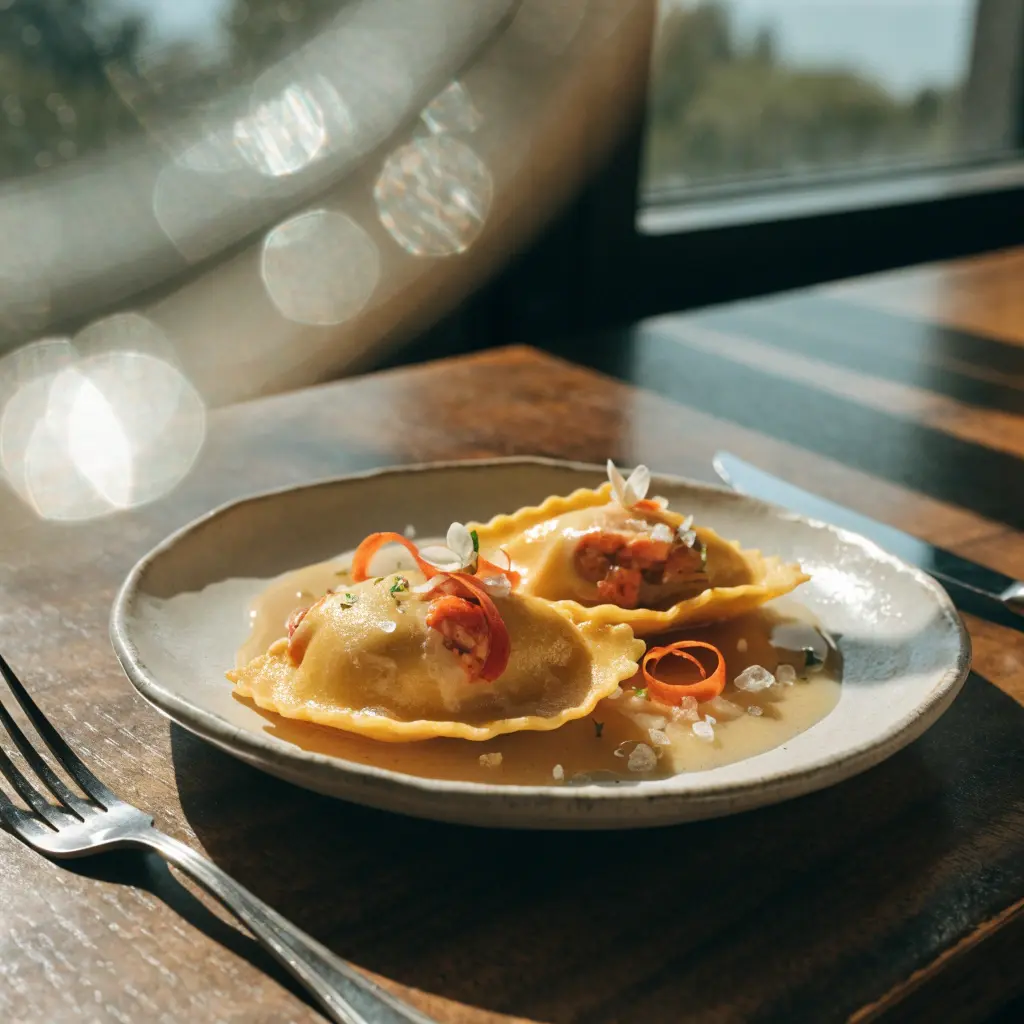
For an elegant presentation, arrange the ravioli in a shallow bowl, add a light dusting of Parmesan, and finish with a few parsley leaves.
Serve immediately while the pasta is tender and the sauce is smooth.
Variations and Substitutions
One of the advantages of this recipe is how easily you can adjust the sauce to suit your preferred flavors.
Lobster Ravioli with Lemon Garlic Cream Sauce
For a brighter version, add a little lemon zest and a small squeeze of lemon juice to the finished sauce.
The citrus flavor complements the sweetness of the lobster and balances the richness of the Parmesan.
Finish with fresh parsley or chives for an aromatic touch.
Lobster Ravioli with White Wine Parmesan Sauce
White wine adds acidity and depth to the sauce.
After sautéing the garlic, add approximately two tablespoons of dry white wine. Let it simmer briefly to reduce before adding the heavy cream.
Continue with the recipe, adding Parmesan gradually. The finished sauce should remain creamy, with a subtle wine flavor rather than a sharp alcoholic taste.
Lobster Ravioli with Spinach
Baby spinach is an easy addition when you want a little more color and texture.
Stir a handful of spinach into the finished sauce just before adding the ravioli. Let the leaves wilt, then fold in the pasta.
Avoid adding too much spinach, as it can release liquid and dilute the sauce.
Lobster Ravioli with Sun-Dried Tomatoes
Chopped sun-dried tomatoes provide a concentrated, slightly tangy flavor.
Add a small quantity to the garlic butter before pouring in the cream. Their color also makes the finished dish visually appealing.
Use them sparingly so they do not overpower the lobster filling.
A Lighter Cream Sauce
If you do not have heavy cream, half-and-half may work as a substitute, although the sauce will generally be thinner.
Allow the liquid to simmer gently and add the Parmesan gradually. Avoid rapid boiling, particularly when using a lower-fat dairy product.
The final texture may differ from the original recipe, so adjust the amount of pasta water carefully.
Common Mistakes to Avoid
Even a simple pasta recipe can be disappointing if a few important details are overlooked.
Overcooking the Ravioli
Ravioli can become soft and split if left in boiling water for too long.
Check the package instructions and begin checking for doneness at the recommended time. Handle the pasta gently when draining and transferring it.
Burning the Garlic
Garlic cooks quickly, especially in butter.
Keep the heat at medium-low and stir frequently. If the garlic becomes dark brown and smells bitter, starting again is usually better than trying to disguise the flavor with cream.
Adding Parmesan at High Heat
Excessive heat can make the cheese clump or create a grainy sauce.
Lower the heat before adding Parmesan, and incorporate it gradually while stirring.
Making the Sauce Too Thick
Cream sauce continues to thicken as it simmers and cools.
If it becomes too thick, add reserved pasta water one tablespoon at a time until it returns to a silky consistency.
Adding Too Much Salt
Parmesan and prepared ravioli may already contain plenty of seasoning.
Taste the finished sauce before adding additional salt. Black pepper, herbs, and a little lemon can provide flavor without relying on more salt.
How to Fix Common Garlic Parmesan Sauce Problems
If the sauce does not turn out exactly as expected, these adjustments can help.
Why Is My Sauce Grainy?
Graininess can result from excessive heat or cheese that does not melt smoothly.
- Remove the skillet from direct heat.
- Whisk gently to bring the sauce together.
- Add a small splash of warm water if needed.
- Next time, grate the Parmesan finely and add it gradually over low heat.
A severely grainy sauce may not return completely to its original texture.
Why Is My Sauce Too Thin?
Let the sauce simmer gently for another minute or two before adding the ravioli.
Stir frequently and monitor the consistency. You can also add a little more Parmesan, provided the sauce is not too hot.
Avoid using excessive cheese as a thickener because it can make the finished dish overly salty.
Why Is My Sauce Too Thick?
Add reserved pasta water a tablespoon at a time while stirring.
If you no longer have pasta water, a small amount of warm water or cream can help loosen the sauce.
Why Does My Sauce Look Separated?
A separated sauce may result from excessive heat or an unstable mixture.
Remove the skillet from the heat and whisk gently while adding a small splash of warm water. If the sauce remains separated, it may be difficult to restore completely.
What to Serve with Lobster Ravioli
Because the ravioli and cream sauce are rich, the best side dishes provide contrast without competing with the main course.
Garlic Bread or Crusty Italian Bread
Warm garlic bread is an excellent choice for soaking up the remaining sauce.
Crusty Italian bread also works well if you prefer something simple alongside the pasta.
Fresh Green Salad
A salad with mixed greens, cucumber, and a light lemon vinaigrette provides a crisp contrast to the creamy ravioli.
Keep the dressing relatively light so it does not compete with the Parmesan sauce.
Roasted Asparagus
Roasted asparagus pairs particularly well with seafood pasta. Toss the spears with a little olive oil, salt, and pepper, then roast until tender.
Finish with lemon zest if desired.
Steamed Broccoli or Green Beans
Lightly seasoned broccoli or green beans make an easy side dish.
Avoid covering the vegetables in another heavy sauce, as the ravioli already provides plenty of richness.
How to Store and Reheat Leftover Lobster Ravioli
Cream-based pasta is best served fresh, but leftovers can be stored and reheated carefully.
Refrigerating Leftovers
Allow the food to stop steaming heavily, then transfer it to a shallow, airtight container and refrigerate promptly.
Do not leave cooked seafood pasta at room temperature for more than two hours, or one hour when the temperature is above 90°F (32°C).
For general storage guidance, follow the applicable recommendations in the cold food storage charts. Use the appropriate guidance for the ingredients in your finished dish.
Reheating on the Stovetop
The stovetop is usually the best method for reheating creamy lobster ravioli because it allows you to control the heat and adjust the sauce.
- Place the leftovers in a skillet over low heat.
- Add a small splash of water, milk, or cream.
- Warm gently, stirring carefully around the ravioli.
- Continue until the pasta is heated through.
- Finish with a little freshly grated Parmesan or parsley if desired.
Avoid prolonged heating, which can cause the sauce to separate and the pasta to become too soft.
Can You Freeze Leftover Lobster Ravioli?
You can freeze some cooked pasta dishes, but the texture of filled ravioli and cream sauce may change after thawing.
The sauce can become grainy or separate, while the pasta may soften. For the best results, prepare only the quantity you expect to serve and refrigerate leftovers promptly.
If freezing is necessary, use an appropriate airtight, freezer-safe container and follow recommended storage practices.
Avoid Repeated Reheating
Reheat only the portion you plan to eat. Repeated heating and cooling can affect the pasta’s texture and make it more difficult to maintain a smooth sauce.
Frequently Asked Questions
What Is the Best Sauce for Lobster Ravioli?
A creamy garlic Parmesan sauce is an excellent choice because it combines buttery richness, savory garlic, and nutty cheese. Lemon butter sauce and white wine cream sauce are also popular options. Choose a sauce that complements the lobster filling without overpowering it.
Can You Use Store-Bought Lobster Ravioli?
Yes. Store-bought lobster ravioli is a convenient option for this recipe. Fresh, refrigerated, and frozen varieties can all work. Follow the package instructions for cooking time and preparation, then combine the cooked pasta with the homemade garlic-Parmesan sauce.
Can You Cook Frozen Lobster Ravioli Without Thawing It?
Many frozen ravioli products can be cooked directly from frozen, but preparation instructions vary by brand. Check the packaging before cooking. If the instructions call for thawing, follow that method instead of assuming every product cooks the same way.
Can You Make Garlic Parmesan Sauce Without Heavy Cream?
Yes. Half-and-half or a suitable unsweetened cooking cream alternative can be used, although the final sauce may be thinner. Heat gently, add the Parmesan gradually, and adjust the consistency with small amounts of pasta water.
Conclusion
Lobster Ravioli with Creamy Garlic Parmesan Sauce brings together tender seafood-filled pasta and a rich, silky homemade sauce for an elegant meal that’s surprisingly easy to prepare. With fresh garlic, good-quality Parmesan, gentle heat, and a little reserved pasta water, you can create a delicious restaurant-style dinner in your own kitchen. Serve it with a fresh salad or roasted vegetables, garnish with parsley, and enjoy every creamy, flavorful bite.