
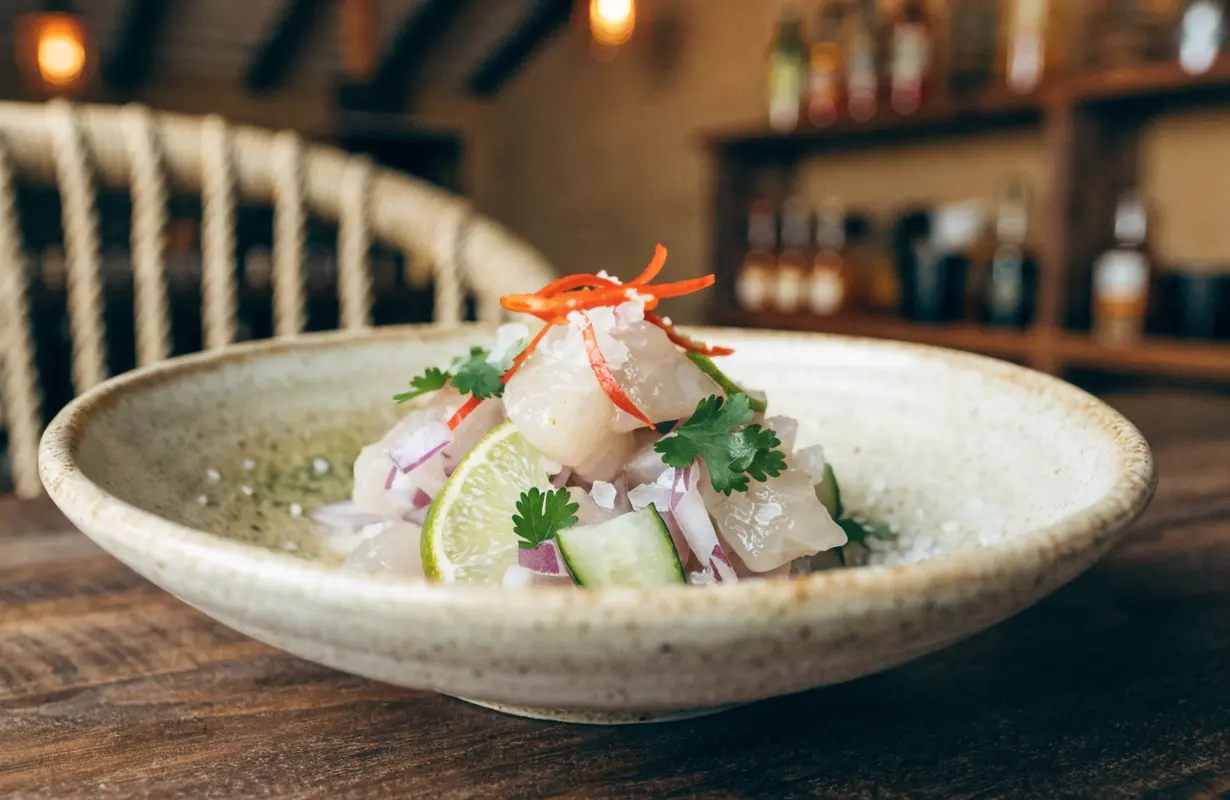
What Is Peruvian Ceviche Recipe?
Peruvian ceviche, also known as ceviche de pescado, is a traditional seafood dish prepared with raw fish, lime juice, red onion, chili peppers, cilantro, and salt. The ingredients are combined shortly before serving to create a bright, aromatic dish with a fresh texture and a distinctive citrus flavor.
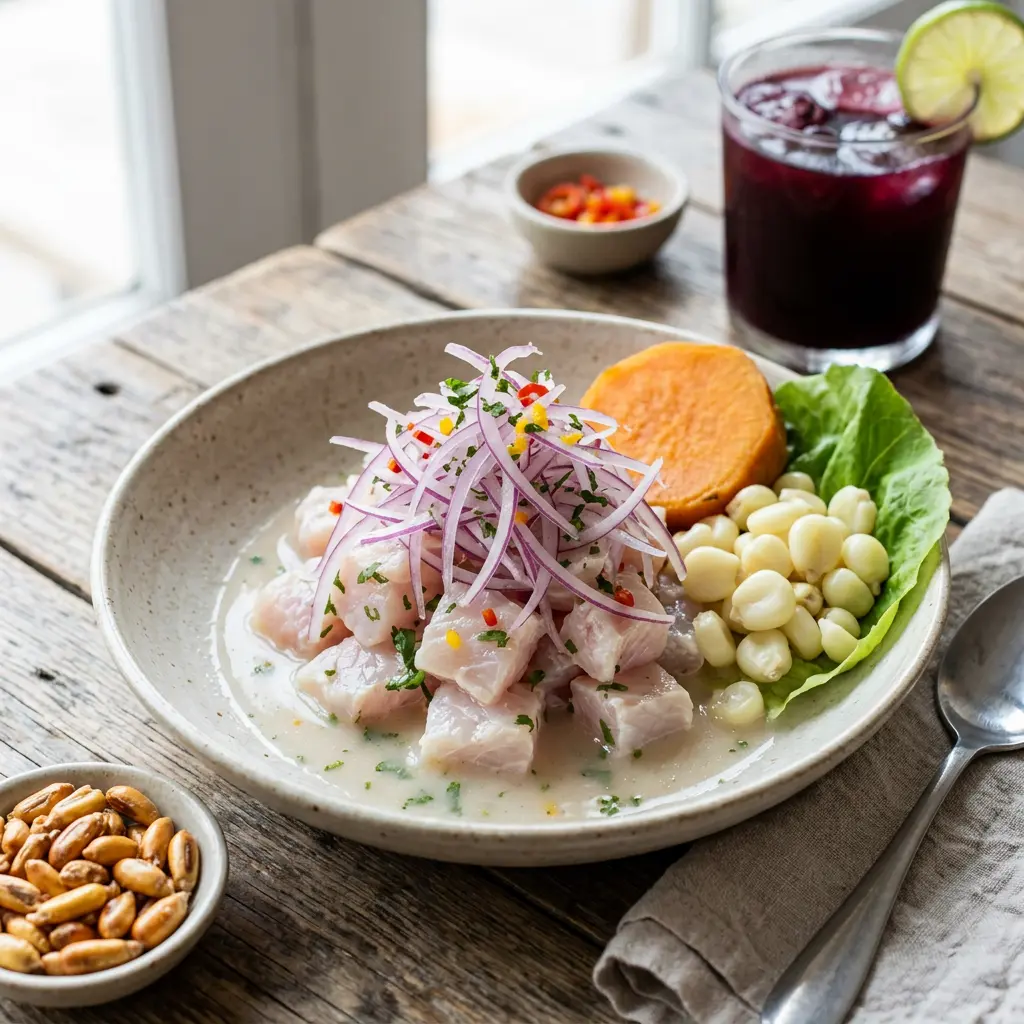
Unlike some other Latin American ceviche variations, the traditional Peruvian version is often served with cooked sweet potato, large-kernel corn, and crunchy toasted corn called cancha. These accompaniments provide different textures and balance the sharpness of the marinade.
Another important term is leche de tigre, which translates to “tiger’s milk.” It refers to the intensely flavored citrus liquid associated with ceviche. Depending on the preparation, it may contain lime juice, chili, cilantro, onion, fish stock, or other aromatics.
Every household and region may have its own approach, but the central idea remains the same: use suitable fish, fresh ingredients, balanced seasoning, and careful preparation.
Ingredients for Authentic Peruvian Ceviche
The beauty of traditional Peruvian ceviche lies in how a few carefully selected ingredients create a distinctive flavor. Prepare everything before assembling the dish so you can work quickly and keep the fish chilled.
1. White Fish
Use approximately 700–800 g (1½–1¾ pounds) of firm white fish, cut into even cubes.
Suitable options include:
- Corvina, a traditional choice in Peru.
- Sea bass, with a delicate flavor and firm texture.
- Sole, for a milder preparation.
- Halibut, where available.
- Another suitable firm white fish recommended by a reputable fishmonger for raw consumption.
Choose fish specifically suitable for raw preparations and follow the supplier’s handling instructions. Ordinary fresh-looking fish is not automatically appropriate for ceviche.
2. Fresh Limes
Use approximately 150–200 ml of freshly squeezed lime juice, adjusting the quantity to the fish and your preferred flavor.
Fresh lime juice gives ceviche its characteristic acidity. Squeeze the limes gently and avoid pressing the peel excessively, which can introduce bitter flavors.
The exact quantity depends on the juiciness of your limes and the size of your fish pieces.
3. Red Onion
Use one large red onion, thinly sliced.
Red onion contributes a crisp texture, a sharp flavor, and a beautiful purple-red color. Slice it into fine strips so it distributes evenly throughout the dish.
If the onion tastes too strong, place the slices in cold water briefly, then drain and dry them thoroughly before use.
4. Peruvian Chili Pepper
Use one small ají limo pepper, finely chopped, or adjust the quantity to taste.
Ají limo is a traditional Peruvian chili known for its pronounced flavor and heat. If it is unavailable, use a small amount of another fresh chili, such as jalapeño, while remembering that the final flavor will differ.
Remove the seeds and inner membranes for a milder preparation.
5. Fresh Cilantro
Use approximately 2 tablespoons of finely chopped fresh cilantro, with a little extra for garnish.
Cilantro adds an herbal aroma that complements the lime and chili. Chop it shortly before assembly to preserve its fresh character.
6. Salt and Optional Black Pepper
- 1 teaspoon of salt, or to taste.
- A small pinch of black or white pepper, if desired.
Start with a modest amount of salt and adjust after combining the ingredients.
7. Sweet Potato
Use one medium sweet potato, peeled and cut into thick slices after cooking.
Known as camote in Peru, sweet potato is a traditional accompaniment. Its gentle sweetness contrasts with the tangy ceviche.
8. Corn
Prepare one or two ears of corn, depending on their size.
Peruvian choclo has large kernels and a distinctive texture. If it is unavailable, ordinary corn on the cob or corn kernels can be used.
9. Optional Garnishes
You may also prepare:
- Lettuce leaves for serving.
- Toasted corn, or cancha, for crunch.
- Extra lime wedges.
- A few additional cilantro leaves.
- A small amount of finely sliced chili.
These garnishes are optional, but they help create a more traditional-looking presentation.
Kitchen Equipment You’ll Need
You do not need specialized equipment to prepare Peruvian ceviche.
Gather the following before starting:
- A sharp chef’s knife.
- A clean cutting board.
- A glass or other suitable nonreactive mixing bowl.
- A citrus juicer.
- A small saucepan for the sweet potato and corn.
- A colander for draining the accompaniments.
- Measuring cups and spoons.
- A refrigerator.
- Chilled serving bowls or plates.
How to Make Peruvian Ceviche Recipe Step by Step
Follow these steps for a classic-style Peruvian Ceviche Recipe with bright citrus flavor, crisp onion, and traditional accompaniments.
Step 1: Cook the Sweet Potato and Corn
Place the sweet potato in a saucepan of water and bring it to a boil. Cook until a knife passes through the center easily, usually around 15–20 minutes depending on its size.
In a separate saucepan, cook the corn according to its variety. Traditional Peruvian corn may need a different cooking time from ordinary sweet corn, so follow the package or supplier instructions.
Once cooked:
- Drain both ingredients.
- Allow them to cool.
- Peel the sweet potato if necessary.
- Cut it into thick slices.
- Cut the corn into manageable portions or remove the kernels.
Set them aside in the refrigerator while you prepare the fish.
Step 2: Prepare the Fish
Place the chilled fish on a clean cutting board. Remove any remaining skin, check carefully for bones, and cut the flesh into uniform cubes.
Transfer the fish to a clean glass or other nonreactive bowl. Keep the bowl refrigerated until you are ready to assemble the ceviche.
Avoid leaving the fish at room temperature while preparing the other ingredients.
Step 3: Prepare the Onion and Chili
Thinly slice the red onion and finely chop the chili.
If you soaked the onion to reduce its sharpness, drain it thoroughly. Excess water can dilute the lime mixture and affect the final flavor.
Add the prepared ingredients to separate small bowls so they are ready to use.
Step 4: Season the Fish
Remove the fish from the refrigerator just before assembly. Add the salt and gently toss the cubes to distribute the seasoning.
Use a spoon rather than squeezing or crushing the fish with your hands. You want to preserve the shape of each piece.
If using black or white pepper, add a small pinch at this stage.
Step 5: Add the Fresh Lime Juice
Pour the freshly squeezed lime juice over the fish. Use enough to coat the pieces evenly, adjusting the amount according to your bowl and the quantity of fish.
Gently mix the ingredients with a clean spoon.
The surface of the fish will gradually become more opaque as the citrus changes its proteins. This is part of the characteristic ceviche preparation, but it does not mean the fish has been cooked with heat.
Important: Lime juice does not reliably eliminate harmful bacteria or parasites. Use fish suitable for raw consumption and follow appropriate handling guidance.
Step 6: Add the Chili and Red Onion
Add the finely chopped chili and most of the red onion to the fish.
Gently fold everything together so the flavor is distributed without breaking apart the cubes.
Taste a small amount of the citrus mixture and adjust the seasoning if needed. If you are uncertain about the heat of the chili, begin with less and add more gradually.
Step 7: Add the Fresh Cilantro
Stir in the chopped cilantro shortly before serving.
The herb adds a fresh aroma and complements the sharpness of the lime. Reserve a few leaves for the final garnish.
At this stage, the mixture should smell fresh and citrusy, with the chili providing a pleasant level of heat.
Step 8: Prepare an Optional Leche de Tigre
For a more elaborate presentation, prepare a small amount of leche de tigre, the flavorful liquid associated with Peruvian ceviche.
A simple variation can be made by blending a little lime juice with chili, cilantro, red onion, and a small amount of suitable cold fish stock. Some versions also include ginger, celery, or garlic.
If using fish or fish stock, follow the same careful sourcing and handling practices as for the main recipe. Strain the mixture if you prefer a smoother liquid, and keep it refrigerated until use.
Add a small amount to the ceviche just before serving if desired. This is optional; a classic preparation can be delicious without an elaborate sauce.
Step 9: Taste and Adjust the Seasoning
Before plating, check the balance of the mixture.
- Add a little salt if the flavor seems flat.
- Add more chili if you prefer extra heat.
- Add a small amount of lime juice if the mixture needs more acidity.
- Add a little cilantro for a stronger herbal aroma.
Avoid making too many adjustments at once. The goal is a clear balance of citrus, seasoning, and the natural flavor of the fish.
Step 10: Plate and Serve Immediately
Arrange the ceviche in chilled individual bowls or on a shallow serving plate.
Add the remaining red onion and reserved cilantro. Arrange the sweet potato slices and corn alongside the fish, then sprinkle with toasted corn if desired.
Serve the ceviche promptly while the ingredients are cold and the fish still has a pleasant texture. Avoid leaving it at room temperature for an extended period.
The finished dish should look colorful, smell fresh, and offer a balance of tender fish, crisp onion, citrus, and chili.
Common Peruvian Ceviche Mistakes to Avoid
Even a short ingredient list leaves room for mistakes. These are the most common problems and how to avoid them.
Using Fish That Is Not Suitable for Raw Consumption
Freshness alone does not guarantee suitability. Purchase fish intended for raw preparations and follow the supplier’s instructions.
Cutting the Fish Unevenly
Large and small pieces can produce inconsistent textures. Use a sharp knife and aim for similarly sized cubes.
Adding Too Much Chili
An overly spicy marinade can overpower the delicate fish. Begin with a small quantity, especially when using ají limo or another unfamiliar pepper.
Over-Squeezing the Limes
Pressing the lime peel too hard can release bitter notes. Juice gently and strain out the seeds.
Using Too Much Onion
A large amount of onion can dominate the other flavors. Slice it thinly and begin with the recommended quantity, adding more if desired.
Marinating Too Far in Advance
Long contact with citrus can make fish firmer and alter its texture. Prepare the garnishes beforehand and assemble the ceviche close to serving time.
Delicious Peruvian Ceviche Recipe Variations
Once you understand the classic method, you can explore several variations while preserving the dish’s characteristic citrus-and-chili profile.
Classic Peruvian Fish Ceviche
Use firm white fish, lime juice, red onion, ají limo, cilantro, and salt. Serve with sweet potato and corn for a traditional-style presentation.
This is the best starting point if you want to experience the straightforward flavor of ceviche de pescado.
Peruvian Ceviche with Leche de Tigre
Add a small amount of a carefully prepared leche de tigre mixture for a more layered citrus flavor.
Depending on the recipe, the liquid may contain chili, onion, cilantro, ginger, celery, garlic, or suitable fish stock. Each version has its own character.
Mild Peruvian Ceviche
Reduce the chili or use a milder variety. Remove the seeds and inner membranes if desired, then adjust the seasoning gradually.
This variation preserves the citrus and herb flavors without making the heat the dominant feature.
Ceviche with Ají Amarillo
Use a small amount of ají amarillo paste to introduce a different Peruvian pepper flavor.
Because ají amarillo differs from ají limo, this is an adaptation rather than an exact replacement. Add it carefully so the citrus and fish remain prominent.
Mixed Seafood Ceviche
Some variations combine fish with shrimp, scallops, or other seafood. For this version, use properly cooked seafood where appropriate rather than assuming that the lime marinade makes every ingredient safe.
Keep the flavors simple and adjust the seasoning to suit the different textures.
What to Serve with Peruvian Ceviche Recipe
Traditional accompaniments complete the dish and make the presentation more interesting.
Sweet Potato (Camote)
Cooked sweet potato is one of the most recognizable ceviche accompaniments. Its mild sweetness contrasts with the sharp citrus marinade.
Cut it into thick slices and arrange them beside the fish rather than mixing them directly into the bowl.
Peruvian Corn (Choclo)
Peruvian corn has large kernels and a distinctive texture. If you cannot find it, ordinary corn on the cob is a practical substitute.
Cook the corn separately, allow it to cool, and serve it alongside the ceviche.
Toasted Corn (Cancha)
Toasted corn adds a crisp, savory contrast. Sprinkle a small amount over the finished dish or serve it in a separate bowl so it remains crunchy.
Lettuce and Fresh Herbs
Lettuce leaves can provide a simple base for plating, while extra cilantro makes the finished dish look fresh and colorful.
How to Store Peruvian Ceviche Recipe
Peruvian ceviche is best assembled and served fresh. Unlike a dish cooked thoroughly with heat, citrus-marinated fish should not be treated as a preserved product.
Can You Refrigerate Leftover Ceviche?
If you have leftovers, refrigerate them promptly in a clean, covered container, following applicable seafood-handling guidance. However, refrigeration does not remove the risks associated with raw fish, and the texture will continue to change.
For a gathering, prepare smaller portions and replenish them from the refrigerator as needed instead of leaving a large bowl out for an extended period.
How Long Does Ceviche Last?
There is no universal storage time that guarantees safety for every preparation. The answer depends on the fish, how it was handled, the temperature, and the time since assembly.
For the best texture and flavor, prepare only what you expect to serve and eat it promptly. Do not rely on lime juice to preserve leftovers.
Can You Freeze Peruvian Ceviche?
Freezing the assembled dish is generally not recommended for quality. The fish may become soft or watery after thawing, while the onion and herbs lose their crisp texture.
If you want to plan ahead, prepare and chill the cooked accompaniments separately, then assemble the ceviche shortly before serving.
Make-Ahead Tips for Easy Preparation
You can prepare several components in advance without assembling the entire dish.
Prepare the Accompaniments
- Cook the sweet potato and corn.
- Allow them to cool and store them in separate covered containers in the refrigerator.
- Wash and dry the cilantro.
- Prepare your serving dishes and utensils.
Prepare the Onion and Chili
Slice the onion and chop the chili shortly before assembly, or prepare them in advance and refrigerate them separately in clean containers.
Keep their flavors separate until you are ready to combine everything.
What to Do Just Before Serving
- Cut the fish close to assembly time.
- Squeeze the limes.
- Season and combine the ingredients.
- Add the cilantro.
- Plate with the chilled accompaniments.
- Serve promptly.
This approach makes entertaining easier while preserving the freshness and texture that make ceviche special.
Frequently Asked Questions About Peruvian Ceviche
What Is Traditional Peruvian Ceviche Made Of?
Traditional Peruvian fish ceviche is made with raw fish, fresh lime juice, red onion, chili pepper, cilantro, and salt. It is often served with sweet potato, corn, and toasted corn. Recipes vary by region and household, so additional aromatics may appear in some versions.
What Is the Best Fish for Peruvian Ceviche?
Corvina is a traditional choice, but suitable firm white fish such as sea bass, sole, or halibut can also work. Choose fish specifically suitable for raw consumption and follow the supplier’s storage and handling instructions.
Does Lime Juice Actually Cook Ceviche?
Lime juice changes the proteins in the fish, causing the flesh to become more opaque and firm. However, this is not the same as cooking with heat, and the citrus does not reliably eliminate harmful bacteria or parasites.
How Long Should Fish Marinate in Lime Juice?
The ideal time depends on the size of the fish cubes and the texture you prefer. Peruvian ceviche is commonly assembled shortly before serving. Rather than relying on a long marinating period, focus on suitable fish, even cuts, and prompt preparation.
Conclusion: Make Authentic Peruvian Ceviche at Home
This Peruvian Ceviche Recipe brings together the essential flavors of traditional Peruvian cooking: fresh fish, bright lime juice, crisp red onion, chili, and fragrant cilantro. With sweet potato, corn, and optional toasted corn on the side, the finished dish offers a beautiful combination of colors, textures, and flavors.
Print
Authentic Peruvian Ceviche Recipe
- Total Time: PT40M
- Yield: 4 servings 1x
Ingredients
- 700–800 g firm white fish suitable for raw consumption, cut into cubes
- 150–200 ml freshly squeezed lime juice, adjusted to taste
- 1 large red onion, thinly sliced
- 1 small ají limo or another suitable fresh chili, finely chopped
- 2 tablespoons fresh cilantro, chopped
- 1 teaspoon salt, or to taste
- 1 medium sweet potato
- 1–2 ears of corn
- Lettuce leaves, optional
- Toasted corn (cancha), optional
- Extra cilantro and lime wedges, for serving
Instructions
- Boil the sweet potato until fork-tender and cook the corn according to its variety. Cool, slice, and refrigerate separately.
- Cut the chilled fish into evenly sized cubes and place them in a clean, nonreactive bowl.
- Thinly slice the red onion and finely chop the chili and cilantro.
- Season the fish with salt and gently toss.
- Add the freshly squeezed lime juice and mix carefully to coat the fish.
- Fold in the chili and most of the red onion.
- Add the chopped cilantro and adjust the seasoning to taste.
- Arrange the ceviche in chilled bowls and serve with the sweet potato, corn, and optional toasted corn.
- Serve promptly and follow appropriate guidance for raw seafood handling.
- Prep Time: PT20M
- Cook Time: PT15M
- Category: Seafood
- Method: Citrus-marinated
- Cuisine: Peruvian
Nutrition
- Serving Size: 1 serving (approximately 250 g)
- Calories: 250 Kcal
- Sugar: 10 g
- Sodium: 480 mg
- Fat: 4 g
- Saturated Fat: 0.8 g
- Unsaturated Fat: 2.7 g
- Trans Fat: 0 g
- Carbohydrates: 28 g
- Fiber: 4 g
- Protein: 27 g
- Cholesterol: 45 mg