
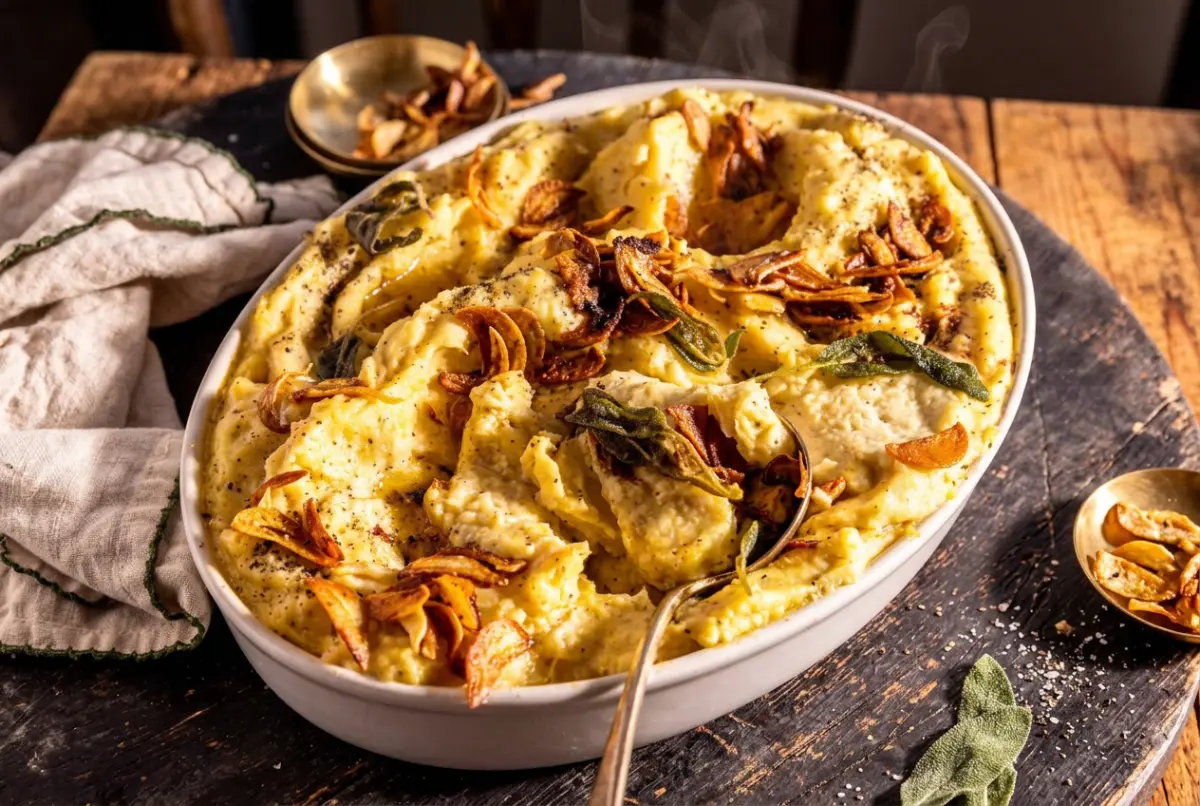
Ingredients for Brown Butter Mashed Potatoes with Crispy Garlic and Sage
You don’t need an extensive ingredient list to create flavorful mashed potatoes. Each ingredient has a specific purpose, from creating a smooth consistency to adding the signature nutty and aromatic flavors.
Here is what you’ll need.
For the mashed potatoes:
- 3 pounds Yukon Gold potatoes, peeled and cut into chunks
- 10 tablespoons unsalted butter, divided
- ½ cup heavy cream or whole milk, warmed
- 2 ounces cream cheese, softened (optional)
- 1 teaspoon kosher salt, plus more for boiling
- ½ teaspoon freshly ground black pepper
For the crispy garlic and sage:
- 5–6 fresh garlic cloves, thinly sliced
- 10–12 fresh sage leaves
- 1 tablespoon unsalted butter or olive oil, if needed for frying
For garnish (optional):
- 2 tablespoons reserved brown butter
- Extra crispy garlic slices
- Fresh fried sage leaves
- Flaky sea salt
- Freshly cracked black pepper
- 2 tablespoons freshly grated Parmesan cheese
Kitchen Equipment You’ll Need
Before starting, gather the following equipment:
- Large stockpot: For boiling the potatoes evenly.
- Colander: For draining excess cooking water.
- Potato masher or ricer: For creating a smooth or slightly rustic texture.
- Small saucepan or skillet: For browning butter and frying garlic and sage.
- Slotted spoon: For removing crispy garlic and sage.
- Sharp knife: For slicing garlic and preparing the potatoes.
- Mixing spoon: For combining the ingredients.
- Serving bowl: For presenting the finished mashed potatoes.
How to Make Brown Butter Mashed Potatoes with Crispy Garlic and Sage
The process is simple when you prepare each component separately. First, cook the potatoes until tender. Next, make the brown butter, fry the garlic and sage, and combine everything into a creamy mash.
Follow these steps for the best results.
Step 1: Prepare the Potatoes
Start by washing and peeling the potatoes.
Cut them into evenly sized chunks, approximately 1½ to 2 inches wide.
Try to keep the pieces similar in size. This allows them to cook at approximately the same rate and prevents smaller pieces from becoming overcooked while larger pieces remain firm.
Place the prepared potatoes in a large stockpot.
Step 2: Boil the Potatoes Until Tender
Cover the potatoes with cold water, making sure they are submerged by approximately an inch.
Add a generous pinch of kosher salt.
Bring the water to a boil over medium-high heat. Once boiling, reduce the heat and allow the potatoes to simmer gently.
Cook for approximately 15–20 minutes, depending on the size of the chunks.
To check whether they’re ready, insert a fork or small knife into a potato piece. It should slide through easily without resistance.
Avoid boiling the potatoes too aggressively. A gentle simmer helps them cook evenly without breaking apart too much.
Step 3: Drain and Dry the Potatoes
Once the potatoes are tender, carefully drain them in a colander.
Return the drained potatoes to the warm stockpot.
Place the pot over low heat for approximately one minute, gently shaking it occasionally.
This allows excess moisture to evaporate.
This step is important because potatoes that retain too much water can produce a loose, watery mash. Removing excess moisture helps the butter and cream blend into the potatoes more effectively.
Step 4: Make the Brown Butter
Now comes the most important flavor-building step.
Place a skillet or light-colored saucepan over medium heat.
Add approximately 8 tablespoons of unsalted butter.
Allow the butter to melt completely. It will begin to foam as the water evaporates.
Continue cooking, swirling the pan occasionally or stirring gently with a heatproof spoon.
You’ll notice several changes:
- The butter will begin bubbling.
- The foam will gradually become more pronounced.
- Small golden-brown particles will appear at the bottom of the pan.
- The aroma will become nutty and toasted.
Once the milk solids turn golden brown and the butter smells fragrant, remove the pan from the heat immediately.
This usually takes approximately 4–6 minutes, although the timing depends on the pan and heat level.
Be careful not to let the butter become dark brown or develop a burnt smell. Brown butter can go from perfectly toasted to burnt very quickly.
Set aside a portion of the brown butter for the finished dish.
Step 5: Fry the Garlic Until Crispy
Thinly slice 5–6 garlic cloves.
If you’re using the same skillet, allow the brown butter to cool slightly before adding the garlic. Keep the heat low enough to gently fry the slices without scorching them.
Cook the garlic until the edges become lightly golden.
Stir gently to ensure the slices cook evenly.
The garlic should be pale golden rather than dark brown. Remember that it will continue cooking briefly after being removed from the pan.
Use a slotted spoon to transfer the garlic slices to a paper towel-lined plate.
Spread them into a single layer and allow excess butter to drain.
Set aside until serving.
Step 6: Fry the Fresh Sage Leaves
Add the fresh sage leaves to the warm butter.
Fry them briefly, usually for approximately 10–20 seconds, depending on their size and the temperature of the butter.
The leaves should become slightly darker, fragrant, and crisp around the edges.
Use a slotted spoon to remove them carefully.
Place them on a paper towel-lined plate.
Keep the sage leaves intact for garnishing the finished potatoes.
If you prefer a stronger sage flavor throughout the mash, finely chop a few additional fresh leaves and reserve them for mixing into the potatoes.
Step 7: Mash the Potatoes
Return your attention to the drained potatoes.
Use a potato masher for a slightly rustic texture or a potato ricer if you prefer exceptionally smooth mashed potatoes.
Begin mashing while the potatoes are still warm.
Add the softened cream cheese, if using, and gently mix until incorporated.
Gradually pour in the warm milk or heavy cream.
Add the brown butter a little at a time, stirring gently after each addition.
The potatoes should become creamy and smooth without turning runny.
Avoid using a blender or food processor. Excessive mechanical mixing can release too much starch, resulting in sticky, gluey mashed potatoes.
Step 8: Season and Add the Sage
Add kosher salt and freshly ground black pepper.
Taste the potatoes and adjust the seasoning as needed.
If you want a more pronounced sage flavor, fold in a small amount of finely chopped sage.
You can also add a little extra brown butter for a richer finish.
If the potatoes seem too thick, gradually add another tablespoon or two of warm cream.
Mix gently until you reach your preferred consistency.
Step 9: Assemble and Garnish
Transfer the finished mashed potatoes to a large serving bowl.
Use the back of a spoon to create attractive swirls across the surface.
Pour the reserved brown butter over the potatoes, allowing it to settle into the small wells.
Finish with:
- Crispy golden garlic slices.
- Fried fresh sage leaves.
- Freshly ground black pepper.
- A small pinch of flaky sea salt.
- An additional drizzle of brown butter.
Serve immediately while the potatoes are warm and the garlic and sage are still crisp.
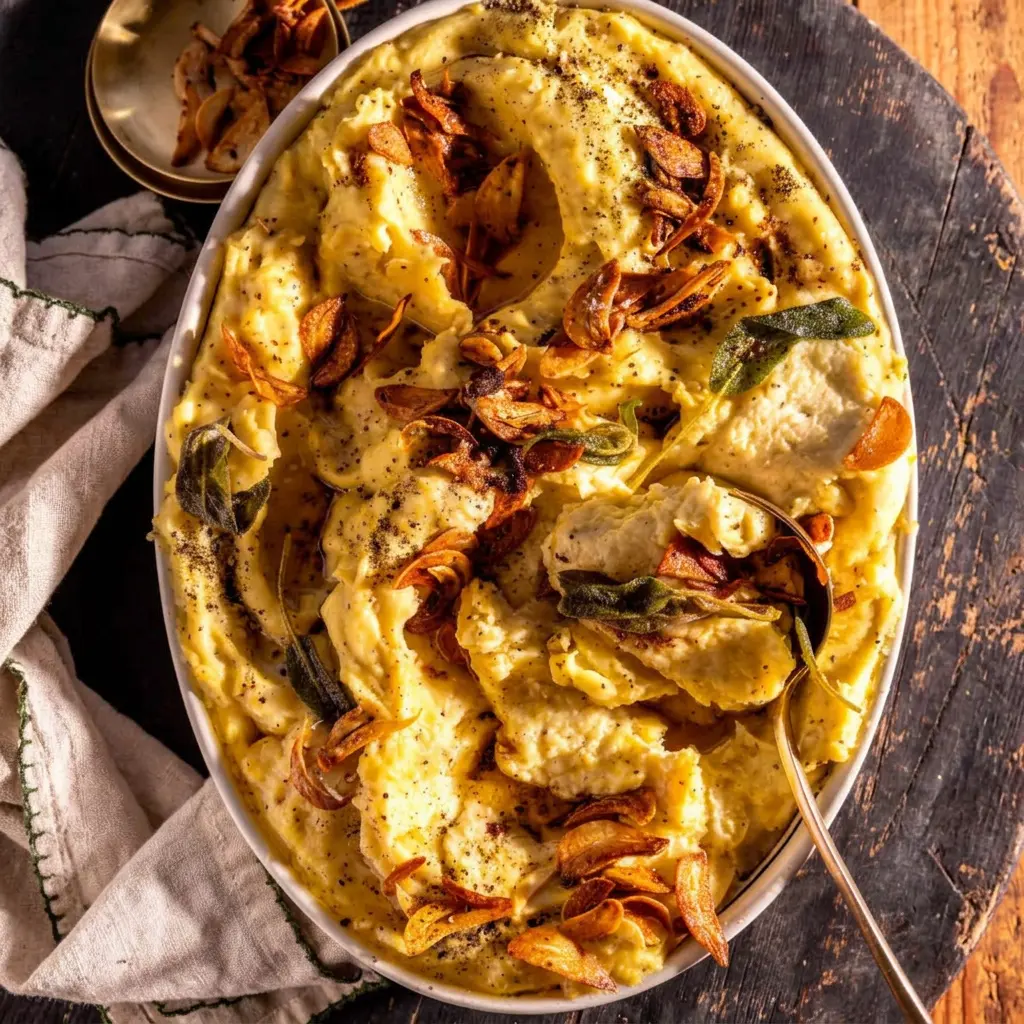
Recipe Variations and Ingredient Substitutions
One of the best things about this recipe is how easily you can customize it.
The combination of brown butter, garlic, and sage is delicious on its own, but a few small changes can create different flavor profiles.
Brown Butter Mashed Potatoes With Roasted Garlic
For a deeper garlic flavor, combine crispy garlic with roasted garlic.
Roasted garlic becomes soft and mellow, making it easy to mash directly into the potatoes.
To prepare it:
- Cut the top off a garlic bulb.
- Drizzle with a little olive oil.
- Wrap loosely in foil.
- Roast at 400°F until the cloves are soft.
- Allow to cool slightly before squeezing the cloves from their skins.
- Mash the roasted garlic into the potatoes.
Finish with the usual crispy garlic topping for a combination of smooth and crunchy textures.
Brown Butter Mashed Potatoes With Parmesan
If you enjoy a more savory mashed potato recipe, Parmesan is a wonderful addition.
Add approximately ½ cup of freshly grated Parmesan while mixing the warm potatoes.
The cheese adds a salty, savory flavor that works beautifully with the nutty brown butter.
Finish with a little extra Parmesan and freshly ground black pepper.
Extra-Creamy Brown Butter Mashed Potatoes
For an especially rich, restaurant-style mash, increase the amount of heavy cream slightly.
You can also add another tablespoon of softened cream cheese.
Add the ingredients gradually, tasting as you go.
The goal is a smooth, luxurious consistency that still holds its shape when served.
Dairy-Free Brown Butter Mashed Potatoes
If you need a dairy-free alternative, use a plant-based butter substitute designed for cooking and an unsweetened, unflavored plant-based milk.
Choose a butter alternative that browns well, as not all varieties develop the same toasted flavor as traditional butter.
You can still prepare crispy garlic and sage separately and use them as the finishing garnish.
What to Serve With Brown Butter Mashed Potatoes
These brown butter mashed potatoes with crispy garlic and sage are versatile enough to accompany many different main dishes.
Their rich, savory flavor makes them particularly suitable for roasted meats, holiday meals, and comforting family dinners.
Here are some excellent serving ideas.
1. Roasted Turkey
Roasted turkey is one of the best pairings, especially during Thanksgiving and Christmas.
The nutty butter, fragrant sage, and crispy garlic complement the flavors of roast turkey beautifully.
Serve the potatoes alongside:
- Traditional turkey gravy.
- Homemade stuffing.
- Roasted carrots.
- Green beans.
- Cranberry sauce.
Together, these dishes create a classic holiday dinner.
2. Garlic Roasted Chicken
For a comforting Sunday dinner, serve the potatoes with garlic-roasted chicken.
The crispy chicken skin and savory pan juices pair wonderfully with the creamy potatoes.
Add roasted vegetables or a simple green salad to complete the meal.
3. Steak and Beef Tenderloin
Brown butter and garlic are natural companions to beef.
These mashed potatoes are particularly delicious with grilled steak, roasted beef tenderloin, or pan-seared beef.
You can serve them with:
- Garlic butter steak.
- Beef tenderloin.
- Braised short ribs.
- Slow-cooked pot roast.
- Homemade mushroom sauce.
The potatoes are also excellent with a spoonful of warm beef gravy.
How to Store and Reheat Leftover Mashed Potatoes
If you have leftovers, you can store them and enjoy them again over the following days.
How to Store in the Refrigerator
Allow the mashed potatoes to stop steaming heavily, then transfer them to an airtight container.
Refrigerate promptly rather than leaving them at room temperature for an extended period.
Cooked potatoes generally keep for 3–4 days in the refrigerator when stored correctly.
For more details, consult the USDA’s cooked potato storage recommendations.
Keep any remaining crispy garlic and sage in separate containers rather than mixing them into the potatoes.
Can You Freeze Brown Butter Mashed Potatoes?
Yes, you can freeze brown butter mashed potatoes.
For best results:
- Allow the potatoes to cool.
- Divide them into convenient portions.
- Transfer to airtight freezer-safe containers.
- Label each container with the preparation date.
- Freeze until needed.
The texture may change slightly after freezing and thawing.
When reheating, add a little warm cream or milk and stir gently to bring the potatoes back to a smooth consistency.
The crispy garlic and sage are best prepared fresh rather than frozen with the potatoes.
Best Ways to Reheat Leftovers
There are three convenient ways to reheat mashed potatoes.
Oven method:
- Transfer the potatoes to an oven-safe dish.
- Add a small amount of cream or butter.
- Cover with foil.
- Reheat at 350°F until thoroughly hot.
- Stir gently before serving.
Stovetop method:
- Place the potatoes in a saucepan.
- Add a splash of milk or cream.
- Warm over low heat.
- Stir occasionally until smooth and hot.
- Avoid using high heat, which can cause the potatoes to stick to the bottom.
Common Mistakes to Avoid
Even a straightforward mashed potato recipe can turn out differently depending on how each ingredient is handled.
Avoid these common mistakes to get the best results.
1. Choosing the Wrong Potatoes
Using very waxy potatoes can produce a denser texture.
Choose Yukon Gold for creamy mashed potatoes or Russet potatoes for a lighter, fluffier result.
2. Adding Too Much Liquid
Adding all the milk or cream at once can make the potatoes too loose.
Instead, add it gradually until you reach your preferred consistency.
3. Burning the Brown Butter
Brown butter needs attention.
Watch the milk solids carefully and remove the pan from the heat as soon as they turn golden brown.
4. Overcooking the Garlic
Garlic becomes bitter when it is fried too long.
Remove the slices when they are lightly golden, not dark brown.
Frequently Asked Questions
What Are the Best Potatoes for Brown Butter Mashed Potatoes?
Yukon Gold potatoes are an excellent choice because they have a naturally buttery flavor and creamy texture. Russet potatoes are another good option if you prefer lighter, fluffier mashed potatoes. You can also combine both varieties to achieve a balance between smoothness and fluffiness.
How Do You Make Brown Butter for Mashed Potatoes?
Melt unsalted butter in a saucepan over medium heat. Allow it to foam while stirring or swirling occasionally. Continue cooking until the milk solids turn golden brown and the butter develops a nutty aroma. Remove it from the heat immediately to prevent burning.
How Do You Keep Mashed Potatoes Creamy and Fluffy?
Start with suitable potatoes, cook them until fork-tender, and drain them thoroughly. Mash while warm and gradually add warm milk or cream. Avoid overmixing, as excessive stirring can release starch and make the potatoes sticky.
Can You Make Brown Butter Mashed Potatoes Ahead of Time?
Yes. You can prepare the mashed potatoes one or two days ahead and refrigerate them in a covered container. Reheat gently with a little additional cream or milk before serving. Prepare the crispy garlic and sage separately and add them immediately before serving.
Final Thoughts
These Brown Butter Mashed Potatoes with Crispy Garlic and Sage are a delicious way to give a familiar side dish a special touch. The creamy potatoes, nutty brown butter, golden crispy garlic, and fragrant fried sage come together to create a combination that is rich, comforting, and full of flavor.
Print
Brown Butter Mashed Potatoes with Crispy Garlic and Sage
- Total Time: PT45M
- Yield: 6 servings 1x
- Diet: Vegetarian
Ingredients
For the mashed potatoes:
- 3 pounds Yukon Gold potatoes, peeled and cut into chunks
- 10 tablespoons unsalted butter, divided
- ½ cup heavy cream or whole milk, warmed
- 2 ounces cream cheese, softened (optional)
- 1 teaspoon kosher salt, plus more for boiling
- ½ teaspoon freshly ground black pepper
For the crispy garlic and sage:
- 5–6 fresh garlic cloves, thinly sliced
- 10–12 fresh sage leaves
- 1 tablespoon unsalted butter or olive oil, if needed for frying
For garnish (optional):
- 2 tablespoons reserved brown butter
- Extra crispy garlic slices
- Fresh fried sage leaves
- Flaky sea salt
- Freshly cracked black pepper
- 2 tablespoons freshly grated Parmesan cheese
Instructions
1. Prepare the potatoes: Peel the Yukon Gold potatoes and cut them into evenly sized chunks, approximately 1½–2 inches wide.
2. Boil the potatoes: Place the potatoes in a large pot and cover with cold water. Add a generous pinch of salt. Bring to a boil, then reduce the heat and simmer for 15–20 minutes, or until fork-tender.
3. Drain and dry: Drain the potatoes thoroughly and return them to the warm pot. Let them sit over low heat for about 1 minute to remove excess moisture.
4. Make the brown butter: Melt 8 tablespoons of unsalted butter in a skillet over medium heat. Stir or swirl occasionally until the butter foams and golden-brown milk solids form at the bottom. Once it smells nutty, remove from the heat and reserve some for garnish.
5. Fry the garlic: Thinly slice the garlic cloves. Gently fry them in the warm butter until lightly golden and crispy. Remove with a slotted spoon and place on a paper towel-lined plate.
6. Fry the sage: Add the fresh sage leaves to the warm butter and fry for 10–20 seconds, until fragrant and crisp. Remove and set aside.
7. Mash the potatoes: Mash the warm potatoes using a potato masher or potato ricer. Add the softened cream cheese, if using, and gradually mix in the warm cream or milk.
8. Add the brown butter: Pour the brown butter into the mashed potatoes, reserving some for serving. Stir gently until creamy and well combined.
9. Season: Add kosher salt and freshly ground black pepper. Taste and adjust the seasoning as needed. Avoid overmixing to keep the potatoes fluffy.
10. Garnish and serve: Transfer the mashed potatoes to a serving bowl. Drizzle with reserved brown butter and top with crispy garlic, fried sage leaves, and a sprinkle of flaky sea salt and black pepper. Serve warm and enjoy!
- Prep Time: PT15M
- Cook Time: PT30M
- Category: Side Dish
- Method: Boiling
- Cuisine: American
Nutrition
- Serving Size: 1 serving
- Calories: 450 kcal
- Sugar: 3 g
- Sodium: 300 mg
- Fat: 30 g
- Saturated Fat: 19 g
- Unsaturated Fat: 9 g
- Trans Fat: 0.5 g
- Carbohydrates: 42 g
- Fiber: 5 g
- Protein: 6 g
- Cholesterol: 90 mg