
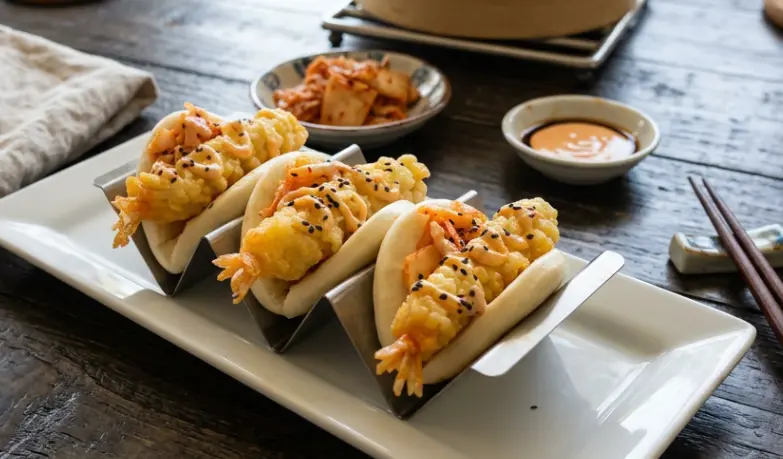
What Are Homemade Tempura Shrimp Bao Buns?
Tempura shrimp bao buns are soft, folded steamed buns filled with crispy battered shrimp, fresh vegetables, and flavorful sauces. They bring together elements of Chinese and Japanese cooking in a delicious fusion-style dish.
Bao buns are made from a simple dough containing flour, yeast, water or milk, sugar, and other ingredients that help produce their characteristic soft texture. After kneading and proofing, the dough is divided, shaped, and steamed. The result is a tender, fluffy bun that can be opened and filled with different ingredients.
Tempura shrimp, on the other hand, consists of shrimp coated in a light batter and quickly fried until golden. Unlike thicker breadcrumb coatings, traditional tempura batter is designed to create a delicate, crisp exterior.
When combined, these ingredients create a satisfying sandwich with several contrasting textures.
A typical shrimp bao includes:
- Steamed bao buns: Soft, fluffy, and slightly sweet.
- Tempura shrimp: Golden, crispy, and tender inside.
- Fresh vegetables: Cucumber, cabbage, carrots, and other crunchy toppings.
- Creamy sauce: Usually spicy mayonnaise, bang bang sauce, or sweet chili mayonnaise.
- Garnishes: Fresh cilantro, green onions, sesame seeds, and lime.
Ingredients You’ll Need for Homemade Tempura Shrimp Bao Buns
This recipe has four main components: the bao dough, tempura shrimp, spicy sauce, and fresh toppings.
Preparing the ingredients before you begin makes the entire cooking process easier.
Ingredients for Homemade Bao Buns
For approximately eight medium-sized buns, you’ll need:
- 300 g all-purpose flour
- 30 g granulated sugar
- 5 g instant yeast
- 5 g baking powder
- 2 g salt
- 170 ml warm water or milk
- 15 ml neutral vegetable oil
Ingredient notes:
- All-purpose flour: Creates a soft dough that’s easy to knead and shape.
- Sugar: Adds a subtle sweetness and supports yeast activity.
- Instant yeast: Helps the dough rise and develop an airy texture.
- Baking powder: Provides additional lift during steaming.
- Warm liquid: Helps bring the dough together. Avoid using excessively hot liquid.
- Vegetable oil: Helps produce a smoother, more manageable dough.
If you prefer a slightly richer bun, milk can be used instead of water.
Ingredients for Crispy Tempura Shrimp
- 450 g large raw shrimp, peeled and deveined
- 100 g all-purpose flour
- 40 g cornstarch
- 1 large egg
- 150–170 ml ice-cold water
- ½ teaspoon salt
- ¼ teaspoon garlic powder (optional)
- Neutral oil for deep-frying
Large or jumbo shrimp work particularly well because they’re easier to coat, fry, and arrange inside the bao buns.
Cornstarch helps produce a lighter coating, while ice-cold water keeps the batter from becoming overly thick during preparation.
Ingredients for Homemade Spicy Mayo
- 120 g mayonnaise
- 1–2 tablespoons sriracha
- 1 teaspoon lime juice
- 1 teaspoon honey
- ½ teaspoon sesame oil (optional)
Mixing these ingredients creates a creamy, tangy sauce with a gentle sweetness and adjustable heat.
Ingredients for the Bao Fillings and Toppings
Choose a combination of fresh vegetables and garnishes.
- ½ cucumber, thinly sliced
- 1 cup shredded cabbage
- 1 small carrot, julienned
- 2 tablespoons chopped fresh cilantro
- 2 green onions, thinly sliced
- ¼ cup pickled radishes (optional)
- 1 tablespoon sesame seeds
- Lime wedges for serving
You don’t need to use every topping. Choose ingredients that complement the shrimp and sauce without making the buns difficult to close.
Kitchen Equipment Needed
Before starting, gather the following equipment:
- Large mixing bowl for the bao dough.
- Measuring cups or a kitchen scale.
- Rolling pin.
- Dough scraper or sharp knife.
- Bamboo steamer or metal steaming basket.
- Parchment paper.
- Deep, heavy-bottomed saucepan or Dutch oven.
- Cooking thermometer.
- Slotted spoon or spider strainer.
- Wire cooling rack.
- Small bowls for the sauce and toppings.
How to Make Homemade Tempura Shrimp Bao Buns
Making these delicious buns involves several stages, but the process becomes much easier when you prepare each component in the correct order.
Step 1: Prepare the Bao Bun Dough
Start by preparing the dough.
- Add the warm water or milk to a large mixing bowl.
- Add the instant yeast and sugar.
- Stir gently until the sugar dissolves.
- In a separate bowl, combine the flour, baking powder, and salt.
- Gradually add the dry ingredients to the liquid mixture.
- Add the vegetable oil.
- Mix until a rough dough begins to form.
The dough should come together without being excessively sticky.
If it feels too wet, add a small amount of flour. If it feels too dry or crumbly, add a teaspoon of water at a time.
Avoid adding too much extra flour because this can make the finished buns dense.
Once the ingredients are combined, transfer the dough to a lightly floured work surface.
Step 2: Knead and Proof the Dough
Kneading helps develop the dough’s structure and creates a smoother consistency.
Knead for approximately 8–10 minutes until the dough becomes smooth, soft, and elastic.
You should be able to press the surface gently with your finger and see it spring back gradually.
Next:
- Lightly grease a clean mixing bowl.
- Place the dough inside.
- Turn it once so the surface is lightly coated with oil.
- Cover the bowl with a clean kitchen towel or plastic wrap.
- Leave it in a warm place for approximately 60–90 minutes.
The dough should increase noticeably in size, usually becoming approximately double its original volume.
The exact proofing time depends on the temperature of your kitchen and the activity of your yeast.
Step 3: Shape the Homemade Bao Buns
Once the dough has risen, gently press it to release some of the accumulated air.
Transfer it to a lightly floured surface.
Divide the dough into eight equal portions.
Follow these steps:
- Roll each portion into a smooth ball.
- Flatten each ball into an oval shape.
- Use a rolling pin to create an even thickness.
- Brush the surface lightly with vegetable oil.
- Fold each oval in half.
- Place a small piece of parchment paper inside the fold or underneath the bun.
The oil prevents the two sides from sticking together, making it easier to open the buns after steaming.
Arrange the shaped buns on parchment squares and leave them to rest for approximately 20–30 minutes.
This second resting period helps the dough relax and gives the buns a softer texture.
Step 4: Steam the Bao Buns Until Fluffy
Prepare your steamer while the shaped buns rest.
Add water to a saucepan or steamer base and bring it to a gentle simmer.
Arrange the buns inside the steamer, leaving enough room between them because they will expand during cooking.
Depending on the size of your steamer, you may need to work in batches.
Cover with a lid and steam for approximately 8–12 minutes.
Once cooked:
- Turn off the heat.
- Allow the buns to rest inside the covered steamer for approximately 2 minutes.
- Open the lid gradually.
- Remove the buns carefully.
Avoid opening the lid repeatedly during steaming because sudden temperature changes can affect the finished texture.
The buns should look plump, smooth, and fluffy.
Transfer them to a plate and keep them covered with a clean towel while preparing the shrimp.
Step 5: Clean and Prepare the Shrimp
Now it’s time to prepare the main filling.
If you’re using frozen shrimp, allow them to thaw completely before beginning.
Peel and devein the shrimp if necessary, then pat them thoroughly dry using paper towels.
Removing excess moisture is important because wet shrimp can cause the tempura coating to slide off or become uneven.
For straighter shrimp:
- Place each shrimp on a cutting board.
- Make two or three shallow cuts along its underside.
- Gently press the shrimp against the board.
- Season lightly with salt and optional garlic powder.
You can leave the tails attached for presentation, but removing them makes the shrimp easier to place inside the buns.
Set the prepared shrimp aside while you make the batter.
Step 6: Prepare the Homemade Tempura Batter
A good tempura batter should be light rather than thick and doughy.
The key is to use cold liquid and avoid excessive mixing.
Start by placing the flour and cornstarch in a mixing bowl.
In a separate bowl:
- Crack in the egg.
- Add the ice-cold water.
- Whisk gently until combined.
- Pour the liquid mixture into the dry ingredients.
- Stir briefly using chopsticks or a fork.
The batter should remain slightly lumpy.
Do not attempt to make it completely smooth.
Overmixing encourages gluten development, which can produce a heavier coating instead of the delicate, crispy texture associated with tempura.
Step 7: Fry the Shrimp Until Golden and Crispy
Heat neutral vegetable oil in a deep, heavy-bottomed saucepan or Dutch oven.
Bring the oil to approximately 350°F (175°C).
Use a cooking thermometer to monitor the temperature.
Once the oil is ready, prepare your shrimp for frying.
- Lightly dust each shrimp with flour.
- Dip it into the cold tempura batter.
- Allow excess batter to drip away.
- Carefully lower the shrimp into the hot oil.
- Repeat with a few more shrimp without overcrowding the pan.
Fry the shrimp in small batches until the coating becomes light golden and crispy and the shrimp are fully cooked.
Depending on their size, shrimp generally take approximately 2–3 minutes, although cooking time can vary.
Use a slotted spoon to remove the shrimp and transfer them to a wire rack.
Avoid stacking freshly fried shrimp because trapped steam can soften the coating.
Allow the oil temperature to return to approximately 350°F (175°C) before adding another batch.
Step 8: Make the Creamy Spicy Bao Sauce
While the shrimp rests briefly, prepare the sauce.
Add the following ingredients to a small bowl:
- 120 g mayonnaise.
- 1–2 tablespoons sriracha.
- 1 teaspoon lime juice.
- 1 teaspoon honey.
- ½ teaspoon sesame oil, if desired.
Whisk until smooth and creamy.
Taste the sauce and adjust the ingredients according to your preference.
For a spicier sauce, add more sriracha.
For a sweeter flavor, add a little extra honey or sweet chili sauce.
If the sauce is too thick, add a few drops of lime juice or water until it reaches your preferred consistency.
Cover and refrigerate until you’re ready to assemble the buns.
Step 9: Prepare the Fresh Vegetables and Garnishes
Fresh toppings give shrimp bao buns their signature combination of textures.
Prepare your vegetables while the other ingredients are ready.
- Slice the cucumber into thin strips or rounds.
- Shred the cabbage finely.
- Cut the carrot into thin matchsticks.
- Chop the cilantro.
- Slice the green onions.
- Prepare the pickled radishes.
- Toast the sesame seeds lightly if desired.
Arrange the prepared ingredients in separate small bowls.
This makes assembling the buns much easier and helps you control how much filling goes into each one.
If you’re preparing the vegetables in advance, keep them covered and refrigerated until needed.
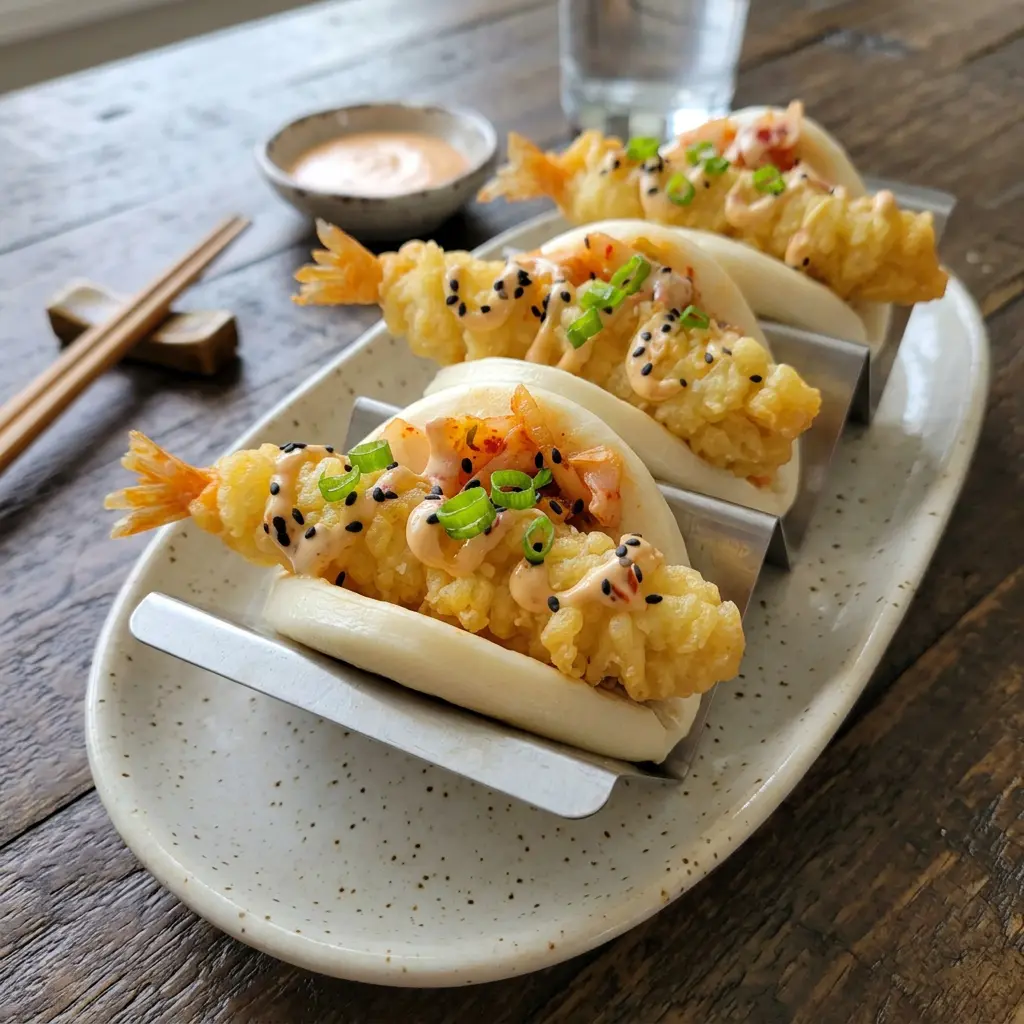
Step 10: Assemble Your Homemade Tempura Shrimp Bao Buns
Now comes the most enjoyable part: putting everything together.
Take one warm bao bun and gently open its folded center.
Spread a little spicy mayonnaise along the inside.
Add a small amount of shredded cabbage, followed by one or two pieces of crispy tempura shrimp.
Finish with:
- Sliced cucumber.
- Shredded carrots.
- Pickled radishes.
- Fresh cilantro.
- Green onions.
- Toasted sesame seeds.
Add another small drizzle of spicy sauce.
Repeat with the remaining buns.
Arrange them on a serving platter and add lime wedges on the side.
Serve immediately while the buns are warm and the shrimp is crispy.
Variations and Substitutions for Homemade Tempura Shrimp Bao Buns
One of the best things about homemade bao is how easily you can change the fillings and flavors.
Here are several variations to try.
Spicy Tempura Shrimp Bao
If you enjoy bold flavors, turn up the heat.
- Add extra sriracha to the mayonnaise.
- Drizzle with chili oil.
- Include thinly sliced fresh chili.
- Sprinkle with chili flakes.
The spicy sauce works particularly well with the mild sweetness of the steamed buns.
Gluten-Free Shrimp Bao Buns
You can experiment with gluten-free alternatives if you need to avoid regular wheat flour.
Use a tested gluten-free steamed bun recipe with an appropriate flour blend.
For the shrimp coating, use gluten-free flour and cornstarch.
Check the ingredients of prepared sauces and seasonings, as some varieties contain wheat-based ingredients.
Gluten-free dough behaves differently from traditional bao dough, so follow a recipe formulated specifically for that flour combination.
Air Fryer Shrimp Bao
If you prefer not to deep-fry shrimp, an air fryer provides another option.
However, traditional wet tempura batter isn’t particularly suitable for air frying because it can drip through the basket before setting.
Instead, use a breadcrumb coating.
- Dip the shrimp in beaten egg.
- Coat with seasoned flour.
- Press into panko breadcrumbs.
- Arrange in a single layer in the air fryer.
- Lightly spray with cooking oil.
- Cook at approximately 390°F (200°C), turning as needed, until golden and fully cooked.
Add the crispy shrimp to steamed bao buns using the same toppings and sauce.
Vegetarian Bao Buns
You can easily create a vegetarian version by replacing shrimp with another crispy filling.
Some good options include:
- Tempura mushrooms.
- Crispy tofu.
- Tempura sweet potato.
- Fried cauliflower.
- Crispy eggplant.
Use the same spicy mayonnaise or sweet chili sauce to complete the filling.
What to Serve with Tempura Shrimp Bao Buns
These buns are delicious on their own, but pairing them with a few complementary side dishes creates a more complete meal.
Asian-Inspired Side Dishes
Consider serving your shrimp bao with:
- Asian cucumber salad.
- Vegetable spring rolls.
- Steamed edamame.
- Sesame cabbage slaw.
- Miso soup.
- Pickled vegetables.
An Asian cucumber salad is particularly suitable because its refreshing flavor contrasts nicely with the crispy shrimp.
Rice and Noodle Dishes
If you want a more substantial spread, add:
- Steamed jasmine rice.
- Sesame noodles.
- Vegetable fried rice.
- Garlic noodles.
- Stir-fried vegetables.
Keep the side dishes relatively simple so the shrimp bao remains the main attraction.
How to Store, Reheat, and Make Bao Buns Ahead of Time
Proper storage helps preserve the texture of each component.
The most important thing is to keep the buns, shrimp, sauce, and vegetables separate.
Storing Leftover Bao Buns
Allow steamed bao buns to cool completely.
Place them in an airtight container and refrigerate for up to 3 days.
For longer storage, freeze them in a suitable freezer container with small pieces of parchment paper between the buns.
Storing Cooked Tempura Shrimp
Allow leftover shrimp to cool briefly, then transfer it to an airtight container.
Refrigerate promptly and use within 1–2 days for the best results.
Keep the shrimp separate from the sauce and vegetables.
How to Reheat Tempura Shrimp
An oven or air fryer is the best choice for bringing back some of the shrimp’s crispness.
Air fryer method:
- Preheat the air fryer to approximately 350°F (175°C).
- Arrange the shrimp in a single layer.
- Heat for approximately 3–5 minutes, checking regularly.
- Allow a little extra time if necessary.
Oven method:
- Preheat the oven to approximately 375°F (190°C).
- Arrange the shrimp on a wire rack over a baking tray.
- Heat until thoroughly warmed and the coating becomes crisp again.
Avoid adding sauce before reheating.
Can You Freeze Bao Buns?
Yes! Homemade bao buns can be frozen after steaming and cooling.
Follow these steps:
- Allow the buns to cool completely.
- Separate them with parchment paper.
- Place them in a freezer-safe container or bag.
- Label and freeze.
When you’re ready to use them, steam the frozen buns until heated through and soft.
Make-Ahead Preparation
You can prepare several components in advance to make serving easier.
The day before:
- Prepare the spicy mayonnaise.
- Prepare pickled vegetables.
- Slice and store suitable vegetables.
- Make and refrigerate the bao dough if following a suitable overnight proofing method.
Shortly before serving:
- Shape and steam the buns.
- Prepare the tempura batter.
- Fry the shrimp.
- Reheat the buns if necessary.
- Assemble everything just before serving.
The shrimp is best fried close to serving time because its crispy coating gradually softens after cooking.
Common Mistakes to Avoid When Making Shrimp Bao Buns
Even a straightforward recipe can produce disappointing results if a few important details are overlooked.
Here are some common mistakes and how to avoid them.
1. Using Warm Water in Tempura Batter
Warm water can encourage gluten development and produce a heavier coating.
Always use ice-cold water when preparing tempura batter.
2. Overcrowding the Frying Pan
Adding too many shrimp at once can lower the oil temperature.
Fry in small batches and allow the oil to return to the correct temperature between batches.
3. Overworking the Bao Dough
Knead the dough until smooth and elastic, but avoid continuing unnecessarily.
Follow the recommended kneading and proofing times to achieve a soft, fluffy texture.
4. Overproofing the Dough
Allow the dough to rise until it has expanded noticeably.
Leaving it for too long can affect the structure and texture of the finished buns.
Frequently Asked Questions
1. What Is the Best Shrimp to Use for Tempura Shrimp Bao Buns?
Large or jumbo raw shrimp are ideal because they’re easy to coat and arrange inside the buns. Choose peeled and deveined shrimp to simplify preparation. You can leave the tails attached for presentation or remove them for easier eating.
2. How Do You Make Tempura Shrimp Extra Crispy?
Use ice-cold batter, avoid overmixing, and maintain an oil temperature of approximately 350°F (175°C). Lightly dust the shrimp with flour before dipping. Fry in small batches and transfer the finished shrimp to a wire rack.
3. Can I Use Frozen Shrimp for Bao Buns?
Yes. Frozen shrimp work well in this recipe. Thaw them completely in the refrigerator, remove excess moisture, and pat them dry before coating. This helps the tempura batter adhere properly and creates a more even coating.
4. Can I Use Store-Bought Bao Buns?
Absolutely. Store-bought frozen bao buns are a convenient alternative when you don’t have time to prepare dough from scratch. Simply steam them according to the package instructions before filling them with freshly fried shrimp and your preferred toppings.
Conclusion: Enjoy Your Homemade Tempura Shrimp Bao Buns!
These Homemade Tempura Shrimp Bao Buns bring together everything that makes an Asian-inspired meal enjoyable: fluffy steamed buns, golden crispy shrimp, crunchy vegetables, and a delicious creamy sauce. Although each component requires a little preparation, the finished result is well worth the effort.
Print
Delicious Homemade Tempura Shrimp Bao Buns – Crispy & Fluffy!
- Total Time: PT2H30M
- Yield: 8 bao buns 1x
Ingredients
For the bao buns:
- 300 g all-purpose flour.
- 30 g sugar.
- 5 g instant yeast.
- 5 g baking powder.
- 2 g salt.
- 170 ml warm water or milk.
- 15 ml vegetable oil.
For the tempura shrimp:
- 450 g large raw shrimp, peeled and deveined.
- 100 g all-purpose flour.
- 40 g cornstarch.
- 1 egg.
- 150–170 ml ice-cold water.
- ½ teaspoon salt.
- Neutral oil for frying.
For the spicy sauce:
- 120 g mayonnaise.
- 1–2 tablespoons sriracha.
- 1 teaspoon lime juice.
- 1 teaspoon honey.
Instructions
- Combine the warm liquid, yeast, and sugar.
- Add flour, baking powder, salt, and vegetable oil.
- Knead for 8–10 minutes until smooth.
- Cover and proof for 60–90 minutes.
- Divide into eight portions, shape into ovals, brush with oil, and fold.
- Rest for 20–30 minutes.
- Steam the buns for approximately 8–12 minutes.
- Pat the shrimp dry and season lightly.
- Mix flour, cornstarch, egg, and ice-cold water to create the tempura batter.
- Heat oil to approximately 350°F (175°C).
- Dip shrimp into the batter and fry in small batches until golden and fully cooked.
- Combine mayonnaise, sriracha, lime juice, and honey.
- Prepare the vegetables and garnishes.
- Open each steamed bun and add spicy mayo, cabbage, tempura shrimp, cucumber, carrots, and garnishes.
- Serve immediately.
Notes
- Keep the tempura batter cold.
- Avoid overmixing the batter.
- Pat shrimp dry before coating.
- Prep Time: PT45M
- Cook Time: PT25M
- Category: Main Dish
- Method: Steaming and Deep-Frying
- Cuisine: Asian-Inspired
Nutrition
- Serving Size: 2 bao buns