
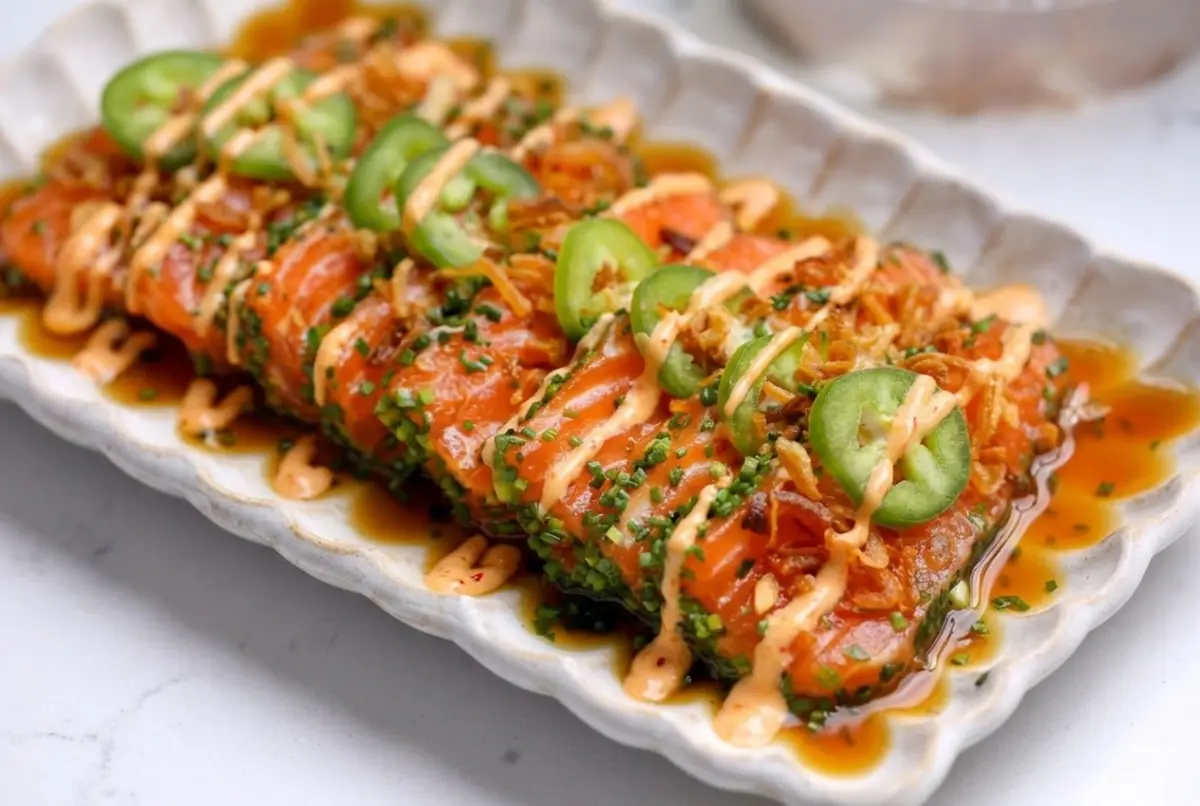
What Is Salmon Crudo?
The word crudo means raw in Italian. In cooking, it describes a preparation featuring thinly sliced or finely chopped raw seafood, usually seasoned with citrus, olive oil, sauces, herbs, or other flavorful ingredients.
Although crudo has Italian culinary roots, modern versions borrow inspiration from different food traditions. Japanese ingredients, Mediterranean seasonings, and contemporary restaurant techniques frequently appear together in creative crudo dishes.
Salmon is particularly popular for this preparation because its naturally buttery texture pairs beautifully with bright citrus and savory seasonings. When sliced carefully, it creates delicate pieces that absorb just enough dressing without losing their characteristic texture.
Ingredients for Salmon Crudo with Yuzu Soy & Spicy Mayo
The beauty of this recipe comes from using a relatively small collection of carefully selected ingredients. Each component contributes a different flavor or texture.
Main Ingredients
Salmon (8 ounces)
Choose a skinless, center-cut salmon fillet from a reputable seafood supplier, specifically intended for raw consumption. A thick, evenly shaped piece makes slicing easier and produces attractive portions.
Kosher salt (2 tablespoons)
Salt forms part of the quick curing mixture. It seasons the salmon and helps create a slightly firmer texture.
Cane sugar (1 tablespoon)
Sugar balances the salt and contributes to the gentle curing process.
Fresh chives (¼ cup, chopped)
Fresh chives create the beautiful green coating around the salmon. Their delicate onion flavor complements the citrus dressing without overpowering the fish.
Serrano pepper (1 pepper)
Thinly sliced serrano adds a bright, spicy finishing touch. You can substitute jalapeño if you prefer a milder pepper.
For the Crispy Shallots
1 large shallot
Shallots become beautifully golden and crunchy when thinly sliced and fried. Their slightly sweet onion flavor provides a delicious contrast to the creamy sauce.
Neutral frying oil
Choose an oil with a high smoke point and a mild flavor, such as grapeseed, canola, or sunflower oil.
For the Yuzu Soy Sauce
2½ tablespoons light soy sauce
Light soy sauce creates the savory foundation of the dressing. It adds a distinctive umami character and complements the salmon.
1 tablespoon yuzu juice
Yuzu is a fragrant Japanese citrus fruit with a distinctive aroma and a flavor that combines characteristics of lemon, lime, and mandarin.
Fresh or bottled yuzu juice works well. If you cannot find yuzu, a mixture of lemon and lime juice makes a useful alternative.
1 tablespoon mirin
Mirin is a Japanese rice seasoning with gentle sweetness. It softens the salty character of soy sauce and rounds out the citrus flavor.
For the Spicy Mayo
2 tablespoons Japanese mayonnaise
Japanese mayonnaise, such as Kewpie, creates a smooth and creamy sauce with a slightly tangy flavor.
1 teaspoon wasabi
Wasabi adds a distinctive, aromatic heat. Start with the suggested amount and adjust according to your preference.
½ teaspoon agave syrup
Agave balances the spicy flavor and adds a subtle sweetness. Honey can also be used as an alternative.
Essential Kitchen Equipment
You don’t need many specialized tools to prepare this salmon crudo.
Gather the following equipment before starting:
- A sharp chef’s knife or sashimi knife.
- A clean cutting board.
- A small mixing bowl for the curing mixture.
- A wire rack and baking sheet.
- Paper towels.
- Two or three small bowls for the sauces.
- A whisk or small spoon.
- A small frying pan.
- A slotted spoon.
- A serving platter.
- A squeeze bottle for the spicy mayo, if desired.
Step-by-Step Instructions: How to Make Salmon Crudo
Now comes the most enjoyable part: bringing all the components together. Follow these steps carefully to create beautiful slices of salmon with balanced seasoning and an elegant finish.
Step 1: Lightly Cure the Salmon
Begin by preparing the salt and sugar mixture.
- Combine the kosher salt and cane sugar in a small bowl.
- Place the salmon on a wire rack positioned over a baking sheet.
- Sprinkle the salt and sugar mixture evenly over both sides of the salmon.
- Make sure the surface is covered without leaving large uncovered areas.
- Transfer the salmon to the refrigerator.
- Allow it to cure for approximately 15–30 minutes.
During this short curing period, the salt and sugar season the surface and help create a firmer texture.
Once the curing time is complete, remove the salmon from the refrigerator.
Rinse away the curing mixture under cold running water, then pat the fish completely dry using clean paper towels.
Important tip: Avoid extending the curing time unnecessarily. The goal is to create a lightly seasoned, delicate texture rather than a heavily cured piece of fish.
Step 2: Coat the Salmon with Fresh Chives
The chive coating gives this recipe its distinctive appearance.
- Spread the finely chopped chives evenly across a clean plate.
- Place the dried salmon over the chives.
- Gently press each side into the chopped herbs.
- Turn the salmon carefully to coat the remaining surfaces.
- Make sure the chives adhere evenly.
Transfer the coated salmon to a clean covered container and refrigerate for approximately 15 minutes.
This short resting period helps the chives remain attached when you slice the fish.
Step 3: Prepare the Crispy Shallots
Crispy shallots add an essential crunchy element to the finished dish.
- Peel the shallot and slice it into very thin, even rings.
- Separate the rings gently with your fingers.
- Pat the slices dry using paper towels.
- Place them in a small, cold frying pan.
- Add enough neutral oil to coat the shallots.
- Turn the heat to medium.
- Stir gently as the oil warms and the shallots begin to fry.
- Continue cooking until the slices become golden and crisp.
- Remove them with a slotted spoon.
- Transfer them to a paper towel-lined plate.
Allow the excess oil to drain.
Remember that shallots continue to darken slightly after leaving the pan, so remove them when they reach a light golden color.
Let them cool completely before using.
Step 4: Make the Yuzu Soy Sauce
This simple dressing is one of the defining elements of the recipe.
- Add the light soy sauce to a small mixing bowl.
- Pour in the yuzu juice.
- Add the mirin.
- Whisk until all three ingredients are thoroughly combined.
- Taste the mixture.
- Adjust the flavor if necessary.
If the dressing tastes too salty, add a little more yuzu juice or mirin.
If it is too sharp, a small additional amount of mirin can help soften the flavor.
The finished sauce should have a pleasant balance of savory soy, fragrant citrus, and gentle sweetness.
Transfer the dressing to a small covered container and refrigerate until needed.
Step 5: Prepare the Spicy Mayo
The creamy spicy mayonnaise creates a delicious contrast with the bright yuzu soy dressing.
- Place the Japanese mayonnaise in a small bowl.
- Add the wasabi.
- Pour in the agave syrup.
- Whisk until smooth and creamy.
- Taste and adjust the seasoning.
For additional heat, add a little more wasabi.
For a milder sauce, increase the mayonnaise slightly.
If the mixture becomes too thick for piping, add a few drops of water and whisk again until it reaches your preferred consistency.
Transfer the spicy mayo to a squeeze bottle or small serving bowl.
Keep refrigerated until assembly.
Step 6: Slice the Salmon
Once the salmon has rested with its chive coating, prepare it for serving.
- Remove the salmon from the refrigerator when ready to slice.
- Place it on a clean cutting board.
- Use a sharp knife to cut the salmon into even portions.
- Make smooth, controlled cuts rather than sawing back and forth.
- Aim for approximately ½-inch-thick pieces, following the style of presentation you prefer.
For attractive slices, keep the knife clean between cuts.
Avoid pressing too firmly on the fish, as this can flatten the delicate pieces and disturb the chive coating.
Arrange the slices on a chilled plate while preparing the final presentation.
How to Assemble and Plate Salmon Crudo
Beautiful presentation is part of what makes this recipe so enjoyable. The goal is to showcase the salmon while allowing the sauces and garnishes to complement each piece.
Step 1: Prepare the Serving Plate
Choose a flat, chilled serving platter.
Pour a small amount of yuzu soy dressing onto the plate and spread it gently across the center.
You don’t need a large quantity. A thin layer provides enough flavor without covering the salmon completely.
Step 2: Arrange the Salmon
Carefully arrange the salmon slices over the dressing.
You can:
- Arrange them in a neat circular pattern.
- Slightly overlap the slices.
- Create a line of salmon across the center of the plate.
- Leave small spaces between pieces for the garnishes.
Choose a layout that looks balanced and allows each slice to remain visible.
Step 3: Add the Spicy Mayo
Place a small dollop of spicy mayonnaise over each salmon slice.
Alternatively, pipe thin lines or small decorative dots around the plate.
Avoid adding too much mayonnaise because its creamy texture should complement the salmon rather than dominate the dish.
Step 4: Add the Final Garnishes
Finish the plate with:
- Crispy fried shallots.
- Thin slices of serrano pepper.
- Fresh chopped chives.
- Optional microgreens.
- A little fresh yuzu zest.
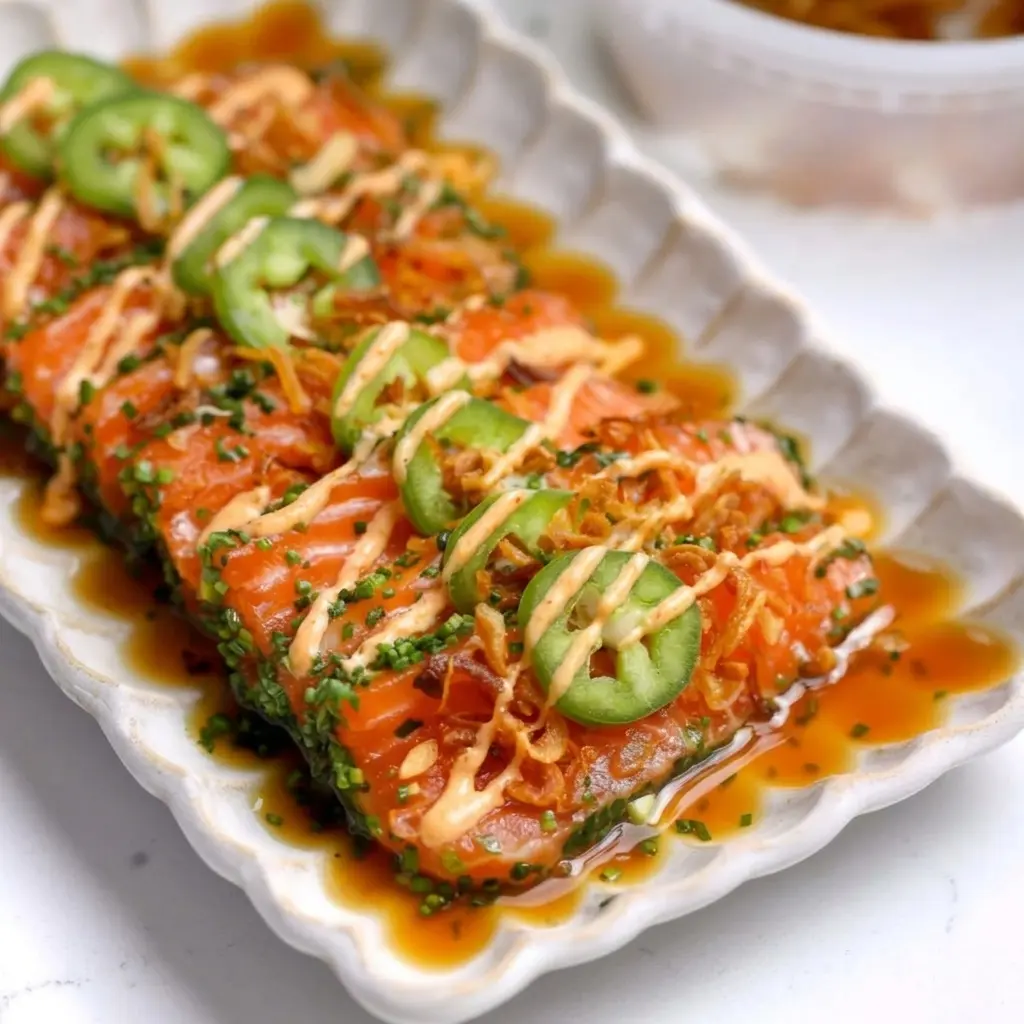
The green chives, red pepper, golden shallots, and salmon create an attractive combination of colors.
Serve immediately for the best contrast between the delicate fish, creamy sauce, and crispy toppings.
Common Mistakes to Avoid When Making Salmon Crudo
Even a simple recipe can become less successful when a few important details are overlooked.
Here are some common mistakes and how to avoid them.
Using Salmon Not Intended for Raw Consumption
Ordinary salmon should not automatically be considered suitable for crudo.
Always purchase appropriately handled fish from a reputable supplier and ask about its suitability for raw preparation.
Over-Curing the Salmon
Leaving the fish in the salt and sugar mixture for too long can create an excessively firm and salty result.
Follow the recommended curing time and rinse the mixture away thoroughly.
Cutting Uneven Slices
Thick and thin pieces arranged together can create an inconsistent presentation.
Use a sharp knife and try to maintain similar thickness throughout.
Making the Dressing Too Salty
Soy sauce is naturally salty, so adding too much can overpower the other ingredients.
Measure carefully and adjust the yuzu and mirin gradually.
Adding the Crispy Shallots Too Early
Crispy shallots can lose their crunch when exposed to moisture.
Always add them immediately before serving.
Easy Ingredient Substitutions and Recipe Variations
One of the best things about this salmon crudo recipe is how easily you can customize it.
You can experiment with different seafood, citrus combinations, sauces, and garnishes while keeping the same basic preparation.
1. Salmon Substitutions
If you want to experiment with other seafood, consider:
- Yellowfin tuna: A beautiful alternative with a firm texture and clean flavor.
- Yellowtail: Offers a delicate taste that pairs well with citrus and soy.
- Scallops: Thinly sliced scallops create an elegant alternative.
Always choose seafood specifically suitable for raw preparation and follow appropriate handling instructions.
2. Yuzu Juice Alternatives
Fresh yuzu can sometimes be difficult to find.
Fortunately, several alternatives work well.
- Bottled yuzu juice is the closest convenient option.
- Fresh lemon juice adds bright citrus flavor.
- Lime juice contributes a sharper, more aromatic character.
- A combination of lemon and lime creates a balanced substitute.
For a closer approximation, combine lemon and lime juice in small quantities and taste before adding the mixture to the soy sauce.
3. Soy Sauce Alternatives
You can adjust the dressing according to your preferences.
- Tamari provides a useful alternative to traditional soy sauce.
- Reduced-sodium soy sauce creates a less salty dressing.
- Gluten-free soy sauce alternatives can be used when required.
Remember to taste the dressing after making substitutions because different brands have different levels of saltiness.
4. Spicy Mayo Variations
The wasabi mayonnaise is delicious, but there are several other combinations worth trying.
Sriracha Mayo
Combine Japanese mayonnaise with a small amount of sriracha for a creamy chili sauce.
Chili Oil Mayo
Mix mayonnaise with a little chili oil for a deeper, more aromatic heat.
Garlic Spicy Mayo
Add a small amount of finely grated garlic to the mayonnaise and chili mixture.
What to Serve with Salmon Crudo
This appetizer pairs beautifully with other Japanese-inspired dishes and fresh accompaniments.
If you’re preparing a complete dinner menu, consider serving the crudo as a starter before a seafood or rice-based main course.
Japanese-Inspired Side Dishes
Cucumber Salad
A refreshing cucumber salad with rice vinegar, sesame seeds, and a little soy sauce makes an excellent accompaniment.
Its crisp texture complements the delicate salmon.
Seaweed Salad
A small serving of seaweed salad adds another Japanese-inspired element to the menu.
Edamame
Simply prepared edamame makes an easy addition to an appetizer spread.
Rice-Based Accompaniments
You can also serve the crudo with:
- Seasoned sushi rice.
- Small crispy rice bites.
- Japanese rice bowls.
- Lightly seasoned steamed rice.
These options work particularly well when serving the salmon as part of a larger meal.
Fresh Accompaniments
For a simple presentation, consider adding:
- Thin cucumber slices.
- Fresh radishes.
- Citrus wedges.
- Microgreens.
- Fresh herbs.
These additions keep the plate colorful and complement the flavors already present in the dish.
How to Store and Make Salmon Crudo Ahead of Time
Although the finished dish is best assembled shortly before serving, you can prepare several components in advance.
This is especially useful when entertaining guests because most of the work can be completed before arranging the final plate.
Can You Prepare Salmon Crudo Ahead of Time?
Yes, but it’s best to prepare the individual components separately.
You can prepare the following in advance:
Yuzu Soy Sauce
Mix the soy sauce, yuzu juice, and mirin in a small airtight container.
Refrigerate until needed and stir before serving.
Prepare the mayonnaise, wasabi, and agave mixture.
Transfer it to a sealed container or squeeze bottle and refrigerate.
Crispy Shallots
Fry the shallots ahead of time and allow them to cool completely.
Store them in an airtight container in a cool, dry place. Keep moisture away from the shallots to preserve their crisp texture.
How to Store the Salmon
Keep the salmon refrigerated in a clean, covered container and follow the supplier’s storage instructions and use-by guidance.
Keep it separate from prepared garnishes and ready-to-eat ingredients.
The finished crudo should not be treated like a dish that can be stored for several days. For the best texture and presentation, serve it immediately after assembly.
Can You Freeze Salmon Crudo?
Freezing is not a recommended way to preserve an already assembled crudo dish.
However, properly controlled freezing may be part of the initial parasite-control process for fish intended to be served raw.
These are two different purposes, and freezing does not replace appropriate sourcing and handling.
How to Keep the Best Texture
For an attractive final presentation:
- Keep the fish chilled.
- Prepare sauces separately.
- Fry shallots in advance.
- Slice the salmon close to serving.
- Add the dressing shortly before plating.
- Finish with crispy toppings at the last moment.
These small details make it much easier to serve a beautiful plate without rushing.
Frequently Asked Questions
What Is Salmon Crudo?
Salmon crudo is a seafood appetizer made with thinly sliced raw salmon dressed with flavorful ingredients such as citrus juice, soy sauce, olive oil, or fresh herbs. It is often served with delicate garnishes and sauces. This version features yuzu soy dressing, spicy Japanese mayonnaise, fresh chives, and crispy shallots.
Is Salmon Crudo the Same as Sashimi?
No. Both preparations feature raw seafood, but their presentation and seasoning are different. Sashimi is a traditional Japanese preparation of carefully sliced seafood, while crudo is a broader style of serving raw seafood with dressings, citrus, and additional seasonings.
Is It Safe to Eat Raw Salmon at Home?
Raw salmon requires careful sourcing and handling. Purchase fish specifically intended for raw consumption from a reputable supplier and ask about appropriate parasite-control freezing. Refrigerate it properly and prevent cross-contamination. Freezing does not eliminate every possible foodborne hazard, so raw preparations are not suitable for everyone.
What Type of Salmon Is Best for Crudo?
A center-cut salmon fillet is an excellent choice because it has a uniform shape and is easy to slice. Choose appropriately handled salmon intended for raw consumption. Ask your seafood supplier about its sourcing, freezing, and handling history.
Conclusion
This Salmon Crudo with Yuzu Soy & Spicy Mayo is a beautiful combination of delicate salmon, fragrant citrus, creamy sauce, and crispy garnishes. With simple preparation and careful presentation, you can create an impressive restaurant-style appetizer in your own kitchen. Try this recipe for your next special dinner, experiment with your favorite garnishes, and enjoy every delicious bite. Don’t forget to share your experience in the comments!