
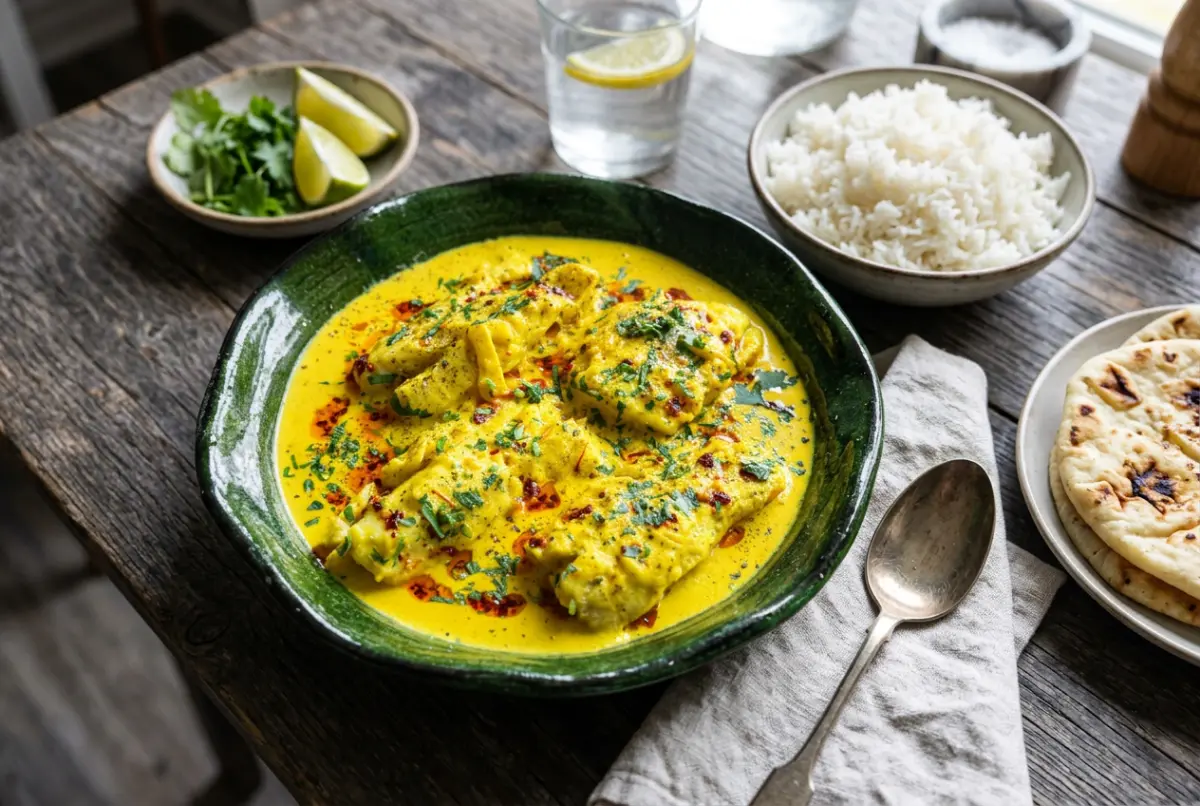
What Is Coconut Saffron Poached Fish Recipe?
Coconut saffron poached fish is a seafood dish in which fish fillets are gently cooked in a seasoned liquid made with coconut milk, saffron, and aromatic ingredients. Rather than frying or roasting the fish, this method uses gentle heat to cook the fillets directly in the flavorful broth.
The combination of coconut milk and saffron gives the dish its distinctive character. Coconut milk creates a smooth, creamy base with a mild sweetness, while saffron adds a delicate floral fragrance and a beautiful golden color.
Garlic, onion, coriander, and turmeric provide additional layers of flavor. These ingredients complement the coconut without overpowering the natural taste of the fish.
Cod is an excellent choice because its mild flavor and flaky texture work particularly well with aromatic sauces. However, other varieties of white fish can also be used.
Ingredients for Coconut Saffron Poached Fish Recipe
The success of this recipe depends on using ingredients that complement one another. Each component contributes something different, from the creamy consistency of the coconut milk to the floral fragrance of saffron.
Here is what you’ll need.
1. White Fish Fillets
Cod is the recommended fish for this recipe. Its mild flavor allows the saffron and coconut sauce to stand out, while its flaky texture makes it particularly suitable for gentle poaching.
Choose four boneless, skinless cod fillets, approximately 150–180 grams each.
Other suitable choices include:
- Halibut
- Haddock
- Pollock
- Sea bass
- Snapper
Try to select fillets with a similar thickness so they finish cooking at approximately the same time.
2. Full-Fat Coconut Milk
Coconut milk is the foundation of the sauce. It gives the broth its creamy consistency and introduces a mild sweetness that balances the aromatic spices.
Use full-fat canned coconut milk rather than a thin coconut beverage. Shake the can well before opening it, or stir the contents if the cream has separated from the liquid.
If you prefer a particularly rich sauce, you can use a small amount of coconut cream mixed with coconut milk.
3. Saffron Threads
Saffron is the defining ingredient in this recipe.
These delicate threads release a distinctive floral aroma and create a beautiful golden color when infused in warm liquid.
You only need a small pinch. Using too much saffron can create an overpowering or slightly bitter flavor.
Whenever possible, use genuine saffron threads rather than artificially colored substitutes.
4. Onion
One medium onion provides the aromatic foundation for the broth.
Finely chopped yellow or white onion works well. Cooking it slowly in oil softens its flavor and brings out its natural sweetness.
5. Garlic
Fresh garlic adds savory depth and complements the sweetness of coconut milk.
Use three or four cloves, finely minced. Add the garlic after the onion has softened so that it doesn’t burn.
6. Ground Coriander
Ground coriander contributes a warm, slightly citrusy flavor that works particularly well with coconut and saffron.
It adds complexity without overpowering the fish.
7. Ground Turmeric
A small amount of turmeric reinforces the golden appearance of the saffron broth.
It also adds an earthy flavor that complements the other spices.
8. Vegetable or Coconut Oil
A little oil is needed to sauté the onion and garlic.
Coconut oil works particularly well because it complements the coconut milk, although neutral vegetable oil is also suitable.
9. Vegetable or Fish Stock
Stock helps adjust the consistency of the coconut broth and provides additional savory flavor.
Use low-salt stock if you want more control over the final seasoning.
10. Salt and Black Pepper
Seasoning brings all the flavors together.
Start with a moderate amount of salt and black pepper, then taste the broth before adding the fish.
11. Fresh Herbs and Lemon
Finish the dish with freshly chopped cilantro or parsley.
Lemon wedges provide a bright, citrusy contrast to the creamy coconut sauce.
Optional finishing ingredients include:
- Fresh red chili
- Chili flakes
- Chili oil
- Lime wedges
- Fresh basil
Essential Equipment for Making Poached Fish
You don’t need specialized equipment to prepare this recipe.
Gather the following items before starting:
- A wide, deep skillet or sauté pan with a lid.
- A sharp kitchen knife.
- A cutting board.
- Measuring cups and spoons.
- A small bowl for blooming saffron.
- A wooden spoon or silicone spatula.
- A fish spatula for transferring the fillets.
- An instant-read food thermometer.
How to Make Coconut Saffron Poached Fish Recipe Step by Step
This is the main part of the recipe. Follow the steps in order to create a smooth, aromatic broth and tender fish fillets.
Step 1: Prepare the Fish Fillets
Begin by removing the fish from its packaging and patting each fillet dry with paper towels.
Check carefully for any remaining pin bones. Remove them with clean kitchen tweezers if necessary.
Season both sides with:
- Salt
- Freshly ground black pepper
Set the fillets aside while you prepare the other ingredients.
If the fillets are particularly thick, make sure they are reasonably uniform in size so they cook evenly.
Step 2: Bloom the Saffron
Place the saffron threads in a small bowl.
Add two tablespoons of warm water and allow the threads to steep for approximately 10–15 minutes.
As the saffron releases its color, the liquid will gradually become golden.
Keep the bowl nearby because you’ll add the entire infusion to the coconut broth.
Step 3: Sauté the Onion
Place a wide skillet over medium heat.
Add one tablespoon of coconut oil or vegetable oil.
Once the oil is warm, add the finely chopped onion.
Cook for approximately four to five minutes, stirring occasionally, until the onion becomes soft and translucent.
Avoid browning it too aggressively. You want the onion to soften and develop a gentle sweetness rather than become crispy.
Step 4: Add the Garlic and Spices
Add the minced garlic to the softened onion.
Stir for approximately 30 seconds until fragrant.
Next, add:
- One teaspoon ground coriander.
- Half a teaspoon ground turmeric.
- A small amount of black pepper.
Stir everything together for another 20–30 seconds.
This brief cooking step helps the spices become fragrant and distributes them evenly throughout the aromatic base.
Step 5: Add the Coconut Milk
Pour the full-fat coconut milk into the skillet.
Add approximately half a cup of vegetable or fish stock, depending on your preferred sauce consistency.
Stir gently to combine the coconut milk with the onion, garlic, and spices.
The broth should have a smooth appearance with an even golden color beginning to develop.
Step 6: Add the Bloomed Saffron
Pour the saffron infusion into the coconut milk mixture.
Include the saffron threads as well.
Stir gently and allow the broth to simmer for approximately three to five minutes.
Taste the sauce and adjust the salt and pepper.
If it seems too thick, add a little more stock. If it appears too thin, allow it to simmer gently for another minute or two before adding the fish.
Step 7: Gently Poach the Fish
Reduce the heat to low.
Carefully place the seasoned fish fillets into the coconut saffron broth.
Arrange them in a single layer, leaving a little space between each piece.
Spoon some of the sauce over the upper surfaces of the fillets.
Cover the skillet with a lid and allow the fish to cook gently.
Depending on thickness, the fillets will generally take approximately 5–10 minutes.
Avoid stirring the broth vigorously or repeatedly moving the fish. Delicate fillets can break apart before they are ready to serve.
Step 8: Check the Fish for Doneness
The fish should become opaque and separate easily into flakes when gently tested with a fork.
Check the thickest part of the fillet rather than relying only on the edges.
For a temperature-based check, finfish should reach an internal temperature of 145°F (63°C).
Cooking time will vary depending on:
- The thickness of the fillets.
- The variety of fish.
- The starting temperature of the fish.
- The temperature of the poaching liquid.
- Whether the skillet is covered.
Once the fish is ready, remove the skillet from the heat.
Step 9: Finish the Coconut Saffron Sauce
Taste the broth one final time.
Add additional salt or black pepper if needed.
For a brighter finish, squeeze in a little lemon juice.
If you enjoy a little heat, add fresh chili slices or a drizzle of chili oil.
Stir gently around the fish rather than directly through the fillets.
Step 10: Garnish and Serve
Use a fish spatula to carefully transfer the fillets into shallow serving bowls.
Spoon the golden coconut saffron broth over each portion.
Finish with freshly chopped cilantro or parsley.
Add lemon wedges on the side and serve immediately.
The fish should be tender and flaky, surrounded by a creamy, aromatic sauce.
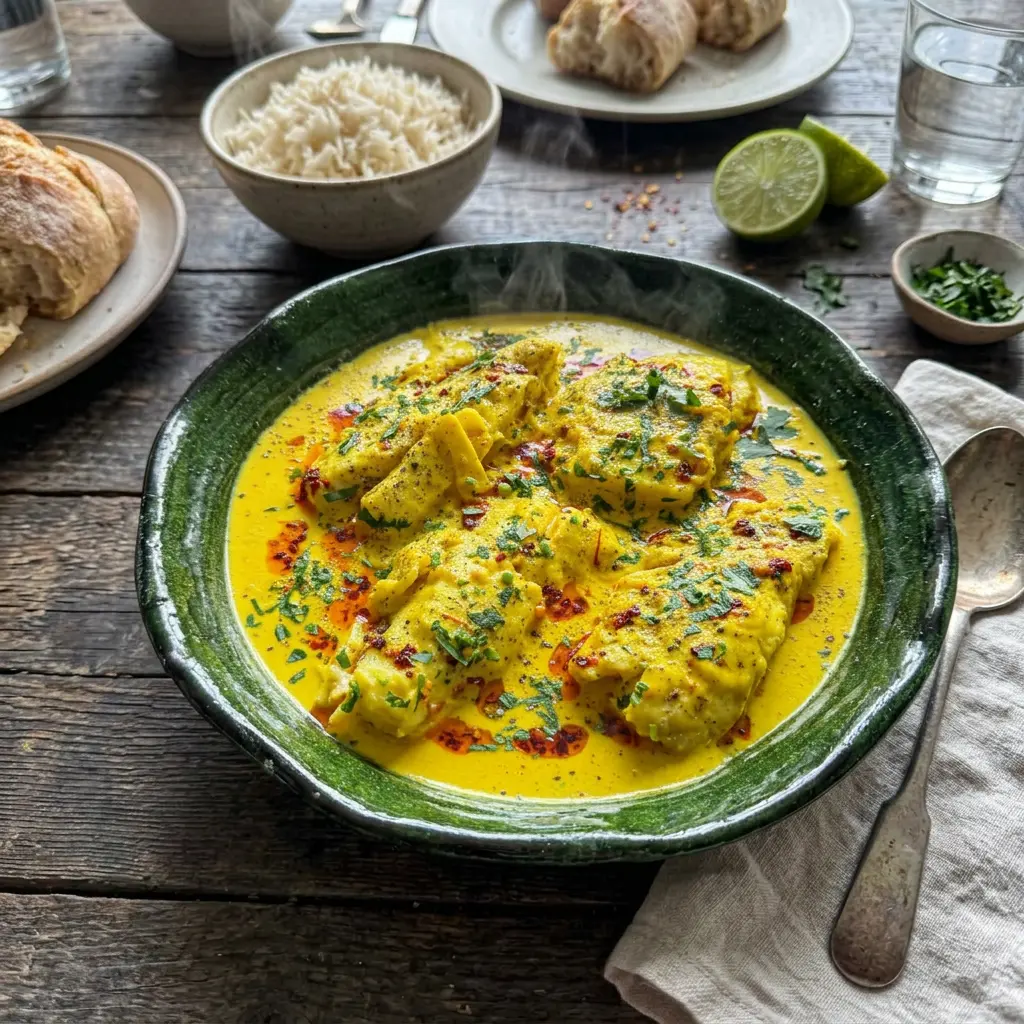
What to Serve With Coconut Saffron Poached Fish
The sauce is one of the best parts of this recipe, so choose accompaniments that allow you to enjoy every spoonful.
Steamed Jasmine Rice
Jasmine rice is one of the best options.
Its delicate fragrance and soft texture complement the saffron and coconut milk.
Spoon the broth over the rice and place a fish fillet alongside it.
Basmati Rice
Basmati rice is another excellent choice.
Its long, separate grains work beautifully with the creamy sauce.
You can serve it plain or add a little lemon zest and chopped cilantro.
Cauliflower Rice
For a different presentation, serve the fish with cauliflower rice.
It provides a lighter-textured alternative to traditional rice and allows the coconut broth to remain the main feature.
Steamed Vegetables
Steamed vegetables add color and texture to the plate.
Good options include:
- Broccoli.
- Green beans.
- Asparagus.
- Bok choy.
- Zucchini.
- Carrots.
Keep the vegetables simply seasoned so they don’t compete with the saffron broth.
Fresh Cucumber Salad
A cucumber salad with lemon juice, fresh herbs, and a little black pepper creates a refreshing contrast.
Its crisp texture also works well alongside the soft fish.
Crusty Bread
Fresh crusty bread is ideal for soaking up the remaining coconut sauce.
Serve warm slices alongside the fish for a simple but satisfying presentation.
Variations and Substitutions
One of the advantages of this recipe is how easily you can adapt it.
You can change the fish, introduce additional aromatics, or adjust the consistency of the broth while retaining the basic coconut and saffron combination.
Coconut Saffron Poached Salmon
Salmon can replace cod if you prefer a richer fish.
Use individual salmon fillets and follow the same general method.
Because salmon has a different texture and thickness, adjust the cooking time accordingly.
Keep the seasoning relatively simple so that the saffron remains noticeable.
Coconut Saffron Poached Halibut
Halibut is an excellent alternative to cod.
Its firm texture helps the fillets hold their shape during poaching.
It also works particularly well when you want to serve individual portions in shallow bowls.
Spicy Coconut Saffron Fish
If you enjoy a little heat, introduce chili to the aromatic base.
You can use:
- Fresh red chili.
- Green chili.
- Red pepper flakes.
- Chili oil.
- A small amount of chili paste.
Add fresh chili with the garlic, or finish the dish with chili oil just before serving.
Coconut Saffron Fish With Ginger
Fresh ginger adds a slightly warm and aromatic flavor.
Add one teaspoon of finely grated ginger when sautéing the garlic.
The combination of ginger, saffron, and coconut milk creates a different but complementary flavor profile.
Coconut Saffron Fish With Lemongrass
For a more pronounced aromatic character, add one bruised lemongrass stalk to the broth.
Allow it to simmer with the coconut milk, then remove it before serving.
Lemongrass introduces a fresh citrus-like fragrance that works well with coconut.
Lighter Coconut Saffron Broth
If you prefer a thinner sauce, replace part of the coconut milk with additional stock.
Start with a small amount and adjust until you achieve the desired consistency.
Avoid diluting the sauce too much, as coconut milk is responsible for much of the dish’s characteristic flavor.
Common Mistakes to Avoid When Poaching Fish in Coconut Milk
Even a straightforward recipe can be affected by a few common mistakes.
Here are the problems to watch out for.
Boiling the Coconut Milk Too Aggressively
The broth should not be boiling rapidly when you add the fish.
Excessive heat can cause delicate fillets to break apart and may affect the consistency of the sauce.
Keep the heat low and maintain a gentle simmer.
Adding Too Much Saffron
Saffron has a distinctive flavor, and a small quantity is enough.
Adding too many threads can make the broth overpowering or bitter.
Start with a small pinch and increase the amount only if necessary.
Using Thin Fish Fillets
Very thin fillets can cook quickly and become difficult to handle.
Choose thicker portions whenever possible.
If using thinner pieces, check them earlier and remove them as soon as they are done.
Overcrowding the Pan
When too many fillets are placed together, they can overlap and cook unevenly.
Arrange the fish in a single layer.
If your skillet is too small, cook the fish in batches.
Overcooking the Fish
This is probably the most common mistake.
Fish can go from tender to dry surprisingly quickly.
Start checking the fillets after approximately five minutes, especially if they are thin.
How to Store and Reheat Leftover Coconut Saffron Fish
If you have leftovers, store the fish together with some of the coconut broth.
The sauce helps prevent the exposed surface of the fish from drying out during storage.
Refrigerating Leftovers
Transfer the fish and broth into a clean, airtight container.
Refrigerate promptly, ideally at 40°F (4°C) or below.
Use cooked seafood leftovers within three to four days, following USDA storage guidance.
Freezing the Dish
You can freeze leftover fish and sauce, although the texture may change after thawing.
Coconut sauces can sometimes separate slightly when frozen and reheated.
For the best results:
- Use a freezer-safe airtight container.
- Allow the dish to cool before freezing.
- Label the container with the preparation date.
- Thaw in the refrigerator.
- Stir the sauce gently while reheating.
Reheating Instructions
The best way to reheat this dish is in a saucepan over low heat.
Add a small splash of stock or water if the sauce has thickened.
Warm the fish gently until heated through, avoiding prolonged boiling.
Try not to stir the fish directly. Instead, spoon the warm broth over the fillets.
For more even reheating, smaller portions are easier to handle than one large container.
Frequently Asked Questions About Coconut Saffron Poached Fish
Can You Poach Fish in Coconut Milk?
Yes. Coconut milk is an excellent liquid for poaching fish because it creates a creamy, aromatic broth. Combine it with garlic, onion, saffron, and spices, then gently simmer the fish until cooked. Avoid vigorous boiling to help the fillets retain their shape.
What Is the Best Fish to Poach in Coconut Milk?
Cod is an excellent choice because of its mild flavor and flaky texture. Halibut, haddock, pollock, sea bass, and snapper are also suitable alternatives. Choose fillets with a reasonably even thickness so they cook consistently in the coconut broth.
How Long Does Fish Take to Poach in Coconut Milk?
Most individual fish fillets take approximately 5–10 minutes to poach, depending on their thickness and the temperature of the broth. Check the thickest part of the fish. It should become opaque and separate easily with a fork, or reach 145°F (63°C).
Can I Use Frozen Fish for This Recipe?
Yes, frozen fish works well. Thaw the fillets in the refrigerator, remove excess moisture with paper towels, and season them before cooking. Avoid adding frozen fillets directly to the broth because they can release excess water and affect the sauce consistency.
Final Thoughts on This Coconut Saffron Poached Fish Recipe
This Coconut Saffron Poached Fish Recipe is a wonderful way to prepare tender white fish with a creamy, aromatic sauce. The combination of full-fat coconut milk, fragrant saffron, garlic, onion, and warm spices creates a golden broth that makes every serving special.
Print
Coconut Saffron Poached Fish Recipe
- Total Time: PT30M
- Yield: 4 servings 1x
Ingredients
For the fish:
- 4 cod fillets, approximately 150–180 grams each.
- Salt, to taste.
- Black pepper, to taste.
For the coconut saffron broth:
- 1 can full-fat coconut milk (approximately 400 ml).
- 1/2 cup vegetable or fish stock.
- A small pinch of saffron threads.
- 1 medium onion, finely chopped.
- 3–4 garlic cloves, minced.
- 1 teaspoon ground coriander.
- 1/2 teaspoon ground turmeric.
- 1 tablespoon coconut oil or vegetable oil.
- Additional salt and black pepper, to taste.
- 2 tablespoons warm water for blooming saffron.
For garnish:
- 2 tablespoons chopped fresh cilantro or parsley.
- Lemon wedges.
- Fresh chili or chili oil, optional.
Instructions
- Pat the cod fillets dry and season with salt and black pepper.
- Bloom the saffron in two tablespoons of warm water for 10–15 minutes.
- Heat the oil in a wide skillet over medium heat.
- Add the chopped onion and cook for four to five minutes until softened.
- Stir in the garlic, coriander, and turmeric.
- Add the coconut milk and stock.
- Pour in the saffron infusion and stir gently.
- Allow the broth to simmer for three to five minutes.
- Reduce the heat and add the fish fillets in a single layer.
- Cover and poach gently for approximately 5–10 minutes, depending on thickness.
- Check that the fish has reached 145°F (63°C) or is opaque and separates easily with a fork.
- Adjust the seasoning and finish with lemon juice if desired.
- Garnish with fresh cilantro or parsley.
- Serve immediately with the golden coconut broth.
Notes
- Use full-fat coconut milk for a creamy sauce.
- Avoid boiling the broth vigorously.
- Use fillets with similar thickness.
- Prep Time: PT15M
- Cook Time: PT15M
- Category: Main Dish
- Method: Stovetop
- Cuisine: American
Nutrition
- Serving Size: 1 fillet with sauce (approx. 300 g)
- Calories: 390 kcal
- Sugar: 2 g
- Sodium: 420 mg
- Fat: 29 g
- Saturated Fat: 23 g
- Unsaturated Fat: 5 g
- Trans Fat: 0 g
- Carbohydrates: 5 g
- Fiber: 1 g
- Protein: 30 g
- Cholesterol: 55 mg