

What Are Creamsicle Orange Cookies?
Creamsicle Orange Cookies are soft cookies inspired by the familiar combination of orange and vanilla found in a classic Creamsicle-style frozen treat. Instead of an icy dessert, you get that same flavor idea in a warm, tender cookie.
The orange flavor comes primarily from fresh orange zest, with orange extract adding another layer of citrus when a more pronounced flavor is desired. Vanilla extract brings out the creamy side of the recipe, while white chocolate chips add sweet, smooth pockets throughout the dough.
Unlike a plain orange sugar cookie, these cookies are designed around the contrast between bright citrus and creamy vanilla. That balance is what gives them their recognizable creamsicle character.
They are delicious when served slightly warm, but they are also excellent after cooling completely. The centers remain soft while the edges become lightly set, creating the kind of texture that makes you want to reach for another cookie.
Why You’ll Love These Creamsicle Orange Cookies
There are plenty of reasons to add this orange creamsicle cookie recipe to your baking list.
- Bright orange flavor: Fresh orange zest gives the cookies a fragrant citrus character.
- Creamy vanilla notes: Vanilla and white chocolate complement the orange beautifully.
- Soft and chewy texture: The cookies are tender in the center with lightly golden edges.
- Easy preparation: The dough comes together with familiar baking ingredients.
- No complicated decorating: The cookies are attractive without elaborate frosting.
- Great for sharing: They work beautifully on dessert trays, at parties, and during cookie exchanges.
- Easy to customize: You can add a glaze, extra white chocolate, or additional orange zest.
- Freezer-friendly: Both baked cookies and prepared dough can be stored for later baking.
- Year-round appeal: Although the orange flavor feels especially summery, these cookies are just as enjoyable during cooler months.
The best part is that the recipe doesn’t require a complicated technique. If you’ve made a basic batch of chocolate chip cookies before, you’ll find the process very familiar.
Ingredients for Creamsicle Orange Cookies Recipe
The ingredient list is straightforward, but each component has a specific job. For the best result, measure your ingredients carefully and use fresh orange zest whenever possible.
All-Purpose Flour
All-purpose flour gives the cookies structure while still allowing them to remain tender. Measure it carefully rather than packing it tightly into a measuring cup.
Too much flour can produce a dense or dry cookie, so spoon the flour into the cup and level the top if you’re measuring by volume.
Unsalted Butter
Softened butter creates the rich, buttery base of the cookies. It should be soft enough to mix easily but not melted or greasy.
Room-temperature butter creams more effectively with the sugar, helping create a smoother dough.
Granulated Sugar
Granulated sugar provides sweetness and contributes to the cookie’s texture. It also helps the edges develop a delicate golden finish during baking.
Brown Sugar
A little brown sugar adds depth and helps keep the centers pleasantly soft. The combination of granulated and brown sugar creates a more interesting texture than using only one type.
Egg
The egg binds the dough together and contributes to its structure. For easier mixing, allow the egg to come close to room temperature before beginning.
Fresh Orange Zest
Fresh orange zest is one of the most important ingredients in this recipe.
The colored outer peel contains the fragrant citrus oils that give the cookies their distinctive orange aroma. Use a fine zester or microplane and rotate the orange as you work.
Stop once you reach the white layer underneath the peel. That white pith can taste bitter.
Orange Extract
Orange extract is optional, but it is useful when you want a more noticeable orange creamsicle flavor. Fresh zest gives a natural citrus aroma, while extract provides concentrated orange flavor.
If you prefer a more delicate cookie, you can reduce or omit the extract.
Vanilla Extract
Vanilla is essential to the creamsicle-style flavor. It softens the sharpness of the citrus and adds the sweet, familiar aroma associated with the classic orange-and-vanilla combination.
White Chocolate Chips
White chocolate chips provide the creamy, sweet component of the cookies. They also create little pockets of melted sweetness throughout the dough.
For a more luxurious cookie, use chopped white chocolate instead of chips.
Baking Soda
Baking soda contributes to the cookies’ spread and texture. Use the amount specified in the recipe rather than adding extra for more lift.
Baking Powder
Baking powder helps give the cookies a little additional lift and contributes to their tender texture.
Salt
Salt balances the sweetness and helps the orange and vanilla flavors stand out.
Equipment You’ll Need
You don’t need any unusual equipment to make these cookies.
Have the following ready:
- Large mixing bowl
- Medium bowl for dry ingredients
- Hand mixer or stand mixer
- Rubber spatula
- Measuring cups and spoons
- Kitchen scale, if available
- Microplane or fine citrus zester
- Cookie scoop
- Baking sheets
- Parchment paper
- Wire cooling rack
How to Make Creamsicle Orange Cookies Recipe
The process is simple, but a few small details make a noticeable difference.
Step 1: Prepare the Baking Sheets
Preheat your oven according to the recipe temperature.
Line one or two baking sheets with parchment paper. This makes cleanup easier and helps prevent the cookies from sticking.
If you’re using multiple baking sheets, keep one batch at a time in the oven whenever possible. This makes it easier to monitor the baking time.
Step 2: Zest the Orange
Wash and dry the orange thoroughly before zesting.
Using a microplane or fine zester, gently remove the bright orange outer layer.
Turn the orange frequently so you don’t keep grating the same area.
You want the colorful peel, not the white pith underneath.
Measure the zest required for the recipe and set it aside.
Step 3: Combine the Dry Ingredients
In a medium bowl, whisk together:
- All-purpose flour
- Baking soda
- Baking powder
- Salt
Mixing these ingredients separately helps distribute the leavening agents evenly throughout the flour.
Set the bowl aside while you prepare the wet ingredients.
Step 4: Cream the Butter and Sugars
Place the softened butter, granulated sugar, and brown sugar into a large mixing bowl.
Beat until the mixture becomes smooth and creamy.
Scrape down the sides and bottom of the bowl with a rubber spatula as needed.
Don’t rush this step. Properly softened butter is much easier to cream than cold butter, while melted butter can cause the finished cookies to spread too much.
Step 5: Add the Egg
Add the egg and beat until incorporated.
The mixture may look slightly different after the egg is added. That’s normal.
Scrape the sides of the bowl again to make sure everything is evenly mixed.
Step 6: Add the Orange and Vanilla
Add the fresh orange zest, orange extract, and vanilla extract.
Mix just until the flavorings are incorporated.
At this point, the mixture should smell strongly of fresh orange and vanilla. That aroma is a good indication that the cookie dough is developing its signature flavor.
Step 7: Add the Dry Ingredients
Gradually add the dry ingredients to the butter mixture.
Mix on low speed or stir with a spatula until you no longer see streaks of dry flour.
Avoid overmixing.
Once the flour disappears, stop mixing. Overworking the dough can make the cookies less tender.
Step 8: Fold in the White Chocolate
Add the white chocolate chips.
Use a rubber spatula to gently fold them through the dough.
Try to distribute the chips evenly so every cookie gets a good amount.
If you’re using chopped white chocolate, don’t worry about making every piece identical. A mixture of large and small pieces can create a particularly attractive cookie.
Step 9: Scoop the Dough
Use a cookie scoop to portion the dough onto the prepared baking sheets.
Leave enough space between the dough balls for them to spread during baking.
For evenly baked cookies, try to keep every portion approximately the same size.
If the dough feels unusually soft, refrigerate it briefly before baking.
Step 10: Bake the Cookies
Place the baking sheet in the preheated oven.
Bake until the edges look set and the centers still appear slightly soft.
Don’t wait for the entire cookie to become deeply golden. Cookies continue to set as they cool on the baking sheet.
The exact baking time can vary depending on cookie size, oven temperature, and the type of baking sheet used.
Step 11: Cool the Cookies
Allow the cookies to rest on the baking sheet for several minutes after removing them from the oven.
They will be delicate when hot.
After they have firmed up slightly, transfer them to a wire rack to finish cooling.
For the softest texture, don’t overbake them.
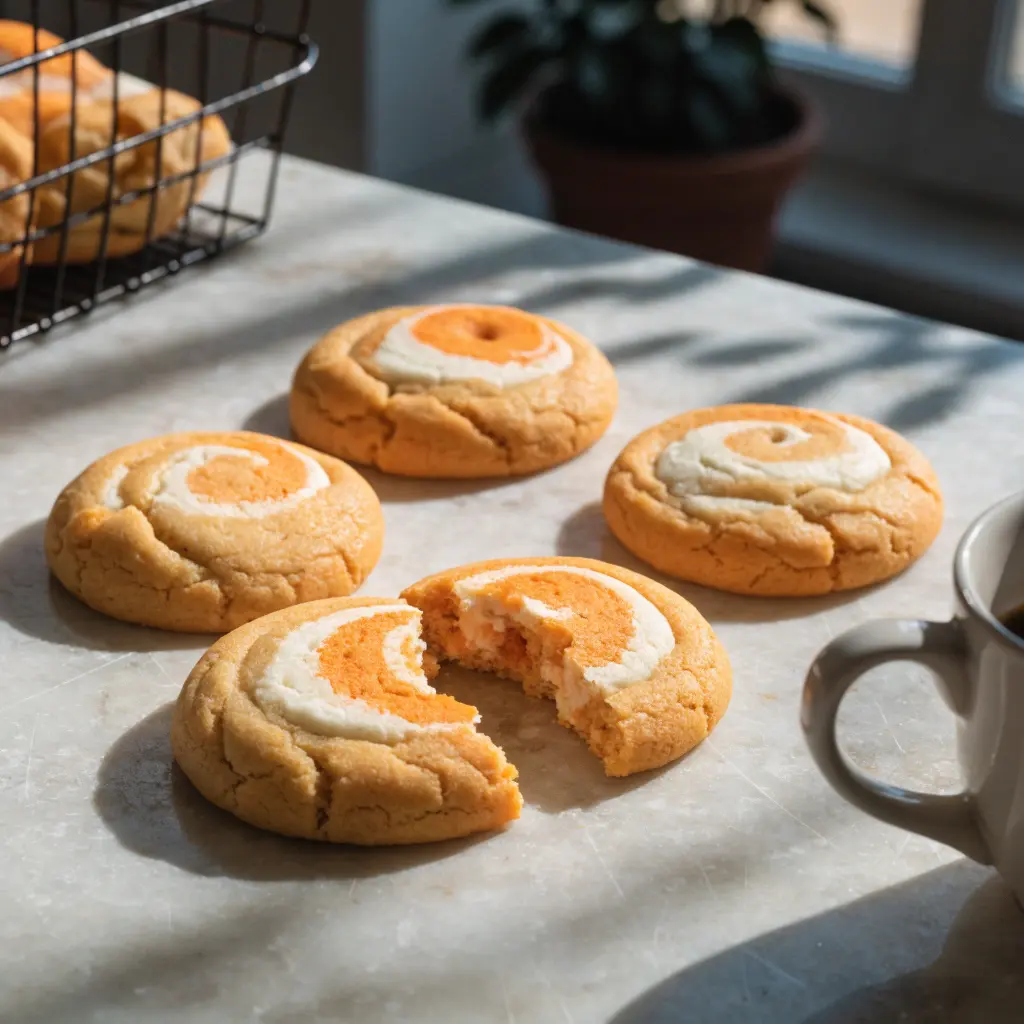
Creamsicle Orange Cookie Variations
Once you’ve mastered the basic recipe, it’s easy to make your own version.
Orange White Chocolate Chip Cookies
The simplest variation is to emphasize the white chocolate.
Add extra white chocolate chips or replace some of the chips with chopped white chocolate.
The larger pieces melt into creamy pockets while the smaller pieces distribute sweetness throughout the dough.
Orange Cream Cheese Cookies
For an especially tender cookie, you can experiment with incorporating cream cheese into the dough.
Cream cheese changes both the texture and flavor, creating a softer cookie with a subtle tang.
If using cream cheese, make sure it is softened before mixing.
Stuffed Creamsicle Cookies
For an impressive dessert, try stuffing the cookies with a small amount of vanilla buttercream.
Prepare small portions of filling and chill them until firm.
Wrap the orange cookie dough around each portion, seal the edges, and bake as directed.
The result is a cookie with a creamy center hidden inside the orange exterior.
Orange Glazed Cookies
A simple glaze is one of the easiest ways to make these cookies look bakery-style.
Combine powdered sugar with a small amount of orange juice and vanilla.
Drizzle the glaze over completely cooled cookies.
Finish with a little fresh orange zest if desired.
Orange Sugar Cookies
Before baking, roll each dough ball lightly in granulated sugar.
This creates a delicate sparkling coating and adds a slightly crisp exterior.
Orange and Dark Chocolate Cookies
Although white chocolate is the classic choice for a creamsicle-inspired cookie, dark chocolate can create an interesting contrast.
Use it sparingly so the chocolate doesn’t overpower the orange.
Orange Sprinkle Cookies
For birthdays, showers, or festive dessert tables, fold orange or white sprinkles into the dough.
You can also press a few sprinkles onto the tops of the dough balls before baking.
How to Make a Simple Orange Creamsicle Glaze
A glaze is optional, but it’s an easy way to intensify the citrus flavor.
You’ll need:
- Powdered sugar
- Fresh orange juice
- Orange zest
- Vanilla extract
Place the powdered sugar in a small bowl.
Add a small amount of orange juice and whisk.
Continue adding liquid a little at a time until you reach your preferred consistency.
For a thicker glaze, use less liquid.
For a thinner drizzle, add a little more.
Add a small amount of vanilla extract to reinforce the creamy flavor.
Make sure the cookies are completely cool before glazing.
If they’re still warm, the glaze may melt and disappear into the surface instead of creating a defined drizzle.
Common Mistakes to Avoid
Using Too Much Orange Extract
Orange extract is concentrated.
A little can go a long way, so avoid adding large amounts in an attempt to make the cookies more citrusy.
Fresh zest is usually a better way to build natural orange aroma.
Adding Too Much Orange Juice
Orange juice adds liquid to the dough.
If you add a large amount, you may change the dough consistency and affect how the cookies spread.
For this reason, zest is usually more useful than juice when the goal is strong orange flavor without extra liquid.
Overbaking the Cookies
One of the most common mistakes is leaving the cookies in the oven until the centers look completely done.
By that point, the cookies may become dry after cooling.
Take them out when the edges are set and the centers still look soft.
Using Melted Butter
Melted butter can dramatically change cookie spread.
For this recipe, softened butter is preferable.
Overmixing the Dough
Once the flour has disappeared, stop mixing.
There is no benefit to beating the dough for an extended period.
Zesting Into the White Pith
The white layer beneath the orange peel can introduce bitterness.
Use a light touch when zesting.
Moving Cookies Too Quickly
Freshly baked cookies are delicate.
Allow them a few minutes on the baking sheet before transferring them to a rack.
How to Store Creamsicle Orange Cookies
Allow the cookies to cool completely before storing them.
Place them in an airtight container with parchment paper between layers if you’re stacking them.
At room temperature, keep the container away from direct sunlight, heat, and humidity.
If your kitchen is particularly warm, a cooler storage location can help preserve the texture.
For the best texture, avoid leaving the container open for long periods.
Air exposure can gradually cause cookies to lose their softness.
If you’ve added a glaze, allow the glaze to set before stacking the cookies.
Can You Freeze Creamsicle Orange Cookies?
Yes, these cookies are suitable for freezing.
Freezing Baked Cookies
Allow the cookies to cool completely.
Place them in a freezer-safe airtight container or bag.
If stacking multiple layers, place parchment paper between them.
Label the container with the date.
When you’re ready to enjoy them, transfer the cookies to room temperature and let them thaw.
For best texture, avoid repeatedly freezing and thawing the same batch.
Freezing Cookie Dough
You can also freeze portions of cookie dough.
Scoop the dough into individual portions and place them on a parchment-lined tray.
Freeze until firm.
Transfer the frozen dough portions to a freezer-safe container or bag.
When you’re ready to bake, place the portions on a lined baking sheet and bake according to the recipe, allowing additional time if necessary.
This method is especially convenient when you want freshly baked orange creamsicle cookies without preparing the entire dough from scratch.
Make-Ahead Instructions
These cookies are excellent for make-ahead baking.
You can prepare the dough in advance and keep it chilled until you’re ready to bake.
For longer storage, portion the dough into individual balls and freeze them.
You can then bake only as many cookies as you need.
This is particularly useful for:
- Holiday baking
- Cookie exchanges
- Birthday parties
- Weekend gatherings
- Dessert tables
- Last-minute guests
Preparing cookie dough ahead also makes it easier to enjoy freshly baked cookies without having to measure ingredients every time.
What to Serve With Creamsicle Orange Cookies
These cookies pair naturally with simple drinks and desserts.
Try serving them with:
- Cold milk
- Vanilla ice cream
- Orange sorbet
- Coffee
- Iced coffee
- Black tea
- Herbal tea
- Hot chocolate
- Lemonade
- Sparkling citrus drinks
For a dessert platter, arrange the cookies alongside vanilla treats and other citrus desserts.
The orange flavor adds a bright contrast to richer chocolate or caramel desserts.
When to Serve Creamsicle Orange Cookies
There is no wrong occasion for these cookies.
Their bright appearance and nostalgic flavor make them especially suitable for:
- Summer parties
- Birthday celebrations
- Baby showers
- Afternoon gatherings
- Cookie exchanges
- Holiday dessert tables
- Potlucks
- Bake sales
- Family gatherings
- Weekend baking
Frequently Asked Questions
Are Creamsicle Orange Cookies made with real orange?
Yes. Fresh orange zest is an excellent way to give the cookies a natural citrus aroma and flavor. You can also use orange extract when you want a stronger orange profile.
The zest should come from the bright outer layer of the orange rather than the white pith underneath.
How do you make cookies taste like a Creamsicle?
The classic combination is orange plus vanilla.
For cookies, fresh orange zest creates the citrus side, while vanilla extract and white chocolate create the creamy sweetness.
The secret is balance. You want enough orange to make the flavor immediately recognizable without allowing it to overpower the vanilla.
What makes a cookie taste like an orange Creamsicle?
The combination of orange and creamy vanilla is what creates the recognizable creamsicle effect.
Fresh orange zest, orange extract, vanilla extract, and white chocolate chips work especially well together.
The white chocolate isn’t required, but it adds a sweet creamy element that complements the citrus.
Can I use orange juice instead of orange extract?
You can use orange juice for additional citrus flavor, but it isn’t a direct one-for-one replacement for orange extract.
Orange extract is highly concentrated, while orange juice contains considerably more liquid.
Conclusion
These Creamsicle Orange Cookies are a delicious way to enjoy the classic combination of bright orange and creamy vanilla in a soft, homemade cookie. Fresh orange zest gives every bite a fragrant citrus flavor, while vanilla and white chocolate chips add the sweet, creamy notes that make these cookies so special.
Print
Best Creamsicle Orange Cookies – Easy, Soft & Chewy Recipe
- Total Time: PT25M
- Yield: 24 cookies 1x
- Diet: Vegetarian
Ingredients
- 2 ¼ cups (281 g) all-purpose flour
- 1 teaspoon baking soda
- ½ teaspoon baking powder
- ½ teaspoon salt
- 1 cup (226 g) unsalted butter, softened
- ¾ cup (150 g) granulated sugar
- ½ cup (100 g) light brown sugar, packed
- 1 large egg, preferably at room temperature
- 2 tablespoons fresh orange zest, from about 2 medium oranges
- 1 teaspoon orange extract
- 2 teaspoons vanilla extract
- 1 ½ cups (255 g) white chocolate chips
- Optional: ½ cup chopped white chocolate, for extra creamy pockets
- Optional: 1–2 tablespoons granulated sugar
Instructions
Step 1: Prepare the Baking Sheets
Preheat your oven according to the recipe temperature.
Line one or two baking sheets with parchment paper. This makes cleanup easier and helps prevent the cookies from sticking.
If you’re using multiple baking sheets, keep one batch at a time in the oven whenever possible. This makes it easier to monitor the baking time.
Step 2: Zest the Orange
Wash and dry the orange thoroughly before zesting.
Using a microplane or fine zester, gently remove the bright orange outer layer.
Turn the orange frequently so you don’t keep grating the same area.
You want the colorful peel, not the white pith underneath.
Measure the zest required for the recipe and set it aside.
Step 3: Combine the Dry Ingredients
In a medium bowl, whisk together:
- All-purpose flour
- Baking soda
- Baking powder
- Salt
Mixing these ingredients separately helps distribute the leavening agents evenly throughout the flour.
Set the bowl aside while you prepare the wet ingredients.
Step 4: Cream the Butter and Sugars
Place the softened butter, granulated sugar, and brown sugar into a large mixing bowl.
Beat until the mixture becomes smooth and creamy.
Scrape down the sides and bottom of the bowl with a rubber spatula as needed.
Don’t rush this step. Properly softened butter is much easier to cream than cold butter, while melted butter can cause the finished cookies to spread too much.
Step 5: Add the Egg
Add the egg and beat until incorporated.
The mixture may look slightly different after the egg is added. That’s normal.
Scrape the sides of the bowl again to make sure everything is evenly mixed.
Step 6: Add the Orange and Vanilla
Add the fresh orange zest, orange extract, and vanilla extract.
Mix just until the flavorings are incorporated.
At this point, the mixture should smell strongly of fresh orange and vanilla. That aroma is a good indication that the cookie dough is developing its signature flavor.
Step 7: Add the Dry Ingredients
Gradually add the dry ingredients to the butter mixture.
Mix on low speed or stir with a spatula until you no longer see streaks of dry flour.
Avoid overmixing.
Once the flour disappears, stop mixing. Overworking the dough can make the cookies less tender.
Step 8: Fold in the White Chocolate
Add the white chocolate chips.
Use a rubber spatula to gently fold them through the dough.
Try to distribute the chips evenly so every cookie gets a good amount.
If you’re using chopped white chocolate, don’t worry about making every piece identical. A mixture of large and small pieces can create a particularly attractive cookie.
Step 9: Scoop the Dough
Use a cookie scoop to portion the dough onto the prepared baking sheets.
Leave enough space between the dough balls for them to spread during baking.
For evenly baked cookies, try to keep every portion approximately the same size.
If the dough feels unusually soft, refrigerate it briefly before baking.
Step 10: Bake the Cookies
Place the baking sheet in the preheated oven.
Bake until the edges look set and the centers still appear slightly soft.
Don’t wait for the entire cookie to become deeply golden. Cookies continue to set as they cool on the baking sheet.
The exact baking time can vary depending on cookie size, oven temperature, and the type of baking sheet used.
Step 11: Cool the Cookies
Allow the cookies to rest on the baking sheet for several minutes after removing them from the oven.
They will be delicate when hot.
- Prep Time: PT15M
- Cook Time: PT10M
- Category: Dessert
- Method: Baking
- Cuisine: American
Nutrition
- Serving Size: 1 cookie
- Calories: 205 kcal
- Sugar: 17 g
- Sodium: 115 mg
- Fat: 11 g
- Saturated Fat: 7 g
- Unsaturated Fat: 4 g
- Trans Fat: 0.3 g
- Carbohydrates: 25 g
- Fiber: 0.5 g
- Protein: 2 g
- Cholesterol: 28 mg