
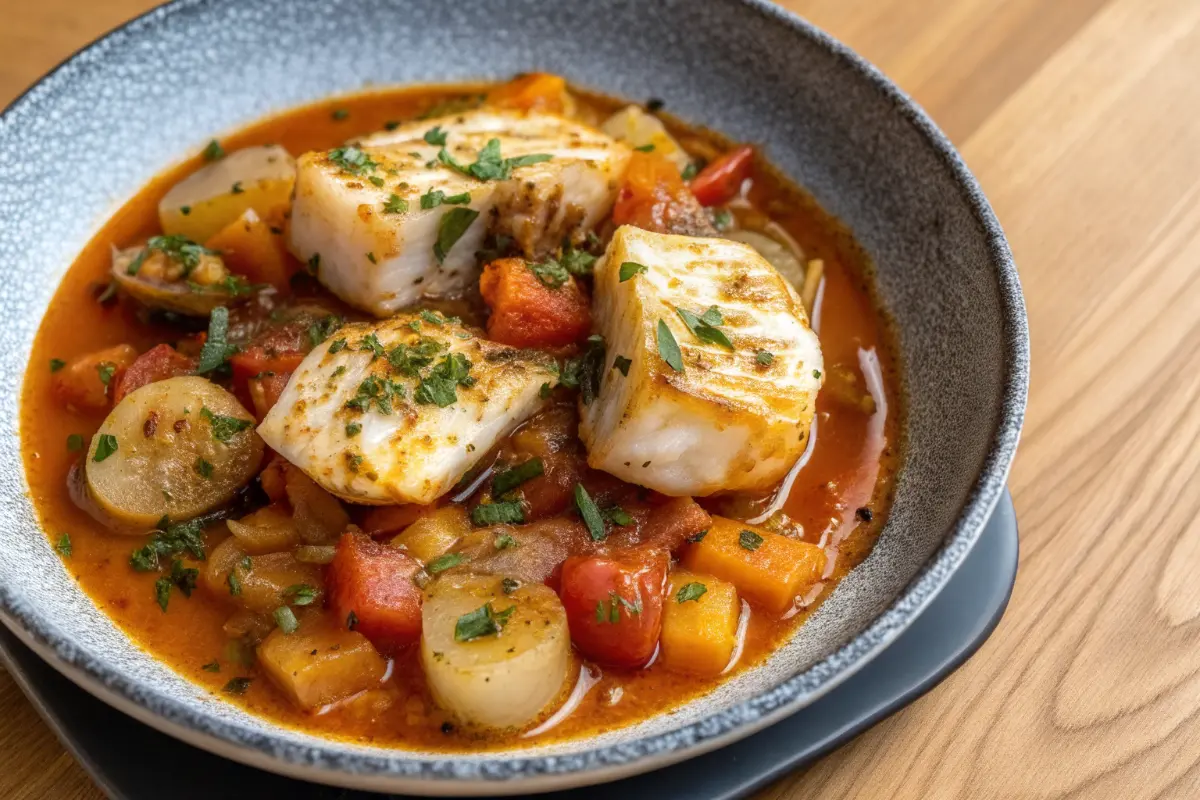
What Is Fish Stew?
At its core, fish stew is a slow-simmered dish made by gently cooking fish in a flavorful liquid base with vegetables, herbs, spices, and aromatics. Unlike seafood soup, which is often thinner and broth-heavy, a stew typically has a heartier consistency and bolder flavor profile.
A traditional fish stew recipe often includes:
- Firm white fish
- Tomatoes or broth
- Garlic and onions
- Herbs and spices
- Vegetables such as carrots, celery, or potatoes
- Optional shellfish additions
The beauty of this dish lies in its flexibility. Coastal communities worldwide have created their own interpretations of fish stew, each using local ingredients and cooking traditions.
Why You’ll Love This Fish Stew Recipe
There are countless reasons why home cooks keep coming back to a comforting fish stew recipe. Beyond being deeply flavorful, it’s also one of the easiest seafood dishes to master.
It’s a One-Pot Wonder
Nobody loves a mountain of dishes after dinner. This recipe keeps cleanup simple because nearly everything cooks in a single pot.
That means:
- Less mess
- Easier preparation
- Minimal cleanup
- More concentrated flavor
As ingredients simmer together, the broth develops complexity naturally.
It Feels Fancy Without Being Complicated
Seafood dishes can sometimes feel intimidating, but fish stew is wonderfully approachable.
You don’t need:
- Fancy culinary training
- Rare ingredients
- Expensive cookware
- Complicated techniques
Instead, you simply build flavor layer by layer.
It’s Highly Customizable
One of the best parts of this fish stew recipe is how adaptable it is.
You can easily customize:
Fish Choices
- Cod
- Haddock
- Halibut
- Sea bass
- Snapper
Flavor Profiles
- Mediterranean herbs
- Tomato-rich broth
- Spicy pepper variations
- Coconut-based coastal versions
Vegetables
- Potatoes
- Bell peppers
- Carrots
- Fennel
- Celery
Ingredients for the Best Fish Stew Recipe
Main Ingredients
- 2 lbs firm white fish, cut into chunks (cod, halibut, haddock, snapper, or sea bass)
- 2 tablespoons olive oil
- 1 medium onion, diced
- 4 garlic cloves, minced
- 2 celery stalks, chopped
- 2 medium carrots, sliced
- 1 red bell pepper, chopped
- 1 tablespoon tomato paste
- 1 can (14 oz) diced tomatoes
- 4 cups fish stock or seafood broth
- 1 cup vegetable broth (optional for extra depth)
- 2 medium potatoes, peeled and cubed (optional for a heartier stew)
Herbs & Seasonings
- 1 teaspoon paprika
- ½ teaspoon chili flakes (optional for heat)
- 1 teaspoon dried thyme
- 2 bay leaves
- 1 teaspoon garlic powder
- 1 teaspoon salt (adjust to taste)
- ½ teaspoon black pepper
Optional Seafood Add-Ins
- ½ lb shrimp, peeled and deveined
- ½ lb mussels or clams, cleaned
Finishing Ingredients
- 2 tablespoons fresh parsley, chopped
- 1 tablespoon fresh lemon juice
- Extra olive oil drizzle for serving (optional)
Optional Serving Pairings
- Crusty bread
- Garlic toast
- White rice
- Herb rice
- Fresh green salad
Kitchen Equipment You’ll Need
The good news? You don’t need fancy kitchen gear.
Here’s what helps:
Essential Equipment
- Large Dutch oven
- Soup pot
- Sharp knife
- Cutting board
- Wooden spoon
- Ladle
Optional Helpful Tools
- Fish bone tweezers
- Citrus juicer
- Fine mesh strainer
Keeping tools simple allows the ingredients to shine.
How to Choose Fresh Fish for Fish Stew
Choosing the right fish can make or break your fish stew recipe. While the broth and aromatics matter, the seafood itself should be fresh, firm, and suitable for simmering.
The good news? You don’t need to be a seafood expert to choose quality fish.
Look at the Appearance
Fresh fish should always look vibrant and clean.
Here’s what to look for:
- Bright, shiny skin
- Moist appearance
- Firm flesh
- Clear eyes (for whole fish)
- Clean-looking fillets
Avoid fish that appears:
- Dull
- Dry around the edges
- Discolored
- Slimy
A quality piece of fish should look fresh and appetizing.
Smell Matters
One of the easiest ways to judge freshness is by smell.
Fresh seafood should smell:
- Clean
- Mild
- Slightly ocean-like
Avoid fish with:
- Sour smells
- Sharp odors
- Overly strong “fishy” scent
If the smell feels overwhelming, skip it.
Check the Texture
Fresh fish should feel firm when touched.
A gentle press should:
- Bounce back quickly
- Feel slightly springy
- Hold its shape
Soft or mushy fish can fall apart during cooking.
Ask Questions at the Seafood Counter
Don’t hesitate to ask:
- When was it delivered?
- Is it fresh or previously frozen?
- Which fish works best for stew?
Most fishmongers are happy to guide you.
Best Fish Choices for Stew
Choose fish that remain firm while simmering.
Excellent choices include:
- Cod
- Halibut
- Sea bass
- Snapper
- Haddock
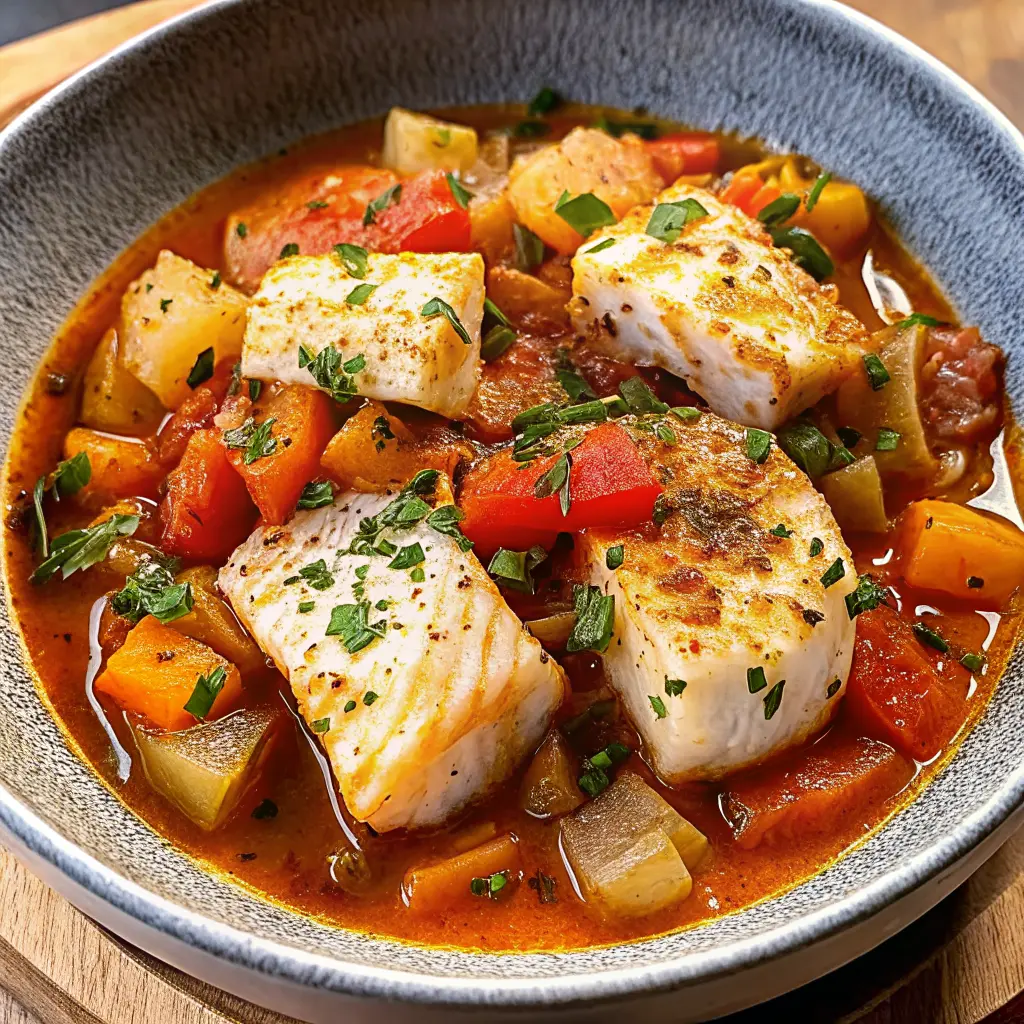
Step-by-Step Fish Stew Recipe Instructions
Now comes the fun part—bringing everything together.
This method creates a rich, comforting fish stew recipe packed with flavor.
Step 1: Prep Your Ingredients
Before turning on the stove, prepare everything first.
Dice:
- Onion
- Garlic
- Celery
- Carrots
- Bell peppers
Cut fish into evenly sized chunks.
Keeping pieces consistent helps them cook evenly.
Also prepare:
- Herbs
- Broth
- Tomatoes
- Seasonings
Good prep makes cooking smooth and stress-free.
Step 2: Sauté Aromatics
Heat oil in a large Dutch oven or soup pot.
Add:
- Onion
- Garlic
- Celery
- Carrots
Cook for several minutes until softened.
This step builds foundational flavor.
The kitchen should start smelling incredible at this point.
Add bell peppers and stir.
Cook briefly until slightly tender.
Step 3: Build the Flavor Base
Now it’s time to deepen the flavor.
Add:
- Tomato paste
- Paprika
- Thyme
- Chili flakes
- Black pepper
Stir everything together.
Cooking spices briefly helps unlock richer flavor.
Then add tomatoes and stir thoroughly.
The mixture should become fragrant and vibrant.
Step 4: Add Broth and Simmer
Pour in your broth.
Options include:
- Fish stock
- Seafood broth
- Vegetable broth
Add bay leaves and bring to a gentle simmer.
Allow vegetables to cook until tender.
This step develops the stew’s signature depth.
Taste occasionally and adjust seasoning.
Step 5: Add the Fish Carefully
This is the most important step.
Gently add fish chunks to the simmering broth.
Avoid stirring aggressively.
Instead:
- Stir gently
- Keep heat moderate
- Avoid rapid boiling
Fish cooks quickly.
Usually, only a few minutes are needed.
You’ll know it’s ready when it flakes easily but still holds shape.
Step 6: Add Optional Seafood
If using extras like shellfish, add them toward the end.
Popular additions include:
- Shrimp
- Mussels
- Clams
Cook only until fully tender.
Overcooked seafood becomes rubbery.
Step 7: Finish and Serve
Right before serving, add finishing touches.
Try:
- Fresh parsley
- Lemon juice
- Cracked pepper
- Olive oil drizzle
These final additions brighten the stew beautifully.
Common Mistakes to Avoid When Making Fish Stew
Even simple recipes can go wrong without a few precautions.
Here are the biggest mistakes people make with fish stew recipe preparation.
Overcooking the Fish
This is the most common problem.
Fish cooks quickly.
Too much simmering leads to:
- Dry texture
- Broken pieces
- Mushiness
Always add fish near the end.
Boiling Instead of Simmering
Aggressive heat can ruin delicate seafood.
Avoid:
- High heat
- Rapid boiling
- Constant stirring
A gentle simmer works best.
Using the Wrong Fish
Delicate fish can disintegrate.
Stick with firmer varieties whenever possible.
Underseasoning the Broth
The broth carries most of the flavor.
Taste often and adjust:
- Salt
- Pepper
- Herbs
- Acidity
Layering seasoning matters.
Skipping Aromatics
Onions and garlic are essential.
Without aromatics, stew may taste flat.
Never rush this flavor-building stage.
Delicious Fish Stew Recipe Variations
One reason people love fish stew is flexibility.
You can reinvent it countless ways.
Mediterranean Fish Stew
Features:
- Tomatoes
- Garlic
- Herbs
- Olives
- Citrus
Bright and rustic.
Spicy Fish Stew
Perfect if you love heat.
Add:
- Chili flakes
- Fresh peppers
- Smoked paprika
Warm and bold.
Coconut Fish Stew
For a creamy coastal twist, use:
- Coconut milk
- Lime
- Garlic
- Herbs
Rich and comforting.
Seafood Lover’s Stew
Mix fish with:
- Shrimp
- Mussels
- Clams
- Scallops
Perfect for special occasions.
Best Serving Ideas for Fish Stew Recipe
Wondering what pairs well with fish stew?
Here are delicious serving ideas.
Crusty Bread
Perfect for soaking up broth.
Try:
- Sourdough
- French bread
- Rustic loaf
Rice
A simple bowl of rice turns stew into a complete meal.
Great options:
- White rice
- Jasmine rice
- Herb rice
Roasted Vegetables
A flavorful side option.
Try:
- Roasted peppers
- Carrots
- Potatoes
Fresh Salad
Something crisp balances the rich broth.
Simple greens work beautifully.
Garlic Toast
Adds crunch and flavor.
Perfect alongside warm stew.
Storage and Reheating Tips
Got leftovers? Great news—fish stew recipe stores surprisingly well.
Refrigerating Fish Stew
Store in an airtight container.
Best enjoyed within:
2–3 days
Allow stew to cool before refrigerating.
Freezing Tips
Some fish stews freeze well.
For best results:
- Freeze broth separately if possible
- Avoid freezing delicate seafood repeatedly
Use freezer-safe containers.
Best Way to Reheat
Gentle reheating is key.
Use:
Stovetop Method
- Low heat
- Gentle stirring
- Avoid boiling
Microwave Method
- Short intervals
- Stir between heating
High heat may overcook fish.
FAQs About Fish Stew Recipe
What fish is best for fish stew?
Firm white fish works best.
Popular choices include:
- Cod
- Halibut
- Snapper
- Sea bass
These stay intact during cooking.
Can I make fish stew ahead of time?
Yes, but for best texture, add fish closer to serving time.
This prevents overcooking.
Can I use frozen fish?
Absolutely.
Just thaw completely before cooking.
Why did my fish fall apart?
Usually because:
- Fish was too delicate
- Heat was too high
- It cooked too long
Gentle simmering helps.
Can fish stew be spicy?
Definitely.
Add:
- Chili flakes
- Fresh peppers
- Spicy seasoning blends
Adjust heat to your preference.
Conclusion
A homemade fish stew recipe is proof that simple ingredients can create extraordinary flavor. With tender seafood, aromatic vegetables, rich broth, and endless customization options, it’s the kind of dish that feels comforting any time of year.