
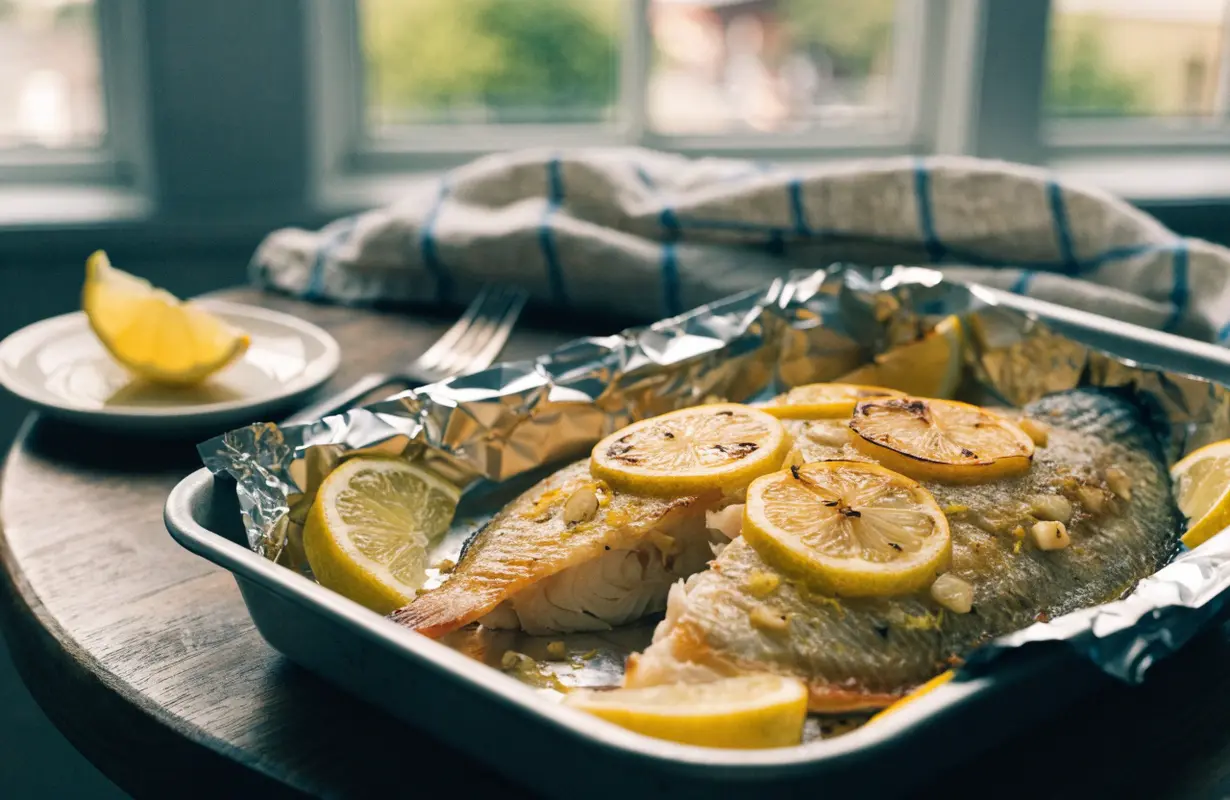
This Garlicky Lemon Baked Tilapia Recipe combines tender, flaky fish with fresh lemon juice, minced garlic, melted butter, and simple seasonings. Every bite delivers a delicious balance of zesty citrus and savory garlic, making it a perfect choice for busy weeknights or a relaxed family dinner.
Ingredients for Garlicky Lemon Baked Tilapia Recipe
The secret to a flavorful lemon butter tilapia recipe is using a balanced combination of fresh citrus, aromatic garlic, and a modest amount of seasoning. The following quantities make approximately four servings.
Ingredients
- 4 tilapia fillets, approximately 4–6 ounces each
- 5 tablespoons unsalted butter, melted
- 2 garlic cloves, finely minced
- 1 lemon, for juice, zest, and slices
- ¼ teaspoon crushed red pepper flakes, optional
- ½ teaspoon kosher salt, or to taste
- ¼ teaspoon freshly ground black pepper, or to taste
- 1–2 tablespoons fresh parsley, chopped, for garnish
- Olive oil or cooking spray, for greasing the baking dish if needed
These measurements provide a buttery, garlicky sauce with a noticeable lemon flavor. If your lemon is especially large or juicy, start with a little less juice and add more according to taste.
Tilapia Fillets
Choose fillets that are similar in thickness so they finish cooking at approximately the same time. Fresh or frozen tilapia can both work well. If you purchase frozen fillets, thaw them before baking for more predictable timing and easier seasoning.
Pat the fish dry with paper towels before adding the sauce. Removing excess surface moisture helps the butter mixture coat the fillets rather than slide off.
Fresh Garlic
Freshly minced garlic gives this recipe its characteristic savory aroma. Two cloves provide a balanced flavor, but you can use three or four if you enjoy a stronger garlic taste.
Chop the garlic finely so it distributes evenly across the fish. Very large pieces can produce concentrated pockets of flavor and may brown too quickly in the oven.
Lemon Juice and Zest
Fresh lemon is an important ingredient in this recipe. Juice contributes tanginess, while zest adds concentrated citrus fragrance.
Wash and dry the lemon before zesting. Remove only the bright yellow outer layer, avoiding the bitter white pith underneath. Slice a few rounds from the lemon to place over the fish before baking.
Butter and Seasonings
Unsalted butter lets you control the amount of salt in the sauce. Black pepper adds a mild bite, while red pepper flakes provide optional heat.
Fresh parsley works especially well as a garnish, but chopped dill, chives, or a little oregano can also complement the lemon and garlic.
Equipment You’ll Need
You only need a few basic kitchen tools to prepare this easy baked tilapia recipe.
- A medium baking dish or rimmed baking sheet
- A small mixing bowl
- A spoon or whisk
- A sharp knife and cutting board
- Measuring spoons
- A citrus zester or fine grater
- Paper towels
- An instant-read food thermometer
Choose a baking dish that accommodates the fillets in a single layer. A dish that is too small can cause the fish to overlap, while an excessively large dish may spread the sauce too thinly.
How to Make Garlicky Lemon Baked Tilapia Recipe
Follow these simple steps for tender fish coated in a flavorful lemon garlic butter sauce.
Step 1: Preheat the Oven
Preheat your oven to 400°F (200°C). Allow it to reach the target temperature before placing the fish inside.
Lightly grease a baking dish with olive oil or cooking spray if necessary. You can also use a rimmed baking sheet lined with parchment paper, provided it is suitable for your oven and intended cooking method.
Preparing the dish in advance makes it easier to transfer the seasoned fillets directly into the oven.
Step 2: Prepare the Tilapia
Remove the fillets from their packaging and pat them dry with paper towels. Check for any remaining pin bones and remove them with clean tweezers if needed.
Arrange the fillets in the prepared baking dish in a single layer. Leave a little space between each piece so heat can circulate around the fish.
Season both sides lightly with salt and freshly ground black pepper. If the fillets are very thin, handle them gently because tilapia can break apart easily.
Step 3: Make the Lemon Garlic Butter Sauce
Place the melted butter in a small bowl. Add the minced garlic, freshly squeezed lemon juice, lemon zest, and crushed red pepper flakes.
Stir until the ingredients are evenly combined.
The sauce should smell strongly of fresh garlic and lemon, with the butter bringing everything together. If you prefer a milder citrus flavor, reduce the amount of lemon juice slightly. For a more pronounced garlic flavor, add another small clove.
Avoid adding so much liquid that the fish becomes submerged. You want the sauce to coat the fillets and collect around their edges.
Step 4: Coat the Fillets
Spoon the lemon garlic butter mixture evenly over each tilapia fillet. Use the back of a spoon or a pastry brush to distribute the sauce across the surface.
Make sure the minced garlic is spread out rather than concentrated in one area.
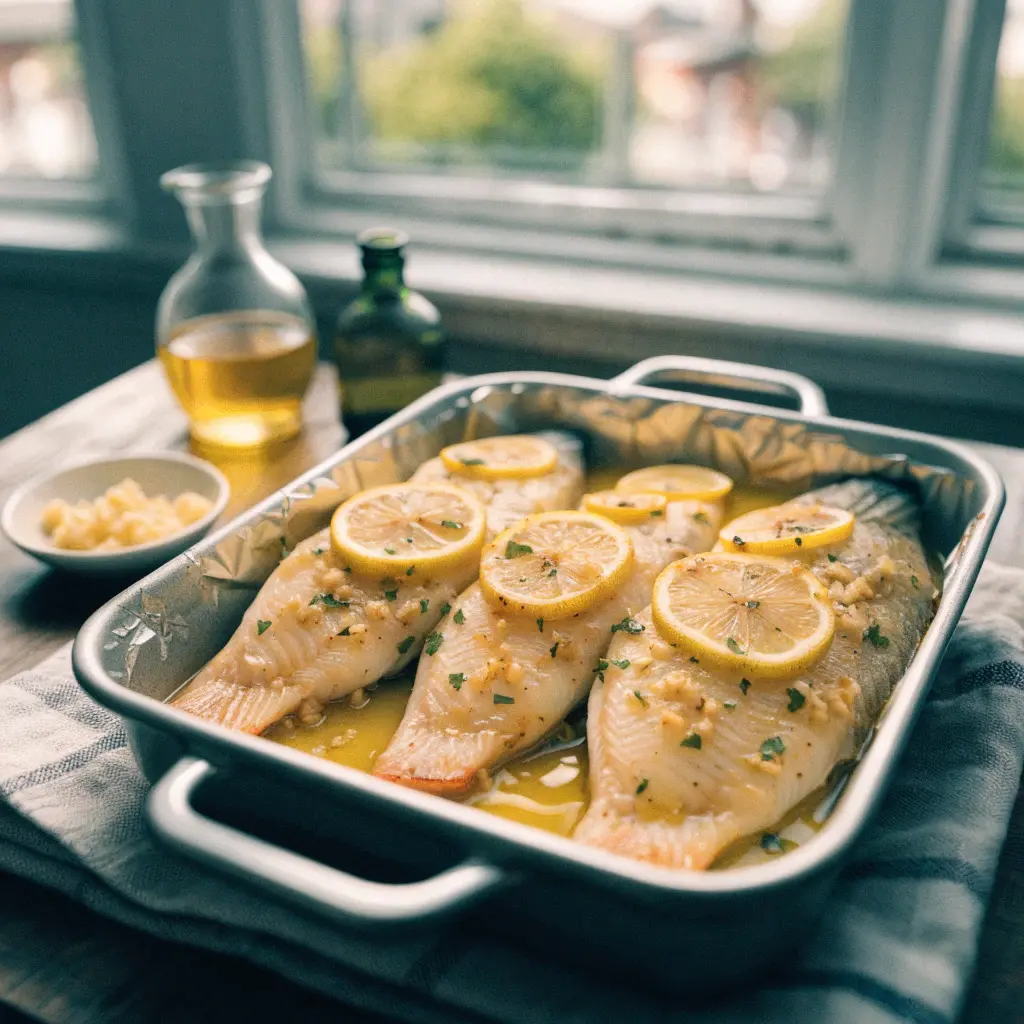
Arrange thin lemon slices on top of the fillets or tuck them between the pieces of fish. As the fish bakes, the lemon releases additional fragrance into the sauce.
For a stronger herbal flavor, sprinkle a little chopped parsley or dried oregano over the fillets before baking.
Step 5: Bake the Tilapia
Place the baking dish in the preheated oven and bake for approximately 10–15 minutes, depending on the thickness of the fillets.
Thin pieces may finish closer to the 10-minute mark, while thicker fillets may require additional time. Begin checking early rather than automatically extending the cooking time.
The fish should become opaque and separate easily into flakes when tested gently with a fork. For a precise check, insert an instant-read thermometer into the thickest portion and confirm that it reaches 145°F (63°C).
Avoid leaving the fish in the oven longer than necessary, as overcooking can make the texture dry and firm.
Step 6: Finish with Fresh Parsley and Lemon
Remove the baking dish from the oven once the fish is cooked.
Sprinkle chopped fresh parsley over the fillets and add a small squeeze of lemon juice if you enjoy a brighter citrus finish.
Use a spoon to drizzle the buttery pan juices over each portion. The sauce collected around the fish is packed with garlic and lemon flavor, making it an excellent finishing touch.
Step 7: Serve Immediately
Transfer the tilapia carefully to serving plates using a wide spatula. The cooked fillets may be delicate, so lift them from underneath rather than pulling them apart.
Serve while warm with your preferred side dishes. Add extra lemon wedges at the table so everyone can adjust the citrus flavor to taste.
What to Serve with Garlicky Lemon Baked Tilapia Recipe
The bright, savory sauce pairs well with side dishes that complement its citrus and garlic flavors. Choose one or two accompaniments to create a meal that suits the occasion.
Rice and Grain Side Dishes
Fluffy white rice is a classic pairing because it absorbs the lemon garlic butter sauce. Brown rice, lemon rice, couscous, and quinoa are also suitable options.
For extra flavor, toss freshly cooked rice with a little parsley, lemon zest, and a small spoonful of the pan juices.
Roasted or Steamed Vegetables
Roasted asparagus, broccoli, green beans, zucchini, and carrots work particularly well alongside baked tilapia.
For a simple side dish, toss the vegetables with olive oil, salt, and black pepper. Roast them separately until tender, then finish with a squeeze of lemon.
Potatoes
Roasted baby potatoes provide a crisp exterior and soft center that contrasts nicely with the flaky fish. Mashed potatoes are another excellent choice, particularly when served with some of the lemon butter sauce.
Garlic roasted potatoes can reinforce the savory flavor of the main dish, although plain roasted potatoes may be preferable if you want the lemon and garlic to remain the focus.
Fresh Salads
A cucumber and tomato salad, mixed green salad, or simple Mediterranean-style salad offers a fresh contrast to the warm, buttery fish.
Use a light lemon vinaigrette or olive oil dressing rather than a heavy sauce that competes with the tilapia.
Pasta and Lighter Accompaniments
Lemon orzo, garlic herb pasta, or buttered noodles make convenient additions. If you prefer something simpler, serve the fish with steamed vegetables and warm crusty bread to soak up the remaining sauce.
Easy Variations and Substitutions
Once you know how to make the basic garlic lemon tilapia recipe, you can adapt it to suit different flavor preferences.
Lemon Garlic Tilapia Without Butter
Replace the melted butter with olive oil. Use the same basic combination of minced garlic, lemon juice, lemon zest, salt, and black pepper.
Olive oil produces a different sauce texture and a more pronounced olive flavor, but it complements tilapia beautifully.
Spicy Lemon Garlic Tilapia
Increase the red pepper flakes or add a small pinch of cayenne pepper. Start with a modest amount, then adjust the seasoning in future batches.
For a smoky, spicy variation, combine smoked paprika with a little red pepper flakes.
Lemon Garlic Parmesan Tilapia
Sprinkle finely grated Parmesan over the fillets during the final few minutes of baking. This creates a savory finish that complements the lemon butter sauce.
Avoid adding a thick layer too early, as the cheese may brown before the fish is ready.
Herb-Infused Baked Tilapia
Fresh dill, parsley, thyme, and chives can all work well with lemon and garlic.
For a delicate herbal flavor, stir chopped herbs into the sauce before baking. Reserve a little fresh parsley or dill for the final garnish.
Paprika Lemon Garlic Tilapia
Add approximately ¼ teaspoon of sweet paprika to the butter mixture. For a deeper flavor, use smoked paprika instead.
The paprika adds color and a warm, savory note without requiring additional preparation.
Can You Use Another Fish Instead of Tilapia?
Yes. Cod, haddock, flounder, and other mild white fish can be prepared with a similar lemon garlic sauce.
However, the texture and thickness will differ. Adjust the baking time accordingly and check the thickest part of the fish before serving.
Can You Use Frozen Tilapia?
Frozen tilapia is a convenient option when fresh fillets aren’t available. For this recipe, thawing the fish first generally makes it easier to remove excess moisture and coat the fillets evenly.
How to Thaw Frozen Tilapia
The easiest approach is to place the fish in the refrigerator overnight, following the package instructions.
If you need to thaw it more quickly, place the fish in a sealed, leakproof bag and immerse it in cold water. Change the water periodically and cook the fish promptly after thawing.
Avoid leaving fish on the kitchen counter to thaw.
Can You Bake Tilapia Directly from Frozen?
It may be possible, but the results can differ from those obtained with thawed fillets. Frozen fish can release additional water during cooking, which may dilute the sauce.
If baking from frozen, use a method specifically suited to frozen fish, allow for additional cooking time, and verify doneness with a thermometer. Do not assume the timing for thawed fillets will apply.
For the most predictable result with this particular recipe, use fully thawed tilapia and pat it dry before adding the lemon garlic butter.
Common Mistakes to Avoid
Even a straightforward fish recipe can be disappointing if a few details are overlooked.
1. Overcooking the Fish
Tilapia is relatively thin, so it can go from tender to dry quickly. Check the fillets early and remove them when they reach the recommended internal temperature.
2. Adding Too Much Lemon Juice
Too much liquid can make the sauce watery and overwhelm the mild fish flavor. Begin with the suggested quantity, taste the sauce, and add more only if necessary.
3. Using Large Pieces of Garlic
Finely minced garlic distributes more evenly across the fillets. Large pieces may produce uneven seasoning and brown too quickly.
4. Crowding the Baking Dish
Overlapping fillets can cook unevenly. Choose a dish large enough to hold the fish in one layer.
5. Forgetting to Dry the Fish
Water on the surface can dilute the sauce. Pat the fillets dry before seasoning.
6. Relying Only on the Timer
Cooking time is an estimate, not a guarantee. Differences in thickness, starting temperature, and oven performance all matter.
7. Adding the Garnish Too Early
Fresh parsley is most appealing when added after baking. This preserves its bright color and fresh flavor.
How to Store and Reheat Leftover Baked Tilapia
If you have leftover lemon garlic tilapia, store it promptly so it can be served another day.
Refrigerating Leftovers
Transfer the cooked fish to a clean, airtight container and refrigerate within two hours of cooking. Keep the fish covered to prevent it from drying out and absorbing other refrigerator odors.
For additional guidance, refer to the cold food storage chart. Follow the recommended storage times for cooked fish and discard leftovers that have been stored improperly.
How Long Does Cooked Tilapia Last?
As a general guideline, properly refrigerated cooked fish should be used within three to four days. Keep the refrigerator at 40°F (4°C) or below.
If the fish develops an unusual odor, appearance, or texture, discard it rather than trying to salvage it.
How to Reheat Tilapia Without Drying It Out
The oven is a practical option for reheating leftover fillets.
- Preheat the oven to approximately 275–300°F (135–150°C).
- Place the fish in an oven-safe dish.
- Add a small spoonful of reserved sauce or a little water.
- Cover the dish loosely with foil.
- Heat until the center reaches 165°F (74°C).
Check the fish periodically to avoid unnecessary reheating. The exact time will depend on the size and thickness of the portions.
You can also use a microwave in short intervals, covering the fish and checking frequently. Reheating too aggressively can make the fillets tough.
Can You Freeze Cooked Tilapia?
Cooked tilapia can be frozen in an airtight, freezer-safe container. Allow it to cool promptly before storing it, and label the container with the date.
Thaw frozen leftovers in the refrigerator and reheat thoroughly. Keep in mind that the texture may become softer after freezing, so leftover fish is often best used in dishes where the fillets can be gently flaked, such as fish wraps or rice bowls.
Frequently Asked Questions
How Long Does It Take to Bake Tilapia at 400°F?
Many thin tilapia fillets take approximately 10–15 minutes at 400°F (200°C). Begin checking around 8–10 minutes for thinner pieces. The precise time depends on thickness and oven performance, so check that the fish reaches 145°F (63°C) before serving.
What Temperature Should Tilapia Be Cooked To?
Tilapia should reach an internal temperature of 145°F (63°C) at its thickest point. The flesh should also appear opaque and separate easily with a fork. An instant-read thermometer is the most reliable way to check doneness.
Should I Cover Tilapia When Baking?
No, covering is not generally necessary for this lemon garlic butter recipe. Baking uncovered allows the sauce to concentrate slightly. If you choose to cover the dish, expect a different surface texture and check the fish early because cooking conditions may change.
Can I Bake Tilapia Without Thawing It?
Yes, some cooking methods allow tilapia to be baked from frozen. However, frozen fillets may release extra liquid and require more time. For the most predictable results with this recipe, thaw the fish first, pat it dry, and follow the standard baking instructions.
How Do I Keep Tilapia from Drying Out?
Pat the fillets dry, coat them evenly with the lemon garlic butter, and avoid overlapping them in the baking dish. Start checking the fish before the expected finish time and remove it promptly once it reaches the correct internal temperature.
Conclusion
This Garlicky Lemon Baked Tilapia Recipe shows how a few simple ingredients can create a flavorful dinner with very little preparation. The combination of melted butter, fresh garlic, lemon juice, and aromatic seasonings complements the delicate fish, while baking keeps the method straightforward and convenient.
Print
Garlicky Lemon Baked Tilapia Recipe
- Total Time: PT20M
- Yield: 4 servings 1x
- Diet: Gluten Free
Ingredients
- 4 tilapia fillets
- 5 tablespoons melted unsalted butter
- 2 cloves minced garlic
- Juice and zest of 1 lemon
- 1 sliced lemon
- ½ teaspoon kosher salt, or to taste
- ¼ teaspoon black pepper
- ¼ teaspoon crushed red pepper flakes, optional
- 1–2 tablespoons chopped parsley
Instructions
- Preheat the oven to 400°F (200°C).
- Pat the tilapia dry and arrange the fillets in a lightly greased baking dish.
- Season with salt and black pepper.
- Mix the melted butter, garlic, lemon juice, lemon zest, and red pepper flakes.
- Spoon the sauce over the fish and arrange lemon slices on top.
- Bake for approximately 10–15 minutes, checking early for doneness.
- Confirm that the thickest portion reaches 145°F (63°C).
- Garnish with parsley and serve with the pan juices.
- Prep Time: PT05M
- Cook Time: PT15M
- Category: Seafood
- Method: Baking
- Cuisine: American
Nutrition
- Serving Size: 1 tilapia fillet
- Calories: 220 kcal
- Sugar: 0.5 g
- Sodium: 320 mg
- Fat: 11 g
- Saturated Fat: 6 g
- Unsaturated Fat: 4 g
- Trans Fat: 0 g
- Carbohydrates: 2 g
- Fiber: 0.2 g
- Protein: 29 g
- Cholesterol: 90 mg