
What Are Gochujang Cream Mussels?
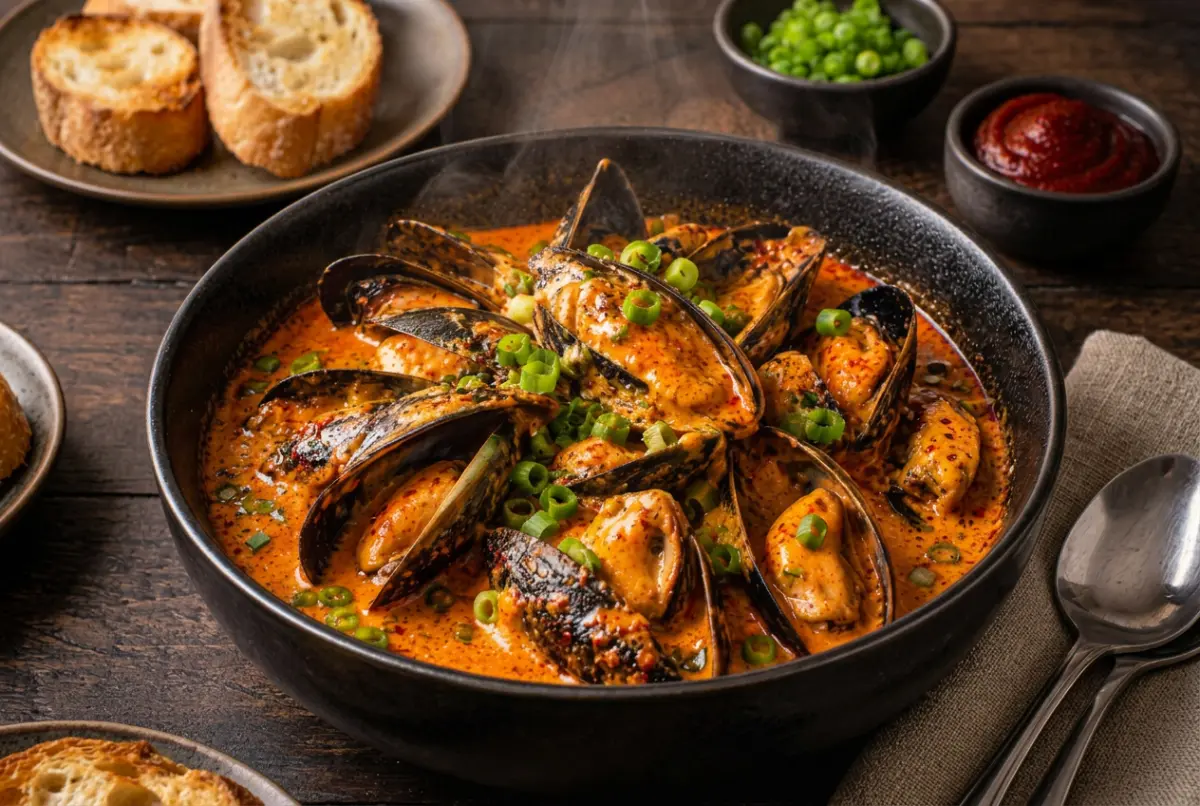
Gochujang Cream Mussels are a Korean-inspired seafood dish featuring fresh mussels cooked in a creamy sauce flavored with gochujang, garlic, shallots, and other aromatic ingredients.
Gochujang is a traditional Korean fermented red chili paste. It has a distinctive combination of heat, sweetness, saltiness, and deep savory flavor. Unlike ordinary hot sauce, which often provides straightforward chili heat, gochujang has a complex character that makes sauces taste fuller and more interesting.
In this recipe, gochujang is combined with butter, cream, garlic, and a little white wine or seafood stock. The result is a smooth, reddish-orange sauce that coats the mussels beautifully.
The dish brings together several culinary influences:
- Korean-inspired flavors: Gochujang and sesame oil introduce a distinctive Korean character.
- Classic seafood preparation: White wine, garlic, butter, and fresh mussels create a familiar seafood foundation.
- Creamy sauce technique: Heavy cream transforms the cooking liquid into a silky sauce.
- Fresh finishing ingredients: Green onions, parsley, and lemon add freshness and contrast.
Although the recipe takes inspiration from Korean flavors, it is a flexible home-cooking creation rather than a traditional Korean preparation. You can adjust the amount of chili paste, cream, and lemon to suit your preferred flavor.
Ingredients for Gochujang Cream Mussels
The secret to a delicious batch of creamy gochujang mussels is using ingredients that complement one another. You do not need an extensive shopping list. Most of the ingredients are simple kitchen staples, while gochujang provides the distinctive flavor.
- 2 lbs (900 g) fresh mussels, cleaned and debearded
- 2 tablespoons gochujang (Korean fermented chili paste)
- 1 cup heavy cream
- 4–5 garlic cloves, minced
- 1 medium shallot, finely chopped
- 2 tablespoons unsalted butter
- 1 tablespoon olive oil
- ½ cup dry white wine
- 1 tablespoon soy sauce
- ½ cup seafood stock (as needed)
- 1 tablespoon fresh lemon juice
- 2 green onions, thinly sliced
- 1 tablespoon fresh parsley, chopped
- 1 teaspoon sesame oil (optional)
- ½ teaspoon freshly ground black pepper
- 1 teaspoon honey (optional)
- Sesame seeds, for garnish (optional)
Essential Kitchen Equipment
Before cooking, prepare the necessary kitchen equipment. Having everything ready makes the process easier because mussels cook quickly.
You will need:
- Large Dutch oven or heavy-bottomed pot: Provides enough room for the mussels to open and steam evenly.
- Tight-fitting lid: Helps trap steam during cooking.
- Sharp chef’s knife: For preparing garlic, shallots, and green onions.
- Cutting board: Provides a clean preparation surface.
- Measuring cups and spoons: Help maintain the correct balance of ingredients.
- Wooden spoon or silicone spatula: For stirring the sauce.
- Colander: For rinsing and draining mussels.
- Kitchen tongs: For gently tossing the mussels.
- Serving bowls: For presenting the finished dish.
How to Make Gochujang Cream Mussels Step by Step
Now comes the most exciting part: preparing the creamy, spicy sauce and cooking the mussels.
The process is straightforward, but the order of the steps matters. Start by building flavor with the aromatics, then incorporate the gochujang before adding the liquid ingredients.
Step 1: Clean and Prepare the Mussels
Begin by cleaning approximately 2 pounds of fresh mussels.
Rinse them under cold running water and scrub the shells thoroughly. Remove any visible beards and inspect each mussel.
Discard cracked or broken mussels. If a mussel is open before cooking, tap its shell gently. If it does not close, discard it.
Drain the cleaned mussels and set them aside in the refrigerator while you prepare the sauce.
Make sure your cutting board, utensils, and preparation surfaces are clean before moving on to the next step.
Step 2: Prepare the Aromatic Base
Place a large Dutch oven or heavy-bottomed pot over medium heat.
Add:
- 2 tablespoons unsalted butter.
- 1 tablespoon olive oil.
Allow the butter to melt completely.
Add the finely chopped shallot and cook for approximately 2 minutes, stirring occasionally.
Next, add the minced garlic.
Cook for another 30 to 45 seconds until fragrant. Keep the heat moderate because garlic can burn quickly.
The combination of butter, garlic, and shallots creates a flavorful base that will carry through the entire sauce.
Step 3: Add the Gochujang Paste
Add 2 tablespoons of gochujang paste to the pot.
Stir continuously to combine it with the garlic and shallots.
Cook for approximately 30 to 60 seconds.
The paste should become fragrant and blend with the melted butter. This short cooking step helps distribute its flavor throughout the sauce.
Avoid cooking the gochujang for too long because it can stick to the bottom of the pot.
If you are preparing a milder version, start with 1 tablespoon and save the remaining paste for later adjustment.
Step 4: Deglaze the Pan
Pour 1/2 cup of dry white wine into the pot.
Stir gently, scraping the bottom with a wooden spoon to loosen any flavorful ingredients that have stuck to the surface.
Allow the liquid to simmer for approximately 2 to 3 minutes.
The wine introduces acidity and creates a flavorful foundation for the creamy sauce.
If you are not using wine, replace it with seafood stock. You can also use a combination of stock and a small amount of lemon juice.
Step 5: Create the Creamy Gochujang Sauce
Reduce the heat to medium-low.
Slowly pour in 1 cup of heavy cream while stirring.
Add:
- 1 tablespoon soy sauce.
- 1/2 teaspoon black pepper.
- 1 teaspoon sesame oil, if desired.
Stir until the sauce becomes smooth and evenly colored.
Allow it to simmer gently for approximately 2 minutes.
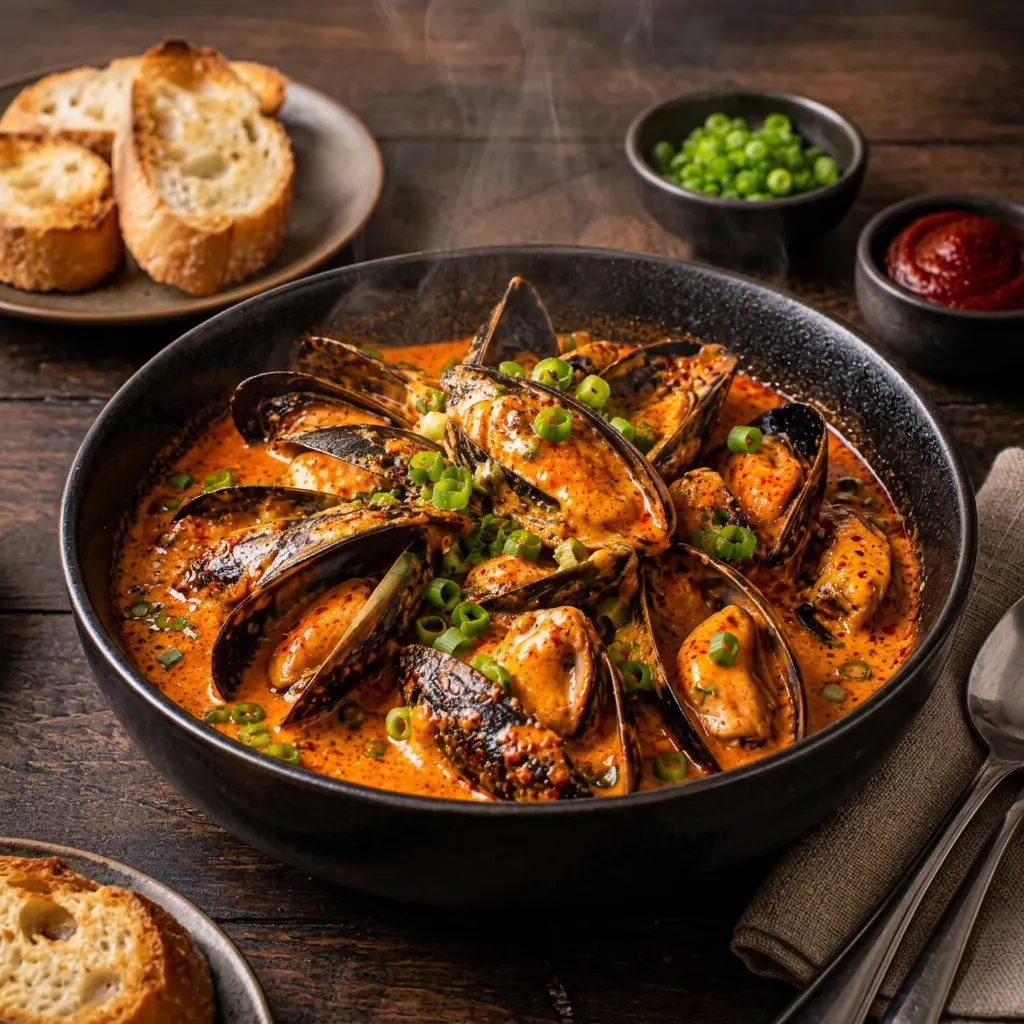
At this stage, the sauce should have a beautiful reddish-orange color with a creamy consistency.
Taste a small amount and adjust the seasoning. If the sauce is too spicy, add a little more cream. If it tastes too rich, add a splash of seafood stock or a little lemon juice.
Step 6: Add the Fresh Mussels
Carefully add the cleaned mussels to the pot.
Use kitchen tongs or a large spoon to distribute them evenly throughout the sauce.
Gently toss the mussels so that their shells are coated with the creamy gochujang mixture.
Cover the pot with a tight-fitting lid.
Allow the mussels to steam over medium heat for approximately 5 to 7 minutes, checking periodically.
Cooking time depends on their size and the amount in the pot, so watch their progress rather than relying only on the clock.
During cooking, the shells will begin to open, releasing their natural juices into the sauce.
Avoid opening the lid repeatedly because this allows steam to escape.
Step 7: Check That the Mussels Are Cooked
After approximately 5 minutes, carefully remove the lid and check the mussels.
Most should have opened, and the meat should be cooked through.
Discard any mussels that remain closed after cooking.
If some mussels need additional cooking, cover the pot again and continue briefly, checking frequently.
Do not continue cooking unnecessarily. Mussels can become tough and rubbery when exposed to heat for too long.
Step 8: Finish the Creamy Sauce
Once the mussels are cooked, turn off the heat.
Add 1 tablespoon of freshly squeezed lemon juice and stir gently.
Taste the sauce again.
You can adjust it according to your preference:
- Add more cream for a milder, richer sauce.
- Add a little gochujang for extra spice.
- Add lemon juice for a brighter flavor.
- Add seafood stock if the sauce is too thick.
- Add a small amount of honey if you prefer a sweeter finish.
The final sauce should be creamy, savory, slightly spicy, and easy to spoon over the mussels.
Step 9: Garnish and Serve
Finish the dish with sliced green onions and freshly chopped parsley.
For additional Korean-inspired flavor, add a few sesame seeds and a light drizzle of sesame oil.
Transfer the mussels to a large serving bowl or serve them directly from the cooking pot.
Spoon plenty of the creamy sauce over the top.
Serve immediately with crusty bread, steamed rice, or noodles.
Common Mistakes to Avoid When Making Gochujang Cream Mussels
Even a simple seafood recipe can go wrong when a few important details are overlooked. Here are common mistakes and how to avoid them.
Using Poor-Quality Mussels
The flavor of the finished dish depends heavily on the quality of the seafood.
Purchase mussels from a reputable supplier, inspect their shells, and keep them properly refrigerated before cooking.
Avoid mussels with cracked shells or those that fail to close when tapped before cooking.
Skipping the Cleaning Process
Mussels can contain sand, dirt, and other debris on their shells.
Always scrub them under cold running water and remove the fibrous beards before cooking.
Taking a few extra minutes during preparation makes the final dish more enjoyable.
Adding Too Much Gochujang
Although gochujang is the signature ingredient, using too much can overpower the delicate flavor of the mussels.
Start with the recommended amount and adjust gradually.
Remember that you want a balanced sauce rather than a dish that tastes exclusively of chili paste.
Boiling the Cream Sauce Too Aggressively
High heat can cause the sauce to reduce too quickly and affect its texture.
Once the cream has been added, keep the temperature moderate and stir gently.
Delicious Variations of Gochujang Cream Mussels
One of the best things about this recipe is how easily you can customize it. The original combination of mussels, cream, and gochujang is delicious, but there are several ways to create different flavor profiles.
1. Coconut Gochujang Cream Mussels
For a slightly sweeter and more tropical version, replace some or all of the heavy cream with coconut milk.
Coconut milk works particularly well with gochujang because its gentle sweetness balances the chili paste.
To prepare this variation:
- Use 1 cup of unsweetened coconut milk.
- Keep the garlic and shallots.
- Add a little fresh ginger.
- Finish with lime juice instead of lemon.
- Garnish with cilantro and green onions.
This version creates a fragrant sauce with a different character while preserving the original Korean-inspired flavor.
2. Extra-Spicy Gochujang Mussels
If you enjoy stronger chili flavors, you can easily increase the heat.
Add:
- An extra teaspoon of gochujang.
- 1/2 teaspoon Korean gochugaru.
- A pinch of red chili flakes.
- A little freshly grated ginger.
Add the extra chili gradually and taste between additions.
The goal is to create a bold, spicy sauce while keeping the flavor of the mussels noticeable.
3. Garlic Butter Gochujang Mussels
For garlic lovers, this variation brings additional buttery richness.
Increase the butter to 3 tablespoons and use 6 garlic cloves instead of 4 or 5.
Add a little extra parsley and finish with freshly squeezed lemon juice.
The result is a delicious combination of garlic butter, spicy Korean chili paste, and creamy seafood sauce.
4. White Wine Gochujang Mussels
White wine is already included in the original recipe, but you can make it more prominent by increasing the amount slightly and reducing the seafood stock.
Choose a dry white wine with a clean flavor.
Allow it to simmer briefly with the aromatics and gochujang before adding the cream.
This creates a more pronounced wine flavor that pairs beautifully with the mussels.
What to Serve With Gochujang Cream Mussels
The right side dishes can turn a simple bowl of mussels into a complete and satisfying dinner.
Since the creamy gochujang sauce is one of the highlights of this recipe, choose accompaniments that complement its bold flavor and allow you to enjoy every last spoonful.
1. Crusty French Bread
Crusty bread is one of the best accompaniments for creamy mussels.
A fresh baguette, sourdough loaf, or toasted artisan bread works beautifully.
Slice the bread, lightly toast it, and serve it alongside the mussels.
The crunchy exterior and soft interior make it perfect for dipping into the spicy cream sauce.
2. Garlic Bread
Garlic bread is another excellent choice.
Its buttery texture and fragrant garlic flavor complement the ingredients already used in the sauce.
Prepare simple garlic bread using:
- French bread.
- Softened butter.
- Minced garlic.
- Chopped parsley.
- A little black pepper.
Toast until golden and serve warm.
3. Steamed Jasmine Rice
For a more complete dinner, serve the mussels over steamed jasmine rice.
The rice absorbs the creamy sauce and creates a wonderful combination of textures.
Korean short-grain rice is another excellent option, especially if you want to emphasize the Korean-inspired character of the dish.
4. Linguine or Spaghetti
Pasta transforms the recipe into a delicious seafood pasta dinner.
Cook linguine or spaghetti separately according to the package instructions.
Drain the pasta and toss it with some of the creamy gochujang sauce.
Add the mussels on top and finish with green onions and parsley.
You can also reserve a little pasta water to loosen the sauce if necessary.
How to Store and Reheat Leftover Gochujang Cream Mussels
Although these mussels are best enjoyed immediately after cooking, you may occasionally have leftovers.
Because this recipe contains fresh shellfish and a cream-based sauce, proper storage is important.
How to Store Leftover Mussels
If you have leftover mussels:
- Transfer them into a clean, shallow, airtight container.
- Include some of the remaining sauce to help retain their moisture.
- Refrigerate promptly.
- Keep the container in the refrigerator at 40°F (4°C) or below.
- Follow appropriate seafood storage guidance and use leftovers promptly.
Do not leave cooked mussels at room temperature for extended periods. Refrigerate perishable food within two hours, or within one hour when the surrounding temperature exceeds 90°F (32°C).
For additional storage information, consult the seafood storage recommendations.
How to Reheat Gochujang Cream Mussels
Reheat leftovers gently to avoid overcooking the mussels.
Follow these steps:
- Transfer the mussels and sauce into a saucepan.
- Add a small splash of cream or seafood stock if the sauce has thickened.
- Place the saucepan over low to medium heat.
- Stir gently to prevent the sauce from sticking.
- Heat thoroughly, using a food thermometer to check that the seafood reaches an appropriate reheating temperature.
- Remove from the heat and serve immediately.
Avoid prolonged heating because mussels can quickly become tough.
Reheat only the portion you intend to serve rather than repeatedly warming the entire batch.
Can You Freeze Gochujang Cream Mussels?
Freezing is not the best option for this particular recipe.
Cream-based sauces can separate after freezing and thawing, while cooked mussels may lose their tender texture.
For the best result, prepare only the amount you expect to serve and enjoy the mussels freshly cooked.
Frequently Asked Questions About Gochujang Cream Mussels
1. What Does Gochujang Taste Like?
Gochujang has a distinctive combination of spicy, sweet, salty, and savory flavors.
It is a fermented Korean red chili paste with a deep, concentrated character.
Unlike ordinary chili sauce, gochujang has a more complex flavor that works beautifully with garlic, cream, butter, and seafood.
2. Is Gochujang Very Spicy?
Gochujang has a noticeable chili flavor, but its heat varies depending on the brand and variety.
Some versions are relatively mild, while others are considerably hotter.
In this recipe, heavy cream helps soften the spicy flavor. You can also reduce the quantity of gochujang to create a milder sauce.
3. Can I Use Frozen Mussels Instead of Fresh Mussels?
Yes, frozen mussels can be used when fresh ones are unavailable.
However, check the packaging carefully because frozen mussels are sold in different forms.
Some are raw and some are already cooked. Their preparation and cooking times will differ.
Follow the package instructions and avoid overcooking them.
For the best result, use frozen mussels that are suitable for the recipe and adjust the amount of cooking liquid as needed.
Conclusion
These Gochujang Cream Mussels are a delicious way to bring bold Korean-inspired flavors into your kitchen. With tender mussels, aromatic garlic, spicy fermented chili paste, and a smooth cream sauce, every serving is full of character. Serve them with crusty bread or steamed rice, and enjoy a memorable homemade seafood dinner!