
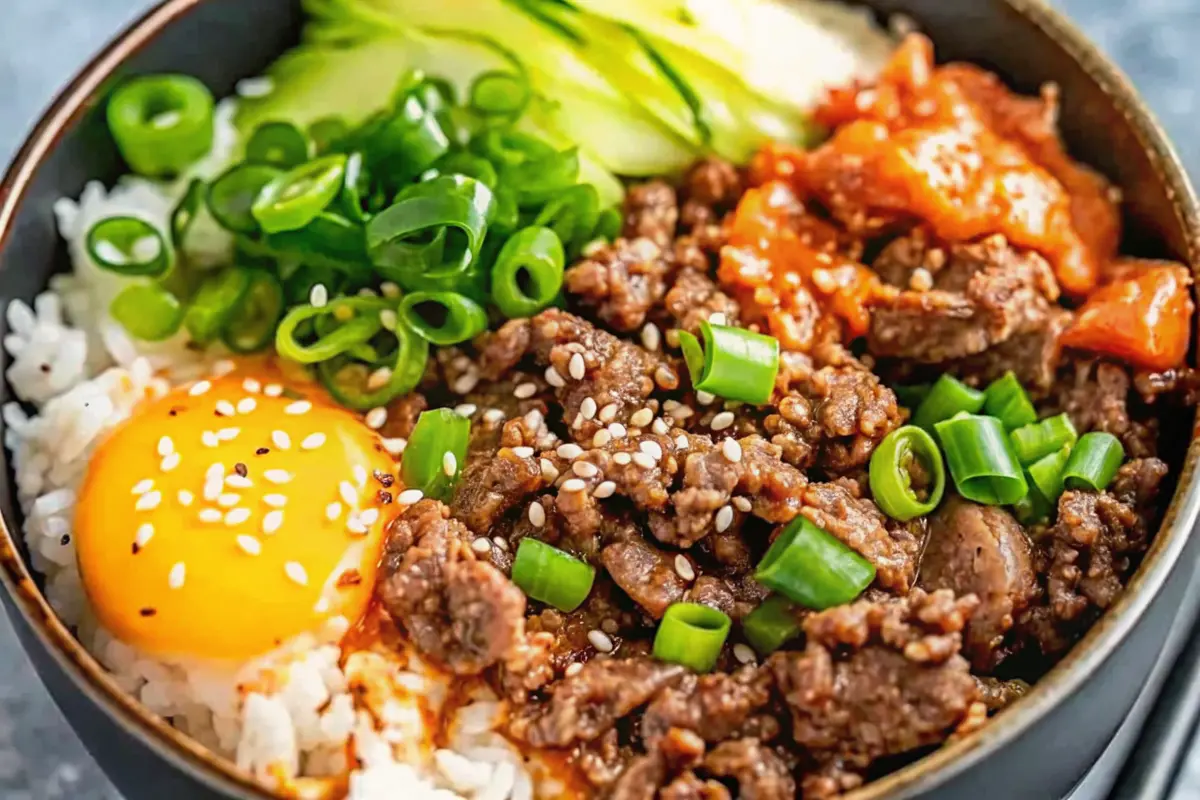
What Is a Korean Beef Rice Bowl?
A Korean Beef Rice Bowl is a layered, one-bowl meal built on three essential elements:
- Savory-sweet Korean-style beef cooked with soy, garlic, ginger, and sesame
- A cozy base of hot rice that soaks up every drop of sauce
- Crisp, colorful toppings and optional sauces for contrast and customization
Think of it as a streamlined, weeknight-friendly cousin to bulgogi bowls or bibimbap—same bold personality, far less prep. Instead of long marinades and multiple sides, the sauce comes together directly in the pan, coating ground beef or thinly sliced steak in minutes.
Essential Ingredients for the Best Korean Beef Rice Bowl
Choosing the right ingredients turns a basic bowl into a signature dish.
1. Beef: Ground vs. Thin-Sliced
Ground beef is the most popular choice:
- Absorbs the sauce quickly
- Creates a saucy, crumbled texture that coats rice
- Ideal for fast weeknight cooking
For a more bulgogi-style Korean beef rice bowl, go for thinly sliced steak:
- Ribeye, sirloin, or flank steak work beautifully
- Quick sear over high heat gives caramelized edges and tender texture
- Feels a little more “special occasion” while staying simple
Both versions deliver that sweet-savory Korean beef flavor. Pick based on your mood and what’s in your kitchen.
2. The Umami-Sweet Sauce
Your sauce is the heart of this bowl. A strong, balanced base might include:
- Soy sauce
- Brown sugar, honey, or a blend
- Minced garlic
- Grated ginger
- Toasted sesame oil
- Optional: rice vinegar or mirin for extra depth
You’re aiming for a glossy coating that clings to the beef and seeps deliciously into the rice—never watery, never flat.
3. Heat & Depth: Gochujang, Gochugaru & Chili
To layer in Korean-style spice and character:
- Add a spoonful of gochujang to the sauce for smoky, tangy richness
- Sprinkle in gochugaru for gentle warmth
- Use chili flakes, fresh chili, or chili crisp if that’s what you have
Because the bowl is customizable, you can serve it mild for some and dial it up for spice lovers with extra sauce or toppings.
4. The Rice Base
Your Korean Beef Rice Bowl deserves rice that can carry flavor:
- Korean short-grain rice – classic, sticky, and perfect for chopsticks
- Jasmine rice – light and fragrant
- Basmati or long-grain – if you like separated grains
- Brown rice, mixed grains, or cauliflower rice – if you prefer a nutty or lighter-style base
The key is hot, well-cooked rice ready to soak up the sauce.
5. Fresh Toppings & Crunch
Toppings turn this from simple to stunning. Mix and match:
- Sliced cucumber or cucumber ribbons
- Shredded carrot or purple cabbage
- Kimchi
- Green onions
- Sesame seeds
- Thinly sliced radish
- Nori strips
- Fresh cilantro or perilla leaves
- A fried, jammy, or soft-boiled egg for richness
Step-by-Step: How to Cook Korean Beef Rice Bowl
Here’s a reliable method for flavorful, perfectly sauced Korean beef.
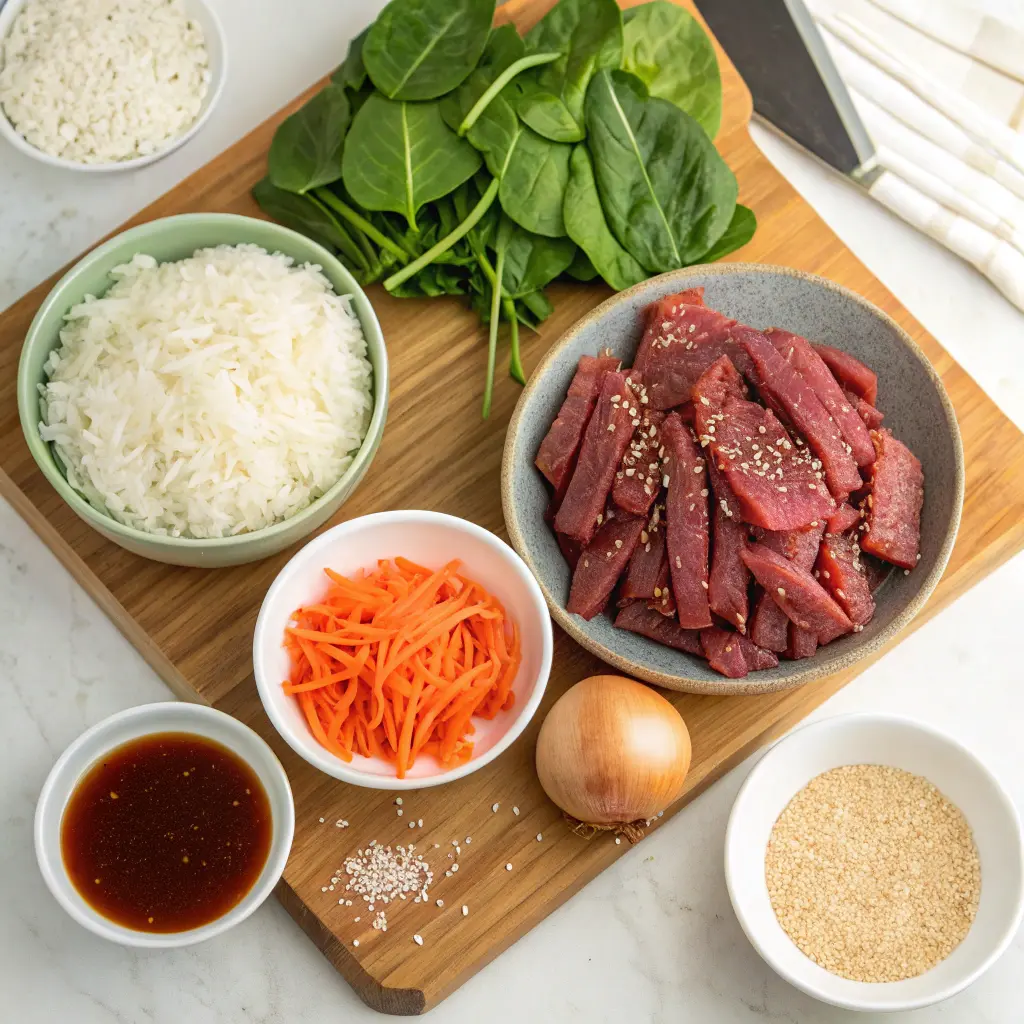
1. Prep Your Ingredients
Before the pan hits the heat:
- Rinse and cook your rice; keep it warm.
- Mince garlic and grate ginger.
- Stir together soy sauce, brown sugar, sesame oil, and gochujang.
- Slice green onions and prepare toppings.
A few minutes of prep make the cooking process smooth and fast.
2. Brown the Beef
- Heat a large skillet over medium-high heat.
- Add your ground beef or sliced steak.
- Break up ground beef or spread out strips of steak for even browning.
- Cook until deeply browned and fragrant.
- Drain excess fat if needed, leaving just enough for flavor.
You want those caramelized bits—they’re pure umami.
3. Build the Sauce in the Pan
With the browned beef in the skillet:
- Add garlic and ginger; stir briefly until aromatic.
- Pour in your sauce mixture.
- Stir well so every piece of beef is coated.
- Let it bubble and thicken slightly, turning glossy and rich.
The sauce should cling to the beef, not pool thinly at the bottom.
4. Taste, Adjust & Balance
Adjust until it’s perfect for you:
- Too salty? Add a pinch more sugar or a splash of water.
- Too sweet? Add more soy sauce or a touch of chili.
- Not bold enough? Add more gochujang, sesame oil, or garlic.
This is where you fine-tune your signature Korean beef rice bowl flavor.
5. Finish with Freshness
Right before serving:
- Stir in sliced green onions.
- Sprinkle toasted sesame seeds.
- Optional squeeze of lime or lemon for brightness.
Now you’re ready to build bowls.
Assembling the Perfect Korean Beef Rice Bowl
Treat each bowl like a composed dish, not just “rice and beef.”
Bowl-Building Blueprint
Follow this simple order:
- Hot rice as the foundation
- A generous spoonful (or two) of Korean beef
- Colorful toppings clustered around the edges
- Optional drizzle or finishing sauce over the top
This method:
- Keeps textures defined
- Makes every bowl look gorgeous
- Let’s people mix as they eat, just how they like it
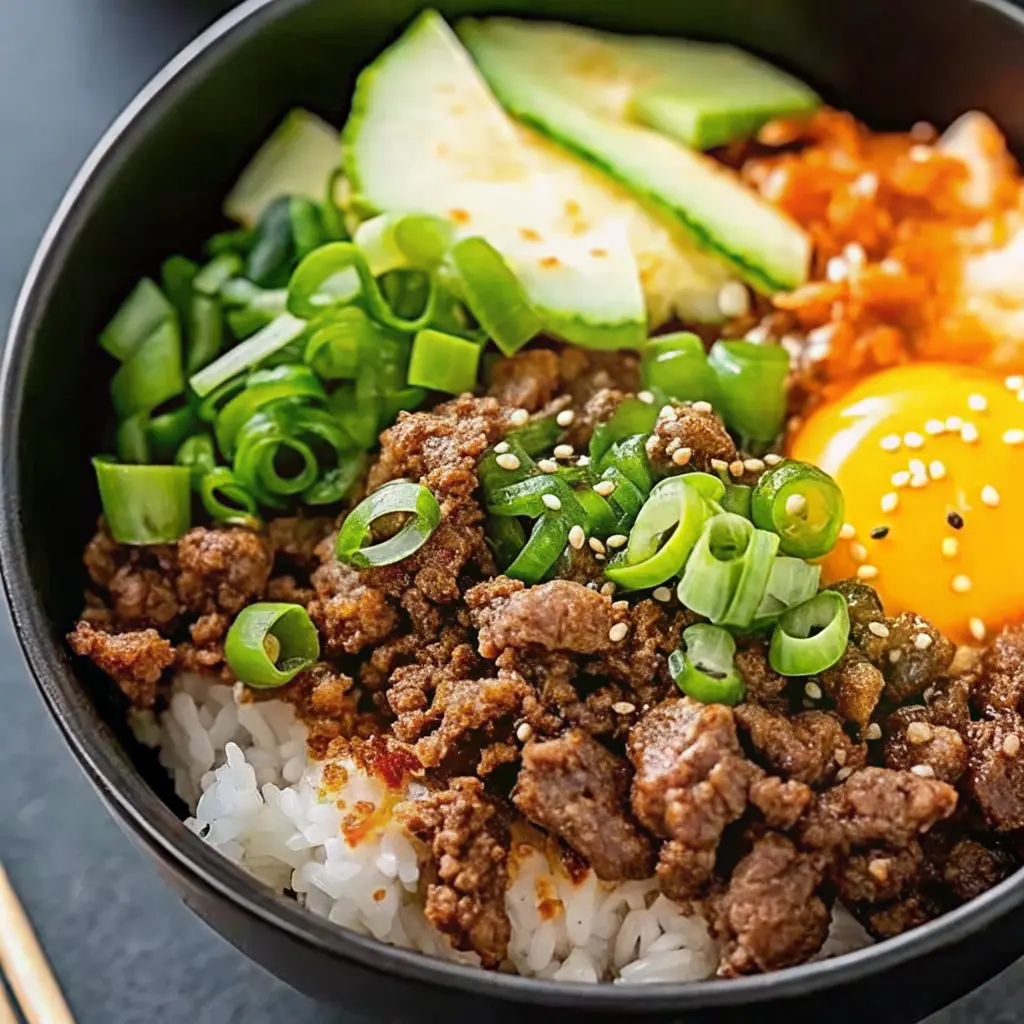
Creative Variations & Protein Swaps
Once you love the classic version, spin it your way.
1. Bulgogi-Style Steak Bowl
- Marinate thinly sliced steak briefly in soy, sugar, garlic, ginger, and pear or apple.
- Sear quickly over high heat.
- Serve over rice with the same toppings for a more traditional-feeling Korean beef rice bowl twist.
2. Spicy Fire Bowl
For heat-seekers:
- Boost gochujang in the sauce.
- Add fresh chili slices on top.
- Finish with chili crisp or extra gochugaru.
You’ll get a bold, fiery bowl that still keeps all the balance.
3. Veggie-Loaded Korean Beef Bowl
Fold extra vegetables directly into the pan:
- Bell peppers
- Mushrooms
- Zucchini
- Snap peas
- Baby spinach
This creates a colorful, loaded bowl with plenty of texture and flavor in each spoonful.
4. Low-Carb or Grain-Free Bowl
Swap the rice base for:
- Cauliflower rice
- Shredded cabbage
- Mixed greens
Top with hot Korean beef and crunchy veg for a bowl that keeps all the flavor, just with a different foundation.
5. Alternative Protein Ideas
Use the same Korean-inspired marinade with:
- Ground turkey or chicken
- Thinly sliced pork
- Crispy tofu or tempeh
Make-Ahead, Storage & Reheating Tips
This recipe is ideal for planning, especially if you love bowl-style meals.
- Cook a batch of Korean beef and a pot of rice.
- Cool and store them separately in airtight containers.
- Keep toppings—especially fresh ones—stored individually.
- Reheat beef gently in a skillet or microwave with a splash of water or soy.
- Warm rice just before serving so it stays soft and inviting.
- Assemble bowls fresh so toppings keep their crunch and color.
Troubleshooting: Fixing Common Korean Beef Bowl Issues
If your first attempt isn’t perfect, here’s how to fix it fast.
- Too salty: Add more plain rice on the plate, a touch of sugar, or a splash of water to the pan sauce.
- Too sweet: Add more soy sauce or chili flakes.
- Too flat: Stir in extra garlic, ginger, or gochujang for depth.
- Too dry: Loosen with a spoonful of water, soy sauce, or a drizzle of sesame oil.
- Sauce too thin: Simmer a bit longer to reduce and thicken.
- Rice not right: Rinse rice before cooking and follow proper ratios for your chosen type.
Each adjustment pushes your bowl closer to that ideal, addictive flavor.
Serving & Plating Inspiration
How you serve your Korean Beef Rice Bowl can turn a simple dinner into an experience.
For cozy weeknights:
- Pile everything into wide, deep bowls so it’s easy to mix.
- Keep toppings in small dishes on the table so everyone can customize.
- Offer extra gochujang, sesame seeds, and soy sauce on the side.
For guests or special occasions:
- Create a “build-your-own bowl” bar:
- One big pot of rice
- A skillet of glossy Korean beef
- Bowls of cucumbers, carrots, kimchi, radish, herbs, and sauces
- Encourage guests to layer, drizzle, and style their own bowls.
- Finish each bowl to order with a fried egg or extra drizzle for that bistro-style touch.
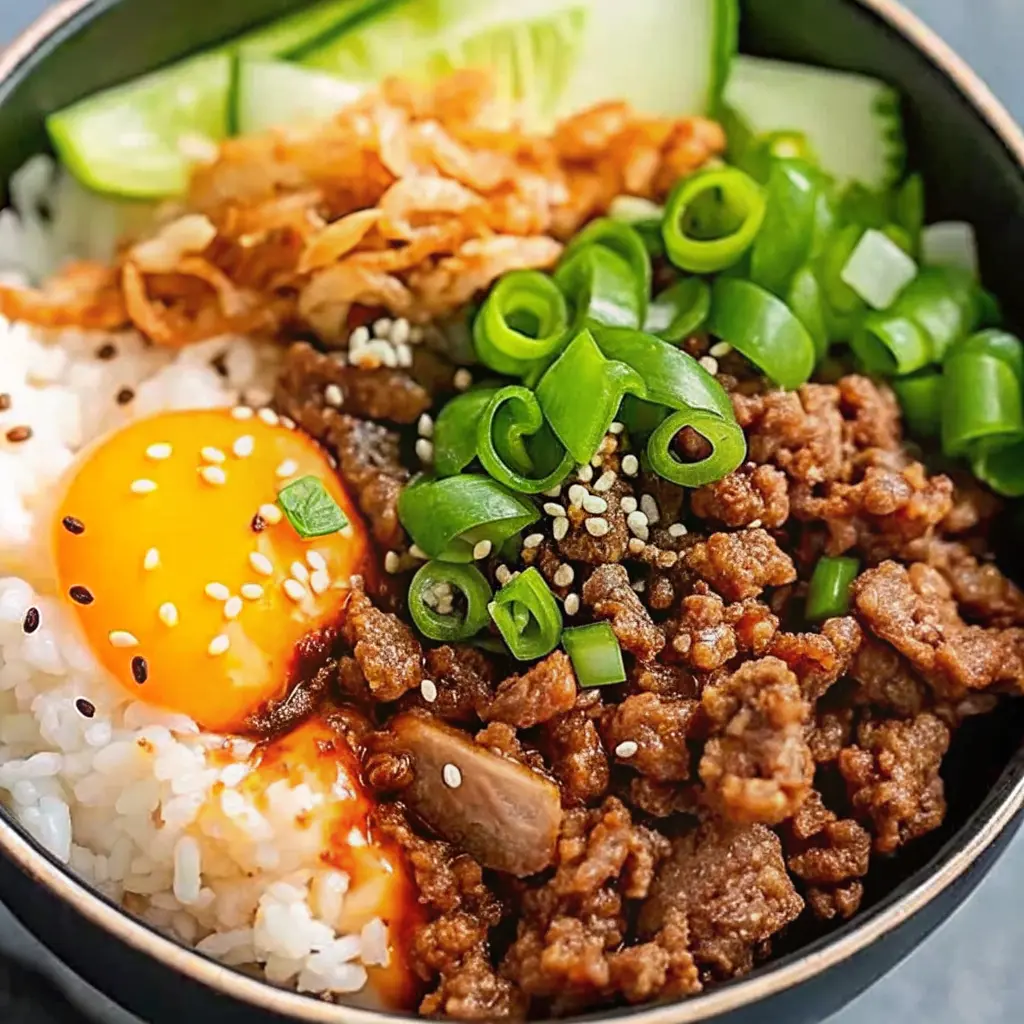
FAQs: Korean Beef Rice Bowl
1. What cut of beef is best for a Korean Beef Rice Bowl?
- Ground beef for ease and sauciness.
- Ribeye, sirloin, or flank steak for a sliced, bulgogi-style version.
2. Can I use ground beef instead of sliced beef (or vice versa)?
Yes. Both options work beautifully. Choose ground beef for speed, sliced beef for a more traditional bite.
3. Is a Korean Beef Rice Bowl spicy?
It can be mild or fiery. The heat comes from gochujang, gochugaru, or chili. Add a little or a lot depending on your preference.
4. Can I make this without gochujang?
You can. Use soy sauce, garlic, ginger, sesame oil, and a bit of chili flakes or sriracha. It becomes a Korean-inspired beef rice bowl with a similar character.
5. What toppings go best with a Korean Beef Rice Bowl?
Kimchi, cucumber, carrot, cabbage, scallions, sesame seeds, radish, nori strips, and eggs all pair perfectly.
Conclusion
The Korean Beef Rice Bowl is bold, cozy, and customizable—exactly the kind of meal that earns a permanent place in your rotation. With a simple skillet of sweet-savory Korean-style beef, a base of fluffy rice, and a handful of vibrant toppings, you can build a bowl that feels special any night of the week.
Print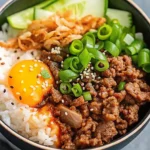
Irresistible Korean Beef Rice Bowl
- Total Time: PT25M
- Yield: 4 servings 1x
Description
This Korean Beef Rice Bowl is a quick and satisfying dish made with perfectly seasoned ground beef simmered in a savory-sweet soy glaze, served over steamed rice. Finished with green onions and sesame seeds, it’s the perfect 20-minute meal that’s bursting with flavor and comfort.
Ingredients
- 1 lb ground beef
- 1 tbsp sesame oil
- 3 garlic cloves, minced
- ¼ cup brown sugar
- ¼ cup soy sauce
- 1 tbsp rice vinegar
- 1 tsp grated ginger
- ½ tsp red pepper flakes (optional)
- 1 tbsp sesame seeds
- 3 green onions, sliced
- Cooked white rice (for serving)
Instructions
- Cook the beef
- Heat sesame oil in a skillet over medium-high heat.
- Add ground beef and cook until browned, breaking it apart with a spatula. Drain excess fat if needed.
- Add aromatics
- Stir in garlic and ginger, cooking for 1 minute until fragrant.
- Make the sauce
- Add soy sauce, brown sugar, rice vinegar, and red pepper flakes. Stir well to coat the beef.
- Simmer for 3–4 minutes until the sauce slightly thickens and glazes the meat.
- Finish and serve
- Stir in green onions and sesame seeds.
- Spoon over bowls of warm steamed rice.
- Prep Time: PT10M
- Cook Time: PT15M
- Category: Main Course
- Method: Stir-Fried
- Cuisine: Korean-Inspired
Nutrition
- Serving Size: 1 bowl
- Calories: 410kcal
- Sugar: 12g
- Sodium: 720mg
- Fat: 25g
- Saturated Fat: 8g
- Unsaturated Fat: 14g
- Trans Fat: 0g
- Carbohydrates: 22g
- Fiber: 1g
- Protein: 26g
- Cholesterol: 80mg