
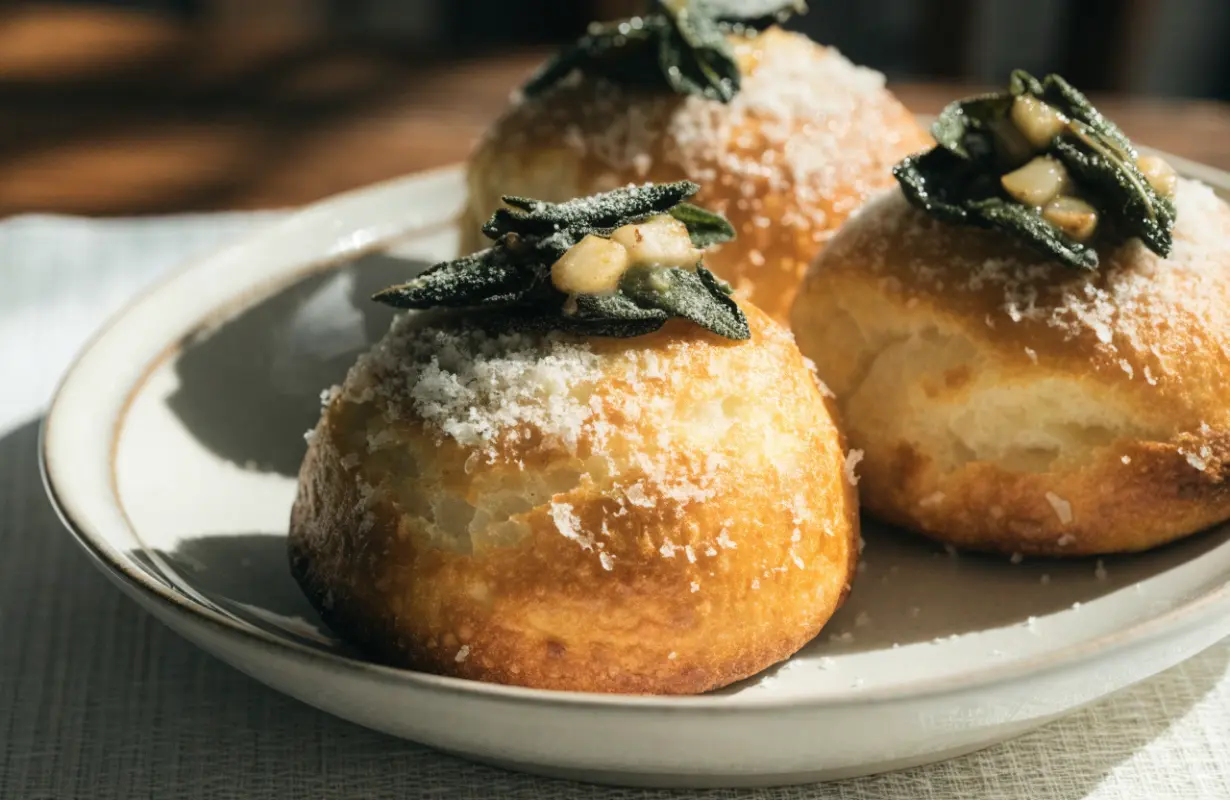
Why You’ll Love These Parmesan Popovers
There are plenty of reasons to add these Parmesan popovers with crispy sage garlic butter to your collection of homemade baking recipes. They’re easy to prepare, beautifully presented, and versatile enough to accompany a wide variety of meals.
- Light and airy texture: These popovers rise dramatically in the oven, creating tall, golden shells with soft, hollow centers. Their delicate interior contrasts beautifully with the crisp exterior.
- Rich Parmesan flavor: Freshly grated Parmesan adds a slightly nutty, salty, and savory taste that makes every bite delicious without overpowering the other ingredients.
- Fragrant sage garlic butter: Fresh sage leaves become wonderfully crisp when cooked in butter, while garlic adds a deep, aromatic flavor. Together, they create a delicious spread for warm popovers.
- Simple ingredients: You only need a handful of everyday baking ingredients, including flour, milk, eggs, Parmesan, butter, garlic, and fresh sage.
- Quick preparation: The batter takes only a few minutes to prepare, making this recipe convenient when you want homemade bread without complicated steps.
- Perfect for entertaining: Their tall, golden appearance makes these popovers an attractive addition to brunch tables, dinner parties, and holiday gatherings.
- Easy to customize: You can experiment with different cheeses, herbs, and seasonings to create your own variations.
What Are Parmesan Popovers?
Popovers are light, hollow baked rolls made from a thin batter containing flour, milk, and eggs. Unlike traditional yeast bread, they don’t require kneading, proofing, or shaping. Instead, they rely on the moisture in the batter and the heat of the oven to expand and create their characteristic puffed shape.
When the batter enters a hot oven, moisture turns into steam, causing the mixture to expand. As the outside begins to set, it forms a delicate shell around the airy interior. This process creates the distinctive tall appearance and hollow center that make popovers different from many other types of homemade bread.
Parmesan popovers take this classic preparation a step further by incorporating finely grated Parmesan cheese and browned butter into the batter. The cheese adds a savory flavor, while the browned butter contributes a subtle toasted aroma.
The crispy sage garlic butter is what makes this particular variation special. It combines fragrant sage leaves and cooked garlic with softened butter to create a rich topping that melts over the warm popovers.
Ingredients for Parmesan Popovers with Crispy Sage Garlic Butter
Ingredients for the Parmesan Popovers
- 1½ cups all-purpose flour: Flour provides the structure for the popovers. Measure it accurately to prevent a batter that’s too thick and heavy.
- 1½ cups whole milk, at room temperature: Milk creates a pourable batter and contributes to the soft interior. Whole milk gives the popovers a rich flavor.
- 3 large eggs, at room temperature: Eggs help the batter expand, provide structure, and create the characteristic hollow center.
- 2 tablespoons freshly grated Parmesan cheese: Parmesan adds a salty, nutty, savory taste. Finely grated cheese distributes evenly throughout the batter.
- 2 tablespoons salted butter: This butter is browned with garlic and sage before being incorporated into the batter.
- 6 teaspoons salted butter: Use approximately one teaspoon per cup to grease and preheat a six-cup popover pan.
- 1 teaspoon kosher salt: Salt enhances the savory flavor of the Parmesan and balances the ingredients.
- ½ teaspoon freshly ground black pepper, optional: Black pepper adds a gentle warmth that complements the cheese and herbs.
Ingredients for the Crispy Sage Garlic Butter
- 4 tablespoons salted butter, softened: Softened butter forms the base of the finishing spread and makes it easy to mix with the aromatics.
- 1–2 garlic cloves, lightly smashed: Garlic develops a mellow, aromatic flavor when gently cooked in butter.
- 8 fresh sage leaves: Fresh sage provides an earthy, fragrant flavor and becomes crisp when cooked in butter.
How to Make Parmesan Popovers with Crispy Sage Garlic Butter
Step 1: Brown the Butter with Garlic and Sage
Begin by placing two tablespoons of salted butter in a small skillet over medium heat. Allow the butter to melt gently, then add the lightly smashed garlic cloves and fresh sage leaves.
Cook for approximately 3–4 minutes, stirring or gently moving the skillet as needed. The butter will begin to foam before developing a golden-brown color and a nutty aroma. The sage leaves should become crisp, while the garlic softens and develops a lightly caramelized appearance.
Watch the skillet carefully during this stage. Butter can go from beautifully browned to burnt very quickly, and burnt garlic can introduce a bitter taste.
Once the butter is golden and fragrant, remove the skillet from the heat. Carefully transfer the sage leaves and garlic to a small plate, reserving them for the finishing butter.
Set the browned butter aside to cool slightly. You’ll incorporate it into the popover batter in a later step.
Step 2: Preheat the Oven and Popover Pan
Position an oven rack in the lower third of your oven and preheat it to 450°F (232°C).
While the oven heats, prepare your six-cup popover pan. Place approximately one teaspoon of salted butter in each cup.
Transfer the pan to the oven so the butter melts and the cups become hot. This step is important because the hot pan helps the batter begin expanding immediately after it is poured in.
If you’re using a standard muffin tin, distribute the butter among the cups you plan to fill. Remember that muffin-tin popovers will be smaller than those baked in a traditional popover pan.
Allow the pan to heat while you prepare the batter, but don’t leave it unattended for an extended period.
Step 3: Whisk the Eggs and Milk
In a large mixing bowl, combine the three room-temperature eggs with the whole milk.
Using a balloon whisk, vigorously whisk the mixture for approximately one minute, until the eggs are fully incorporated and the surface becomes lightly frothy.
This initial whisking helps create a consistent mixture and distributes the eggs evenly throughout the milk.
Avoid skipping this step. Properly combined eggs and milk help produce a batter that pours smoothly into the hot pan and bakes evenly.
If you prefer using a blender, you can blend the eggs and milk briefly until combined. However, a simple hand whisk works perfectly well and requires very little cleanup.
Step 4: Prepare the Parmesan Popover Batter
Pour the slightly cooled browned butter into the egg and milk mixture, whisking continuously as you add it.
Next, add the all-purpose flour, freshly grated Parmesan cheese, kosher salt, and optional black pepper.
Whisk gently until the ingredients are incorporated and the batter is smooth enough to pour. A few small lumps are perfectly fine, so there’s no need to keep whisking until every tiny lump disappears.
The batter should be relatively thin, similar to heavy cream or a thin pancake batter. It should flow easily from a spoon or measuring jug.
Avoid adding extra flour simply because the mixture appears thinner than traditional bread dough. Popover batter is naturally thin, and that consistency is important for creating the characteristic airy structure.
If you notice that the batter has become very thick, double-check your ingredient measurements before making any adjustments.
Step 5: Fill the Hot Popover Pan
Carefully remove the preheated popover pan from the oven using oven mitts. The pan and melted butter will be extremely hot, so place it on a heat-resistant surface.
Gently swirl the melted butter around each cup to coat the bottom and sides.
Pour the prepared batter evenly into the cups, filling each approximately three-quarters full. Try to divide the mixture equally so the popovers bake at a similar rate.
Work carefully but efficiently, as the pan should remain hot during this process.
Once all the cups are filled, return the pan to the oven immediately.
Avoid filling the cups to the very top. The batter needs room to expand as the popovers rise during baking.
Step 6: Bake Until Tall, Golden, and Crispy
Place the filled popover pan on the lower oven rack and bake at 450°F (232°C) for approximately 20 minutes.
During this initial stage, the batter expands rapidly as steam forms inside the popovers. The edges begin to set, creating the structure that allows them to maintain their distinctive shape.
Avoid opening the oven door during the first 20 minutes. Sudden temperature changes can interfere with the rising process and may cause the popovers to collapse before their structure has set.
After 20 minutes, reduce the oven temperature to 350°F (177°C), without removing the pan.
Continue baking for another 15–20 minutes, until the popovers are tall, deeply golden, and crisp.
The exterior should feel firm rather than soft, and the popovers should have a beautifully puffed appearance.
If your oven tends to run hot or you’re using a muffin tin, begin checking for doneness toward the earlier end of the baking range.
Step 7: Prepare the Crispy Sage Garlic Butter
While the popovers are baking, prepare the finishing butter.
Take the reserved cooked garlic and mash it with a fork until it forms a soft paste. Finely chop the crispy sage leaves into small pieces.
Place four tablespoons of softened salted butter in a small bowl. Add the mashed garlic and chopped sage, then mix thoroughly until everything is evenly distributed.
The softened butter should be easy to stir and spread. If it is still too firm, leave it at room temperature for a few additional minutes.
Taste the mixture and adjust the seasoning if desired. You can add a small amount of black pepper or an extra pinch of chopped sage to emphasize the herbal flavor.
The finished butter should be creamy, aromatic, and speckled with green sage.
Step 8: Serve the Popovers Warm
Once the popovers are deeply golden and fully baked, carefully remove the pan from the oven.
Let them rest for just a minute or two before removing them from the cups. Use a small spatula or carefully turn each popover out onto a cooling rack.
If the popovers appear very moist inside, make a small slit in the side of each one to allow excess steam to escape.
Transfer them to a warm serving plate or bread basket and serve immediately with the crispy sage garlic butter.
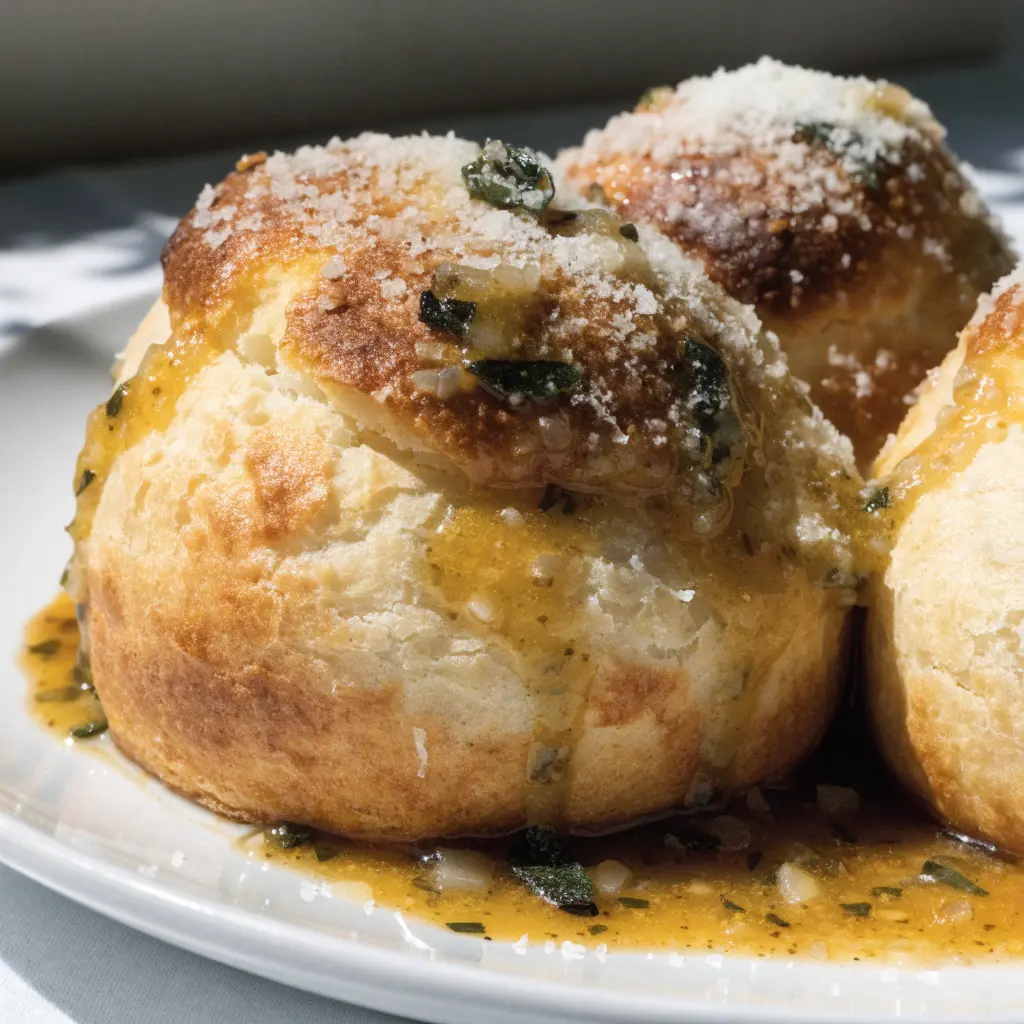
Spread a generous amount of butter over each popover while it is still warm. The butter will soften against the hot crust, allowing the garlic and sage flavors to mingle with the nutty Parmesan.
Variations of Parmesan Popovers with Crispy Sage Garlic Butter
Extra-Cheesy Parmesan Popovers
If you enjoy a stronger cheese flavor, increase the Parmesan slightly or add a little more finely grated cheese to the batter.
You can also sprinkle a small amount of Parmesan over the popovers toward the end of baking, although you should watch carefully to prevent the cheese from browning too much.
For a slightly different flavor, combine Parmesan with a little finely grated Gruyère.
Garlic and Herb Popovers
Fresh herbs can add an extra layer of flavor to the batter.
Try adding a small amount of finely chopped:
- Rosemary
- Thyme
- Chives
- Parsley
Rosemary and thyme complement the sage garlic butter particularly well, while chives offer a milder herbal flavor.
Use herbs sparingly so they don’t overwhelm the delicate Parmesan taste.
Mini Parmesan Popovers
To make smaller portions, use a standard muffin tin instead of a traditional popover pan.
Divide the batter evenly among the cups, filling them approximately two-thirds to three-quarters full.
Because mini popovers are smaller, they may bake more quickly. Monitor them carefully and look for a crisp, golden exterior before removing them from the oven.
They’re a lovely option for appetizers, brunch buffets, and parties.
Spicy Parmesan Popovers
For a little extra warmth, add a pinch of cayenne pepper or red pepper flakes to the batter.
You can also add a small amount of freshly ground black pepper to the sage garlic butter.
The gentle heat contrasts nicely with the nutty Parmesan and rich butter.
How to Store and Reheat Parmesan Popovers
Although Parmesan popovers are best served fresh from the oven, you can store leftovers and reheat them later.
How to Store Leftover Popovers
Allow the popovers to cool completely on a wire rack before storing them.
Once cooled:
- Place the popovers in an airtight container.
- Separate layers with parchment paper if necessary.
- Refrigerate for up to 2–3 days.
- Keep them away from excess moisture to help preserve their texture.
Popovers naturally soften as they cool because steam becomes trapped in the delicate interior. Storing them correctly helps prevent additional moisture from accumulating.
How to Reheat Parmesan Popovers
The oven is the preferred method for reheating popovers because it helps restore their crisp exterior.
Follow these steps:
- Preheat your oven to 350°F (177°C).
- Arrange the popovers in a single layer on a baking sheet.
- Heat for approximately 5–10 minutes, depending on their size.
- Check that they are warmed through and that the exterior has become crisp again.
- Serve immediately with freshly softened sage garlic butter.
A toaster oven also works well for smaller portions.
Frequently Asked Questions
Why Didn’t My Parmesan Popovers Rise?
Popovers may fail to rise for several reasons, including an oven that isn’t hot enough, a pan that wasn’t properly preheated, or an incorrect flour-to-liquid ratio.
Cold ingredients and overmixing can also affect the final result.
To encourage a better rise, use room-temperature eggs and milk, preheat the oven and pan properly, and avoid opening the oven door during the initial baking stage.
What Is the Secret to Getting Popovers Light and Fluffy?
The key is creating a thin, well-combined batter and baking it at a high initial temperature.
The moisture in the batter creates steam during baking, which causes the popovers to expand. The outside then sets to maintain their distinctive shape.
Accurate ingredient measurements, a hot pan, and sufficient baking time all help produce light, airy popovers.
Can I Make Parmesan Popovers Without a Popover Pan?
Yes! A standard muffin tin is a suitable alternative if you don’t have a traditional popover pan.
Muffin tins produce smaller, wider popovers, while dedicated popover pans generally create taller shapes.
Grease the muffin cups well, preheat the pan if appropriate for your equipment, and monitor the baking time carefully because smaller popovers may finish sooner.
Why Do Popovers Deflate After Baking?
Some deflation is normal as popovers cool and the steam inside escapes. However, significant collapsing can occur when the popovers haven’t baked long enough to develop a firm structure.
To reduce this, bake until the exterior is deeply golden and crisp. You can also make a small slit in each popover after baking to release excess steam.
Can I Use Pre-Grated Parmesan Cheese?
Yes, pre-grated Parmesan can be used if that’s what you have available.
However, freshly grated Parmesan is often preferable because it has a finer, softer texture and distributes more evenly throughout the batter.
If using pre-grated cheese, choose a finely grated variety rather than large shreds to maintain a consistent texture.
Conclusion: Enjoy Homemade Parmesan Popovers with Crispy Sage Garlic Butter
These Parmesan Popovers with Crispy Sage Garlic Butter bring together everything you want in a homemade savory bake: tall, airy centers, crisp golden exteriors, nutty Parmesan, and fragrant herb butter. With simple ingredients and a straightforward baking method, they’re an inviting addition to brunches, family dinners, and special gatherings. Serve them warm with plenty of sage garlic butter and enjoy every delicious bite. Don’t forget to share your results and let us know how your popovers turned out!
Print
Easy Parmesan Popovers with Crispy Sage Garlic Butter
- Total Time: PT50M
- Yield: 6 popovers 1x
- Diet: Vegetarian
Ingredients
- For the popovers
- 1½ cups all-purpose flour
- 1½ cups whole milk, at room temperature
- 3 large eggs, at room temperature
- 2 tablespoons freshly grated Parmesan cheese
- 2 tablespoons salted butter
- 6 teaspoons salted butter, for the pan
- 1 teaspoon kosher salt
- ½ teaspoon black pepper, optional
- For the sage garlic butter
- 4 tablespoons salted butter, softened
- 1–2 garlic cloves, lightly smashed
- 8 fresh sage leaves
Instructions
- Melt 2 tablespoons of butter in a skillet over medium heat. Add the garlic and sage and cook for 3–4 minutes, until the butter begins to brown and the sage is crisp. Remove the garlic and sage and reserve them for the finishing butter.
Preheat the oven to 450°F (232°C), with a rack positioned in the lower third. Place 1 teaspoon of butter in each cup of a six-cup popover pan and heat it in the oven.
Whisk the room-temperature eggs and milk together for approximately one minute until frothy.
Add the browned butter, flour, Parmesan, salt, and optional black pepper. Whisk until just combined.
Carefully remove the hot pan from the oven and swirl the melted butter around each cup. Divide the batter evenly between the cups, filling each approximately three-quarters full.
Bake for 20 minutes at 450°F. Reduce the temperature to 350°F and bake for another 15–20 minutes, until tall, golden, and crisp. Avoid opening the oven during the initial baking stage.
Mash the reserved garlic with a fork and finely chop the crispy sage. Mix both into the softened butter.
- Remove the popovers from the pan and serve immediately with the sage garlic butter.
- Prep Time: PT10M
- Cook Time: PT40M
- Category: Bread & Rolls
- Method: Baking
- Cuisine: American
Nutrition
- Serving Size: 1 popover
- Calories: 310 Kcal
- Sugar: 3 g
- Sodium: 530 mg
- Fat: 22 g
- Saturated Fat: 12 g
- Unsaturated Fat: 8 g
- Trans Fat: 0.5 g
- Carbohydrates: 21 g
- Fiber: 1 g
- Protein: 8 g
- Cholesterol: 130 mg