
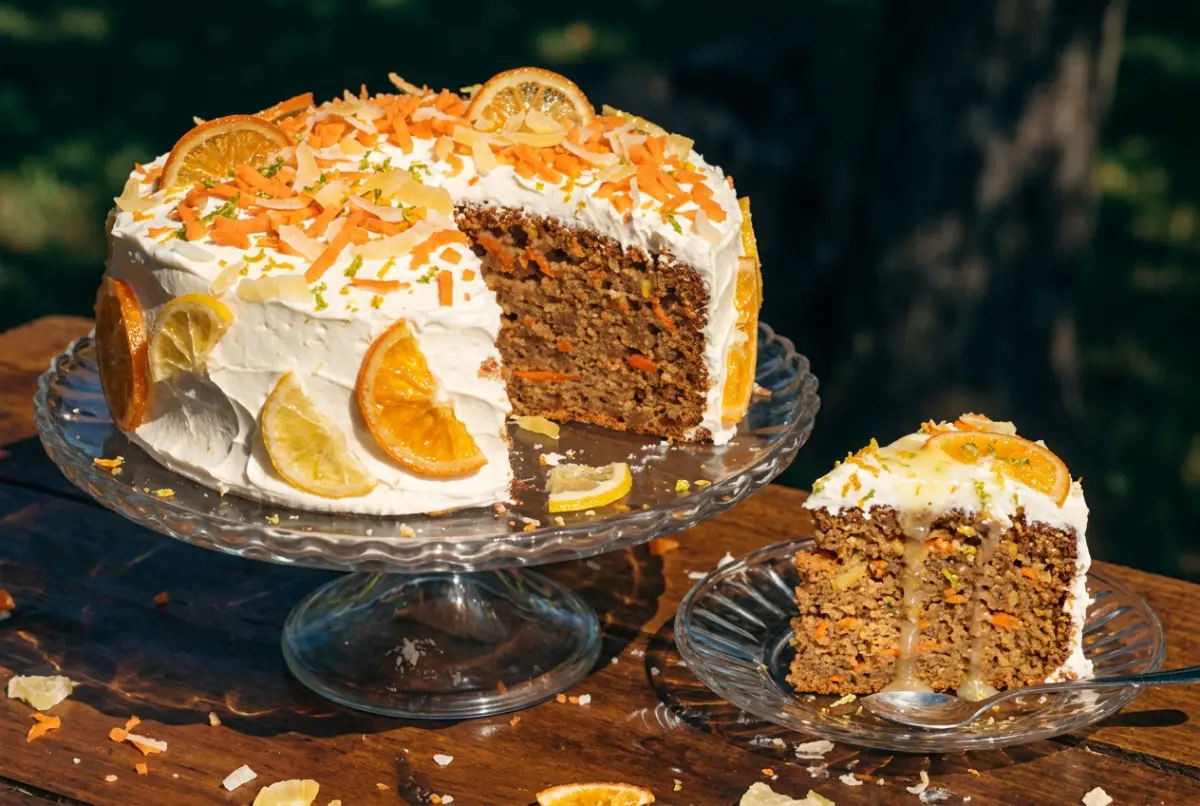
Why You’ll Love This Carrot Coconut Citrus Cake Recipe
There are plenty of reasons to add this moist carrot coconut cake to your baking list.
- It has a wonderfully moist and tender crumb.
- Fresh carrots add natural sweetness and texture.
- Shredded coconut gives the cake a subtle tropical character.
- Orange and lemon zest create a fresh citrus aroma.
- Warm cinnamon, ginger, and nutmeg make the flavor comforting.
- The citrus glaze is quick to prepare.
- You can finish it with a simple glaze or rich cream cheese frosting.
- It works equally well as a casual afternoon cake or a dessert for a special gathering.
- The batter is straightforward and does not require complicated techniques.
- The recipe can easily be adapted into a loaf, layer cake, or cupcakes.
What makes this cake especially appealing is its balance. Traditional carrot cake can be rich and heavily spiced. Coconut carrot cake adds another layer of texture, while citrus brings brightness that prevents the combination from feeling overly heavy.
The result is a cake with several distinct flavors that still work together naturally.
What Makes This Carrot Coconut Citrus Cake Different?
A classic carrot cake usually relies on carrots, warm spices, nuts, raisins, and a cream cheese topping. This version takes that familiar foundation and adds coconut and fresh citrus.
The coconut contributes a mild nuttiness and pleasant chew. It does not need to dominate the cake. Instead, it sits behind the carrots and spices, making the texture more interesting.
Citrus plays an even more important role.
Fresh orange zest provides a sweet, fragrant aroma, while lemon zest adds a sharper note. Using both creates a more complex citrus carrot cake without making it taste like a lemon cake or orange cake.
The flavor progression is simple:
- Carrot provides sweetness and earthy flavor.
- Coconut adds texture and a gentle tropical note.
- Cinnamon and ginger provide warmth.
- Orange adds fragrance and sweetness.
- Lemon adds brightness.
- Vanilla rounds everything out.
That combination makes this cake feel familiar and new at the same time.
Ingredients for Carrot Coconut Citrus Cake Recipe
The ingredient list is made up of familiar baking staples. For the best result, use fresh carrots and freshly grated citrus zest.
For the Cake
- 2 cups all-purpose flour
- 1 1/2 teaspoons baking powder
- 1 teaspoon baking soda
- 1/2 teaspoon salt
- 2 teaspoons ground cinnamon
- 1/2 teaspoon ground ginger
- 1/4 teaspoon ground nutmeg
- 3 large eggs
- 1 cup light brown sugar
- 1/2 cup granulated sugar
- 3/4 cup neutral vegetable oil
- 2 teaspoons vanilla extract
- 2 cups finely grated carrots
- 1 cup unsweetened shredded coconut
- Zest of 1 large orange
- Zest of 1 lemon
- 2 tablespoons fresh orange juice
- 1 tablespoon fresh lemon juice
For the Citrus Glaze
- 1 1/2 cups powdered sugar
- 2 tablespoons fresh orange juice
- 1 tablespoon fresh lemon juice
- 1 teaspoon finely grated orange zest
- 1/2 teaspoon finely grated lemon zest
- 1/2 teaspoon vanilla extract
Optional Citrus Cream Cheese Frosting
If you prefer a richer finish, use:
- 8 ounces softened cream cheese
- 4 tablespoons softened unsalted butter
- 2 cups powdered sugar
- 1 teaspoon vanilla extract
- 1 teaspoon orange zest
- 1 teaspoon lemon zest
- 1 to 2 teaspoons fresh citrus juice
Optional Garnishes
- Toasted shredded coconut
- Orange zest
- Lemon zest
- Chopped pecans
- Chopped walnuts
- Candied orange peel
- Candied lemon peel
- A light dusting of powdered sugar
How to Make Carrot Coconut Citrus Cake Recipe
Step 1: Prepare the Oven and Pan
Preheat your oven to 350°F (175°C).
Grease a 9-inch round cake pan or line the bottom with parchment paper.
If you prefer a loaf cake, use a standard loaf pan and expect the baking time to increase.
For a layer cake, divide the batter between two prepared 8-inch round pans.
The pan you choose affects the baking time, so avoid relying entirely on the clock. Look for visual signs of doneness as well.
Step 2: Prepare the Dry Ingredients
Add the following ingredients to a large bowl:
- All-purpose flour
- Baking powder
- Baking soda
- Salt
- Cinnamon
- Ground ginger
- Nutmeg
Whisk everything together until evenly distributed.
This step is important because the baking soda, baking powder, salt, and spices need to be dispersed throughout the flour.
You do not want one area of the cake to contain too much baking soda or a pocket of cinnamon.
Set the dry ingredients aside.
Step 3: Prepare the Wet Ingredients
In another large bowl, whisk together the eggs, brown sugar, granulated sugar, vegetable oil, and vanilla.
Continue whisking until the mixture looks smooth.
Add the orange zest, lemon zest, orange juice, and lemon juice.
Stir again.
The mixture will have a fragrant citrus aroma at this stage.
The combination of brown sugar and oil helps create a soft, moist crumb, while the citrus gives the batter a fresh character.
Step 4: Add the Carrots and Coconut
Add the grated carrots and shredded coconut to the wet mixture.
Fold them in using a spatula.
Make sure the carrots are distributed evenly.
If the grated carrots have formed large clumps, separate them gently with your fingers or a fork before adding them.
Do not squeeze the carrots aggressively unless they contain an unusual amount of liquid. The moisture in fresh carrots is useful in this cake.
Step 5: Combine the Wet and Dry Ingredients
Add the dry ingredients to the wet ingredients.
Fold everything together gently.
Stop mixing as soon as there are no obvious streaks of flour.
Do not overmix the batter.
Overmixing can develop too much gluten and result in a tougher cake.
A few tiny lumps are preferable to aggressively mixing the batter until it becomes completely smooth.
The finished batter should be fairly thick but easy to spread.
Step 6: Transfer the Batter to the Pan
Pour the batter into the prepared cake pan.
Use a spatula to spread it evenly.
Gently tap the pan once or twice on the counter if you notice large air pockets.
Do not repeatedly bang the pan because there is no need to force every small bubble out of the batter.
Smooth the surface before placing the cake in the oven.
Step 7: Bake the Cake
Place the cake in the center of the preheated oven.
Bake for approximately 35 to 45 minutes in a 9-inch round pan.
The exact baking time will vary depending on your oven, pan material, and the amount of batter.
Start checking toward the lower end of the baking range.
The cake is ready when:
- The center looks set.
- The top springs back lightly when touched.
- The edges are beginning to pull away from the pan.
- A toothpick inserted into the center comes out with a few moist crumbs rather than wet batter.
If the toothpick comes out covered in wet batter, continue baking and check again after several minutes.
Step 8: Cool the Cake
Let the cake cool in the pan for approximately 10 to 15 minutes.
Then carefully transfer it to a wire rack.
Allow it to cool completely before adding cream cheese frosting.
If you are using the citrus glaze, you can choose whether to apply it while the cake is slightly warm or after it has cooled.
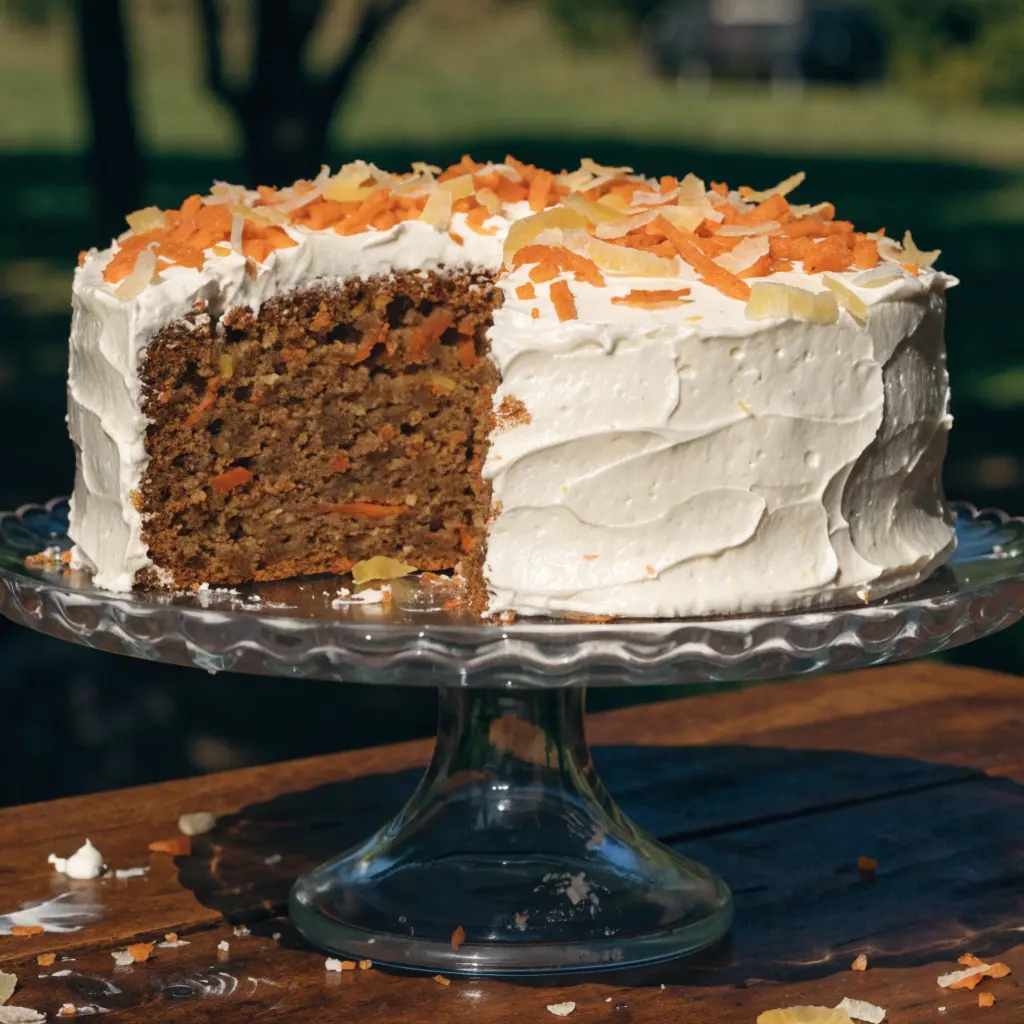
How to Make Citrus Cream Cheese Frosting
If you want a more traditional carrot-cake presentation, use citrus cream cheese frosting instead of the simple glaze.
Place softened cream cheese and butter in a mixing bowl.
Beat until smooth.
Add powdered sugar gradually.
Then add vanilla, orange zest, and lemon zest.
Add a small amount of citrus juice if necessary.
Continue mixing just until the frosting becomes smooth and spreadable.
Do not add too much citrus juice because cream cheese frosting can become loose.
Spread the frosting over the completely cooled cake.
Finish with:
- Toasted coconut
- Orange zest
- Lemon zest
- Chopped walnuts
- Candied citrus peel
Carrot Coconut Citrus Cake Variations
One of the best things about this recipe is how easy it is to customize.
Orange Carrot Coconut Cake
For a sweeter and more aromatic version, make orange the dominant citrus.
Use:
- Extra orange zest
- Orange juice
- Orange glaze
- Toasted coconut
You can also add thin strips of candied orange peel to the top.
Lemon Carrot Coconut Cake
For a sharper citrus profile, emphasize lemon.
Use additional lemon zest and finish the cake with a lemon glaze.
The combination of carrot, coconut, and lemon works particularly well when the cake is not excessively sweet.
Blood Orange Carrot Coconut Cake
Blood orange gives the cake a deeper color and a distinctive citrus character.
Use blood orange zest and juice in the batter and glaze.
For an especially attractive presentation, finish with thin blood-orange slices or candied peel.
Vegan Carrot Coconut Citrus Cake
To make a vegan variation, replace the eggs with a suitable egg substitute and use plant-based ingredients where necessary.
Coconut milk or plant-based milk can be incorporated depending on the specific recipe formulation.
A coconut-based frosting can replace cream cheese frosting.
The texture will differ from the original version, so substitutions should be tested rather than assumed to work in exactly the same proportions.
Gluten-Free Carrot Coconut Citrus Cake
Use a reliable gluten-free all-purpose baking blend designed as a wheat-flour replacement.
Avoid simply replacing all-purpose flour with coconut flour.
Coconut flour is highly absorbent and does not behave like wheat flour in a direct 1:1 substitution.
For a gluten-free version, follow the proportions recommended by the flour manufacturer or use a recipe specifically developed for gluten-free baking.
What to Serve With Carrot Coconut Citrus Cake Recipe
This cake works well with simple drinks and toppings.
Serve slices with:
- Coffee
- Black tea
- Earl Grey tea
- Chai
- Citrus tea
- Vanilla ice cream
- Whipped cream
- Coconut yogurt
- A spoonful of lightly sweetened cream
For presentation, add a little citrus zest immediately before serving.
Toasted coconut also makes a simple and attractive garnish.
How to Store Carrot Coconut Citrus Cake Recipe
The best storage method depends on the topping.
Unfrosted Cake
Place the completely cooled cake in an airtight container.
Keep it at room temperature for short-term storage in a cool environment.
Make sure the container is properly sealed so the cake does not dry out.
Cake With Citrus Glaze
A glazed cake can also be stored in an airtight container.
The glaze may become slightly firmer as it sits.
This is normal.
If you want the freshest appearance, add a little additional glaze shortly before serving.
Cake With Cream Cheese Frosting
If you use cream cheese frosting, refrigerate the finished cake.
Keep it covered to prevent the cake from absorbing refrigerator odors.
Before serving, allow it to sit at room temperature for a short period so the frosting becomes easier to spread and the cake is not overly cold.
Can You Freeze Carrot Coconut Citrus Cake Recipe?
Yes, this cake can be frozen.
For the best results, freeze the cake without the final glaze or frosting when possible.
How to Freeze the Cake
- Allow the cake to cool completely.
- Wrap it tightly in plastic wrap or another freezer-safe wrapping material.
- Add a second protective layer.
- Place it in a freezer-safe container or bag.
- Label it with the date.
- Freeze until needed.
How to Thaw the Cake
Transfer the wrapped cake to the refrigerator and allow it to thaw gradually.
Once thawed, bring it toward room temperature before serving.
Add fresh citrus glaze or frosting after thawing if you want the cleanest presentation.
Common Carrot Coconut Cake Problems
Even a straightforward cake can sometimes produce unexpected results.
Why Is My Carrot Coconut Cake Dense?
A dense cake can result from several issues.
Possible causes include:
- Too much flour
- Overmixing
- Excessive carrot or coconut
- Expired leavening agents
- An incorrect pan size
- Underbaking
Start by checking your flour measurement.
Then consider how much the batter was mixed after the flour was added.
Why Is My Cake Soggy in the Middle?
A wet center usually means the cake needs more baking time, although excess liquid can also contribute.
Check:
- Oven temperature
- Pan size
- Amount of citrus juice
- Amount of grated carrots
- Baking time
Do not remove the cake simply because the top looks golden.
The center must be set.
Why Did My Cake Sink?
A sunken cake can happen when the center has not developed enough structure before the cake is removed from the oven.
Opening the oven door too early can also interfere with baking.
Avoid checking the cake repeatedly during the first portion of baking.
Why Is My Carrot Cake Dry?
The most common causes are overbaking and excessive flour.
Measure flour carefully and start checking the cake before the maximum suggested baking time.
The cake should come out with a few moist crumbs attached to the toothpick rather than a completely dry skewer.
Why Is My Coconut Burning?
Coconut browns quickly.
If you are using coconut as a topping, watch it carefully while toasting.
For a coconut topping baked directly onto a cake, keep a close eye on the surface during the final part of baking.
Frequently Asked Questions
What is carrot coconut citrus cake made of?
A carrot coconut citrus cake is made with grated carrots, shredded coconut, flour, eggs, sugar, oil, warm spices, vanilla, and fresh citrus zest and juice. It can be finished with a simple citrus glaze or cream cheese frosting.
Can I add orange to carrot cake?
Absolutely. Orange is an excellent match for carrot cake. Add orange zest and a modest amount of fresh orange juice to the batter, then finish the cake with an orange glaze. For additional contrast, combine orange with lemon.
Does coconut go well with carrot cake?
Yes. Coconut works particularly well with carrot because it adds texture and a subtle nutty, tropical flavor. Use unsweetened shredded coconut when possible so you can control the sweetness of the finished cake.
What citrus goes best with carrot cake?
Orange and lemon are the easiest choices. Orange creates a sweeter, more aromatic flavor, while lemon adds sharper acidity. Using both gives the cake a balanced carrot coconut citrus flavor.
Can I use lemon instead of orange?
Yes. Lemon can replace orange in the batter or glaze. The resulting cake will have a sharper, more pronounced citrus flavor. You can also use orange in the cake and lemon in the glaze for a balanced combination.
Conclusion
This Carrot Coconut Citrus Cake Recipe brings together everything you want in a homemade cake: a soft, moist crumb, sweet grated carrots, delicate coconut, warm spices, and the bright flavor of fresh orange and lemon. The simple citrus glaze adds the perfect finishing touch, while cream cheese frosting and toasted coconut offer delicious alternatives.