
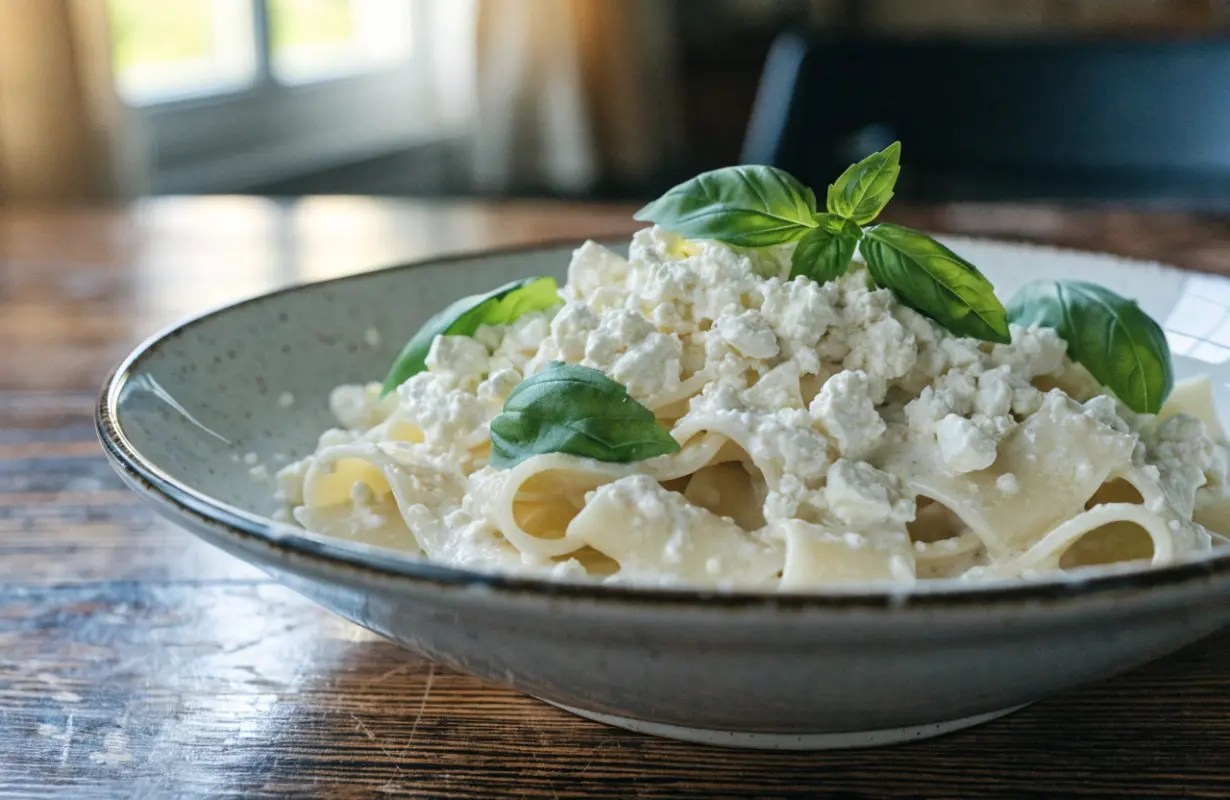
Why You’ll Love Cottage Cheese Basil Pasta
There is a lot to like about this recipe, especially if you enjoy sauces with a fresh basil flavor and a creamy texture.
- The sauce is blended until smooth, so the cottage cheese becomes almost unrecognizable.
- Fresh basil gives the pasta a bright, herbaceous flavor.
- Parmesan adds a salty, savory depth.
- Garlic provides a warm background note without overpowering the basil.
- Lemon adds just enough acidity to keep the sauce tasting fresh.
- Reserved pasta water helps create a glossy consistency.
- The entire dish can be prepared with a small number of basic ingredients.
- You can easily change the pasta shape or add vegetables and other toppings.
- The sauce can be adjusted to be thicker, thinner, cheesier, garlickier, or more lemony.
Unlike a traditional cream sauce, the character of this dish comes from blending rather than simmering a large amount of dairy. That makes the preparation surprisingly straightforward.
The biggest secret is not to rush the blending step. Cottage cheese naturally contains small curds, so simply stirring it into the pasta will not produce the smooth texture you want. Give it enough time in the blender or food processor to become completely silky.
What Does Cottage Cheese Do in Pasta Sauce?
Cottage cheese might not be the first ingredient you think of when making a pasta sauce, but its mild flavor and soft texture make it an excellent base for blending.
When cottage cheese is blended thoroughly, the individual curds break down into a creamy mixture. Parmesan adds a deeper cheese flavor, while olive oil gives the sauce a smoother mouthfeel. Basil brings freshness, garlic adds savory character, and lemon balances the richness.
The important thing to understand is that cottage cheese does not behave exactly like heavy cream or a melting cheese. It is blended into the sauce rather than simply melted into the pan.
That is why the blender is such an important part of the recipe. A quick blend may leave tiny curds behind, while a longer blend creates the smooth texture that makes this pasta special.
For the best results, bring the cottage cheese to room temperature before blending. Cold cottage cheese can still work, but room-temperature ingredients tend to blend more easily.
Ingredients for Cottage Cheese Basil Pasta
The ingredient list is simple, but each ingredient has a specific job.
Cottage Cheese
Use plain cottage cheese without added flavors.
Full-fat cottage cheese generally gives the sauce a richer texture, while 2% cottage cheese also works well. Small-curd cottage cheese is particularly convenient because it breaks down quickly in a blender.
Avoid flavored or heavily seasoned cottage cheese. The sauce should be built around the fresh basil, garlic, Parmesan, and lemon.
Fresh Basil
Fresh basil is one of the defining ingredients in this pasta.
Use leaves that are bright green and fragrant. Avoid basil with large dark spots or wilted leaves.
You can blend most of the basil directly into the sauce and reserve a few leaves for serving. The reserved basil adds color and gives the finished dish a fresh appearance.
Parmesan Cheese
Freshly grated Parmesan works especially well.
Pre-grated cheese can contain ingredients that affect how smoothly it incorporates into a sauce. If you have a wedge of Parmesan, grate it finely before adding it to the blender.
You can also substitute Pecorino Romano for some or all of the Parmesan if you prefer a sharper cheese flavor.
Garlic
One fresh garlic clove is enough to provide a noticeable savory note.
If you love garlic, you can use two cloves, but keep in mind that raw garlic becomes more pronounced after blending. Roasting or lightly sautéing the garlic first will produce a softer, sweeter flavor.
Olive Oil
Extra-virgin olive oil adds richness and helps round out the sauce.
A little goes a long way. You can also drizzle a small amount over the finished pasta just before serving.
Lemon
Lemon is optional, but highly recommended.
Use both zest and juice for the most noticeable citrus character. The zest provides fragrance, while the juice adds acidity.
Start with a modest amount and taste the sauce before adding more.
Pasta
Spaghetti is an excellent choice, but you are not limited to long pasta.
Good options include:
- Spaghetti
- Linguine
- Fettuccine
- Penne
- Rigatoni
- Fusilli
- Rotini
- Cavatappi
Long pasta gives you a classic, silky presentation, while ridged or twisted shapes can capture more of the creamy sauce.
Reserved Pasta Water
Do not forget this ingredient.
Before draining the pasta, reserve some of the cooking water. Its starch helps loosen the blended sauce and allows it to spread evenly over the noodles.
You may not need all of it, so add it gradually.
How to Make Cottage Cheese Basil Pasta
This recipe is easiest when you prepare the sauce while the pasta is cooking.
Step 1: Boil the Pasta
Bring a large pot of water to a boil.
Salt the water generously, then add the pasta.
Cook according to the package directions until the pasta is al dente. You want it cooked through but still slightly firm when you bite into it.
Before draining, scoop out at least 1 cup of pasta water.
It is better to reserve more than you think you need because you can always add it gradually later.
Drain the pasta and return it to the warm pot.
Step 2: Prepare the Basil
Wash and dry the basil leaves thoroughly.
Remove any tough stems.
Reserve a few of the nicest leaves for garnish and add the rest to the blender.
Dry basil leaves are much easier to blend into a smooth sauce than wet leaves covered in excess water.
Step 3: Add the Sauce Ingredients to a Blender
Add the following to a high-speed blender or food processor:
- Cottage cheese
- Fresh basil
- Parmesan
- Garlic
- Olive oil
- Lemon zest
- Lemon juice
- Black pepper
At this stage, do not add all of the pasta water.
You will use it later to adjust the consistency.
Step 4: Blend Until Completely Smooth
Blend the mixture until it looks creamy and uniform.
Stop and scrape down the sides if necessary.
If you are using a food processor, the sauce may require several minutes to become completely smooth. A high-speed blender can often accomplish the job more quickly.
Do not judge the sauce after only a few seconds.
The goal is a silky, spoonable sauce with no noticeable cottage cheese curds.
Step 5: Add Pasta Water
Once the sauce is smooth, gradually add some of the reserved pasta water.
Blend again.
Start with a small amount and add more as necessary.
The sauce should be thick enough to coat a spoon but loose enough to toss easily with pasta.
Remember that the sauce will continue to thicken slightly when it meets the pasta.
Step 6: Combine the Pasta and Sauce
This is where the recipe comes together.
Keep the drained pasta in the warm pot, but remove the pot from direct heat.
Pour the cottage cheese basil sauce over the pasta.
Use tongs to toss everything vigorously.
The movement helps distribute the sauce evenly across the pasta.
If the sauce looks too thick, add another splash of pasta water and toss again.
Continue until every piece of pasta is coated.
Step 7: Taste and Adjust
Before serving, taste the pasta.
You may want to add:
- More salt
- Extra black pepper
- More lemon juice
- Additional Parmesan
- Red pepper flakes
- A little more basil
- A drizzle of olive oil
Make adjustments gradually.
It is much easier to add more flavor than to correct an overly salty or acidic sauce.
Step 8: Garnish and Serve
Transfer the pasta to serving bowls.
Finish with fresh basil, freshly grated Parmesan, black pepper, and a small drizzle of olive oil.
For a little heat, sprinkle over red pepper flakes.
For extra texture, add toasted breadcrumbs or pine nuts.
Serve immediately while the sauce is smooth and glossy.
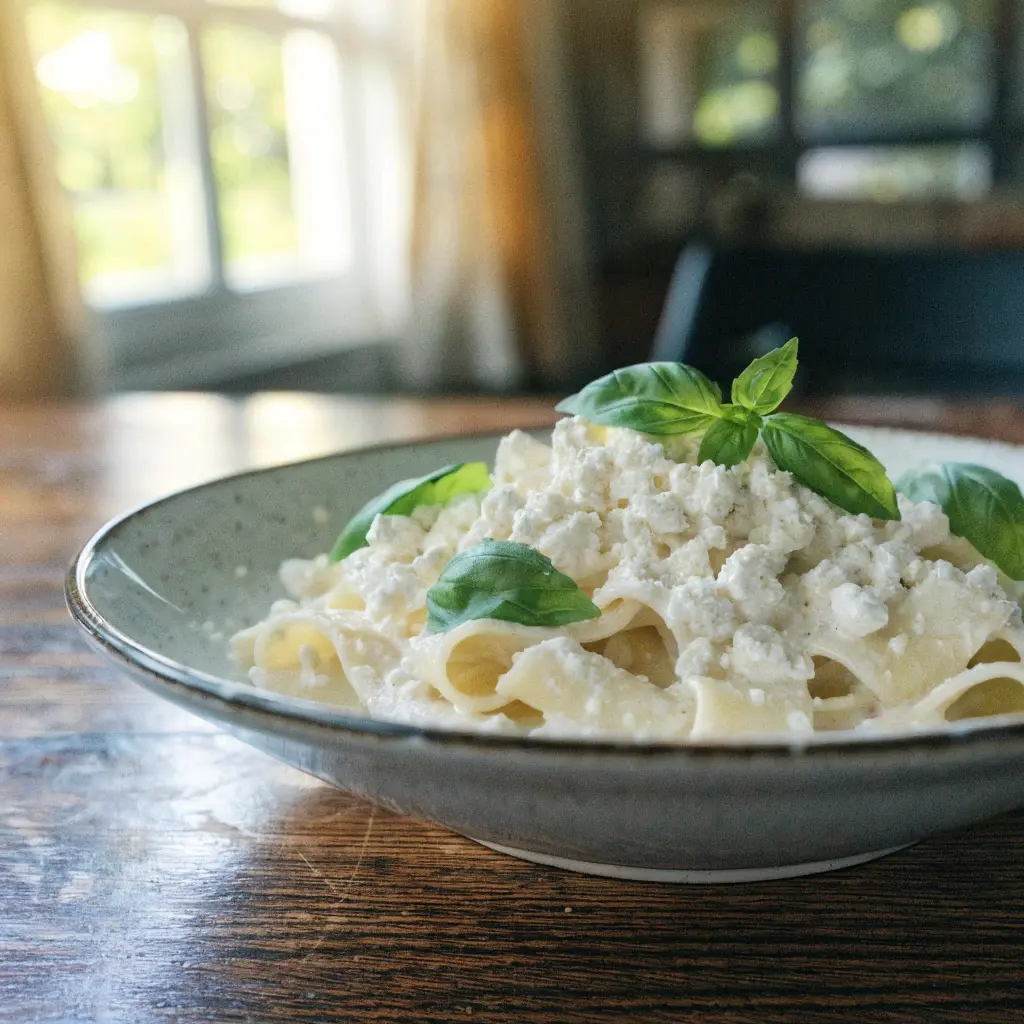
Cottage Cheese Basil Pasta Variations
Once you have the basic sauce mastered, it is easy to change the flavor.
Tomato Basil Cottage Cheese Pasta
Add roasted cherry tomatoes to the finished pasta.
For an even stronger tomato flavor, blend a few roasted tomatoes directly into the sauce.
The sweetness of roasted tomatoes pairs beautifully with fresh basil and Parmesan.
Spinach Basil Pasta
Add a handful of fresh spinach to the blender along with the basil.
The spinach creates an even deeper green color while keeping the basil flavor prominent.
Pesto Cottage Cheese Pasta
For a more traditional pesto character, add a spoonful or two of prepared basil pesto to the blended cottage cheese sauce.
Because pesto already contains basil, garlic, oil, and cheese, it can dramatically intensify those flavors.
Lemon Basil Pasta
Increase the amount of lemon zest and finish the pasta with extra fresh lemon juice.
This is particularly good during warmer months.
Spicy Basil Pasta
Add red pepper flakes to the blender or sprinkle them over each serving.
For more heat, use a small amount of Calabrian chili paste.
Mushroom Basil Pasta
Sauté sliced mushrooms separately until deeply browned.
Toss them through the finished pasta.
The earthy mushrooms provide a strong contrast to the fresh basil sauce.
Chicken Basil Pasta
Add sliced grilled chicken or leftover roasted chicken to make the pasta more substantial.
Toss the chicken through the finished dish just before serving.
Shrimp Basil Pasta
Sauté shrimp with garlic and olive oil, then add them to the pasta at the end.
A little lemon zest works especially well with shrimp and basil.
Sun-Dried Tomato Basil Pasta
Chop oil-packed sun-dried tomatoes and stir them through the finished pasta.
Their concentrated flavor adds a savory, slightly sweet contrast to the creamy sauce.
Can You Make Cottage Cheese Basil Pasta Without a Blender?
Yes, although the texture will be different.
A food processor is the easiest alternative.
An immersion blender can also work if you use a sufficiently deep container.
If you have neither, you can mash the cottage cheese as thoroughly as possible with a fork or potato masher before combining it with the other ingredients.
However, a completely smooth sauce is difficult to achieve without some form of blending.
If a silky texture is your priority, use a blender or food processor.
Can You Use Ricotta Instead of Cottage Cheese?
Yes.
Ricotta can be used in a similar style of sauce, but the finished pasta will have a different texture and flavor.
Ricotta tends to be softer and more delicate, while cottage cheese has a slightly tangier character.
If using ricotta, start with a smaller amount of pasta water and adjust gradually.
You may also want to increase the Parmesan or lemon slightly to give the sauce more contrast.
What to Serve With Cottage Cheese Basil Pasta
The pasta works well as the centerpiece of a simple dinner.
Vegetables
Serve it with:
- Roasted broccoli
- Grilled zucchini
- Sautéed mushrooms
- Roasted asparagus
- Green beans
- Cherry tomatoes
- Roasted bell peppers
Bread
A slice of crusty bread is excellent for catching any remaining sauce.
Garlic bread, focaccia, or a rustic sourdough all work well.
Simple Salad
A crisp green salad provides a fresh contrast to the creamy pasta.
Keep the dressing simple so that it does not compete with the basil sauce.
Additional Toppings
Try:
- Fresh basil
- Parmesan
- Toasted pine nuts
- Red pepper flakes
- Black pepper
- Lemon zest
- Crispy breadcrumbs
- Extra-virgin olive oil
How to Store Cottage Cheese Basil Pasta
Allow leftovers to cool before transferring them to an airtight container.
Store the pasta in the refrigerator and use it within a few days.
Keep in mind that the sauce will become thicker as it chills.
That does not mean the pasta has gone wrong. It simply means you will need a little liquid when reheating.
For more general guidance on preserving fresh basil and basil-based preparations, the National Center for Home Food Preservation’s preservation resources are a useful reference.
Can You Freeze Cottage Cheese Basil Pasta?
You can freeze the dish, but the texture may change after thawing.
Dairy-based sauces can separate during freezing and reheating, and fresh basil can lose some of its original texture.
For the best result, make the sauce fresh when possible.
If you do freeze leftovers, thaw them in the refrigerator rather than placing a frozen container directly over high heat.
Reheat gently and add a little liquid while stirring.
If you regularly prepare this recipe ahead of time, freezing the sauce separately from freshly cooked pasta may give you better control over the final texture.
Frequently Asked Questions
Can You Use Cottage Cheese Instead of Cream in Pasta?
Yes. Blended cottage cheese can create a creamy pasta sauce without using traditional heavy cream.
The key is to blend it until completely smooth and then loosen the sauce with reserved pasta water.
Does Cottage Cheese Melt in Pasta Sauce?
Not in exactly the same way as mozzarella or another melting cheese.
Instead, cottage cheese is blended into the sauce.
The blender breaks down the curds, creating a smooth mixture that can coat pasta.
How Do You Make Cottage Cheese Pasta Sauce Smooth?
Use a blender or food processor and blend the cottage cheese thoroughly.
Add Parmesan, basil, garlic, olive oil, and lemon, then gradually add pasta water until the sauce reaches the desired consistency.
Why Is My Cottage Cheese Pasta Sauce Grainy?
The most common causes are insufficient blending and excessive heat.
Blend the sauce longer and avoid boiling it after it has been combined with the pasta.
Can I Use Low-Fat Cottage Cheese?
Yes.
Low-fat cottage cheese can work, although the finished sauce may have a slightly different texture.
Adjust the pasta water gradually and add olive oil if you want a richer consistency.