
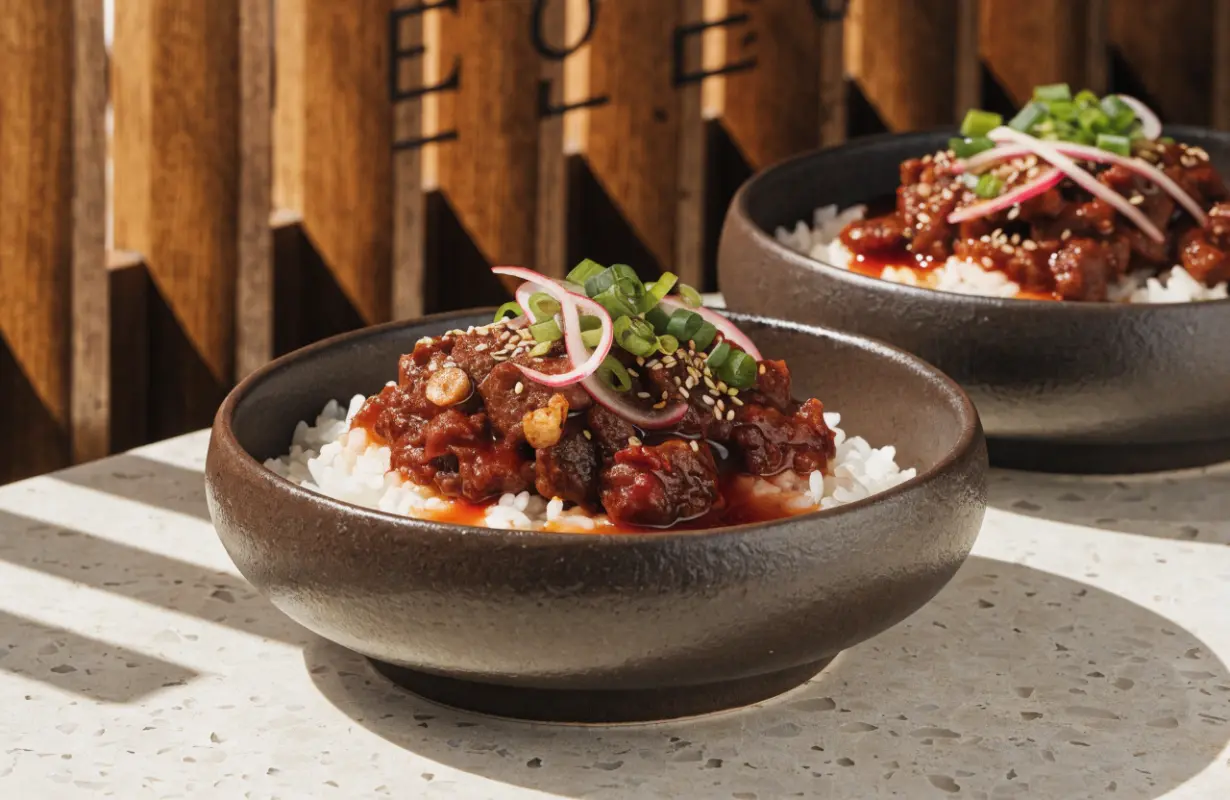
If you love bold, savory flavors and easy weeknight dinners, this Korean Gochujang Beef Bowls Recipe is one to keep in your regular rotation. Tender crumbled ground beef is cooked in a glossy sauce made with gochujang, soy sauce, garlic, ginger, sesame oil, and a touch of sweetness, then spooned over warm rice and finished with crisp vegetables and fresh toppings.
Gochujang is one of the ingredients that gives this bowl its distinctive Korean-inspired character. It is a fermented Korean chili paste known for its combination of spicy, sweet, salty, and deeply savory flavors. You can learn more about this traditional ingredient in Maangchi’s guide to gochujang.
What Are Korean Gochujang Beef Bowls Recipe?
Korean Gochujang Beef Bowls are a Korean-inspired rice bowl made with seasoned ground beef, a spicy-sweet gochujang sauce, rice, fresh vegetables, and flavorful toppings.
The basic idea is simple:
- Start with a bowl of warm rice.
- Add richly seasoned ground beef.
- Spoon over the glossy gochujang sauce.
- Add fresh or pickled vegetables.
- Finish with sesame seeds and green onions.
- Add extra toppings according to your taste.
Why You’ll Love This Korean Gochujang Beef Bowls Recipe
There are plenty of reasons to make this recipe, especially when you need something flavorful without spending hours in the kitchen.
It’s quick and easy
The beef cooks rapidly in a skillet, and the sauce can be mixed while the meat browns. If your rice is already cooked, the entire bowl comes together particularly quickly.
The sauce is packed with flavor
Gochujang does most of the heavy lifting. Combined with soy sauce, brown sugar, garlic, ginger, and sesame oil, it creates a sauce that is spicy, savory, slightly sweet, and wonderfully aromatic.
It uses simple ingredients
Most of the ingredients can be found in a regular grocery store. The one ingredient you may need to look for is gochujang, which is widely available in Asian grocery stores and many larger supermarkets.
It’s easy to customize
You can change the rice, vegetables, protein, toppings, and spice level without changing the basic cooking method.
It’s perfect for meal prep
The cooked beef can be prepared ahead and portioned with rice. Fresh toppings can be added just before serving.
Everyone can build their own bowl
Set out the beef, rice, vegetables, and toppings separately and let everyone assemble a bowl exactly the way they like it.
Ingredients for Korean Gochujang Beef Bowls Recipe
The ingredient list is straightforward, but each component has an important job.
For the Beef
- 1 pound ground beef
- 1 tablespoon neutral cooking oil, if needed
- 3 garlic cloves, finely minced
- 1 teaspoon fresh ginger, grated
- 2 green onions, thinly sliced
Ground beef works especially well because the small pieces capture the sauce. You can use lean ground beef or a slightly higher-fat variety. If the beef releases a lot of excess fat during cooking, simply drain some of it before adding the sauce.
For the Gochujang Sauce
- 3 tablespoons gochujang
- 1/4 cup soy sauce
- 2 tablespoons brown sugar
- 1 teaspoon sesame oil
- 2 tablespoons water
- 1 teaspoon rice vinegar
- 1/2 teaspoon black pepper
- Optional: 1/2 teaspoon gochugaru for extra heat
The exact amount of gochujang can be adjusted. Start with less if you’re unfamiliar with the brand you’re using, because different varieties can vary in heat and sweetness.
For the Bowl
- 4 cups cooked rice
- Sliced cucumber
- Shredded carrots
- Thinly sliced cabbage
- Green onions
- Toasted sesame seeds
- Kimchi, optional
- Quick-pickled vegetables, optional
- Fried egg, optional
Jasmine rice works beautifully, but short-grain white rice or brown rice can also be used.
Kitchen Equipment You’ll Need
You don’t need specialized equipment to make this recipe.
- Large skillet
- Wooden spoon or spatula
- Small mixing bowl
- Whisk or fork
- Knife
- Cutting board
- Measuring spoons
- Rice cooker or saucepan for the rice
A large skillet is preferable because it gives the beef enough room to brown rather than steam.
How to Make Korean Gochujang Beef Bowls Recipe
Step 1: Cook the Rice
Start with the rice because it takes longer than the beef.
Prepare your preferred rice according to the package instructions. Keep it covered and warm while you make the beef.
If you’re using leftover rice, simply reheat it before assembling the bowls.
Step 2: Make the Gochujang Sauce
Add the following ingredients to a small bowl:
- Gochujang
- Soy sauce
- Brown sugar
- Sesame oil
- Water
- Rice vinegar
- Black pepper
Whisk until the mixture is smooth.
Taste a tiny amount of the sauce and decide whether you want it:
- Sweeter → add a little more brown sugar.
- Spicier → add more gochujang or gochugaru.
- More tangy → add a little extra rice vinegar.
- Less intense → add another splash of water.
Setting the sauce aside before cooking the beef makes the final cooking process much easier.
Step 3: Brown the Ground Beef
Heat a large skillet over medium-high heat.
Add the oil if needed, then add the ground beef.
Use a wooden spoon or spatula to break the meat into small pieces.
Cook for approximately 5–7 minutes, stirring occasionally, until the beef is thoroughly cooked and nicely browned.
Don’t constantly stir the beef from the moment it hits the pan. Give it a little time to make contact with the hot skillet so the edges can develop some color.
Step 4: Add the Garlic and Ginger
Add the minced garlic and grated ginger to the skillet.
Stir everything together and cook briefly until fragrant.
Be careful not to leave the garlic in the pan for too long at high heat. Burned garlic can become bitter and overpower the sauce.
Step 5: Add the Gochujang Sauce
Pour the prepared sauce directly over the browned beef.
Reduce the heat to medium-low.
Stir thoroughly so every piece of beef becomes coated.
This is when the simple ground beef starts turning into a deeply flavored Korean-style beef filling.
Step 6: Simmer Until Glossy
Allow the beef and sauce to simmer for about 2–4 minutes.
Stir occasionally.
The sauce should become thicker and cling to the beef.
If it becomes too thick, add a tablespoon of water.
If it seems too loose, continue cooking for another minute or two.
You are looking for beef that is coated in a glossy sauce rather than sitting in a pool of liquid.
Step 7: Prepare the Vegetables
While the beef is simmering, prepare your toppings.
Try:
- Thinly sliced cucumber
- Julienned carrots
- Shredded cabbage
- Sliced green onions
- Kimchi
- Pickled radishes
- Thinly sliced chili peppers
You don’t need to cook every vegetable.
Keeping some toppings raw gives the bowl a fresh, crisp contrast to the warm beef and rice.
Step 8: Assemble the Bowls
Divide the warm rice between four bowls.
Top each bowl with a generous portion of gochujang beef.
Arrange the vegetables around or over the beef.
Finish with:
- Sesame seeds
- Green onions
- Kimchi
- Sliced chili
- Fried egg, if desired
Serve immediately while the beef is warm.
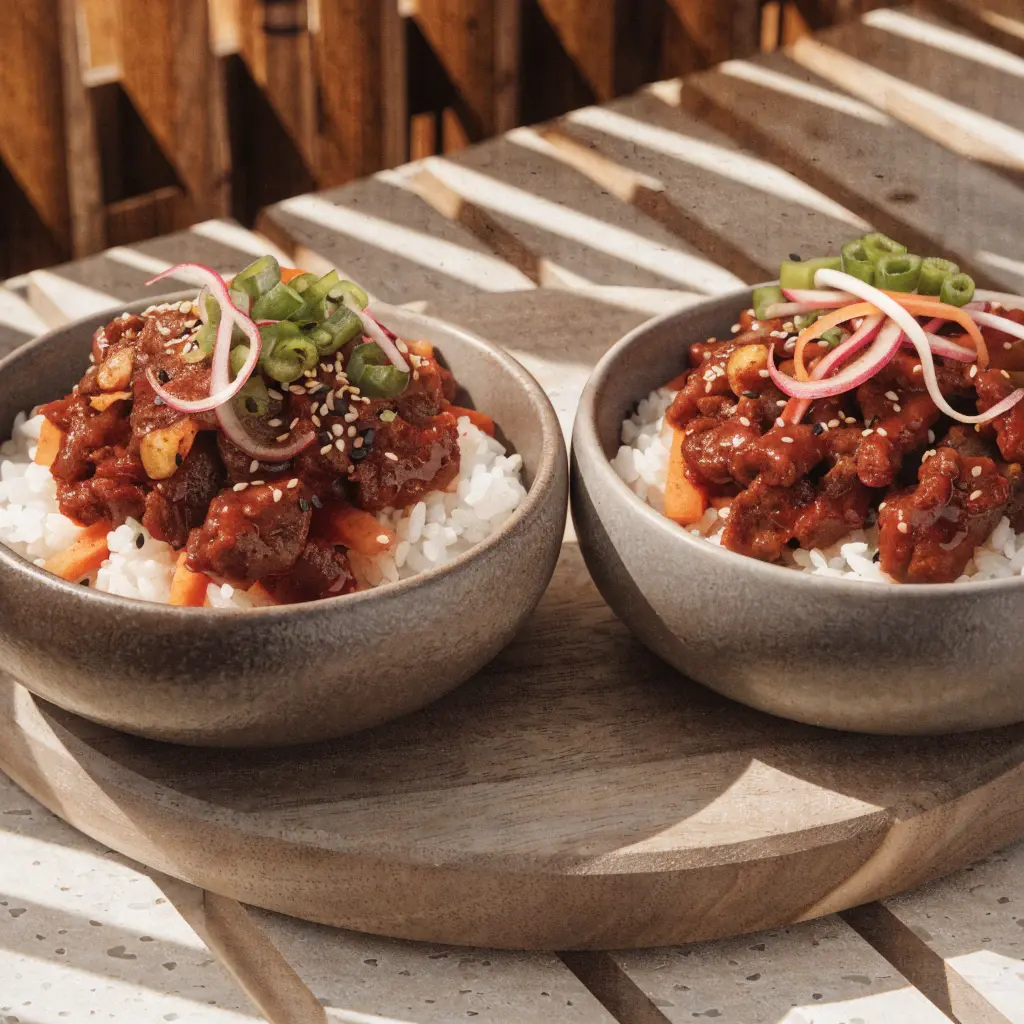
Best Toppings for Gochujang Beef Bowls
One of the best things about this recipe is the topping possibilities.
Fresh Toppings
Try:
- Cucumber
- Carrot
- Cabbage
- Radish
- Green onions
- Fresh cilantro
- Thinly sliced chili peppers
Korean-Inspired Toppings
- Kimchi
- Pickled radish
- Pickled carrots
- Korean cucumber salad
- Sesame seeds
Rich Toppings
A fried egg makes an especially satisfying addition. Place it directly on top of the beef just before serving.
Crunchy Toppings
- Toasted sesame seeds
- Crispy onions
- Roasted peanuts
- Cashews
Don’t feel like you need to use every topping. Two or three contrasting additions are usually enough.
What to Serve With Korean Gochujang Beef Bowls Recipe
Although this bowl is satisfying on its own, you can create a larger Korean-inspired spread with a few simple sides.
Korean Cucumber Salad
Thin cucumber slices tossed with a spicy, tangy dressing make a refreshing companion to the warm beef.
Kimchi
Kimchi adds fermented flavor, spice, and crunch.
Steamed Broccoli
Simple steamed broccoli works particularly well because it can catch some of the extra gochujang sauce.
Pickled Vegetables
Quick-pickled carrots, radishes, or onions add acidity and color.
Seaweed Salad
A small portion of seaweed salad adds another texture and gives the meal a more varied presentation.
Delicious Korean Gochujang Beef Bowls Recipe Variations
Korean Gochujang Steak Bowl
Replace the ground beef with thinly sliced flank steak or sirloin.
Cook the steak quickly over high heat, then toss it with the prepared sauce.
Ground Turkey Gochujang Bowl
Ground turkey can replace beef in the same recipe.
The cooking method remains almost identical.
Ground Chicken Gochujang Bowl
Ground chicken works well with the same garlic, ginger, soy, and gochujang sauce.
Vegetarian Gochujang Bowl
Replace the beef with:
- Firm tofu
- Mushrooms
- Tempeh
- Lentils
- A mixture of mushrooms and tofu
Cook the substitute until nicely browned before adding the sauce.
Gochujang Beef Noodle Bowl
Instead of rice, serve the saucy beef over:
- Udon
- Rice noodles
- Soba
- Ramen noodles
Toss the noodles with some of the sauce before adding the beef.
How to Store Leftover Korean Beef Bowls
For the best texture, store the components separately whenever possible.
Store the Beef
Place the cooked gochujang beef in an airtight container.
Store the Rice
Keep cooked rice in a separate container.
Store Fresh Toppings
Cucumber, cabbage, carrots, kimchi, and green onions are best kept separate.
Why Separate Everything?
When fresh vegetables sit against warm saucy beef for too long, they can lose their crunch.
Keeping everything separate allows you to rebuild the bowl when you’re ready to serve it.
Cooked meat and leftovers are commonly refrigerated for 3–4 days according to USDA guidance.
Can You Freeze Gochujang Beef?
Yes, the cooked beef freezes well.
Allow the beef mixture to cool, then transfer it to a freezer-safe airtight container.
For Better Results
- Freeze the beef separately from fresh vegetables.
- Label the container with the date.
- Freeze in individual portions for easy use.
- Thaw in the refrigerator before reheating when possible.
- Add fresh toppings after reheating.
Fresh cucumber, green onions, and crispy toppings should not be frozen with the beef because their texture can change considerably.
Rice can also be frozen separately if desired.
Common Mistakes to Avoid
Using Too Much Gochujang
More isn’t always better. Too much can dominate the other flavors.
Start with a moderate amount and increase it if necessary.
Making the Sauce Too Salty
Soy sauce and gochujang are both flavorful, so taste before adding additional salt.
Burning the Garlic
Garlic only needs a short time in the hot skillet.
Overcooking the Beef
Once the beef is cooked and browned, add the sauce rather than continuing to cook the meat for a long time.
Making the Vegetables Too Soft
Fresh vegetables are one of the best contrasts to the saucy beef.
Making the Sauce Watery
Allow the beef and sauce to simmer briefly until the sauce thickens and coats the meat.complete.
Frequently Asked Questions
What Is Gochujang Beef Made Of?
This Korean-inspired beef bowl is made with ground beef cooked in a sauce of gochujang, soy sauce, brown sugar, garlic, ginger, and sesame oil. It is served over rice with vegetables and toppings such as cucumber, carrots, green onions, sesame seeds, and kimchi.
What Does Gochujang Taste Like?
Gochujang has a complex flavor that combines spiciness, sweetness, saltiness, and fermented savory notes. Its flavor can vary depending on the ingredients and fermentation process used to make it.
Is Gochujang Very Spicy?
The heat level varies by brand. Some varieties are relatively mild, while others are much hotter. If you’re unsure, start with a smaller amount and add more to taste.
Can I Use Ground Turkey Instead of Beef?
Yes. Ground turkey can replace ground beef in an equal amount. Follow the same general cooking process and adjust the cooking time as needed.
Can I Use Ground Chicken?
Absolutely. Ground chicken works well with the same gochujang, soy sauce, garlic, ginger, and sesame combination.
Conclusion
This Korean Gochujang Beef Bowls Recipe proves that a flavorful Korean-inspired dinner doesn’t need to be complicated. Ground beef becomes incredibly flavorful when simmered with gochujang, soy sauce, garlic, ginger, and sesame oil, while warm rice provides the perfect base for the rich sauce.