
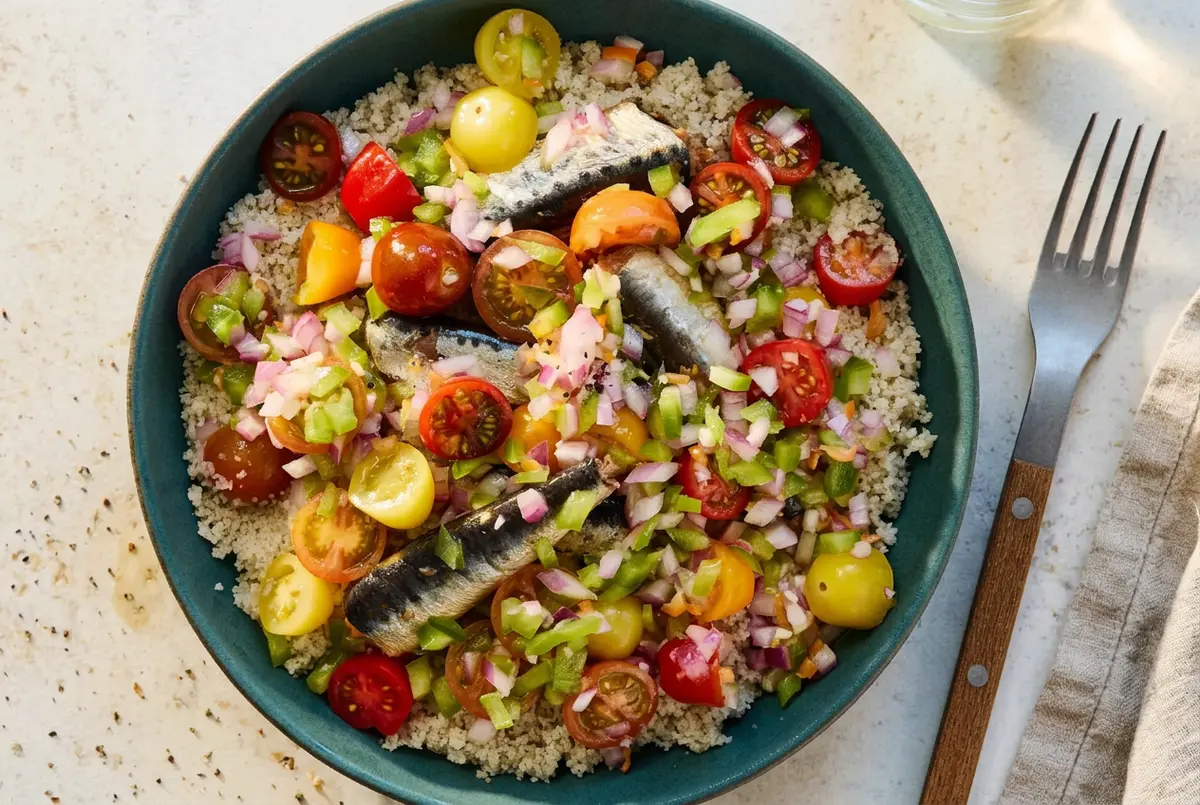
What Is a Grain Bowl With Sardines and Sauce Moyo?
A grain bowl is a simple dish built around a cooked grain and finished with vegetables, fish, sauces, or other toppings. Instead of combining everything in a pot, the ingredients are arranged together in a serving bowl, allowing each component to keep its own texture and flavor.
In this recipe, the grain creates a soft, fluffy base, while sardines add a savory, distinctive taste. Fresh tomatoes, red onion, bell pepper, garlic, lime, and chile make up the sauce moyo. The contrast between the rich fish and the crisp, tangy sauce is what makes this dish especially appealing.
Sauce moyo is associated with West African cooking and is commonly prepared with chopped fresh vegetables, citrus, and chile. Recipes can vary, so there is room to adjust the ingredients according to your preferences and what is available locally.
This bowl is also flexible. You can serve it warm with freshly cooked fonio or prepare the components in advance and assemble them when you’re ready to eat. Whether you’re preparing a quick weekday lunch or a relaxed evening meal, the recipe offers a straightforward way to bring several complementary flavors together.
Why You’ll Love This Sardine Grain Bowl
There are plenty of reasons to add this Grain Bowl With Sardines and Sauce Moyo to your recipe collection.
1. It’s quick to prepare
Using a quick-cooking grain and canned sardines keeps the preparation simple. While the grain cooks, you can chop the vegetables and prepare the sauce. This means you can complete most of the work at the same time instead of preparing every component separately.
2. It combines different textures
The grains are soft and fluffy, the sardines are tender, and the vegetables provide a fresh crunch. Lime juice brings everything together without making the dish complicated.
3. The ingredients are easy to customize
You don’t need to follow one exact version every time. Choose fonio for a West African-inspired preparation, quinoa for a slightly firmer base, couscous for convenience, or rice for a familiar option.
4. You can control the spice
Fresh chile gives sauce moyo its characteristic kick, but you can use less, select a milder pepper, or leave it out entirely. This makes it easy to prepare a version that suits different preferences.
5. It’s suitable for lunch or dinner
Serve the bowl as a simple standalone meal or pair it with a crisp cucumber salad, roasted vegetables, or a slice of crusty bread.
Ingredients for Grain Bowl With Sardines and Sauce Moyo
The following quantities make approximately two modest servings. Adjust them according to the number of people you’re serving and your preferred grain-to-topping ratio.
For the grain base
- 1/2 cup dry fonio
- 1 cup water
- 1 tablespoon olive oil
- Salt, to taste
Fonio is a particularly convenient choice because its tiny grains cook quickly and develop a soft, delicate texture. Follow the instructions on your package, since preparation methods can differ between brands.
For the sardines
- 1 tin of sardines in olive oil, approximately 4 to 5 ounces
- A little of the reserved sardine oil, if desired
- Freshly ground black pepper, to taste
Plain sardines offer a straightforward savory flavor, while smoked sardines provide a deeper, more pronounced taste. Either can work well with the fresh sauce.
For the sauce moyo
- 1/4 medium red onion, finely chopped
- 1 small garlic clove, minced
- 1 tablespoon fresh lime juice, plus more to taste
- 1 cup cherry or grape tomatoes, halved
- 1/4 green bell pepper, finely chopped
- 1/2 habanero or Scotch bonnet chile, seeded and finely chopped, or less to taste
- 1 tablespoon olive oil
- Salt and black pepper, to taste
Optional garnishes
- Fresh cilantro or parsley
- Extra lime wedges
- Sliced scallions
- Diced avocado
- A small amount of finely chopped cucumber
These additions are optional. The main ingredients already provide a balance of soft grains, savory fish, and fresh vegetables.
Kitchen Equipment You’ll Need
You don’t need special equipment to make this recipe. Gather the following before you begin:
- A small saucepan with a lid
- A cutting board
- A sharp kitchen knife
- A small mixing bowl
- Measuring cups and spoons
- A fork for fluffing the grain
- A serving bowl or two individual bowls
How to Make Grain Bowl With Sardines and Sauce Moyo
This recipe comes together in a few straightforward stages. The most efficient method is to begin the sauce first, cook the grain while the onion rests, and assemble everything just before serving.
Step 1: Prepare the onion and garlic mixture
Place the finely chopped red onion and minced garlic in a small mixing bowl. Add the lime juice and a little salt, then stir thoroughly.
Leave the mixture to rest while you prepare the grain. This short resting period allows the sharp flavor of the raw onion and garlic to mellow and helps the lime juice spread through the mixture.
Don’t worry if the onion still has a noticeable bite. It should remain fresh and slightly crisp, providing a pleasant contrast to the soft grain and sardines.
Step 2: Cook the fonio
Pour the water into a small saucepan and add salt according to your taste. Bring it to a boil, then stir in the fonio and one tablespoon of olive oil.
Cover the pan and reduce the heat to low. Cook according to the package directions until the water has been absorbed. Depending on the fonio you’re using, this can take only a few minutes.
Once the liquid has disappeared, turn off the heat and leave the saucepan covered briefly to allow the grains to finish steaming.
Remove the lid and gently fluff the fonio with a fork. The grains should be tender and light rather than wet or clumped together.
Tip: Avoid using the cooking time for fonio as a guide for quinoa or rice. Each grain has its own liquid requirements and preparation method.
Step 3: Finish the sauce moyo
Add the halved tomatoes and chopped green bell pepper to the onion and garlic mixture.
Next, add the finely chopped chile, olive oil, and a generous grind of black pepper. Stir carefully until the vegetables are coated in the lime and onion mixture.
Taste the sauce before adding more seasoning. If it tastes too sharp, adjust the ingredients gradually rather than adding a large amount of oil or salt at once.
For a brighter flavor, add a little more lime juice. For a milder sauce, reduce the chile. If you prefer more texture, keep the tomatoes in larger pieces rather than crushing them while stirring.
The finished sauce should look colorful and fresh, with visible pieces of tomato, onion, and pepper.
Step 4: Prepare the sardines
Open the sardine tin and remove the fish carefully. If the sardines are large, you can separate them into a few pieces, but avoid crushing them.
Reserve a small amount of the oil if you would like to use it when assembling the bowl. The oil can add a savory finishing touch, but it isn’t necessary to use all of it.
If you’re using smoked sardines, expect a more pronounced flavor. Plain sardines provide a gentler taste that allows the lime and fresh vegetables to stand out.
Keep the fish ready for assembly while you check the grain.
Step 5: Check the grain texture
Use a fork to fluff the fonio once more. If it looks slightly damp, allow some steam to escape before serving. If the grains seem dry, a small drizzle of olive oil can help loosen them.
Taste a little and adjust the seasoning if needed. Remember that the sardines and sauce will contribute additional salt and flavor, so there’s no need to make the grain overly seasoned.
The ideal base is soft, fluffy, and easy to spoon into a bowl.
Step 6: Assemble the grain bowl
Divide the cooked fonio between one large serving bowl or two individual bowls.
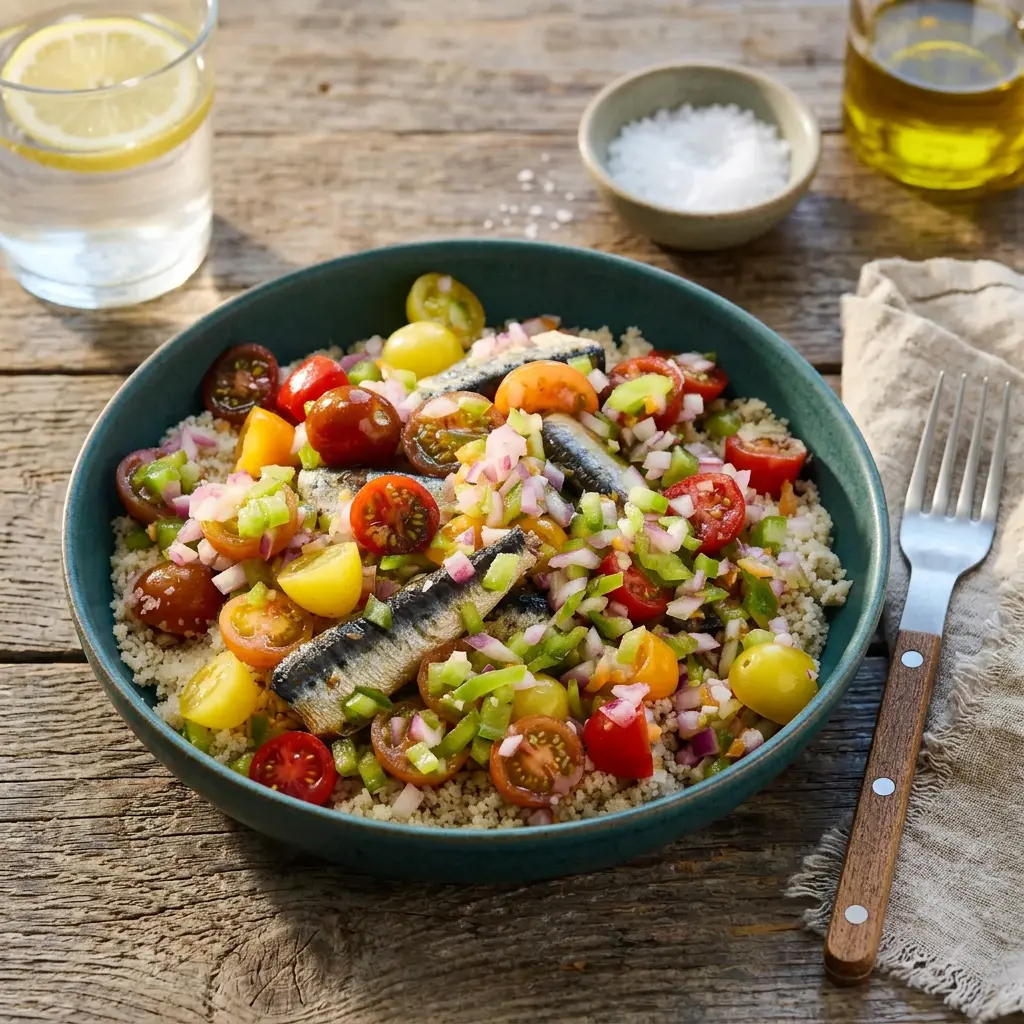
Arrange the sardines over the grain, leaving some pieces intact. Spoon the sauce moyo over the top, making sure that each portion receives a mixture of tomatoes, onion, green pepper, and chile.
If desired, finish with a small drizzle of reserved sardine oil, chopped fresh herbs, or a squeeze of lime.
Serve immediately while the grain is still warm and the vegetables remain crisp.
Common Mistakes to Avoid
Even a simple grain bowl can lose its appeal if a few details are overlooked.
- Using too much water: Excess liquid can make the grain wet and heavy. Follow the package instructions.
- Overcooking the grain: Remove it from the heat when the liquid has been absorbed and allow it to finish steaming as directed.
- Adding too much chile: Start with a small amount and increase the heat gradually.
- Overdoing the lime: Add citrus in stages so that it complements rather than dominates the sauce.
- Using too much oil: A little olive oil is enough to bring the sauce together. Taste before adding the reserved sardine oil.
- Mixing the fish too vigorously: Fold the components together gently or arrange them in layers.
- Assembling too early: Adding the sauce long before serving can soften the grain and vegetables.
Taking a little care with the texture and seasoning helps each ingredient remain distinct.
Easy Variations and Ingredient Substitutions
One of the best features of this sardine grain bowl recipe is how easily it can be adapted.
Quinoa grain bowl with sardines
Replace the fonio with quinoa and cook it according to the package directions. Allow the quinoa to rest briefly before fluffing it with a fork.
Quinoa creates a slightly firmer base and pairs well with the juicy tomatoes and tangy sauce moyo.
Couscous bowl with sauce moyo
Couscous is an excellent option when you want to reduce the time spent cooking. Place it in a heatproof bowl, add the quantity of boiling water indicated on the package, cover, and allow it to absorb the liquid.
Fluff with a fork before adding the sardines and sauce.
Rice bowl with sardines
Use freshly cooked white or brown rice instead of fonio. White rice creates a soft base, while brown rice offers a chewier texture.
Allow excess steam to escape before assembling the bowl.
Mild sauce moyo
If you don’t enjoy very spicy food, reduce the habanero or Scotch bonnet and replace it with a small amount of jalapeño. You can also omit the chile entirely while keeping the tomato, onion, garlic, and lime.
Extra vegetable grain bowl
Add diced cucumber, thinly sliced scallions, or a little avocado. These ingredients introduce different textures and allow you to use vegetables already available in your kitchen.
Smoked sardine variation
Smoked sardines bring a deeper, more pronounced taste. Pair them with a generous amount of fresh tomato and lime to keep the overall flavor balanced.
What to Serve With This Grain Bowl
The recipe can be served on its own, but a simple side dish can add variety to the table.
Consider these options:
- Cucumber salad: Thinly sliced cucumber with lime juice and black pepper makes a crisp accompaniment.
- Roasted vegetables: Serve with roasted carrots, courgettes, or bell peppers.
- Steamed green beans: Their mild flavor works well with the tangy sauce.
- Crusty bread: A slice of bread is useful for enjoying any remaining sauce.
- Fresh herbs and lime wedges: Place these on the table so everyone can finish their bowl according to preference.
Keep the side dishes relatively simple. The sauce moyo already provides a strong combination of acidity, spice, and fresh vegetable flavor.
Make-Ahead Instructions and Meal Prep
You can prepare most of the components in advance, which makes this recipe convenient for busy weekdays.
Prepare the grain ahead
Cook the fonio or your preferred alternative, then cool and refrigerate it promptly in a clean, airtight container.
When you’re ready to eat, reheat the grain thoroughly or serve it cold if you prefer.
Prepare the vegetables
Chop the onion, garlic, tomatoes, and green pepper ahead of time. Store the prepared vegetables in a covered container in the refrigerator.
For the freshest texture, you can combine the vegetables with the lime juice and seasoning shortly before serving.
Keep the components separate
For the best results, store the cooked grain, sauce, and sardines separately when practical. This prevents the vegetables from softening the grain and makes it easier to assemble an attractive bowl.
Pack a lunch bowl
If you’re preparing lunch to take with you, use a suitable sealed container and keep it refrigerated until needed. Add the sauce shortly before eating when possible.
How to Store and Reheat Leftovers
If you have leftover Grain Bowl With Sardines and Sauce Moyo, careful storage helps preserve its flavor and texture.
Refrigeration
Transfer the leftovers into a clean, airtight container and refrigerate them promptly. For the best quality, aim to use the assembled bowl within two days.
If you have prepared the components separately, keep them in separate covered containers whenever practical. Store opened sardines according to the tin’s instructions or transfer them to a suitable sealed container rather than storing them in an opened tin.
Reheating the grain
If you prefer a warm bowl, reheat the grain separately until steaming hot. Add a small splash of water if it has dried out during refrigeration.
Add the sardines and sauce after reheating when possible, especially if you want the vegetables to retain their texture.
Food storage reminders
- Refrigerate perishable leftovers within two hours, or within one hour in temperatures above 90°F (32°C).
- Keep refrigerated food properly covered.
- Avoid repeatedly warming and cooling the same portion.
- Discard food if you are unsure whether it has been stored safely.
Frequently Asked Questions
What is sauce moyo made of?
Sauce moyo is commonly made with chopped tomatoes, onion, chile, and lime juice. Some versions also include garlic, salt, pepper, and olive oil. The exact ingredients can vary, so you can adjust the sauce to suit your preferred level of heat and acidity.
What is the best grain for a sardine grain bowl?
Fonio is an excellent option for this recipe because it cooks quickly and has a delicate, slightly nutty flavor. Quinoa, couscous, and rice are also suitable alternatives. Choose the grain you enjoy most and follow its specific cooking instructions.
Can I use quinoa instead of fonio?
Yes. Quinoa works well with sardines and sauce moyo. Cook it according to the package directions, fluff it with a fork, and let excess steam escape before assembling the bowl.
Are canned sardines suitable for grain bowls?
Yes. Canned sardines are convenient and require very little preparation. Sardines packed in olive oil work particularly well because their savory flavor complements the fresh tomatoes, onion, chile, and lime.
Conclusion
This Grain Bowl With Sardines and Sauce Moyo is a simple way to bring together tender grains, savory fish, and a colorful mixture of fresh vegetables. The tangy sauce adds brightness, while the chile lets you adjust the flavor to suit your preferences.