
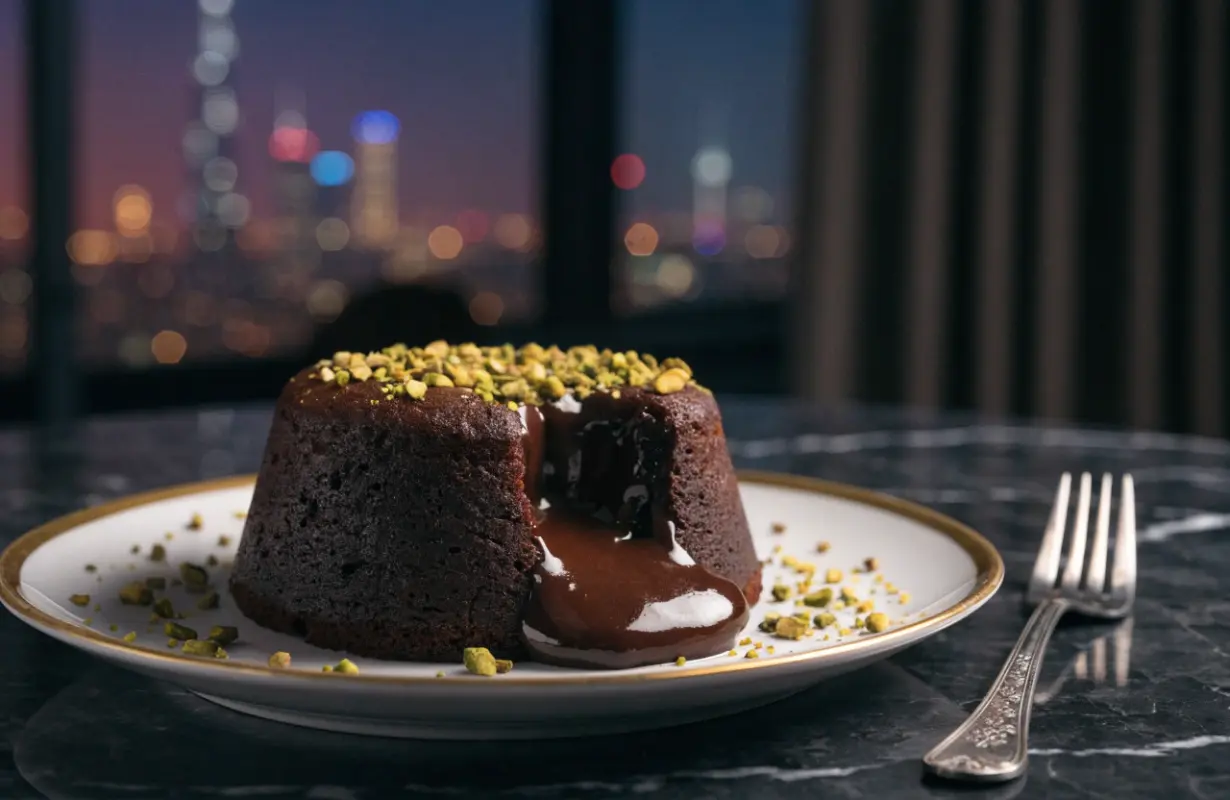
What Is Dubai Chocolate Pistachio Lava Cake?
Dubai Chocolate Pistachio Lava Cake is a dessert inspired by two popular treats: traditional chocolate lava cake and Dubai-style chocolate filled with pistachio cream and crispy kataifi pastry.
A classic lava cake is baked in an individual ramekin or small oven-safe dish. Its outer layer sets during baking, while the middle remains soft and flows when the cake is cut. The Dubai-inspired variation introduces a pistachio filling that adds a nutty flavor and a different kind of molten center.
The signature filling combines two contrasting ingredients:
- Pistachio cream: A smooth, sweet spread that provides a rich nutty flavor.
- Kataifi pastry: Thin strands of shredded pastry that become crisp and golden when toasted.
These ingredients are usually combined before being enclosed in chocolate batter. Some versions use a separate chilled pistachio center, while others rely on a soft chocolate center surrounding the filling.
The result is a dessert with several textures in every bite. The chocolate cake provides a tender outer layer, the pistachio cream adds smoothness, and the kataifi contributes a delicate crunch.
It is important to remember that recipes vary. Some versions are designed to release a stream of pistachio cream when cut, while others combine a traditional chocolate lava center with a pistachio-kataifi filling. The recipe below uses a prepared pistachio center enclosed in chocolate batter to create a dramatic, Dubai-inspired dessert.
Ingredients for Dubai Chocolate Pistachio Lava Cake
The best results come from choosing ingredients that work well together. Before starting, prepare all the components so you can assemble the cakes while the chocolate batter is still smooth.
The following recipe is a starting formula for four individual cakes. Because ramekin sizes, chocolate brands, and pistachio spreads vary, test the baking time with your own equipment before serving the cakes to guests.
Ingredients for the Chocolate Lava Cakes
- 150 g dark or semisweet chocolate, finely chopped
- 100 g unsalted butter, cut into small pieces
- 2 large eggs
- 2 large egg yolks
- 70 g granulated sugar
- 35 g all-purpose flour
- 1 teaspoon vanilla extract
- A small pinch of salt
- Softened butter and cocoa powder for preparing the ramekins
Ingredients for the Pistachio-Kataifi Filling
- 120 g pistachio cream or pistachio spread
- 50 g kataifi pastry, thawed if frozen
- 15 g unsalted butter
- 1 teaspoon tahini, optional
- A small pinch of salt, optional
Pistachio cream and pistachio butter are not always interchangeable without adjustments. Sweetened pistachio cream usually has a smoother, sweeter consistency, while pure pistachio butter may be less sweet and thicker.
Kataifi is a finely shredded pastry commonly used in Middle Eastern desserts. It becomes crisp when toasted in butter. If you cannot find kataifi, finely chopped, toasted phyllo pastry can provide a similar texture.
Optional Toppings
- 30 g melted chocolate
- 1–2 tablespoons chopped pistachios
- A little extra toasted kataifi
- Powdered sugar, if desired
- Vanilla ice cream or lightly whipped cream for serving
Use toppings sparingly so they complement rather than overpower the pistachio filling.
Equipment You Will Need
Prepare the following equipment before making the recipe:
- Four small oven-safe ramekins, approximately 150–180 ml each
- A baking tray
- A heatproof bowl
- A saucepan for a water bath, or a microwave-safe bowl
- A skillet for toasting kataifi
- A whisk and flexible spatula
- A kitchen scale or measuring cups and spoons
- A spoon for filling the ramekins
How to Make Dubai Chocolate Pistachio Lava Cake
Follow these steps carefully for a soft chocolate cake with a creamy pistachio-kataifi center.
Step 1: Prepare the Pistachio-Kataifi Filling
Begin by preparing the crunchy filling.
If your kataifi is frozen, thaw it according to the package instructions. Separate the strands gently with your fingers, then cut them into short pieces with a knife.
Place the butter in a skillet over medium-low heat. Once it has melted, add the kataifi and stir continuously. Cook until the strands are evenly golden and crisp.
This usually takes several minutes, depending on the thickness and moisture of the pastry. Watch the kataifi closely because it can brown quickly toward the end of cooking.
Transfer the toasted pastry to a plate and allow it to cool completely. This step is important: adding hot pastry directly to pistachio cream can soften the filling and reduce the crunch.
Place the pistachio cream in a bowl. Add the cooled kataifi and mix until the pastry is evenly coated. If desired, stir in a little tahini for a deeper flavor and a small pinch of salt to balance the sweetness.
The finished mixture should be thick enough to hold its shape when spooned. If it seems too loose, add a little more toasted kataifi.
Step 2: Portion and Chill the Filling
Divide the pistachio mixture into four small portions. Place them on a parchment-lined plate or tray.
Chill the portions in the refrigerator until firm. For a more clearly defined center, place them in the freezer until they are firm enough to handle.
The filling should be small enough to fit inside each ramekin without touching the sides. A compact center is easier to cover with batter and less likely to escape during baking.
If you prefer a softer, more blended filling, you can skip the preformed portions and spoon a small amount directly into the assembled cake. However, chilling the filling makes the assembly process easier and more consistent.
Step 3: Prepare the Ramekins
Preheat the oven to 200°C (400°F). If your oven has a fan setting, follow the temperature guidance appropriate for your oven and test the baking time.
Brush the insides of four ramekins with softened butter. Pay particular attention to the bottom and the edges where the cake may stick.
Dust each ramekin lightly with cocoa powder, turning it to coat the buttered surfaces. Tap out any excess.
Arrange the ramekins on a baking tray. Preparing them before making the batter allows you to work quickly once the chocolate mixture is ready.
Step 4: Melt the Chocolate and Butter
Place the chopped chocolate and butter in a heatproof bowl.
To use a water bath, set the bowl over a saucepan containing gently simmering water. Make sure the bottom of the bowl does not touch the water. Stir until the chocolate and butter have melted into a smooth mixture.
Alternatively, microwave the ingredients in short intervals, stirring between each interval. Stop heating when only a few small pieces remain, then stir until the residual heat melts them.
Avoid overheating the chocolate. Excessive heat can make it thick, grainy, or difficult to combine with the eggs.
Set the melted mixture aside briefly so it cools slightly. It should remain fluid but should not be so hot that it cooks the eggs when they are added.
Step 5: Make the Chocolate Batter
In a separate bowl, whisk together the eggs, egg yolks, and sugar until thoroughly combined and slightly thickened.
Pour the melted chocolate mixture into the egg mixture gradually, whisking continuously. Add the vanilla extract and salt.
Sift in the flour and fold gently with a spatula until no dry patches remain.
Avoid beating the batter excessively once the flour has been added. Overmixing is unnecessary and may make the finished cake less tender.
The batter should look smooth and glossy. It should be thick enough to spoon into the ramekins but fluid enough to spread around the pistachio filling.
If the mixture becomes noticeably stiff while you are assembling the cakes, work promptly and avoid leaving the batter exposed to a cool environment for too long.
Step 6: Fill the Ramekins
Spoon enough chocolate batter into each ramekin to cover the bottom.
Place one chilled pistachio-kataifi portion in the center of each ramekin. Keep the filling away from the sides so that the chocolate batter can form a protective layer around it.
Cover each portion with more batter until the filling is completely enclosed.
Leave a little space at the top of each ramekin because the cakes may rise during baking.
Use the back of a spoon to smooth the surface. Check that no pistachio filling is visible along the edges.
If you are preparing the cakes in advance, cover and refrigerate the assembled ramekins according to your tested recipe. Cold batter may require a longer baking time, so do not assume the same timing will work without adjustment.
Step 7: Bake the Lava Cakes
Place the baking tray in the preheated oven.
Begin checking the cakes after approximately 10 minutes. Depending on your ramekin size, oven performance, and the temperature of the filling, the cakes may need around 10–14 minutes. This is a starting range rather than a guaranteed baking time.
Look for the following signs:
- The edges appear set.
- The top has formed a delicate surface.
- The center remains softer than the edges.
- The cakes hold their shape without appearing completely firm throughout.
Avoid leaving the cakes in the oven simply because the tops have not browned. Chocolate lava cakes do not need a deeply browned surface to be ready.
If you are making this recipe for the first time, bake one test cake before preparing the entire batch. Adjust the time based on how the center behaves when you cut into it.
Step 8: Rest and Serve
Remove the baking tray from the oven and let the cakes rest briefly.
If serving directly in the ramekins, place each one on a small heatproof plate. This is the simplest option and avoids the risk of breaking the cakes during unmolding.
To unmold the cakes, run a thin knife carefully around the edge. Place a serving plate over each ramekin, hold both firmly, and invert in one controlled movement.
Lift the ramekin slowly. If the cake does not release, avoid shaking it aggressively. Let it rest a little longer or gently loosen the edges again.
Finish with melted chocolate, chopped pistachios, and extra toasted kataifi. Serve while warm to enjoy the contrast between the soft cake and creamy center.
Common Mistakes and How to Fix Them
Why Is My Lava Cake Not Runny?
The most common reason is overbaking. When the cake remains in the oven too long, the center becomes firm rather than flowing.
Other possible causes include:
- Using too much flour.
- Making the filling portions too large or too firm.
- Using ramekins that differ significantly from the recipe’s recommended size.
- Allowing the cakes to cool for too long before serving.
Solution: Reduce the baking time slightly during your next test and check the center immediately after resting.
Remember that a chilled pistachio center behaves differently from an uncooked chocolate center. A cake with a pistachio filling may release warm cream without producing the same flowing chocolate texture as a traditional fondant.
Why Is My Pistachio Filling Leaking?
The filling may be too close to the sides, the batter may not cover it completely, or the filling may be too loose.
Solution: Chill the filling until firm enough to handle. Place it in the center and cover it with batter, paying particular attention to the edges.
Why Is My Cake Sticking to the Ramekin?
Insufficient greasing is a frequent cause of sticking. A cake that has not rested long enough may also break when you try to remove it.
Solution: Grease the entire interior of each ramekin with softened butter and dust it with cocoa powder. Let the baked cake rest briefly before unmolding.
Why Has My Kataifi Become Soft?
Kataifi can lose its crisp texture when it is under-toasted, mixed with hot pistachio cream, or left in contact with moisture for an extended period.
Solution: Toast the pastry until golden, cool it completely, and combine it with the pistachio cream shortly before assembly when practical.
What to Serve With Dubai Chocolate Pistachio Lava Cake
Because this dessert combines rich chocolate with creamy pistachio filling, simple accompaniments often work best.
Vanilla Ice Cream
A scoop of vanilla ice cream creates a classic contrast with the warm cake. Place it beside the cake rather than directly on top if you want to preserve the presentation.
Lightly Whipped Cream
Unsweetened or lightly sweetened whipped cream adds a soft, airy texture without overwhelming the pistachio flavor.
Fresh Berries
Raspberries and strawberries introduce a bright, slightly tart flavor that contrasts with the chocolate and pistachio.
Coffee or Tea
Espresso and black coffee pair well with dark chocolate. Unsweetened tea is another option for readers who prefer a less sweet accompaniment.
Extra Pistachio and Chocolate Garnishes
For a bakery-style finish, add:
- A thin drizzle of melted chocolate.
- Chopped pistachios.
- A small amount of toasted kataifi.
- A light dusting of powdered sugar.
Keep the garnish restrained so the cake’s center remains the main attraction.
Storage, Make-Ahead Preparation, and Reheating
Can You Prepare Lava Cakes Ahead of Time?
Yes. Preparing components in advance can make serving easier.
You can toast the kataifi and prepare the pistachio filling before making the batter. The filling can be portioned and chilled until needed.
You can also assemble the ramekins in advance if your tested recipe permits it. Cover them and refrigerate them until baking, following an appropriate time limit for the ingredients used.
Cold batter generally takes longer to bake than batter that starts at room temperature. Check the center carefully and adjust the timing rather than relying on the original baking time.
How Should You Store Leftover Lava Cake?
Allow leftover cakes to cool, then place them in a covered container and refrigerate promptly. Follow standard food-storage guidance for desserts containing eggs and dairy.
For the best texture, avoid leaving the cakes uncovered because their surfaces can dry out.
Keep any unbaked batter separate from ready-to-eat toppings and use clean utensils during preparation.
Can You Freeze Dubai Chocolate Pistachio Lava Cake?
The assembled cakes may be suitable for freezing, depending on the recipe and ingredients.
For the most predictable results, test freezing a single unbaked cake first. Cover it securely, label it, and follow a tested freezing and baking procedure. The filling and baking time may behave differently after freezing.
Fully baked leftovers can also be frozen, although reheating may change the texture of the cake and filling.
How Do You Reheat Leftover Lava Cake?
Reheat refrigerated leftovers gently in the microwave in short intervals, checking the center between each interval.
Avoid heating the cake for too long because the chocolate batter may become firm and the pistachio filling may lose its smooth texture.
If you want the classic molten presentation, freshly baked cakes generally provide the most reliable result.
Frequently Asked Questions About Dubai Chocolate Pistachio Lava Cake
What Is Dubai Chocolate Pistachio Lava Cake?
It is a Dubai-inspired dessert combining chocolate lava cake with pistachio cream and crispy kataifi pastry. Depending on the recipe, the center may feature warm pistachio cream, molten chocolate, or both.
What Makes Dubai Chocolate Different From Regular Chocolate?
Dubai chocolate is widely associated with a filling made from pistachio cream and toasted kataifi pastry, enclosed in a chocolate shell. The combination of smooth filling and crispy pastry gives it a distinctive texture.
How Do You Make Dubai Chocolate Lava Cake at Home?
Toast the kataifi in butter, mix it with pistachio cream, and chill the filling. Prepare the chocolate batter, place the filling in the center of each ramekin, cover with more batter, and bake until the edges are set and the center remains soft.
Can You Use Store-Bought Pistachio Cream?
Yes. Store-bought pistachio cream is a convenient choice for this recipe. Check its consistency and sweetness before mixing it with the kataifi, as different brands can produce different results.
What Is Kataifi Pastry?
Kataifi is a shredded pastry made from fine strands of dough. When toasted, it becomes crisp and provides the characteristic crunch found in Dubai chocolate-inspired desserts.
Conclusion
Dubai Chocolate Pistachio Lava Cake combines everything that makes this dessert style appealing: rich chocolate, creamy pistachio filling, and the unmistakable crunch of toasted kataifi. With carefully prepared ingredients, a properly enclosed filling, and close attention to baking time, you can create an impressive dessert in your own kitchen.